
HALUKKILINCER.COM · Sectors
Robotics
Production cells, tooling, and handling physics—where automation meets scrap, takt, and safety.
84 analyses
Robotics
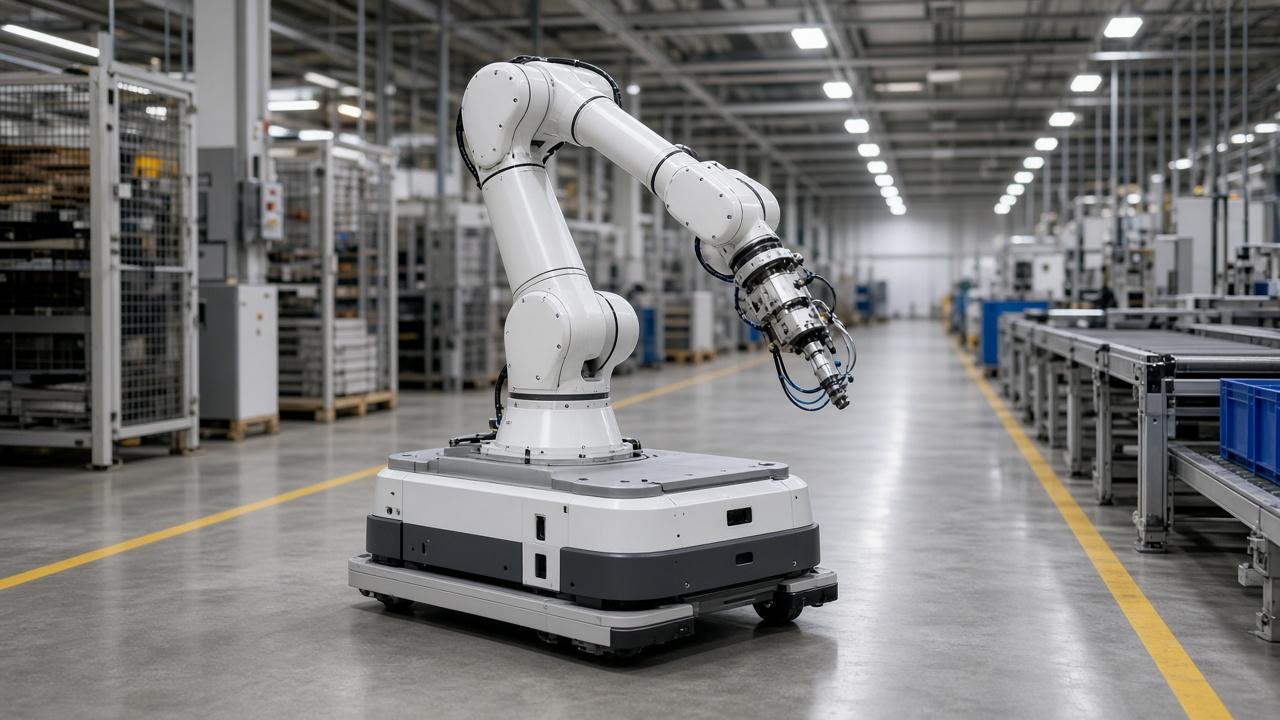
FANUC ships a DC CRX controller built for AMR and AGV mounts
The R-50iA Compact DC, shown at JIMTOF from 26 October with shipments from November, feeds collaborative CRX arms from mobile-platform batteries instead of AC cabinets.
19 Nov 2026
Robotics
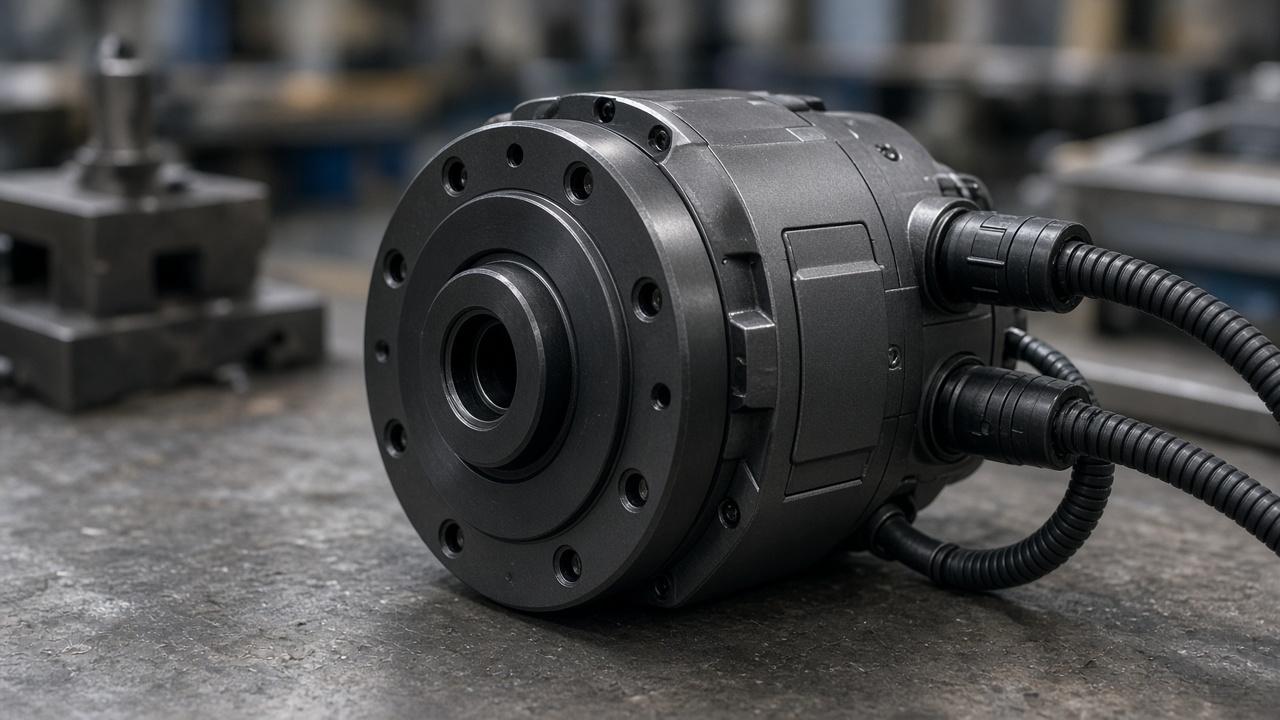
MIPS shows Actus: RISC-V control, TSN, and inference in the joint
At electronica on 9 November the Actus reference platform pairs dual Atlas M8500 cores, motor PWM, and edge inference on GF FDX silicon—development kit territory, not a shipped robot fleet.
17 Nov 2026
Robotics
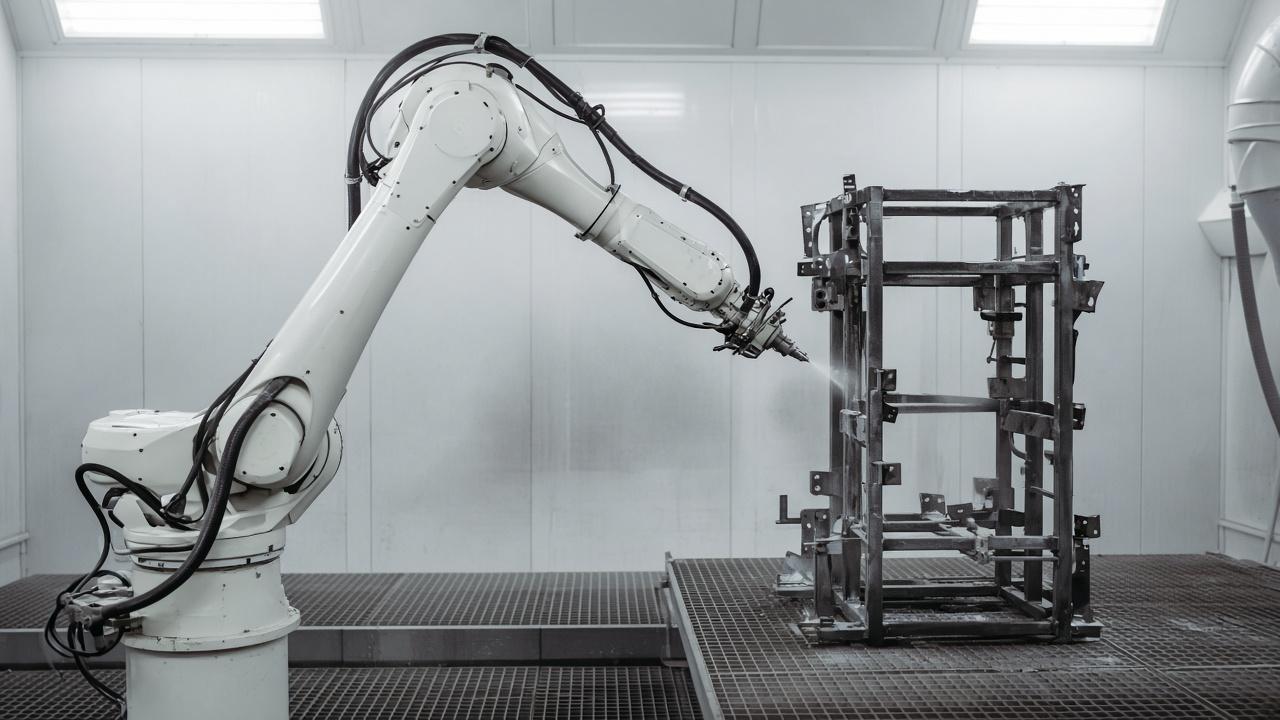
FANUC Europe opens the P-55/15-21A paint line with the R-50iA cabinet
The 5 November six-axis launch lists 15 kg payload, 2,050 mm reach, 0K/1K/2K paint support, and an ATEX Zone 1 external purge enclosure.
16 Nov 2026
Robotics
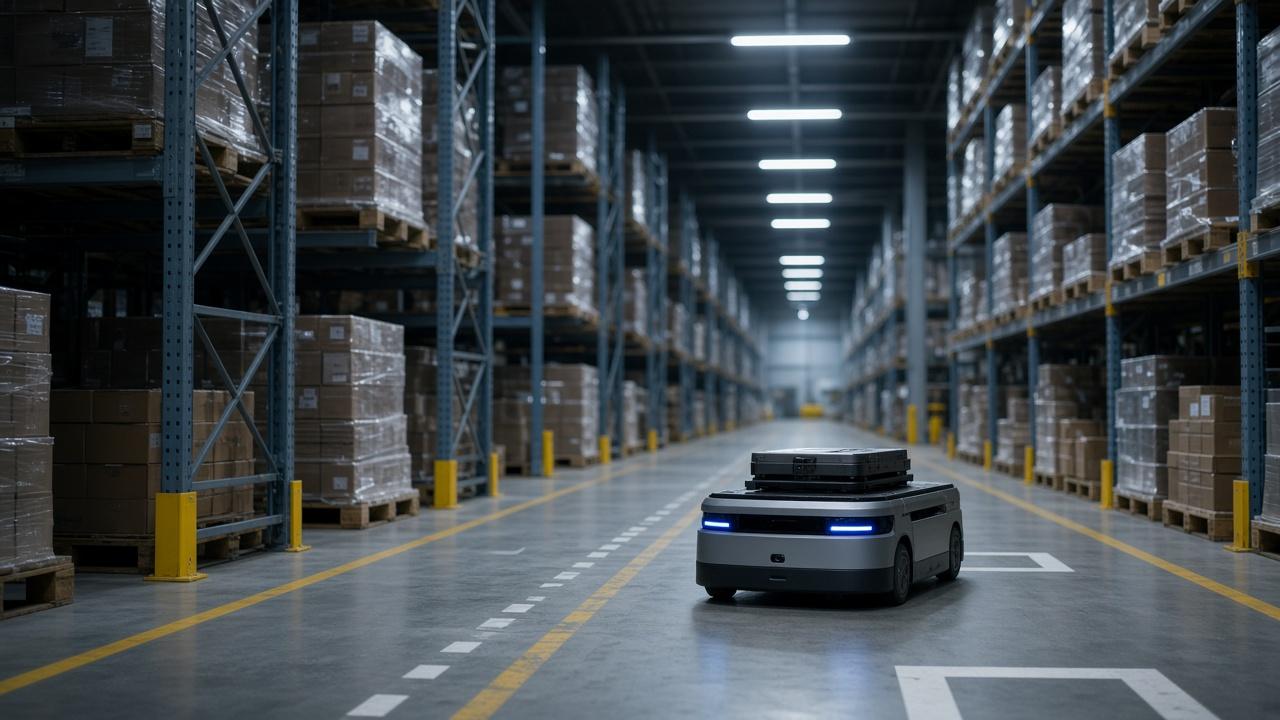
TÜV SÜD and Accenture put AMR certification work into simulation first
Their Physical AI Safety Suite concept, shown at NVIDIA GTC Berlin, prepares ISO 3691-4 evidence with digital twins before robots land. TÜV keeps the certificate; the 30% faster claim is an estimate.
15 Nov 2026
Robotics
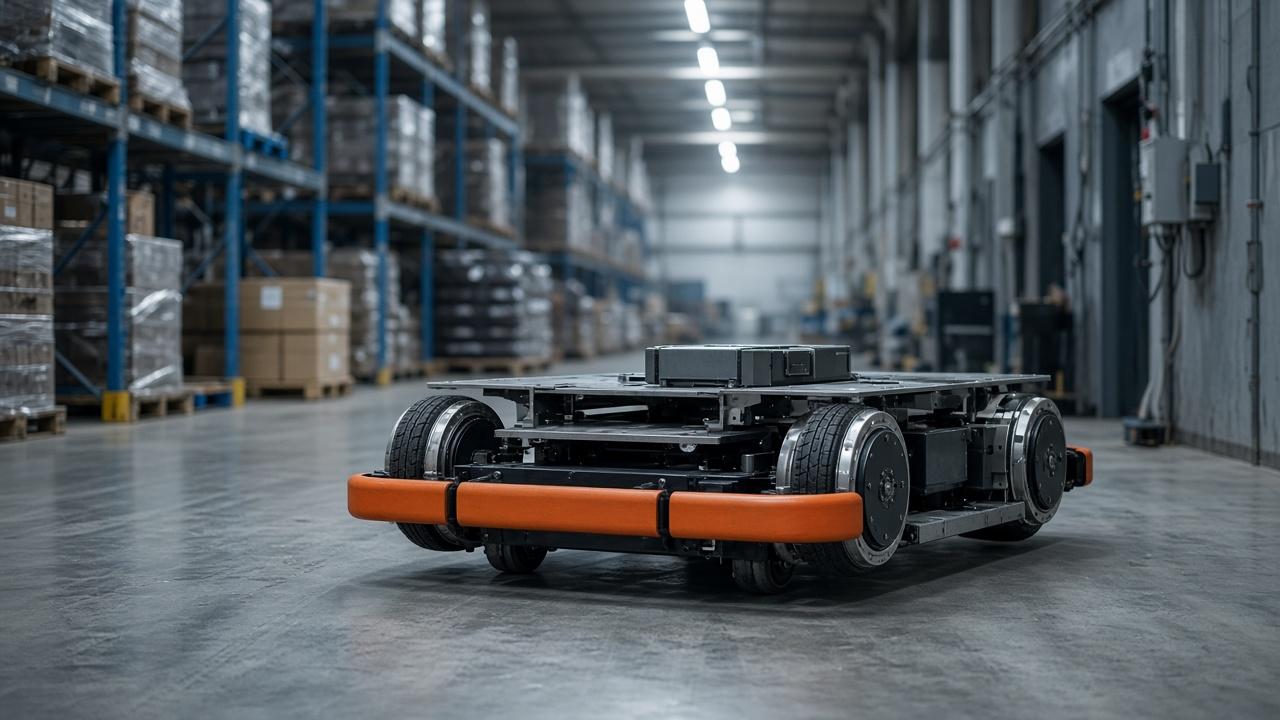
Siemens pairs Sinamics E210 with Simotics E-1EE1 for 24/48 V AGV fleets
The 2 November ELV drive launch targets battery-powered AGVs and AMRs inside TIA Portal and Simove. Regenerative conversion and PROFIsafe are on the datasheet; fleet takt is still a vehicle design problem.
13 Nov 2026
Robotics
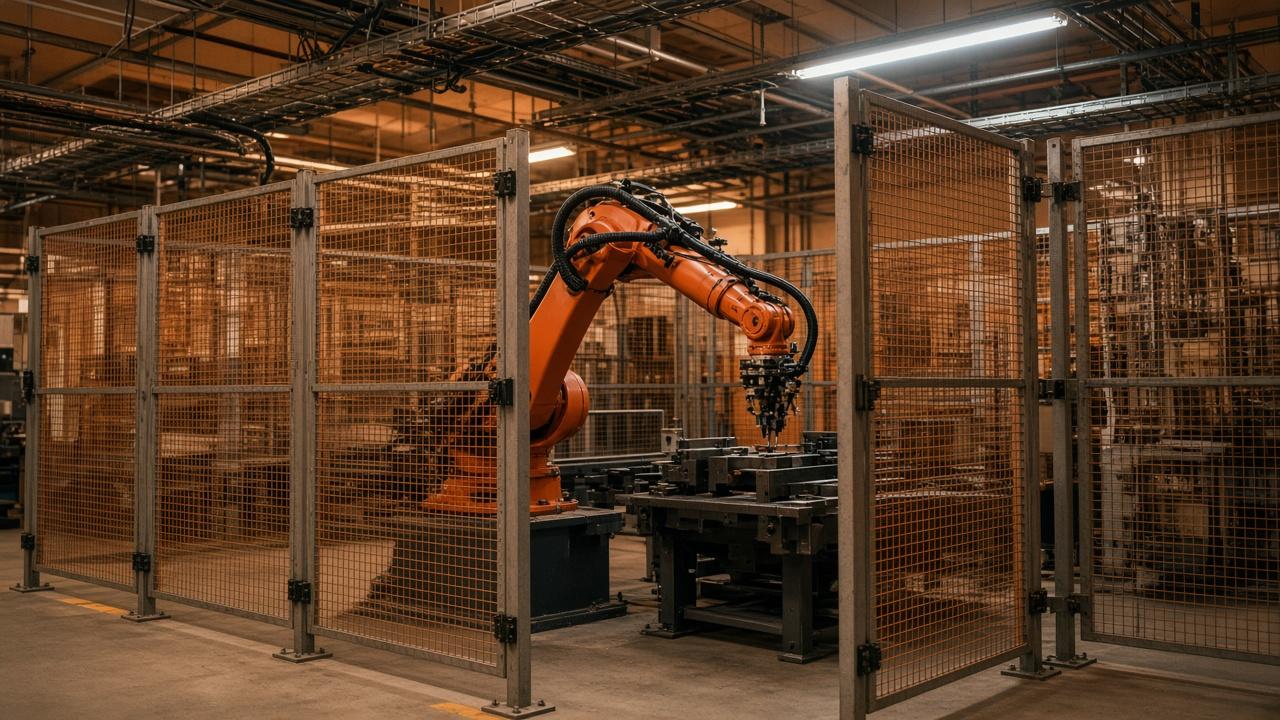
ABB launches the IRB 1700 family for compact high-speed cells
At CIIF the OmniCore pair listed up to 20% shorter catalog cycles, 0.03 mm path repeatability, and 6–12 kg payloads. Station takt still depends on fixture, process, and dress design.
11 Nov 2026
Robotics
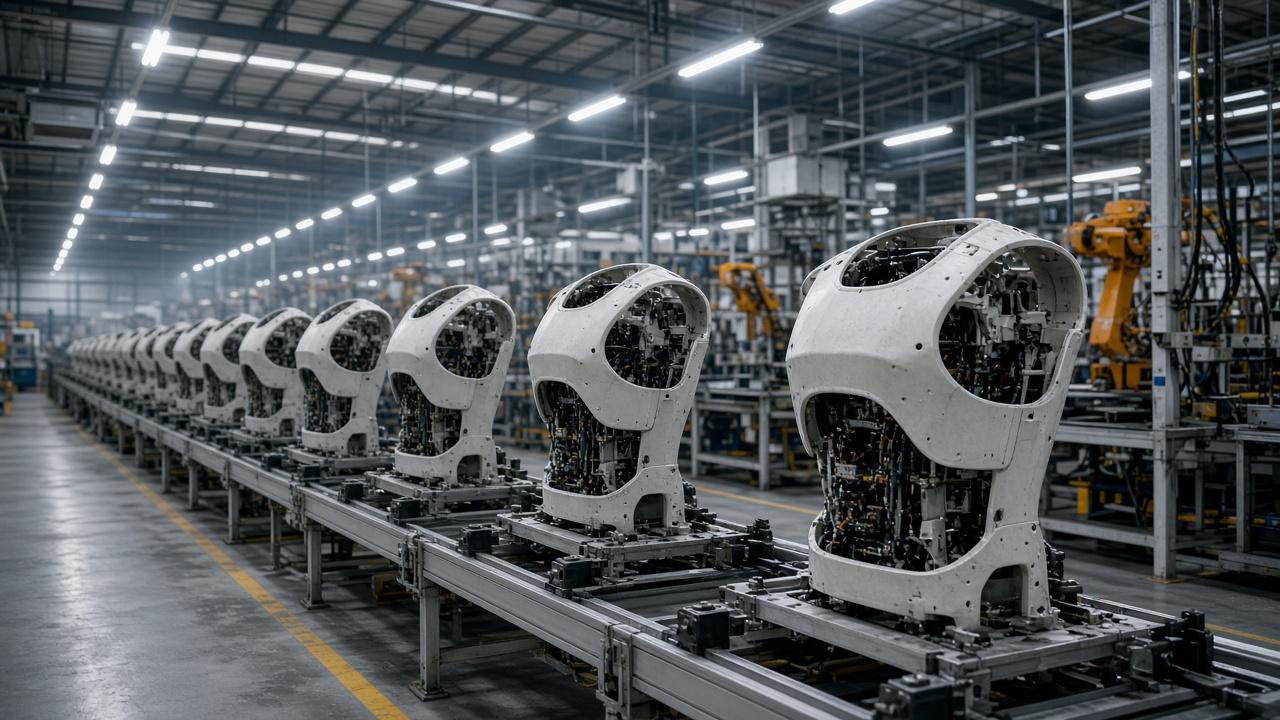
Tesla calls Fremont ‘early production.’ A million-unit rate is still a design problem.
On the October earnings call, Musk said Optimus early production has started in California and customer shipments are likely late next year. The installed line’s nameplate is not the current takt.
09 Nov 2026
Robotics
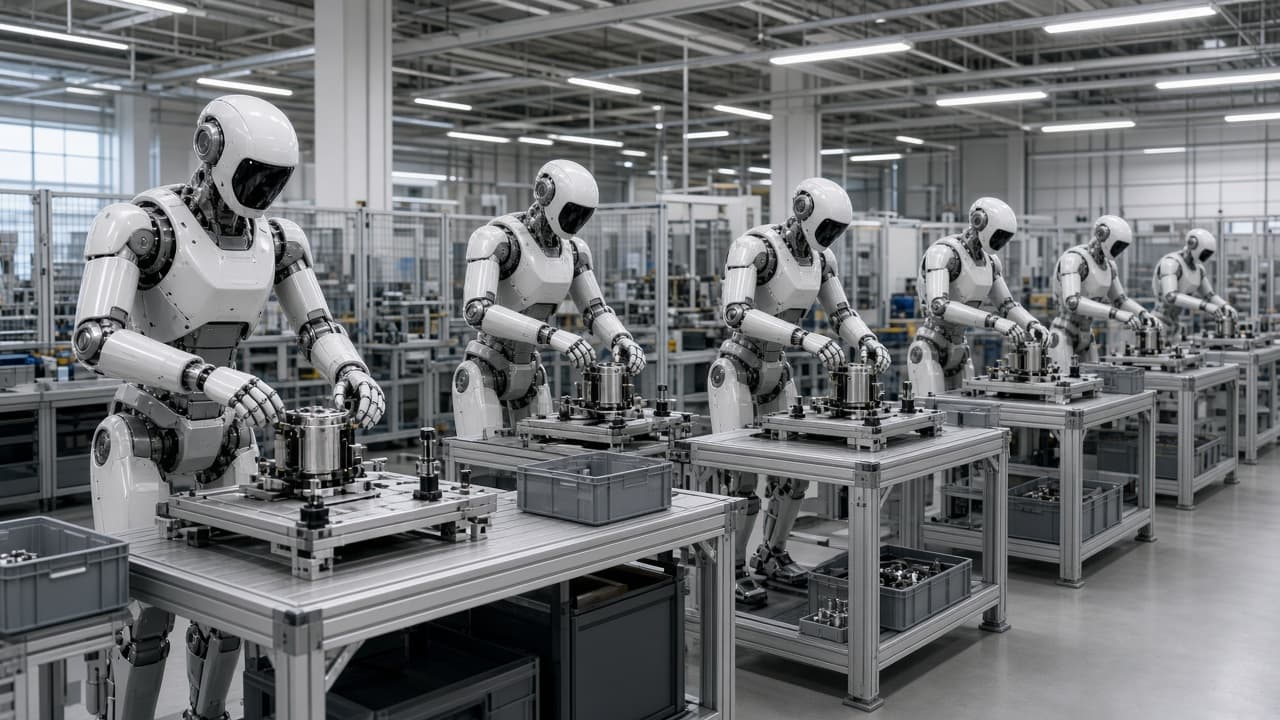
Six humanoids, five stations: Schaeffler opens actuator assembly in Taicang
The 20 October hall builds linear and rotary joint modules and trains skills against Schaeffler’s own plants. Cycle time and intervention rate were not in the release.
05 Nov 2026
Robotics
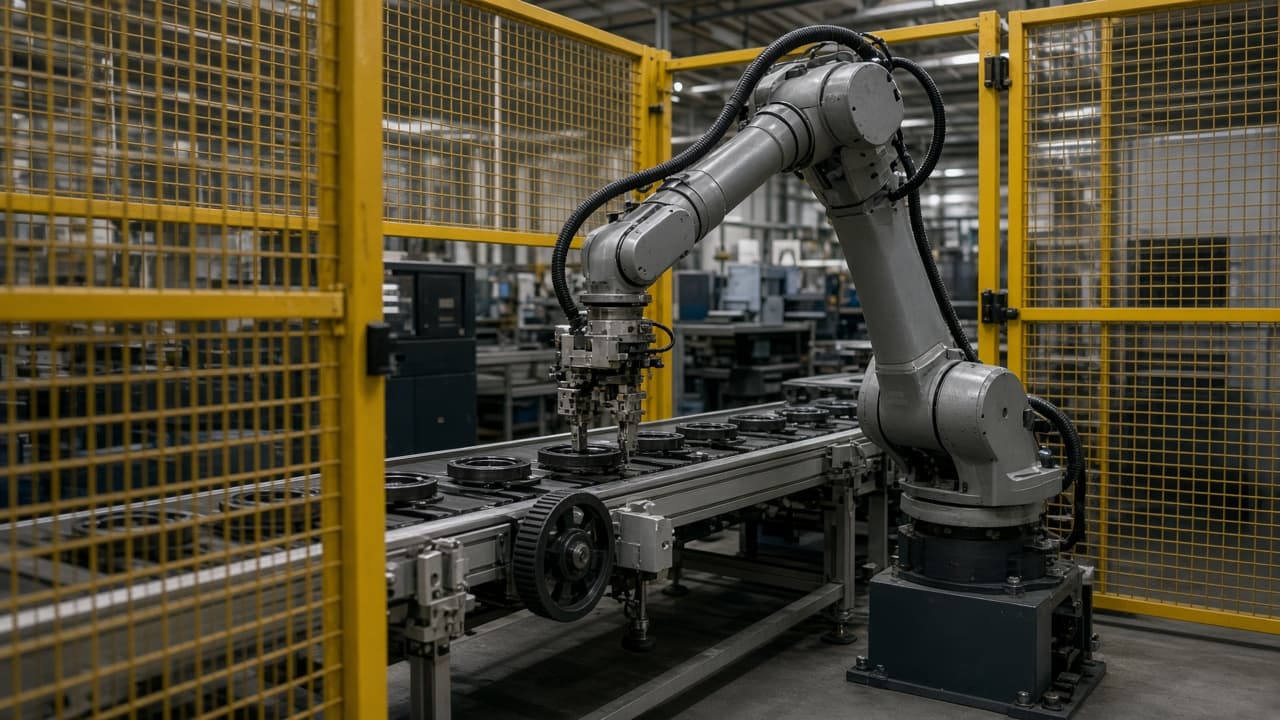
Conveyor tracking is not ‘aim where the part was’—it is a live coordinate frame on the belt
Pick-on-the-fly needs a quadrature encoder, a sync trigger, calibrated counts-per-meter, and a robot that stays inside dynamic limits while the object moves. A camera snapshot without that chain is a delayed guess.
02 Nov 2026
Robotics
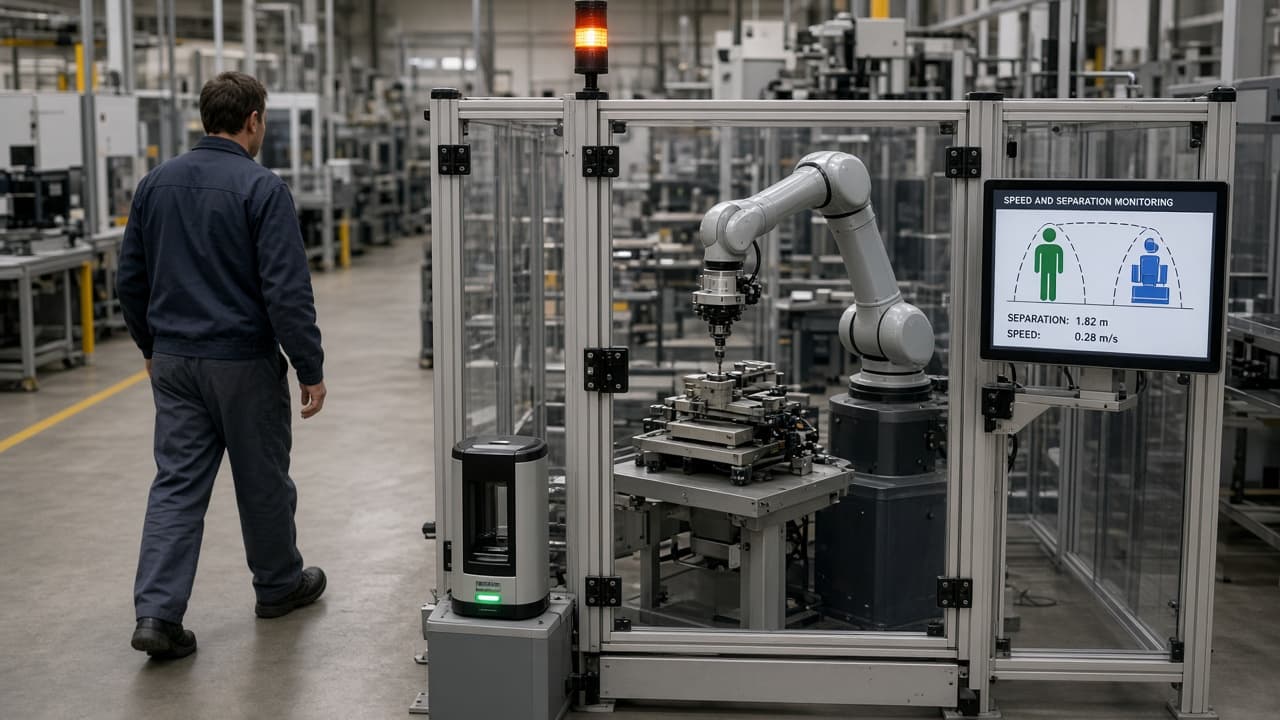
Speed-and-separation monitoring is not ‘slow the cobot when someone walks by’
ISO/TS 15066’s SSM mode keeps a protective separation distance that accounts for human motion, robot stopping distance, and sensor uncertainty. A laser scanner with a hopeful speed limit is not that calculation.
28 Oct 2026
Robotics
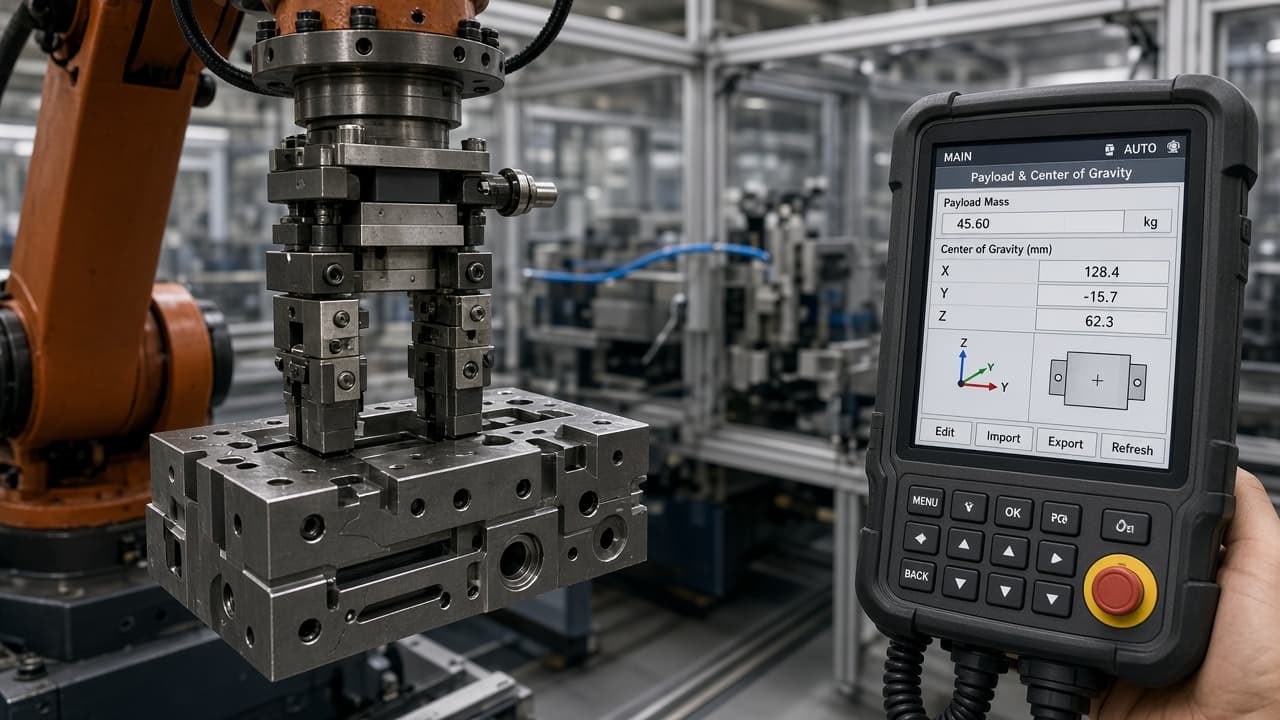
Empty-gripper payload data becomes a lie the moment the part is in the jaws
Mass at the flange is only half the story. Center-of-gravity offset and inertia change when the workpiece is picked, placed, or a tool is swapped—and the controller still believes yesterday’s empty EOAT numbers.
26 Oct 2026
Robotics
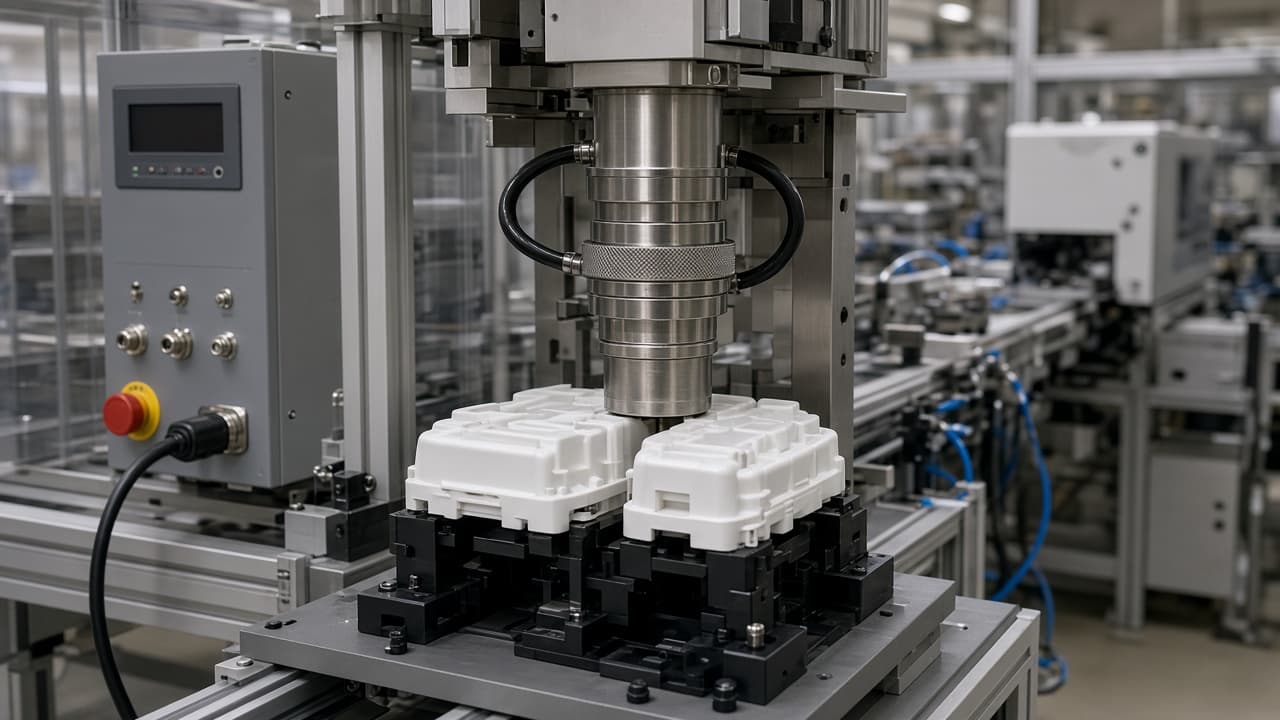
Ultrasonic welds follow horn amplitude squared—copying time and pressure is not a process
Thermoplastic joints melt where the stack delivers vibration at the interface. Amplitude at the horn face, a sound energy director, and a stack free of cracks decide strength and seal; a borrowed weld-time recipe does not.
23 Oct 2026
Robotics
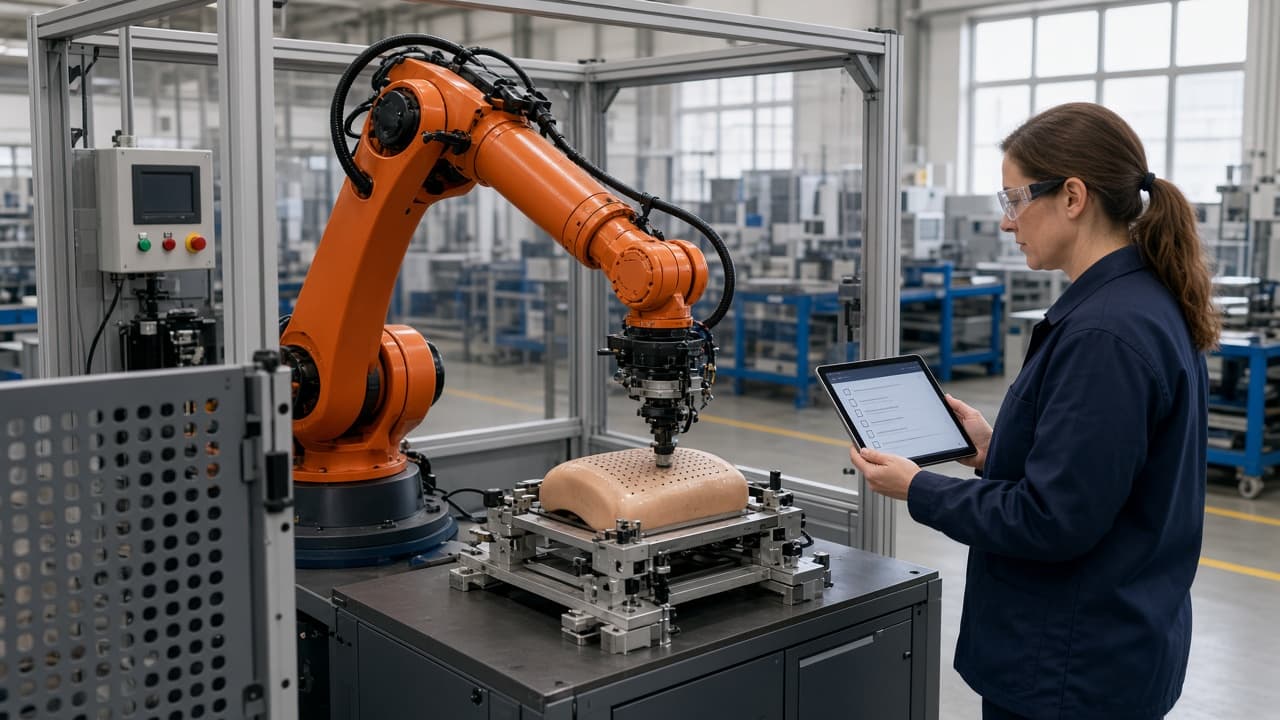
Power-and-force limiting is not proven until force and pressure are measured on the real tool
ISO/TS 15066 sets biomechanical limits for collaborative contact. Controller torque limits and a vendor brochure do not replace biofidelic force-pressure checks on every quasi-static and transient scenario the risk assessment named.
22 Oct 2026

Robotics
Impedance gains copied from the demo cell jam the first production peg
Force-torque essays sell wrist sensing. This page is the tuning that makes peg-in-hole survive tolerance stack-up: search soft, insert firmer, and never leave gravity bias in the sensor that the controller treats as process force.
21 Oct 2026
Robotics
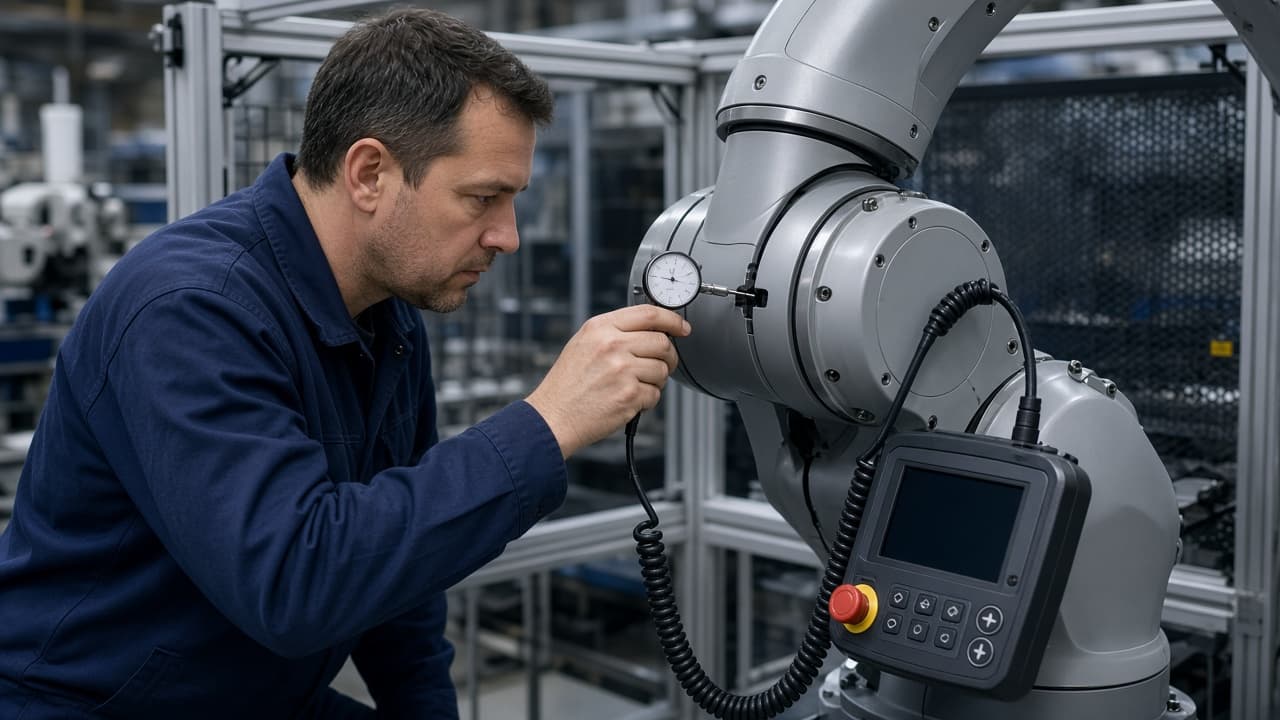
After a motor or encoder swap, unmastered axes make every taught point a rumor
Mastering aligns mechanical zero with encoder zero so Cartesian motion and TCP frames still mean something. Skipping it after joint service keeps repeatability theater while absolute pose drifts.
20 Oct 2026
Robotics
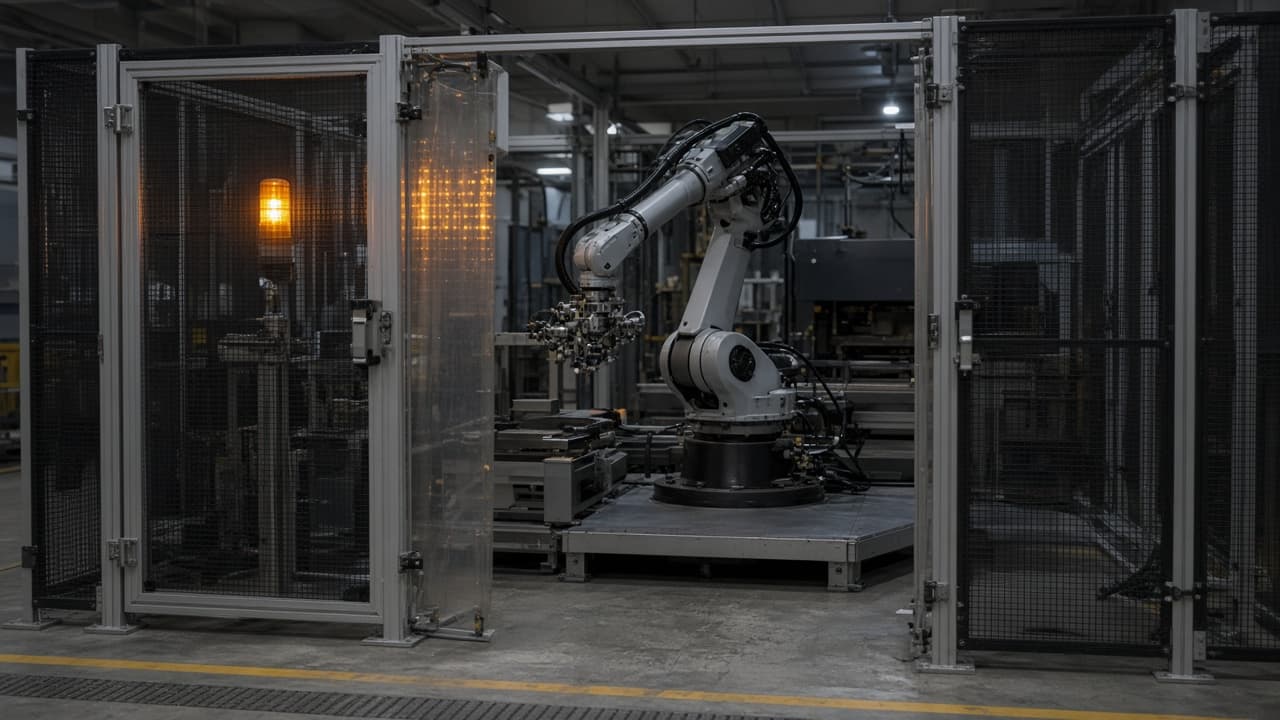
After a protective stop, monitored standstill is a proof—not a green pendant light
ISO 10218 monitored stop / standstill monitoring is meant to keep axes from drifting when the cell says ‘stopped.’ A fault reset that re-enables drive power without a standstill check rewrites the safety case the risk assessment assumed.
13 Oct 2026
Robotics
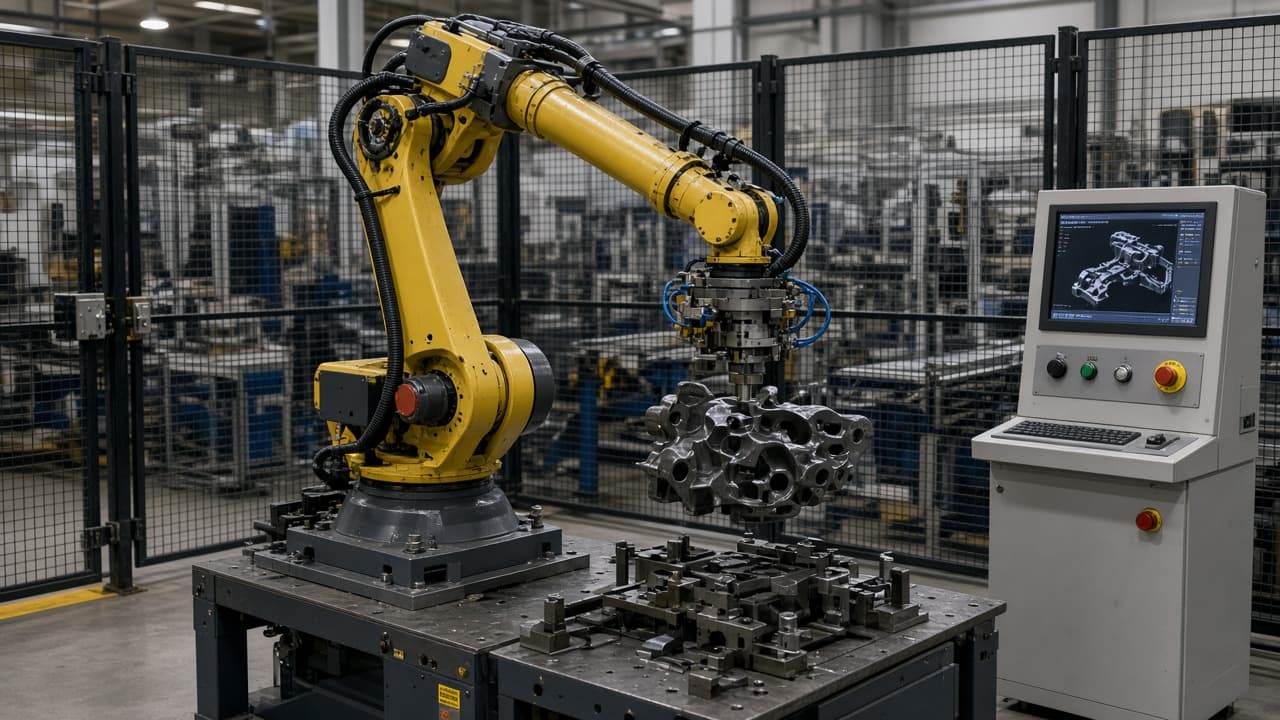
Collision sensitivity set for the wrong payload turns safe stops into false trips—or missed hits
Robot collision detection depends on expected inertia and torque. A light EOAT with heavy-part settings, or the reverse, either floods nuisance stops or softens the guard that should have fired.
30 Sept 2026
Robotics
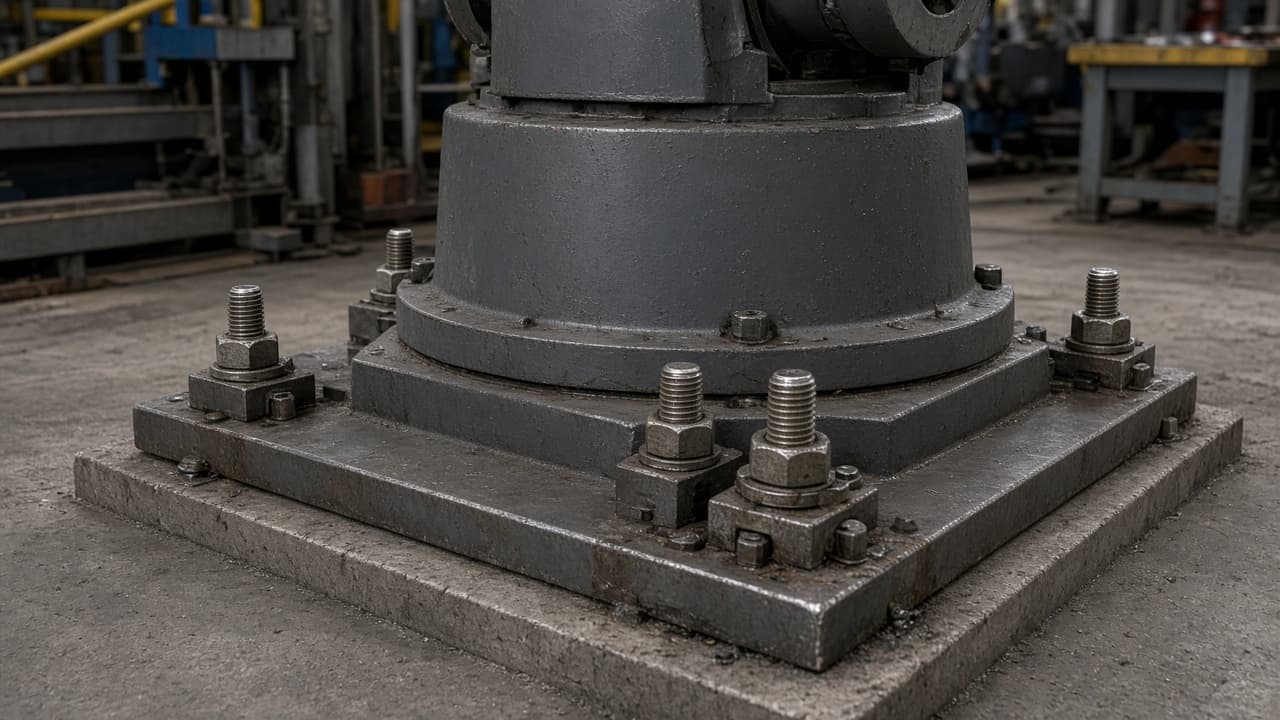
Robot accuracy starts at the base bolts—loose pedestals invent TCP ghosts
Path touch-ups and mastering rituals cannot fix a pedestal that rocks on soft grout or under-torqued anchors. Base integrity is mechanical, not a pendant parameter.
29 Sept 2026
Robotics
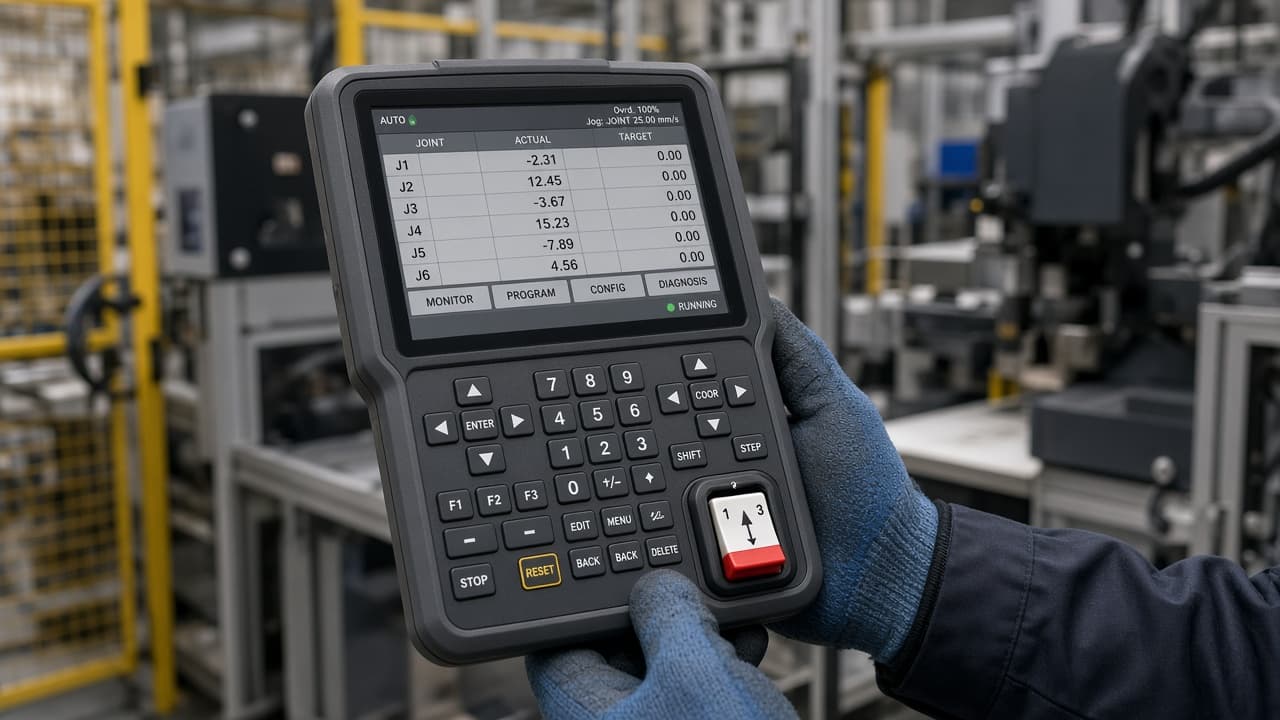
A teach pendant without a working enable device is not in teach—it is a hazard
Three-position enable switches let motion run only in the middle grip. Stuck contacts, taped buttons, and bypass jumpers turn ‘teach mode’ into full-speed risk with a human inside the cell.
28 Sept 2026
Robotics
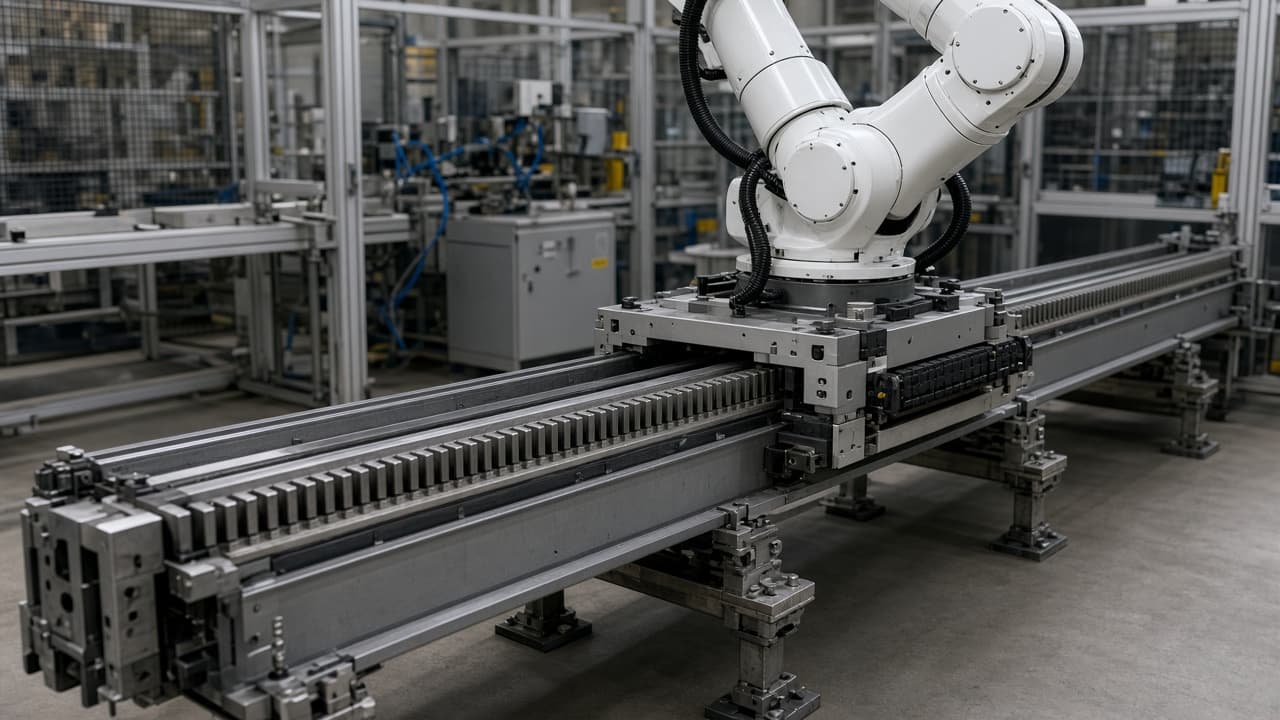
Seventh-axis rack wear shows up as pose error long before the servo alarms
Linear tracks that move the whole robot rely on rack-and-pinion mesh. Worn teeth, lost preload, and dirty grease invent following error that teams blame on the arm.
26 Sept 2026
Robotics
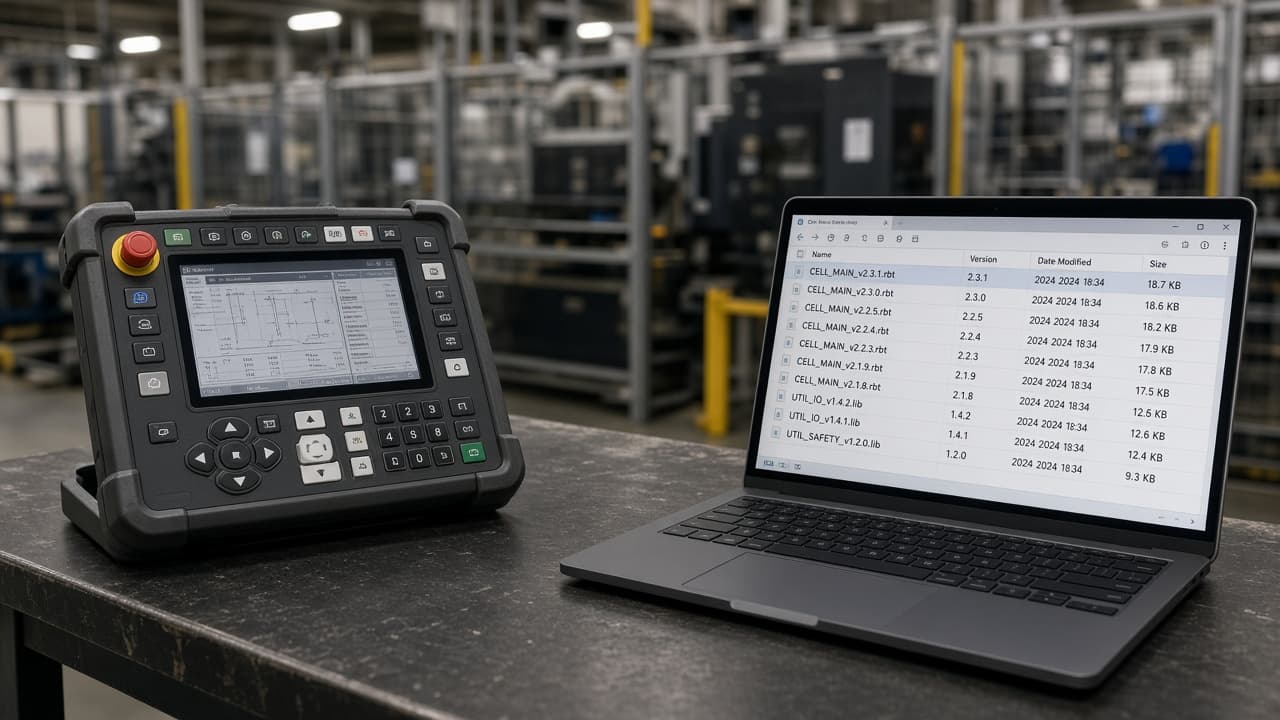
The pendant is not a version-control system—robot programs need named backups
A cell that ‘works on this shift’ can still be running an undocumented edit from three Fridays ago. Named revisions, offline masters, and restore drills beat hoping the teach pendant still holds the truth.
25 Sept 2026
Robotics
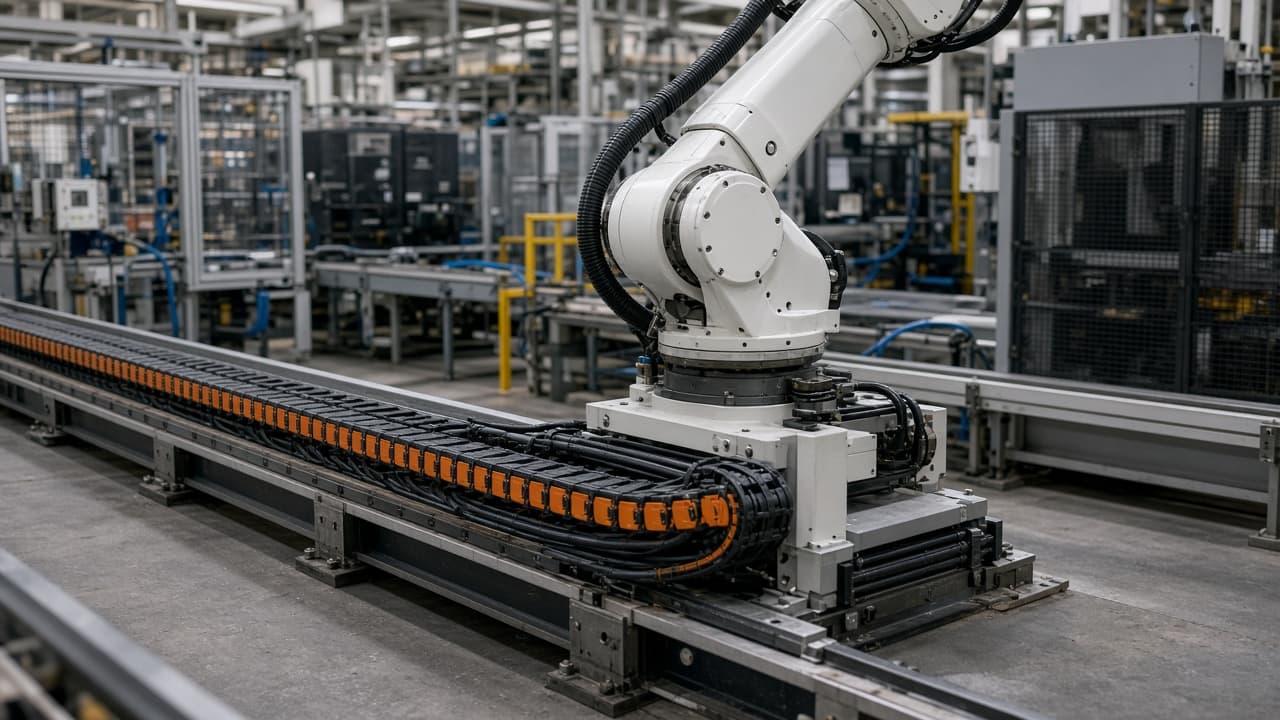
Energy-chain cables fail from bend radius and grit, not mysterious servo faults
Seventh-axis tracks and dress packs chew conductors inside the carrier long before the drive reports a coherent alarm. Link wear, fill ratio, and bend radius decide whether the next stop is a cable or a weekend of intermittent encoder noise.
22 Sept 2026
Robotics
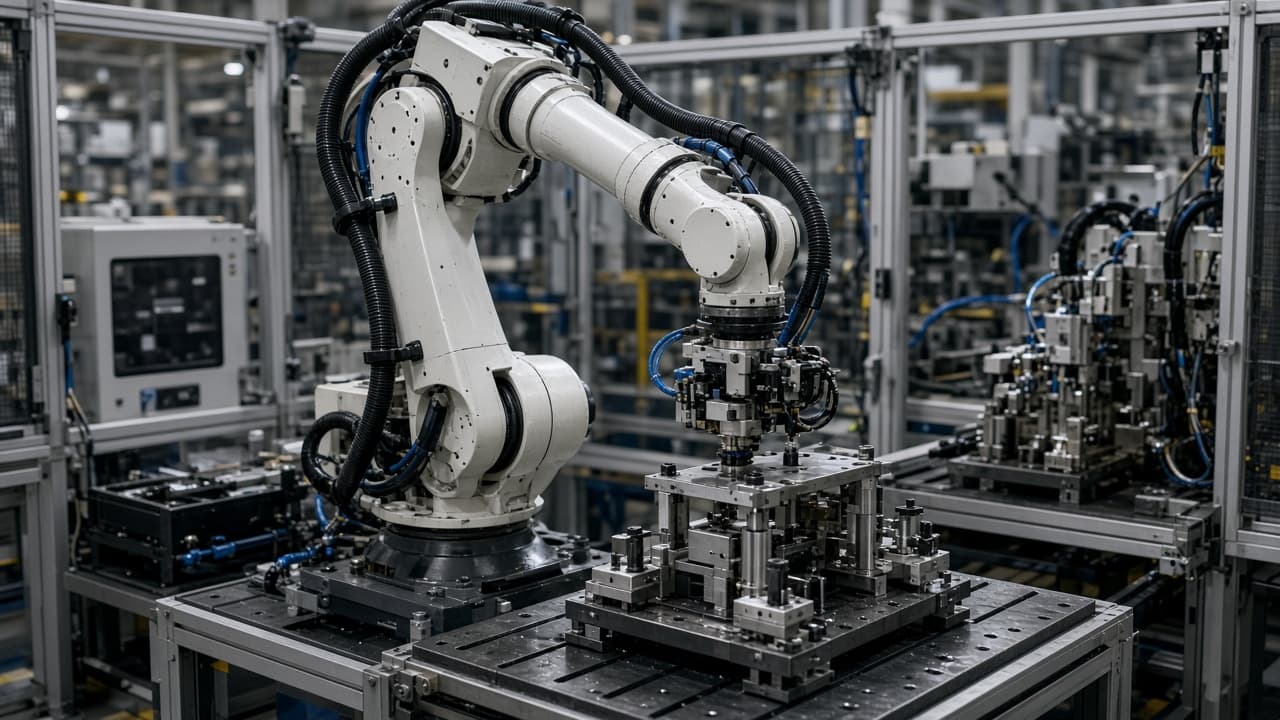
Wrist singularity is not a spooky alarm—it is a pose where the robot runs out of a clean inverse solution
Near singularity, joint rates spike, paths weave, and torque limits trip. Holding brakes and tip dress are other tickets; this short note is path design and singularity margins.
21 Sept 2026
Robotics
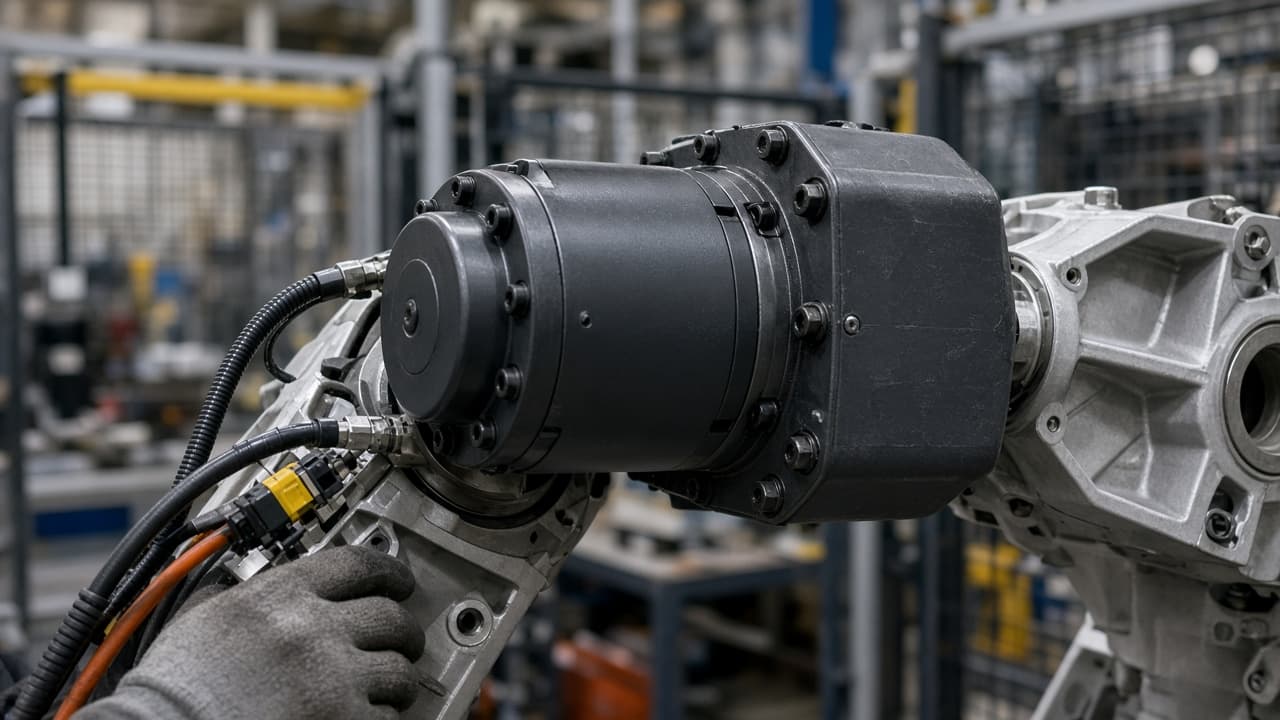
Servo holding brakes wear quietly—then the axis drops when power leaves
Holding brakes on robot axes are wear parts with a test, not eternal clamps. Tip dress and encoder batteries are other tickets; this note is brake torque, brake tests, and when to replace before gravity writes the incident report.
19 Sept 2026
Robotics
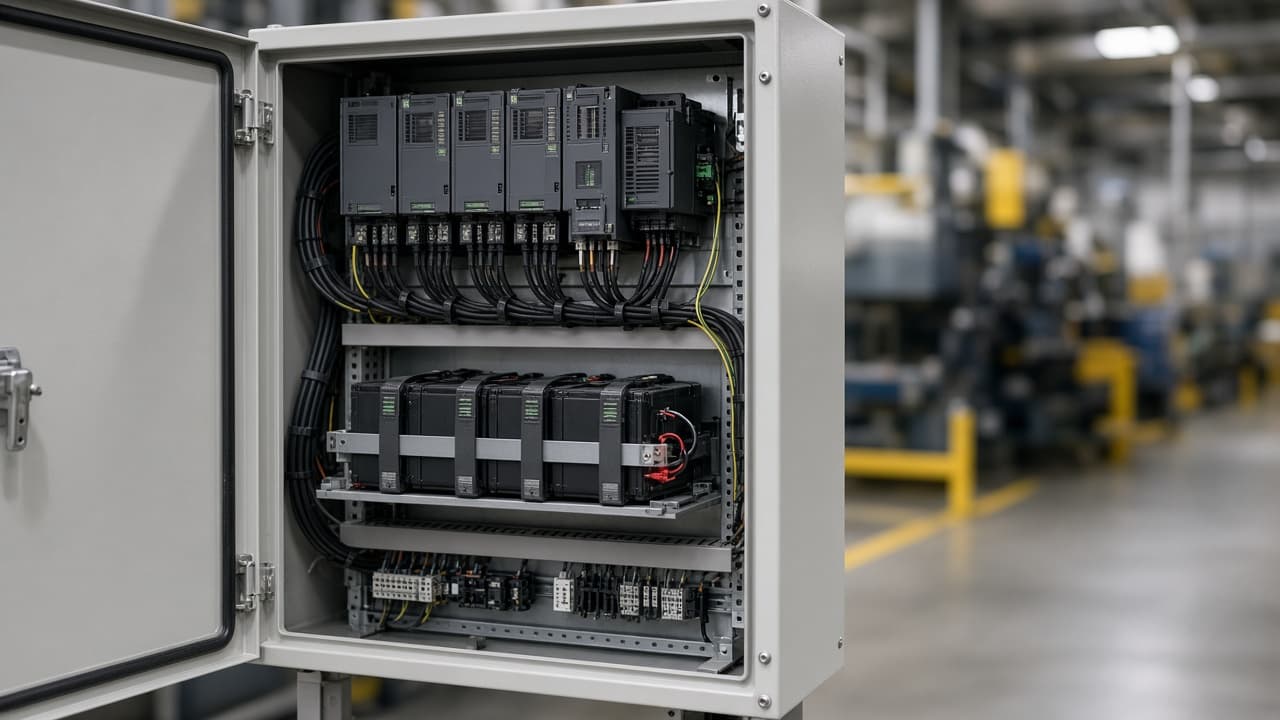
Absolute-encoder batteries die quietly—then every robot joint forgets where ‘zero’ was
When the backup cell on an absolute encoder fails, mastering is not optional paperwork. Tip dress, dress-pack cables, and hand-eye calibration cannot rescue a robot whose joint zeros moved.
19 Sept 2026
Robotics
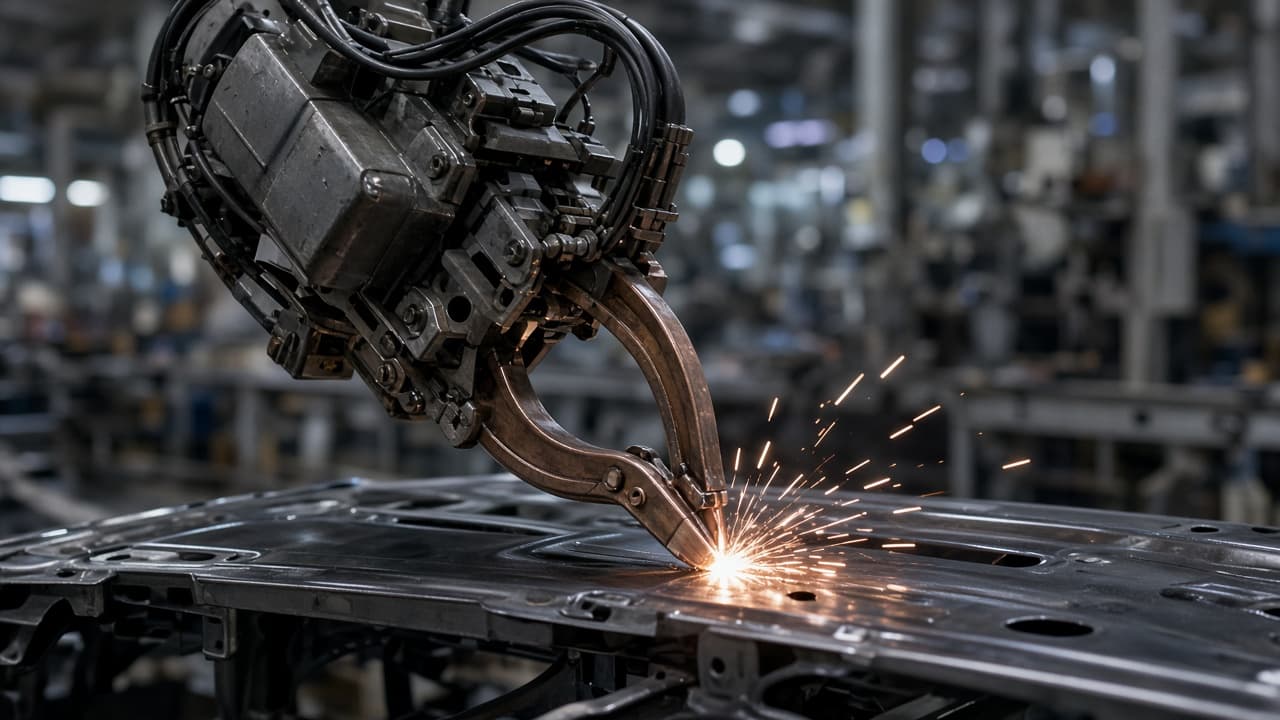
Spot-weld tip dress intervals decide nugget quality before the robot path does
Copper electrode tips mushroom, pit, and pick up zinc. Current density falls; expulsion rises. A cell that never misses a taught point still ships weak welds when the dresser is tribal knowledge.
18 Sept 2026
Robotics
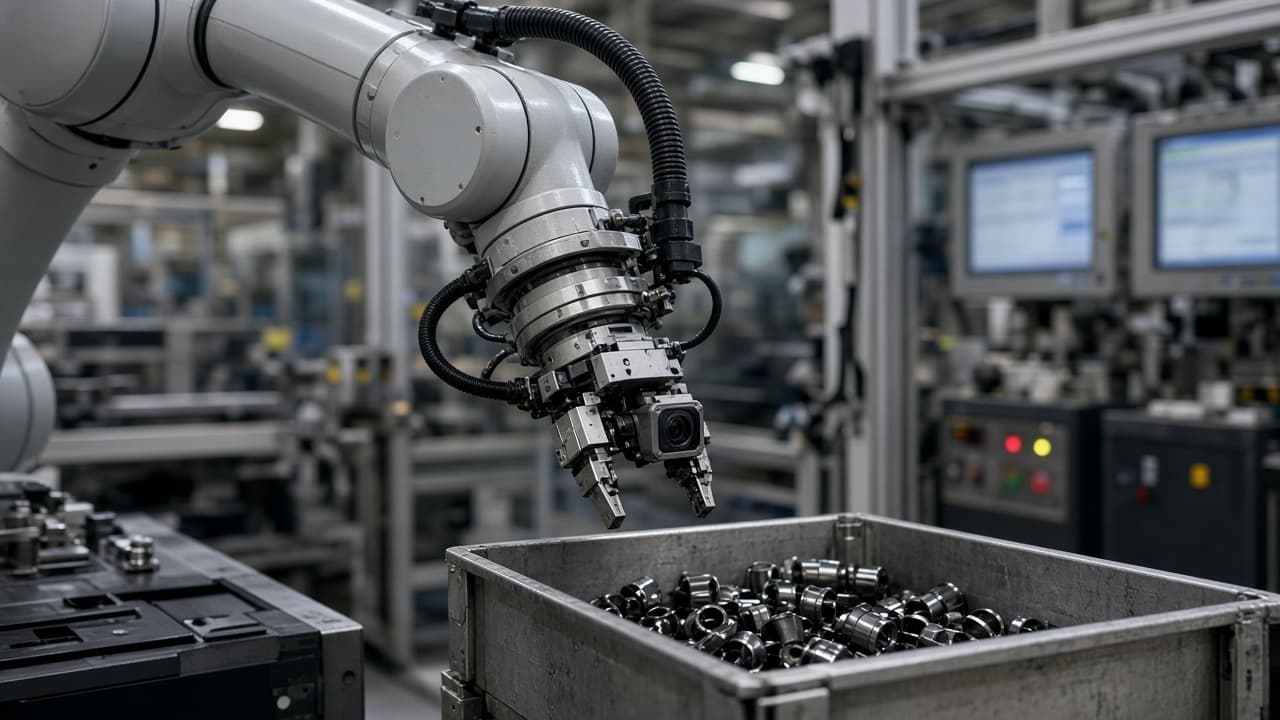
Vision-guided robots miss when hand-eye calibration is treated as a one-time pendant trick
Eye-in-hand and eye-to-hand cells map camera pixels to robot base frames. Fixture moves, tool changes, and thermal drift break that map long before the path program looks wrong.
17 Sept 2026
Robotics
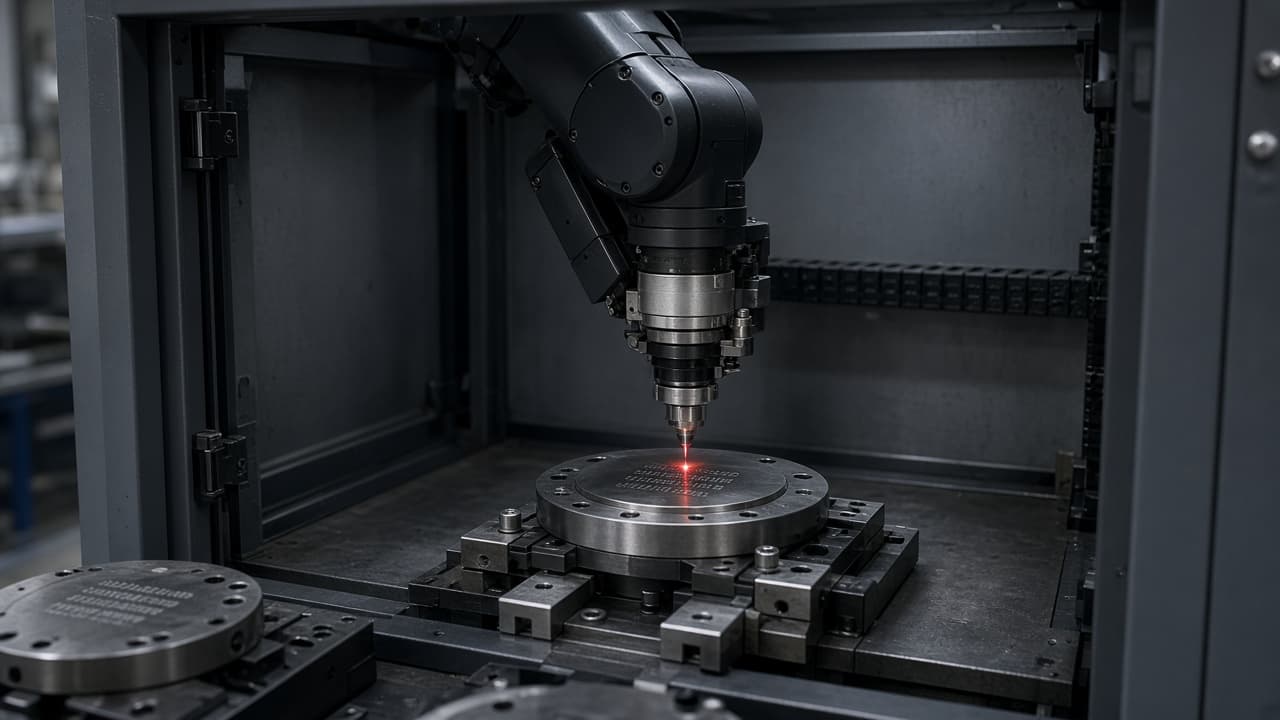
Laser part marking fails traceability when contrast and code grade are not part of the recipe
Robotic laser cells can place Data Matrix or human-readable marks at takt. Scanners still reject marks when focus, power, surface finish, or fixture drift push the code below grade—even if the robot path never changed.
15 Sept 2026
Robotics
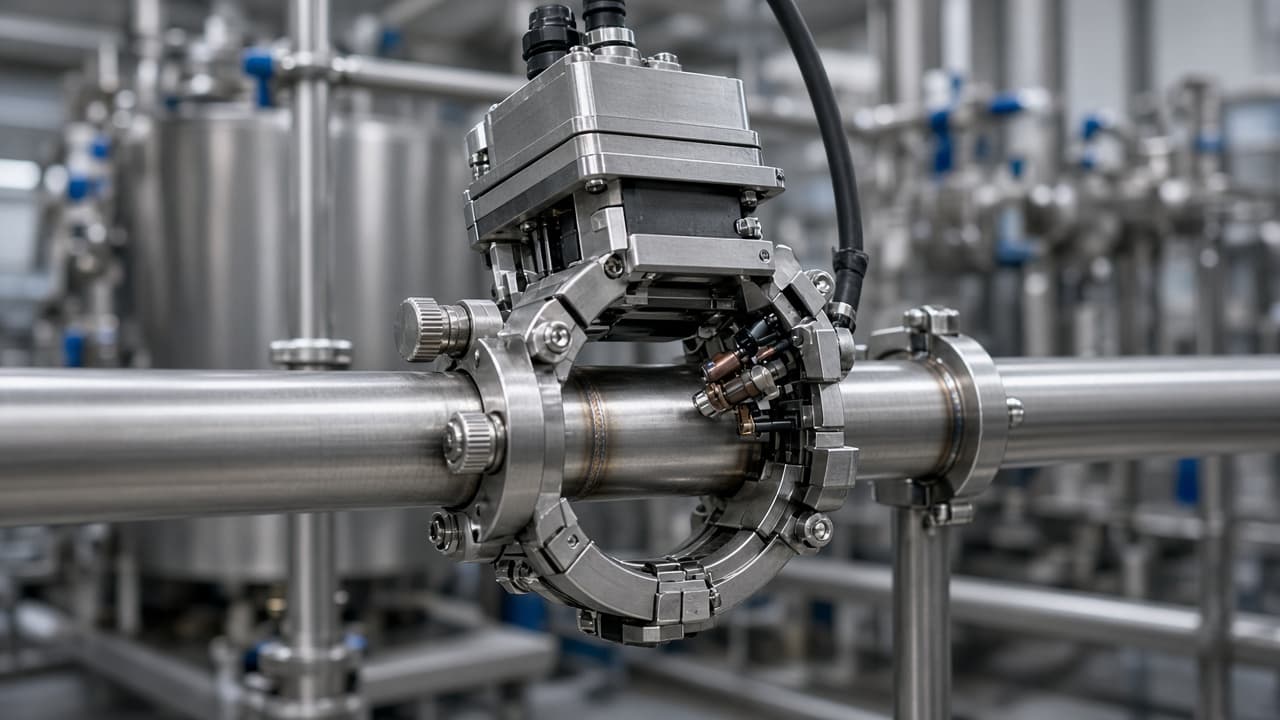
Orbital tube welding for sanitary lines depends on purge, fit-up, and coupon discipline
Automated orbital heads repeat travel speed and arc length well. Oxidation, lack of fusion, and mismatched ID beads still appear when purge gas, joint prep, and parameter coupons are treated as optional.
14 Sept 2026

Robotics
Heat staking holds plastic assemblies only when tip temperature and dwell stay inside a narrow window
Robotic heat stake cells look simple: heat, press, cool. Boss melt, sink marks, and weak stakes show up when temperature, dwell, and alignment drift—and the robot path still looks perfect.
11 Sept 2026
Robotics
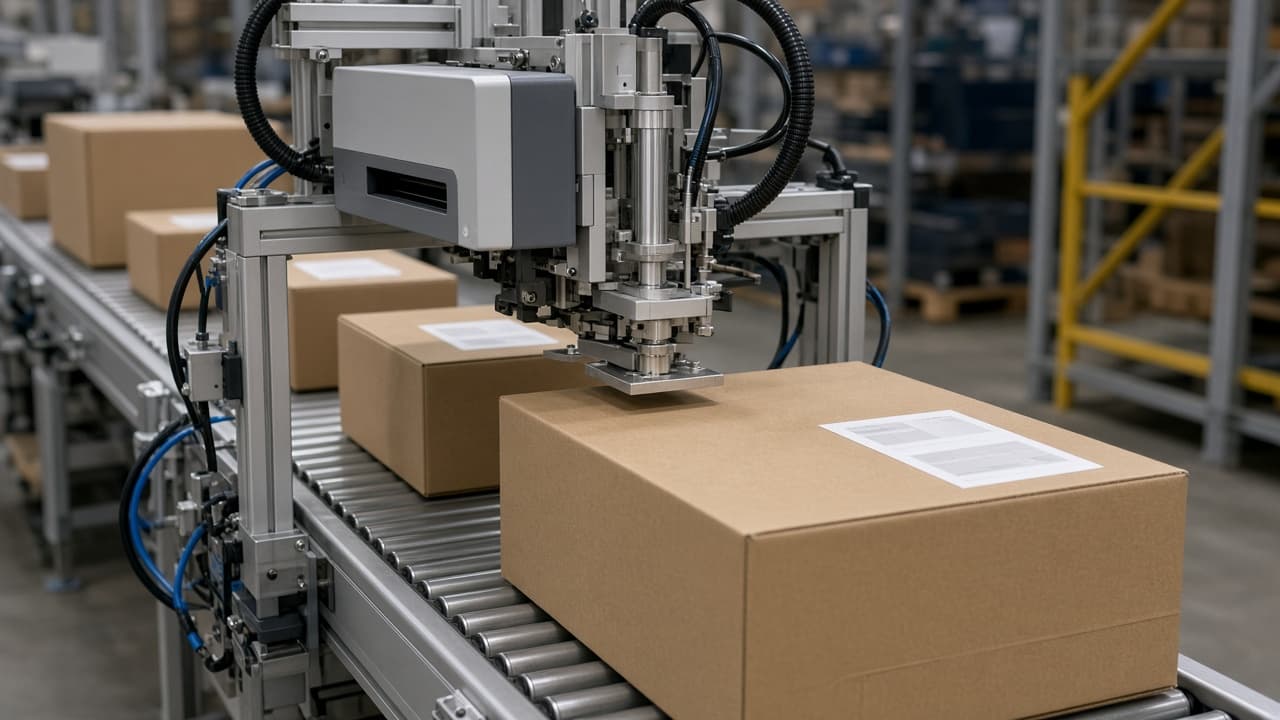
Print-and-apply labelers lose scan rates when the printhead and applicator timing drift
Unreadable barcodes on cartons are rarely a ‘warehouse Wi-Fi’ problem first. Ribbon wrinkle, printhead wear, peel-plate gap, and apply timing decide whether the label that left the printer is still scannable at the dock.
10 Sept 2026
Robotics
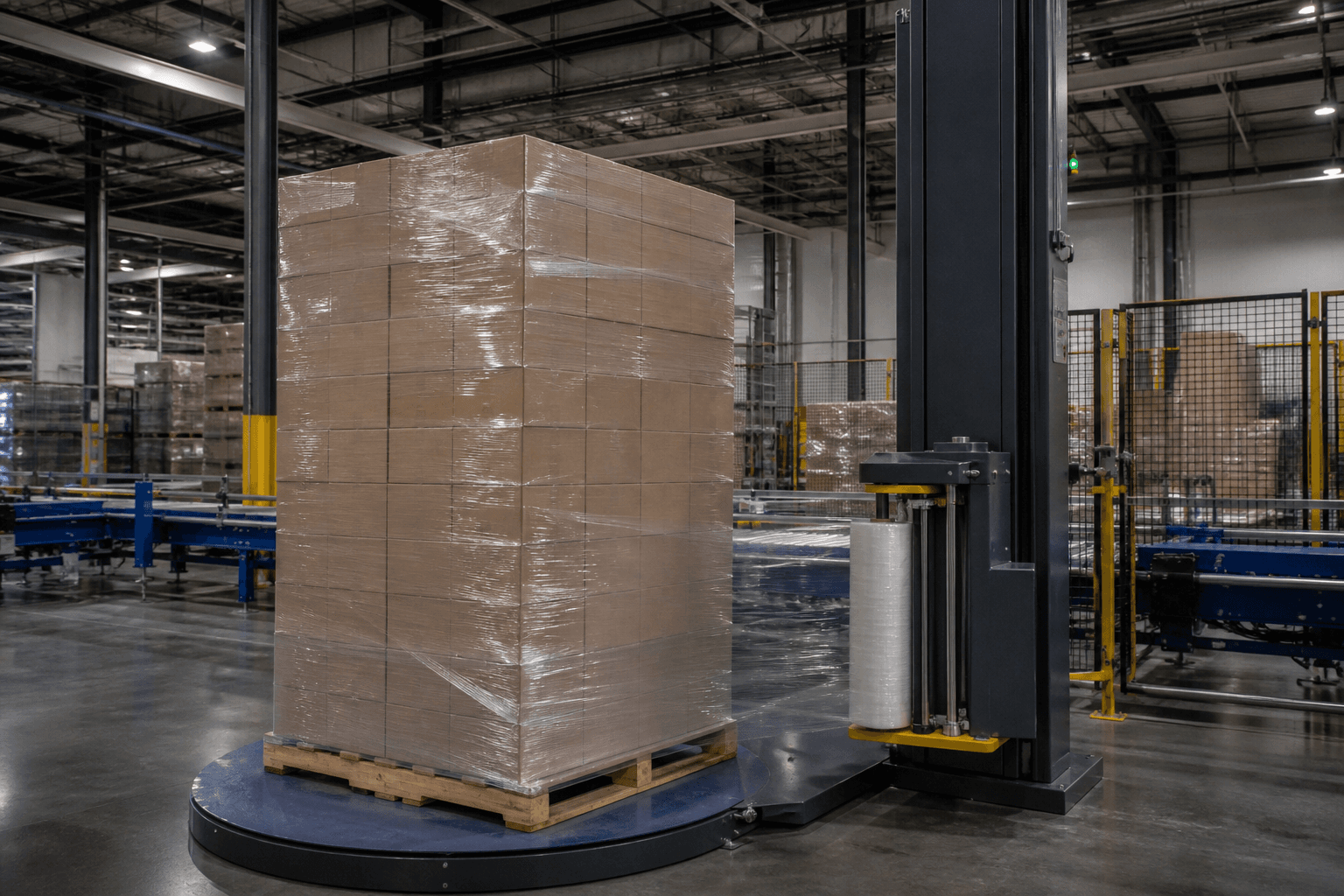
Seven truths a stretch wrapper must satisfy before the pallet is ‘shippable’
Pre-stretch percentage, containment force, and film breaks decide whether a perfect robot stack survives the first dock plate. A green cycle count is not a unit-load integrity certificate.
08 Sept 2026
Robotics
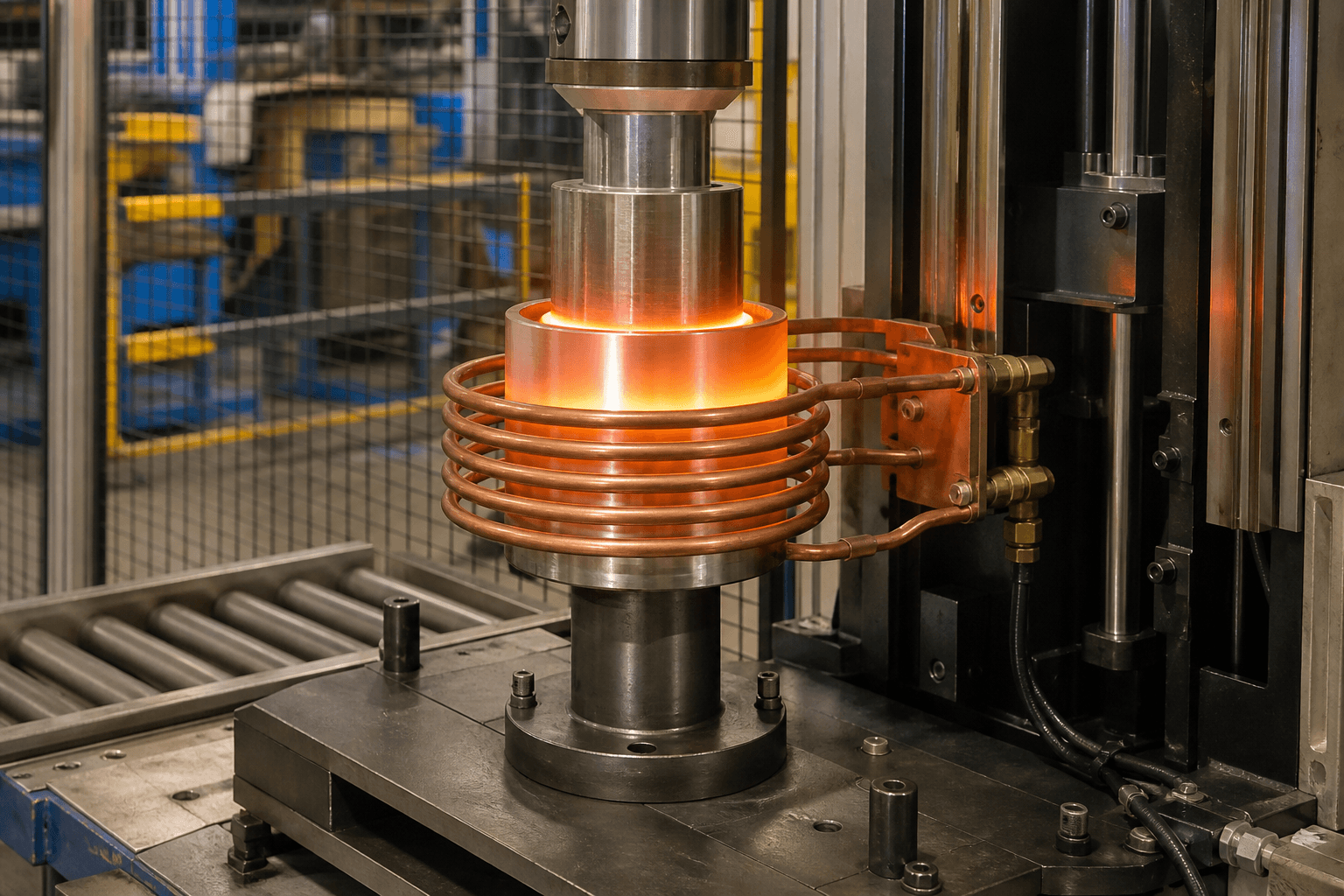
Shrink-fit assembly fails when heat, clearance, and hold time are hopes—not a controlled interference
Induction overshoot, cold shafts, and rushed seating freeze galling and wrong final positions. A green coil amp reading does not prove the hub expanded enough to go home clean.
03 Sept 2026
Robotics
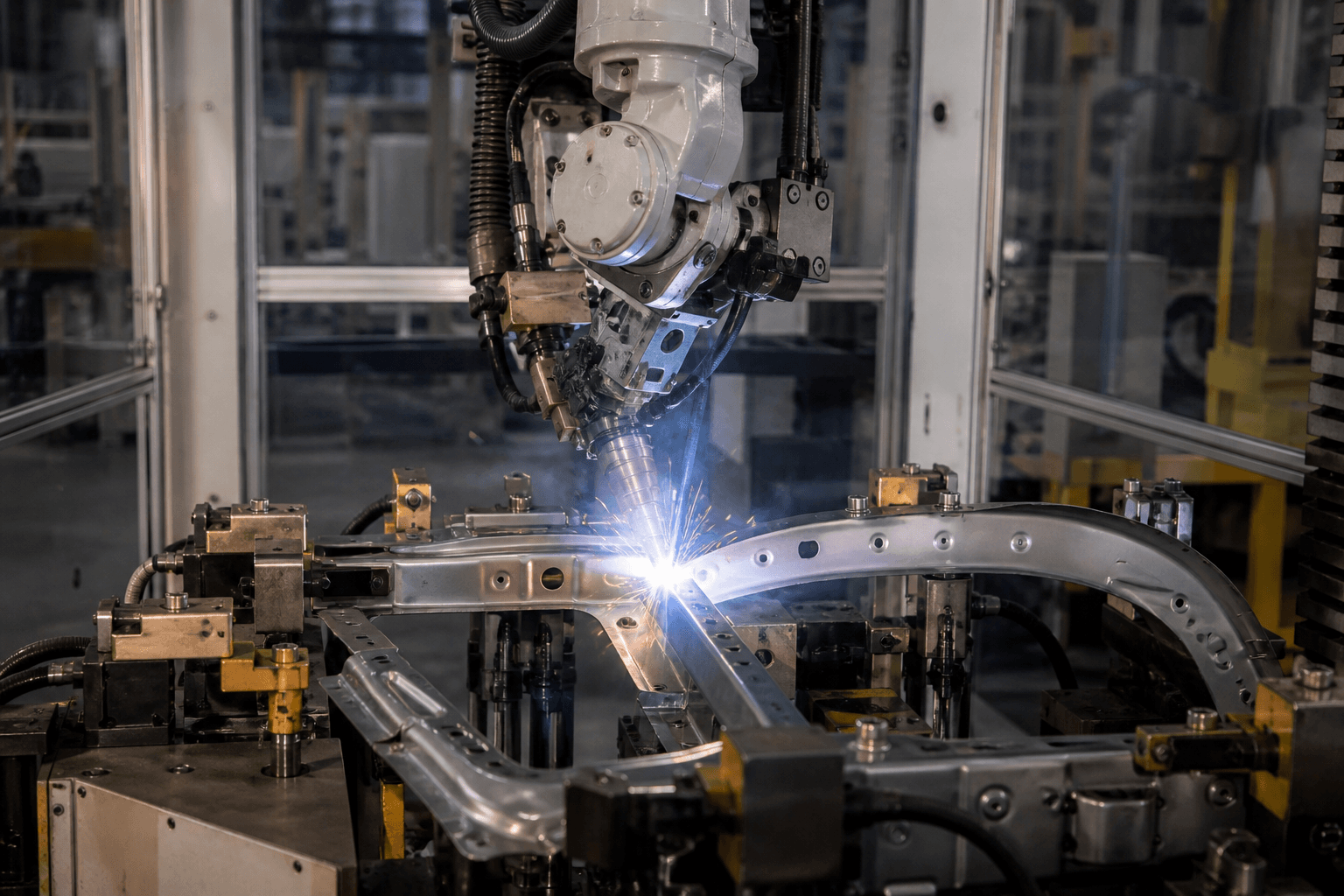
Laser weld keyholes collapse when power, focus, and gap stop agreeing—not when the robot path looks fine
Incomplete penetration and porosity follow unstable vapor cavities, not mysterious filler. A green TCP sheet does not prove the keyhole stayed open through the joint.
02 Sept 2026
Robotics
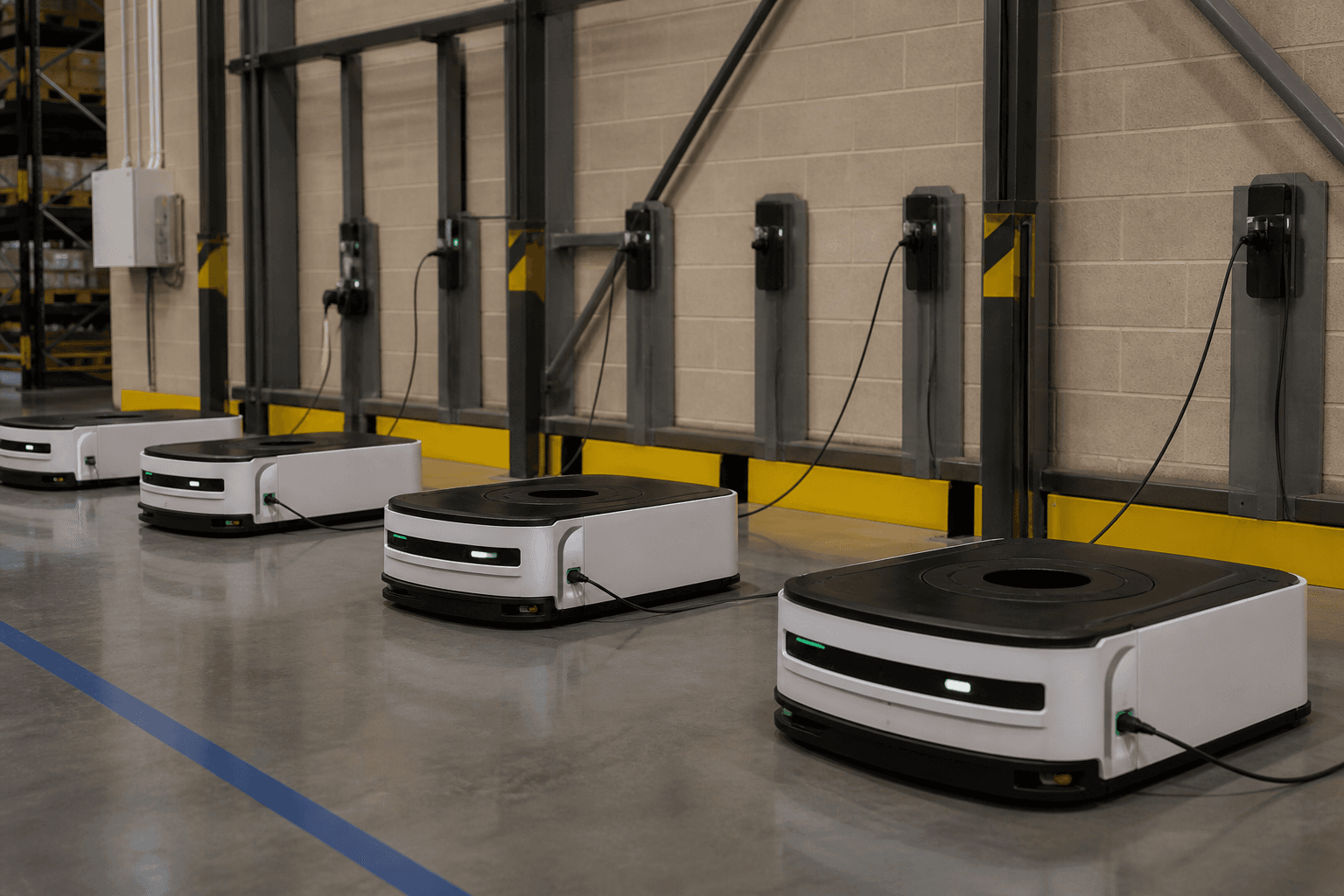
An AGV fleet dies in the aisles when opportunity charging is a hope, not a policy
State-of-charge floors, charger reservation, and mission preemption decide whether logistics keeps takt or borrows forklifts. A green fleet map does not prove batteries will last the night shift.
27 Aug 2026
Robotics
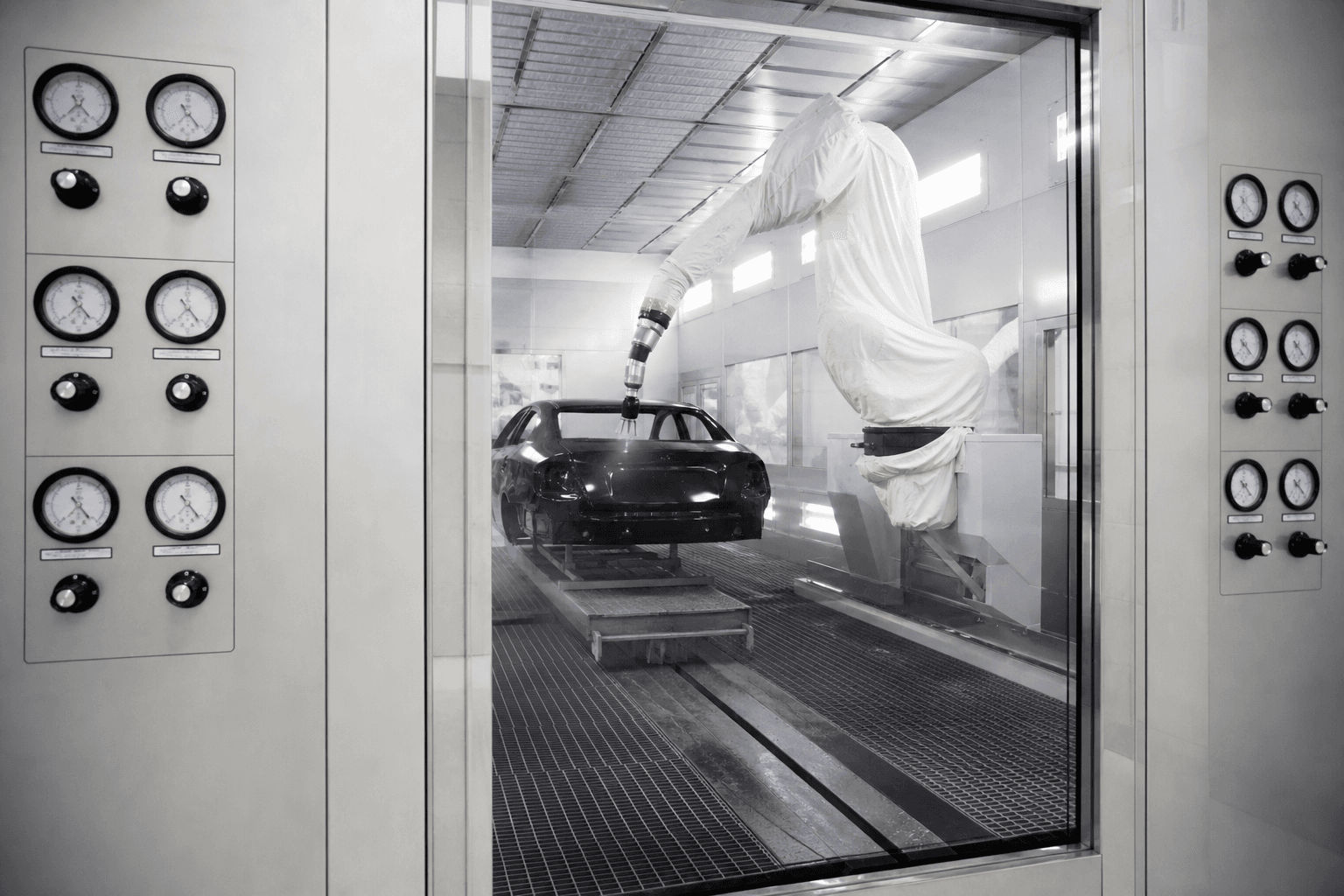
Paint robots own atomization; booth balance owns whether the film lands on the part
Supply/exhaust ΔP, filter load, and downdraft uniformity decide whether spray stays in the booth envelope—or drafts pull overspray into the wrong zone and invent orange peel. A perfect TCP does not restore a booth that is starving for make-up air.
26 Aug 2026
Robotics
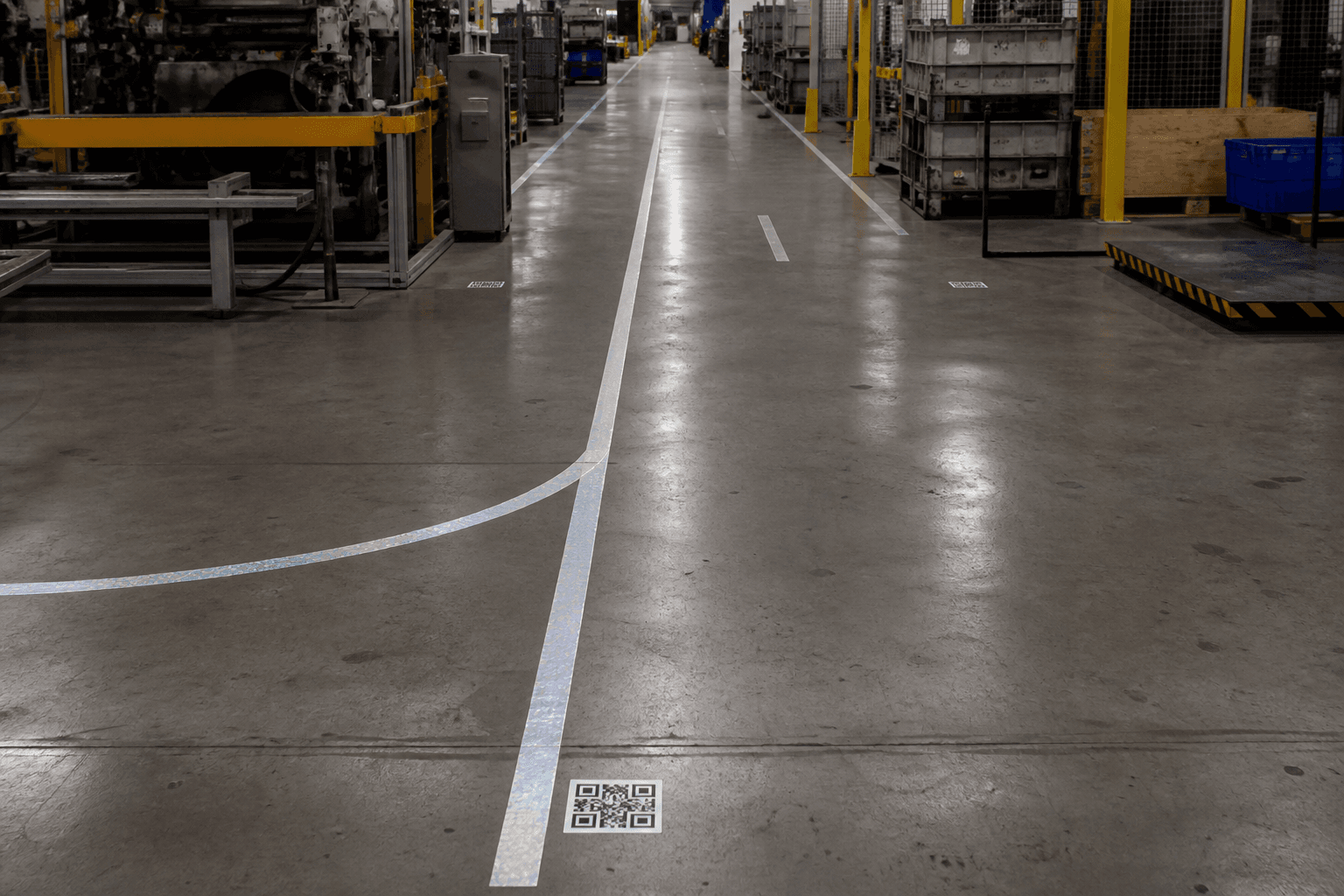
AMR localization fails on scuffed reflector tape long before it fails on lidar
Line tape, QR islands, and floor reflectivity decide whether fleets hold lane pose—or drift, snap, and stop clean while the dashboard shows healthy SLAM. A green Wi-Fi chart does not certify the aisle someone power-washed gray.
26 Aug 2026
Robotics
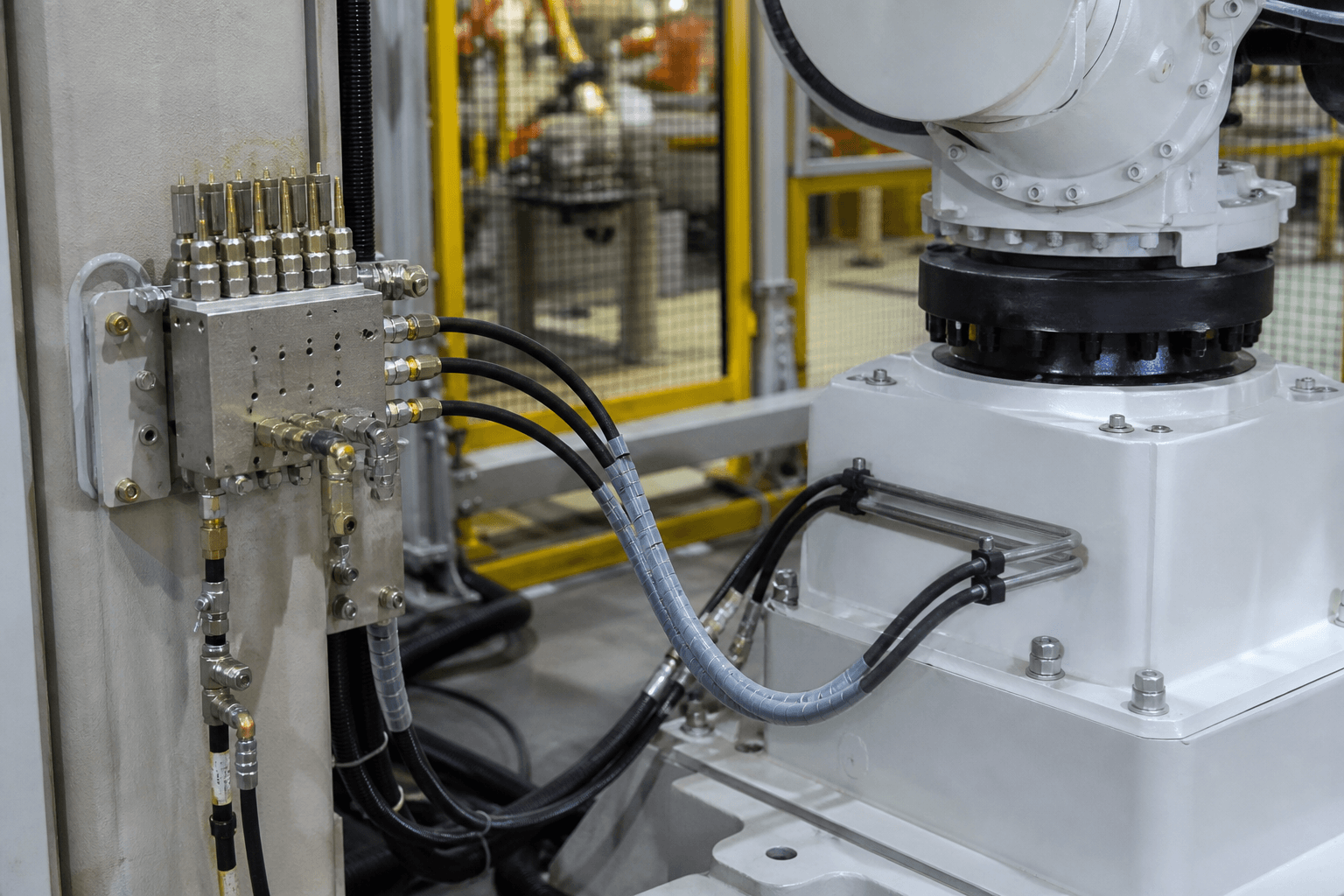
Robot axes starve when progressive grease dividers jam and the pump still cycles
Divider-block pistons, blocked outlets, and grease grade mismatches decide whether every lube point gets a shot—or only the easy branches while a wrist runs dry. A green pump runtime hourmeter does not certify the port that stopped moving last month.
25 Aug 2026
Robotics
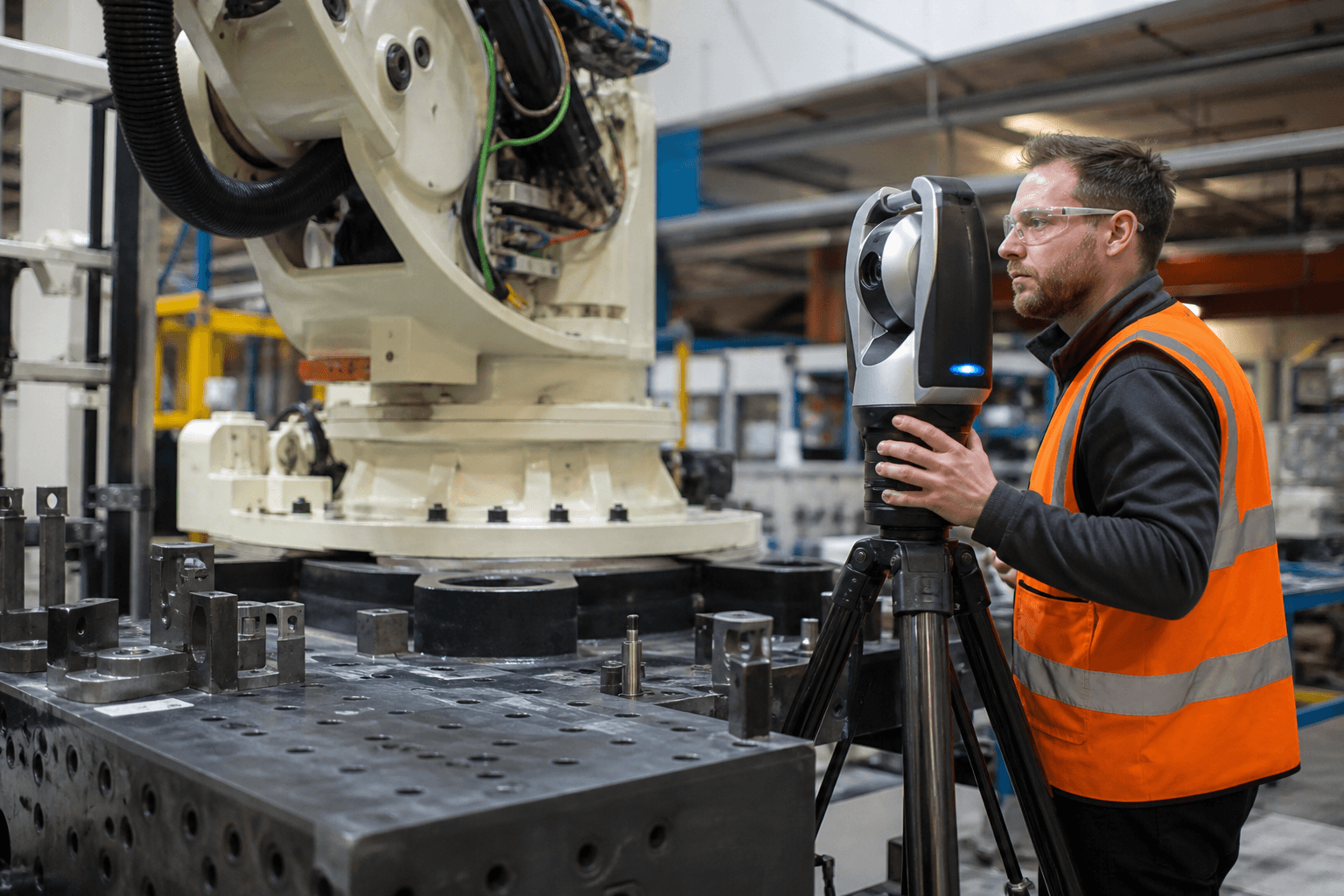
Large robot cells lose absolute accuracy when the base moves and the tracker stays on the shelf
Foundation settlement, fixture drift, and a laser-tracker survey that was never repeated decide whether taught points still meet the part—or only meet the memory of commissioning. A green mastering routine does not restore a pedestal that sank three millimeters.
24 Aug 2026
Robotics
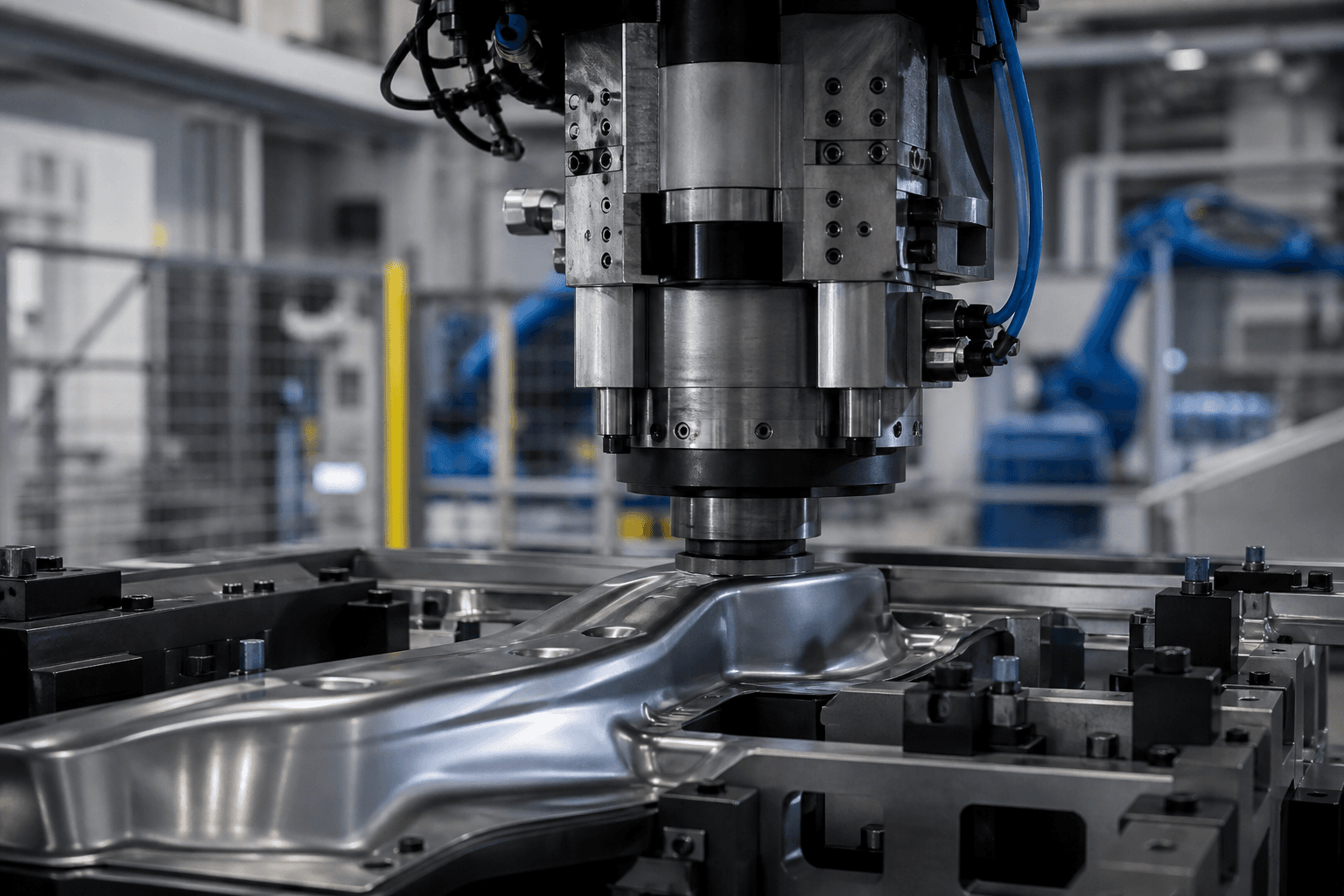
Clinch cells fail on force–distance truth and die wear, not on robot pose polish
Button geometry, sheet stack-up, and the servo-press curve decide whether a clinch is a locked interlock—or a shallow set that peels in transit. A perfect TCP does not restore a mushroomed punch or a nest that springs.
22 Aug 2026
Robotics
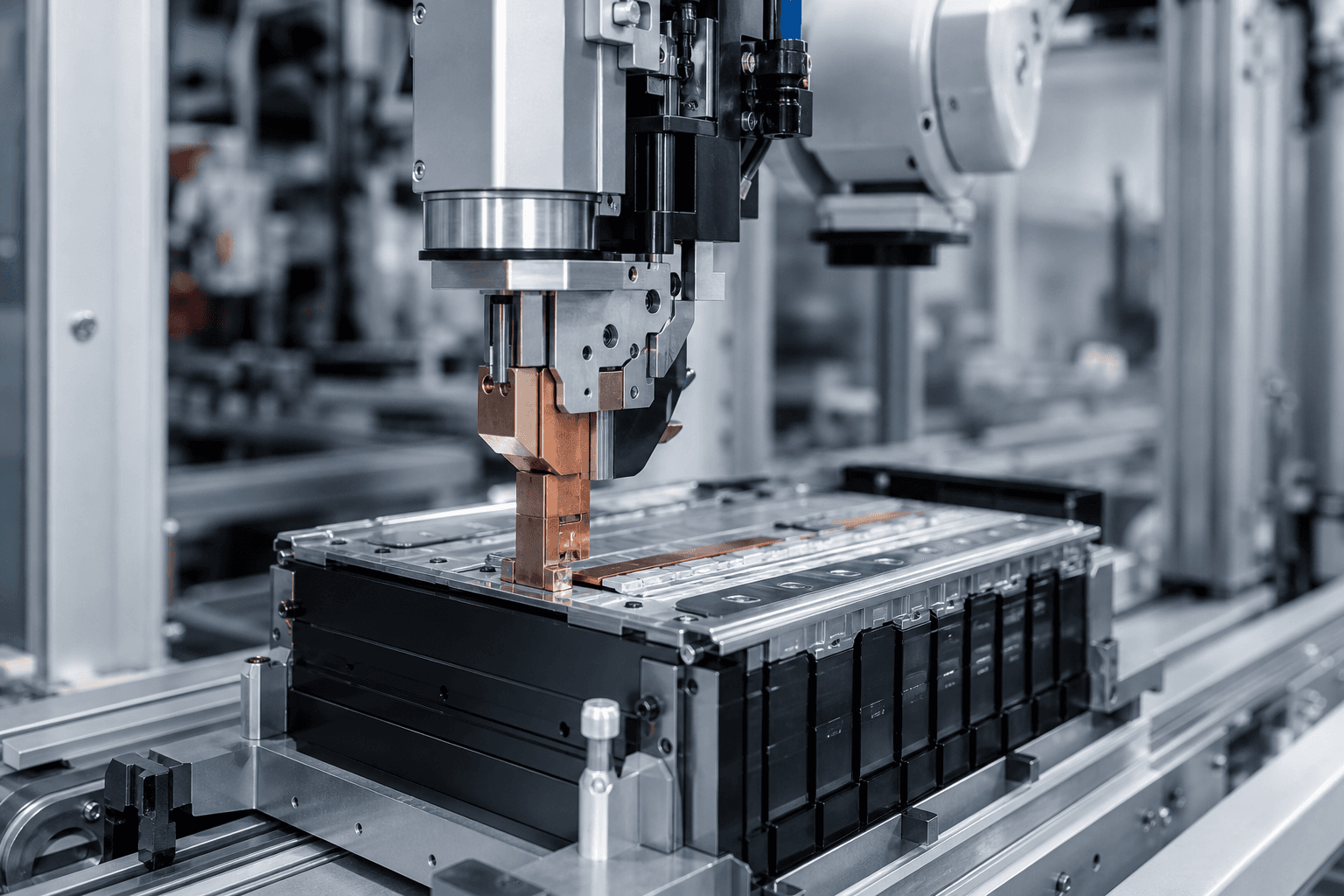
Ultrasonic tab welds fail on horn wear and clamp truth, not on robot path polish
Sonotrode face geometry, amplitude, and hold-down force decide whether foil-to-bus joints are solid-state bonds—or cold welds that pass a tug test once and open in the pack. A perfect TCP does not restore a mushroomed horn.
21 Aug 2026
Robotics
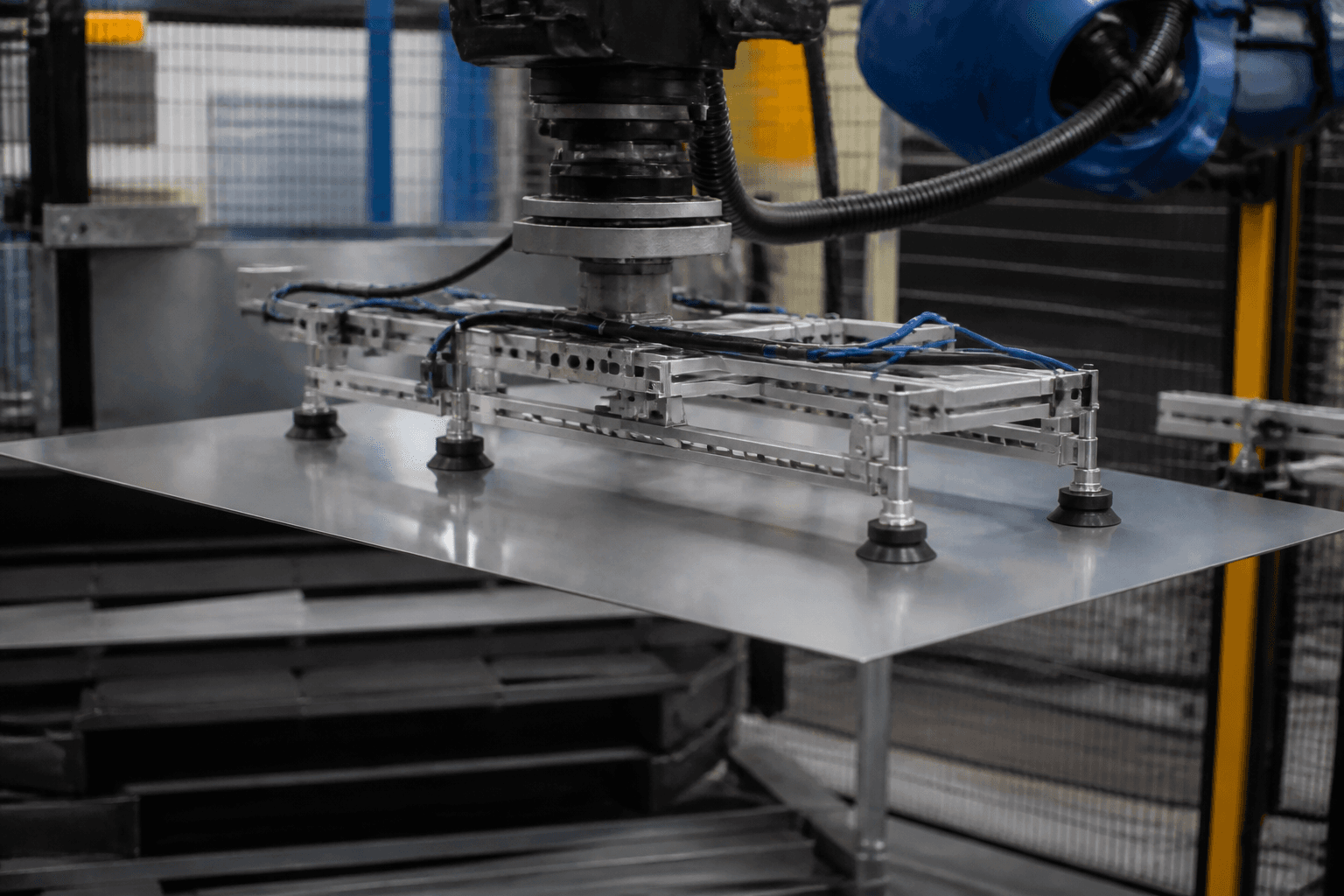
Vacuum EOAT drops parts when cups are treated as free rubber forever
Seal lip wear, cracked bellows, and vacuum level at the cup—not at the pump gauge—decide grasp reliability. A robot that never misses in the teach pose still drops at full speed when one cup is a silent leaker.
21 Aug 2026
Robotics
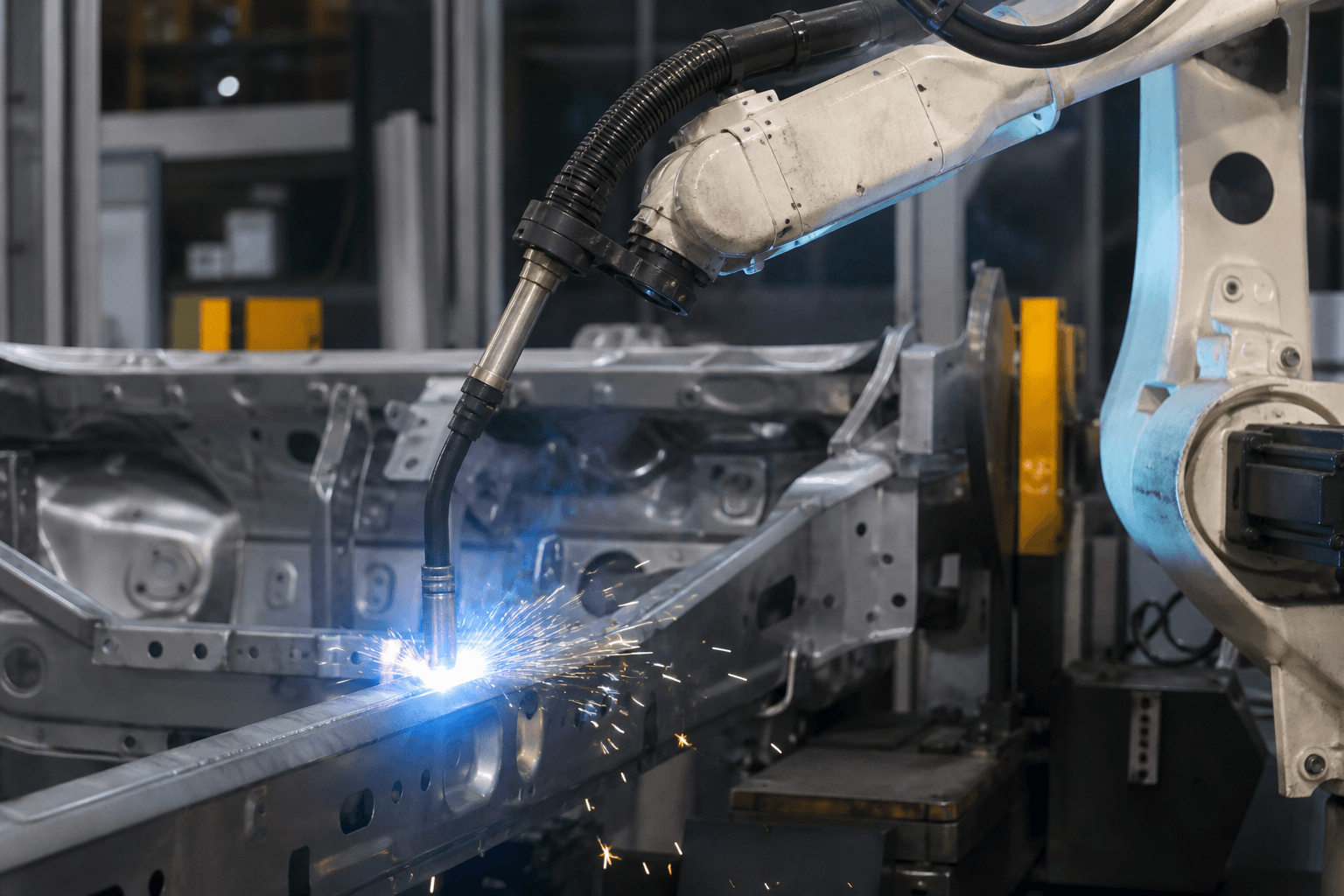
MIG robot welds wander when the liner and stick-out are treated as torch folklore
Contact-tip bore, liner debris, and unchanging stick-out set current density at the arc—not only the synergic schedule. A path that is perfect still porosity-maps when the wire casts and the tip is oval.
19 Aug 2026
Robotics
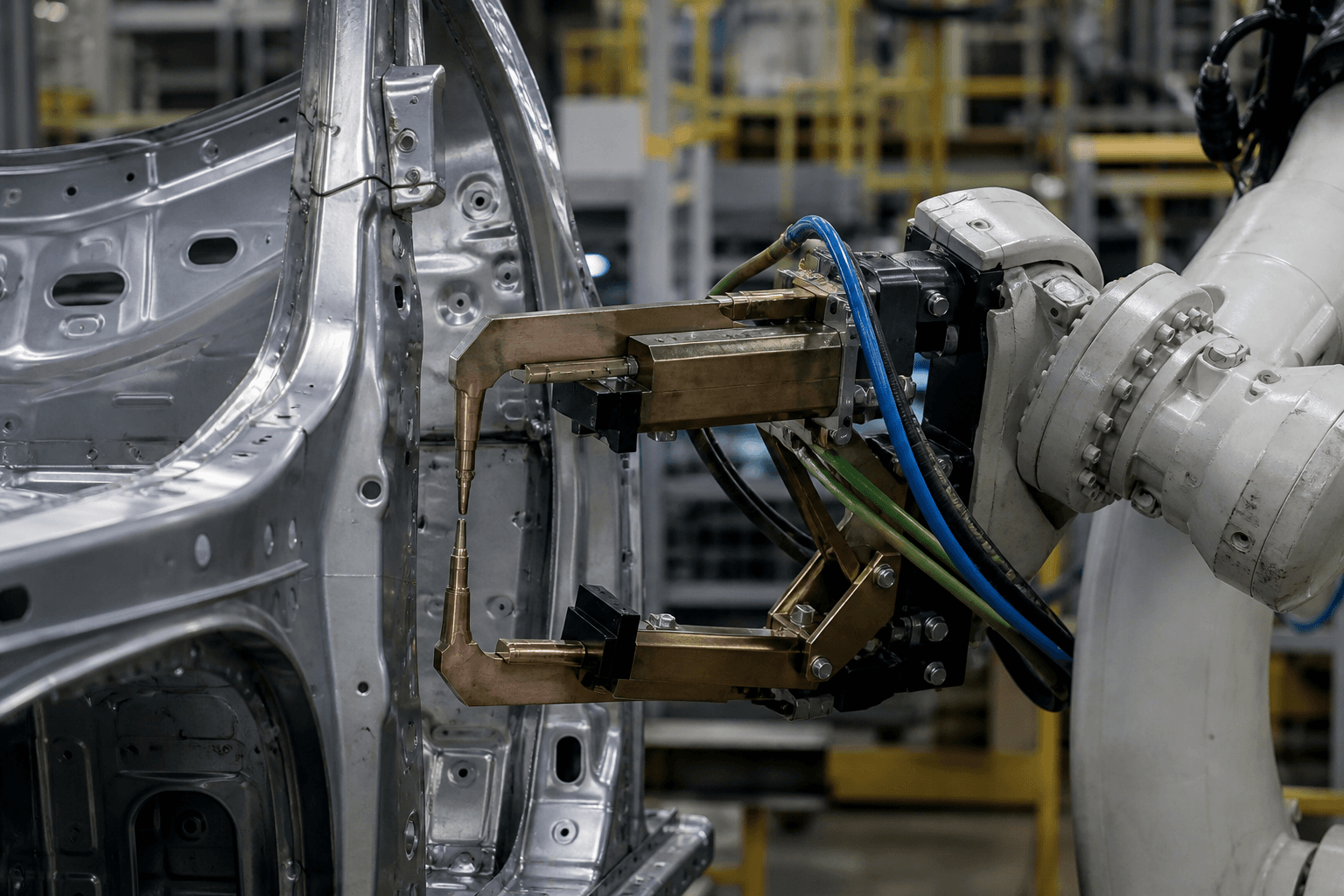
Spot-weld cells miss nugget size when caps and water are treated as consumable folklore
Electrode cap geometry, dress interval, and gun cooling flow decide resistance-weld heat—not only the schedule on the timer. A robot that repeats the path still makes cold welds when the cap face mushrooms and the water jacket runs hot.
19 Aug 2026
Robotics
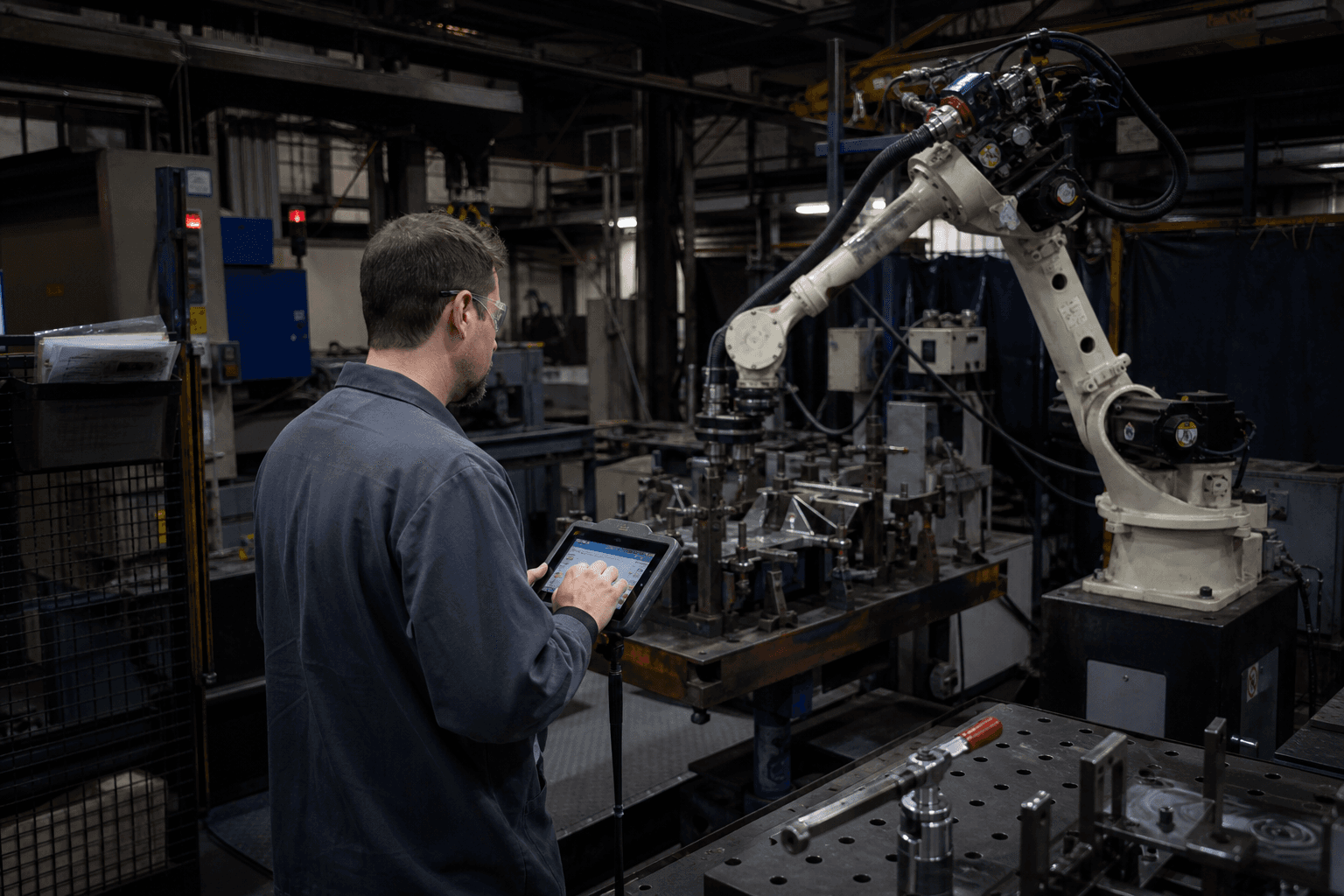
Robot re-commissioning after a repair is not a repeat of the original FAT
Replacing a servo drive, a joint bearing, or a complete arm assembly resets more than the failed component—it resets the calibration state, the payload validation, and in some cases the safety-rated function. The verification steps that matter are not on the OEM repair sheet.
18 Aug 2026
Robotics
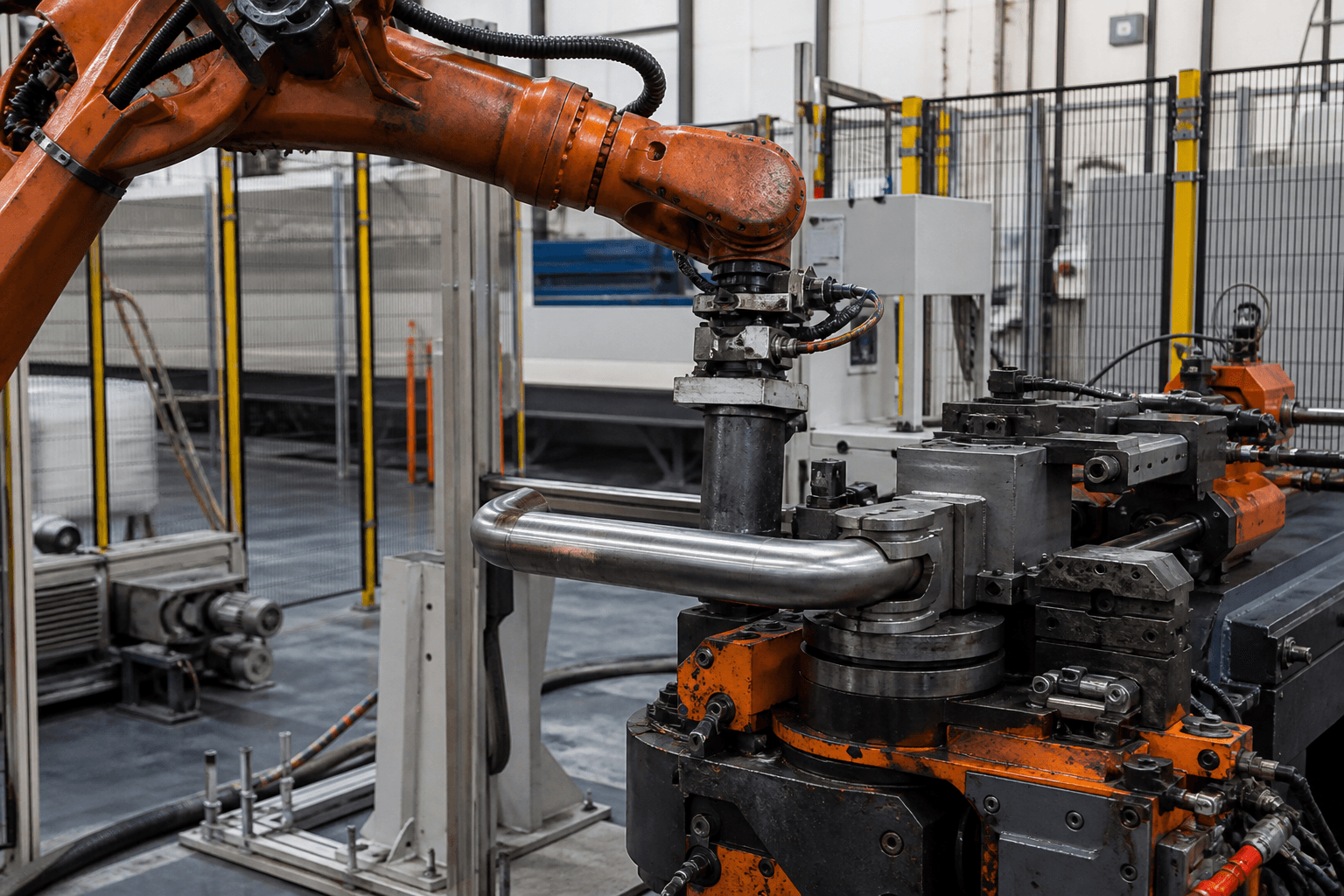
Robotic tube bending cells fail on springback and clamp truth, not on path polish
Die geometry, clamp marks, springback compensation, and in-process measurement decide whether bent tube cells hold tolerance—metal fab robotics, not press-brake flange springback alone, not FSW tool-wear essays, not CNC machine-tending volume plays.
13 Aug 2026
Robotics
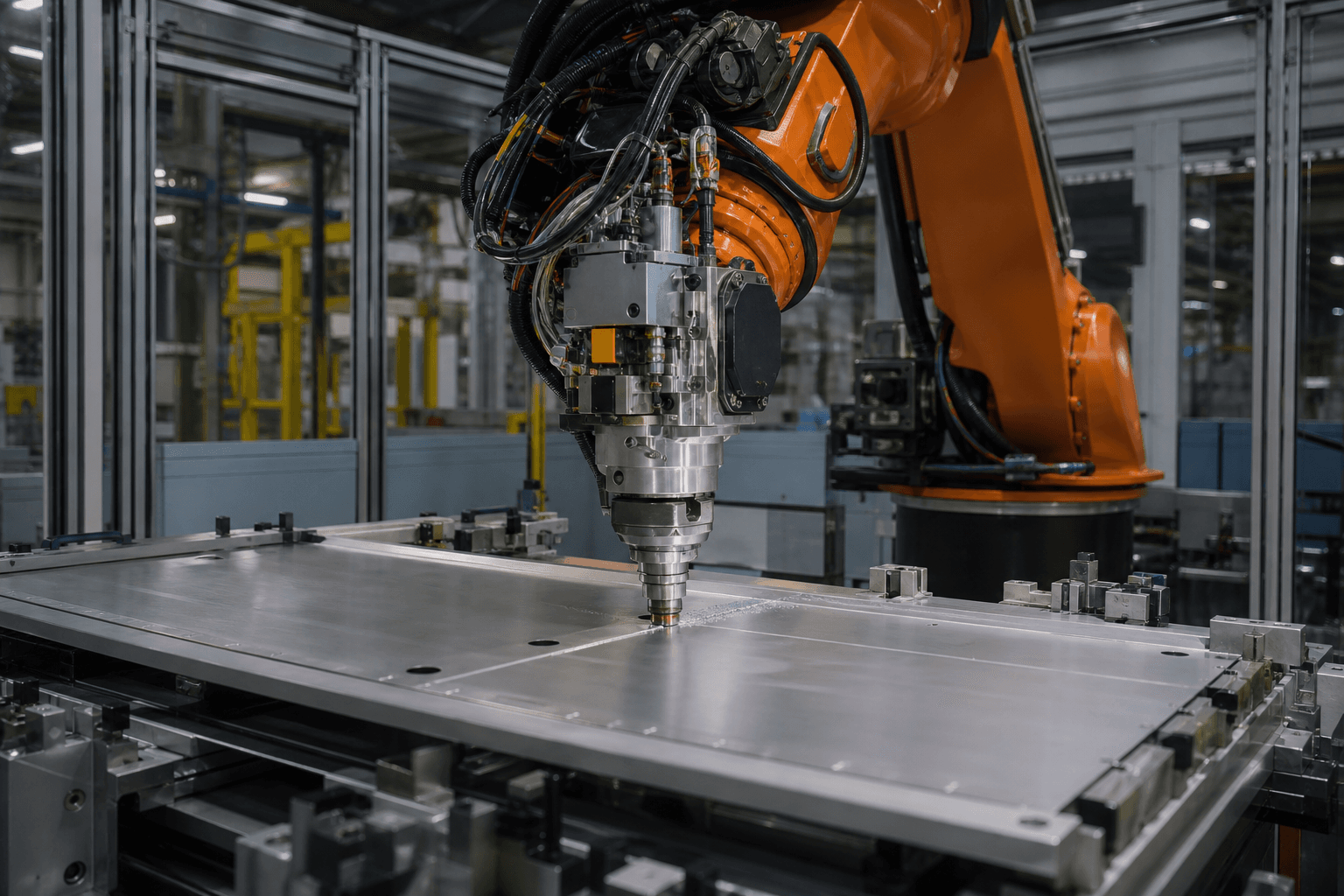
Friction stir welding cells fail on tool wear and fixturing, not on path polish
Pin life, forge force, and joint prep decide whether solid-state welds hold—robotics for joining, not arc adaptive welding alone, not laser EV weld monitors alone, not selective solder electronics cells.
11 Aug 2026
Robotics
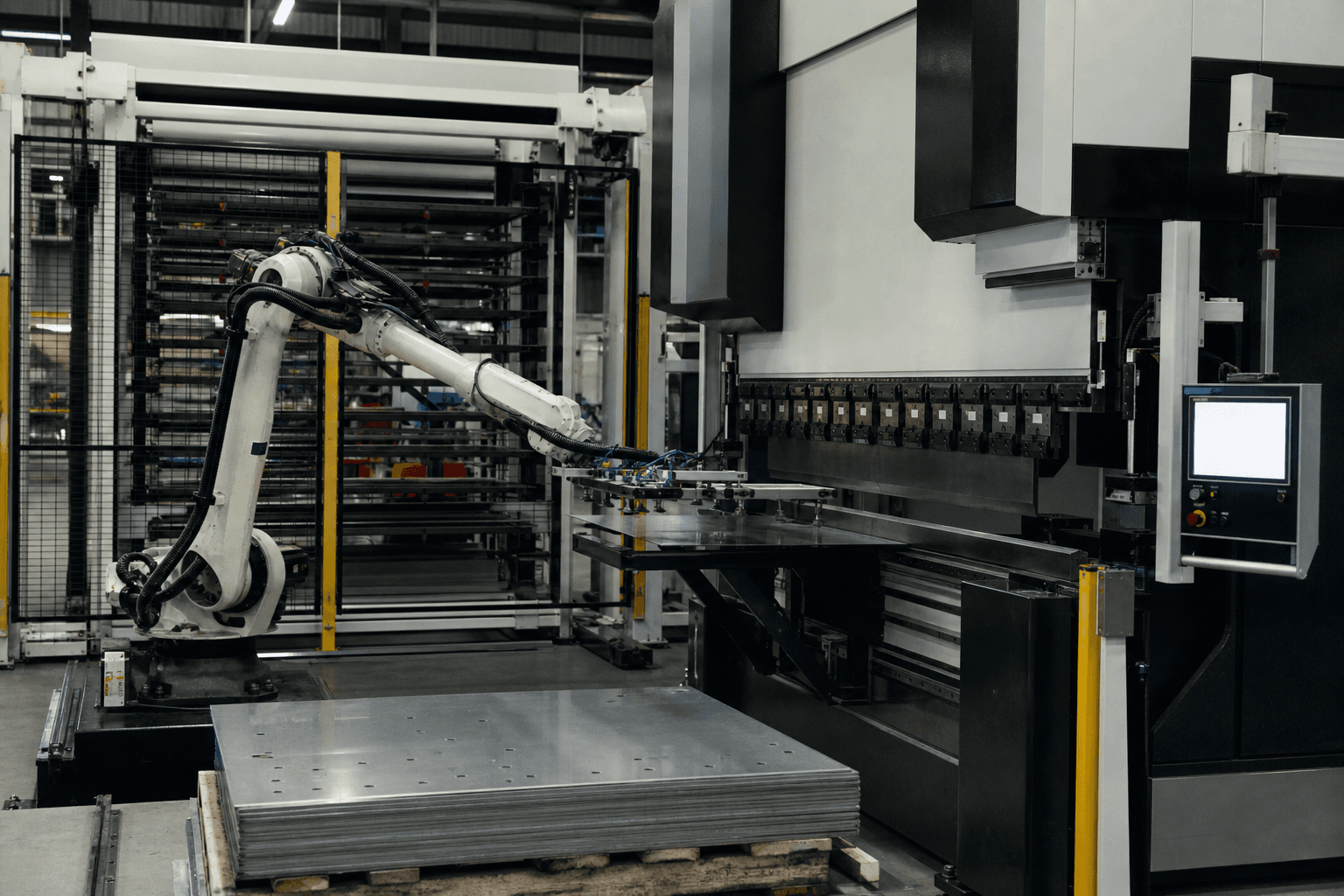
Press-brake tending robots fail on flange springback, not on pick success
Gauge strategies, bend sequence, and in-cell measurement decide whether sheet cells ship—robotics for fabrication, not CNC machine-tending islands alone, not palletizing docks, not selective solder electronics cells.
10 Aug 2026
Robotics
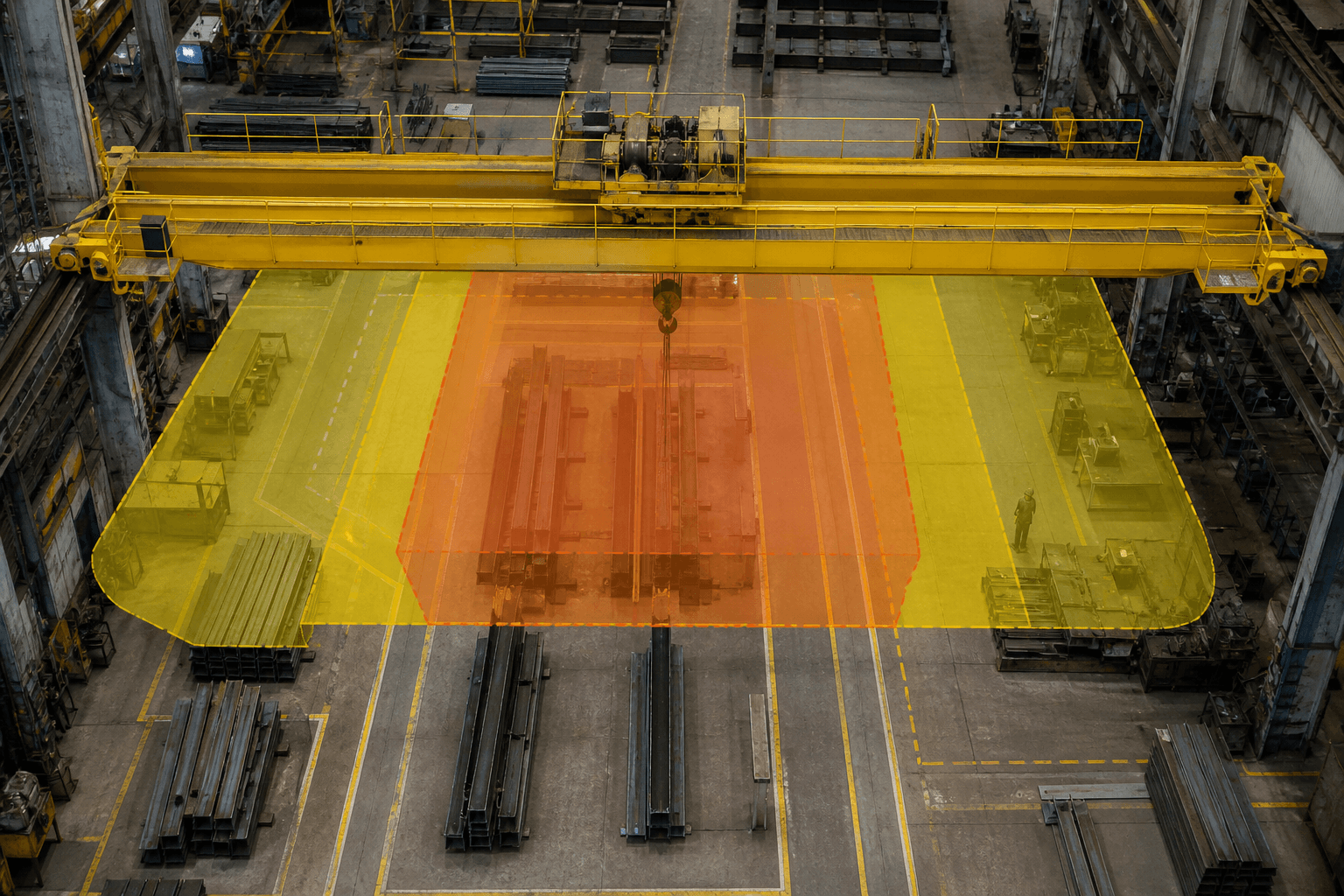
Overhead crane anti-collision zones fail as layout lies, not as sensor stickers
Zone maps, sensor proof tests, and mixed human traffic decide whether gantry bays scale safely—robotics and heavy handling control, not AMR floor intersections alone, not cobot ISO essays alone, not humanoid pilot decks.
08 Aug 2026

Robotics
Selective soldering cells fail on thermal recipes, not on robot reach
Nozzle path, preheat, and pin-through thermal mass decide mixed-technology board yield—robotics for electronics assembly, not wave-solder nostalgia, not screwdriving torque cells, not adhesive dispense demos.
07 Aug 2026
Robotics
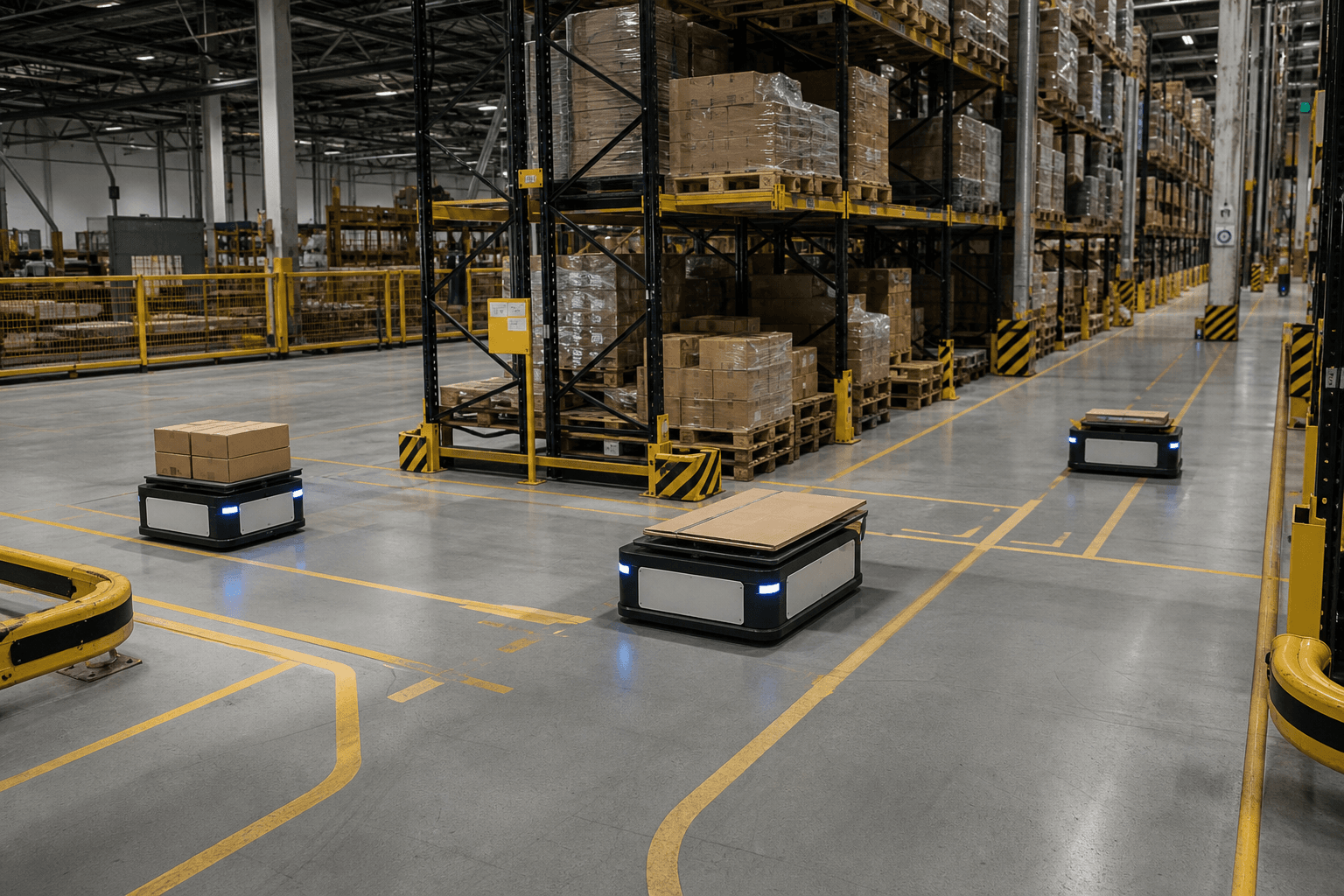
AMR intersections fail as traffic problems long before they fail as robot problems
Priority rules, deadlock recovery, and mixed human traffic decide whether fleets scale—robotics traffic control for AMRs, not edge-AI logistics overviews, not bin-picking cells, not humanoid pilot essays.
05 Aug 2026

Robotics
Idle engine lines become humanoid factories only if quality systems travel
Repurposed auto capacity, takt for bipedal builds, and reused MES discipline decide whether humanoid mass production is manufacturing—or a press release with fixtures.
05 Aug 2026
Robotics
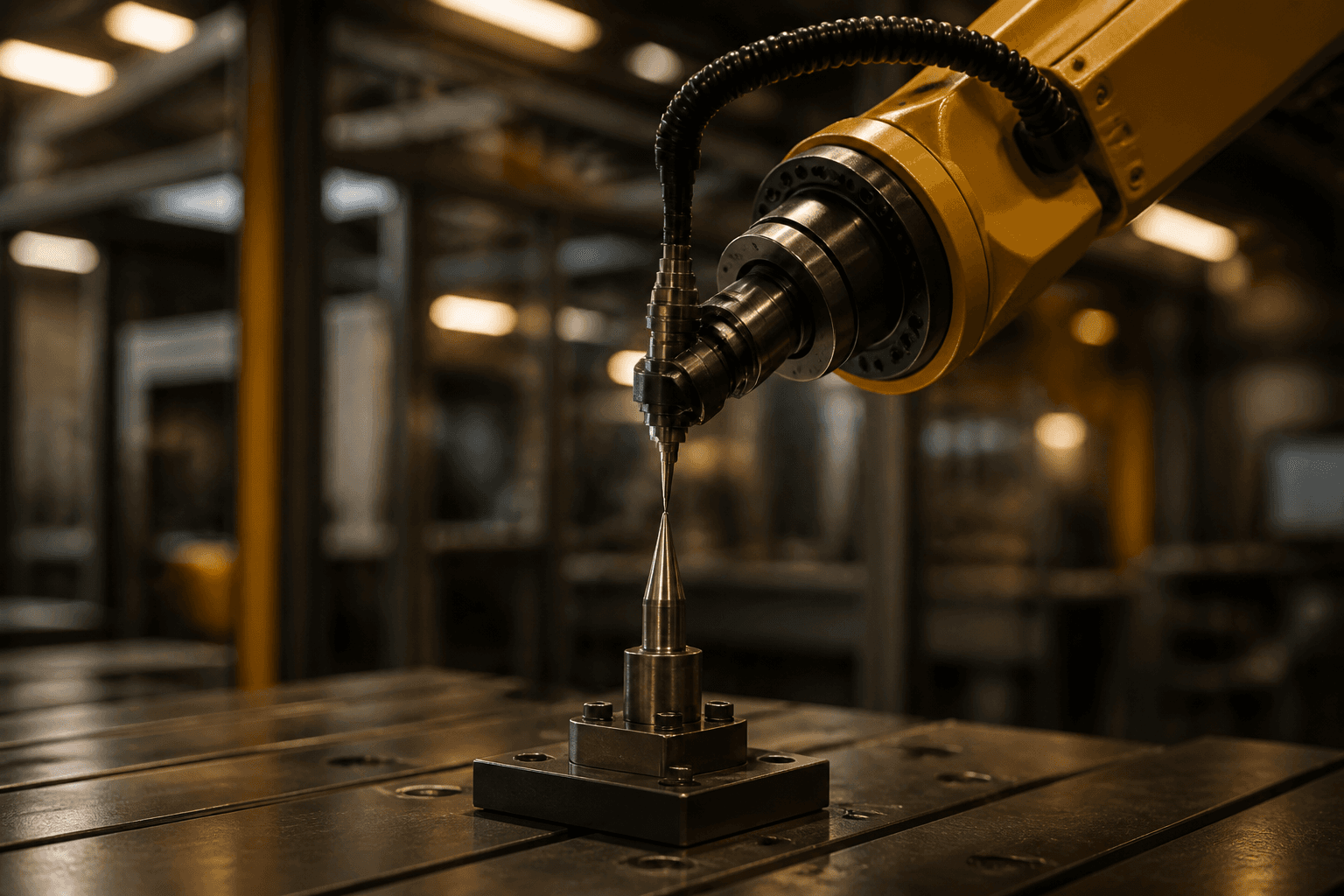
TCP sheet TV-3: the millimeter that turned into scrap
Tool center point checks, mastering state, and fixture datums decide whether the path still matches the world—robotics TCP verification sheet, not collision dump annotations, not cycle waterfalls, not gripper photo logs.
05 Aug 2026

Robotics
Collision dump CD-08: the stop that was not a ‘bump’
Axis, speed, and contact force decide whether a robot hit geometry or a lie in the world model—robotics collision dump annotation, not cycle waterfalls, not gripper photo logs, not payload pendant logs.
04 Aug 2026
Robotics
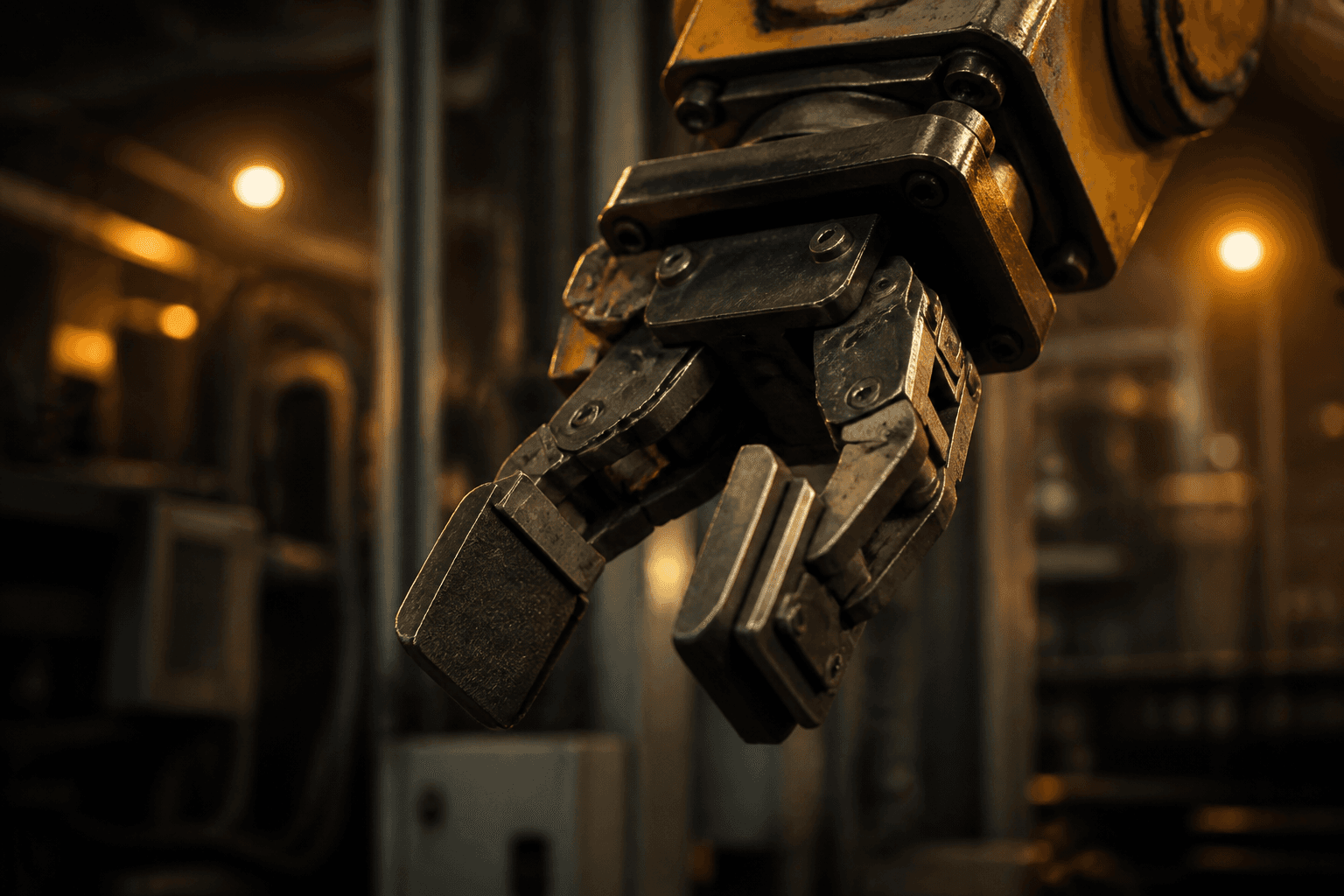
Photo log GR-18: gripper fingers tell time better than the CMMS
Wear flats, chip-outs, and pad glaze decide grip fails before the robot does—robotics photo log, not cycle-time waterfalls, not payload pendant logs, not tool-changer dock briefs.
04 Aug 2026

Robotics
Cycle-time waterfall: where 4.2 seconds actually went
Wait, travel, process, and fault recovery bars decide takt more than peak robot speed—robotics timing breakdown, not payload/inertia pendant logs, not commissioning punch lists, not muting protocols.
29 Jul 2026

Robotics
Punch list 37: the robot cell that was ‘basically done’
Open FAT/SAT items, temporary jumpers, and unsigned speed limits decide whether a cell is commissioned or merely powered—robotics commissioning ledger, not muting validation protocols, not dress-pack field guides, not tool-changer seal kits.
28 Jul 2026

Robotics
Pendant log: payload/inertia lies and the following-error that wasn’t tuning
EOAT mass, inertia tensors, and teach-speed proofs decide whether path accuracy survives takt—robotics pendant event log, not commissioning punch lists, not dress-pack guides, not tool-changer dock seals.
28 Jul 2026
Robotics
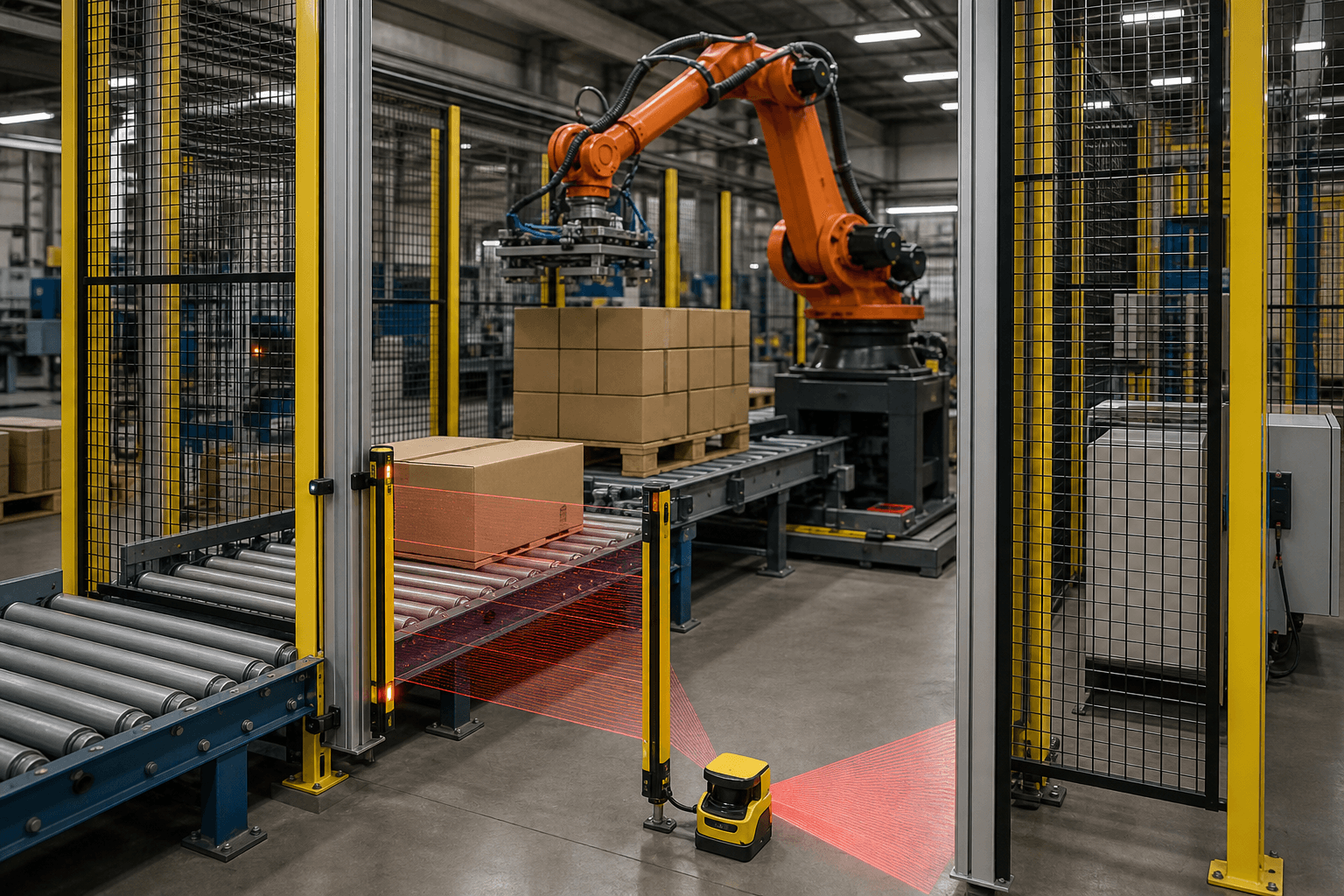
Protocol 14: validating laser-scanner muting without inventing a bypass culture
Muting logic, sensor placement, and timed proofs decide whether safeguarding still means something on high-mix cells—robotics safety validation protocol, not cobot ISO theory essays, not dress-pack flex life, not tool-changer seals.
28 Jul 2026
Robotics
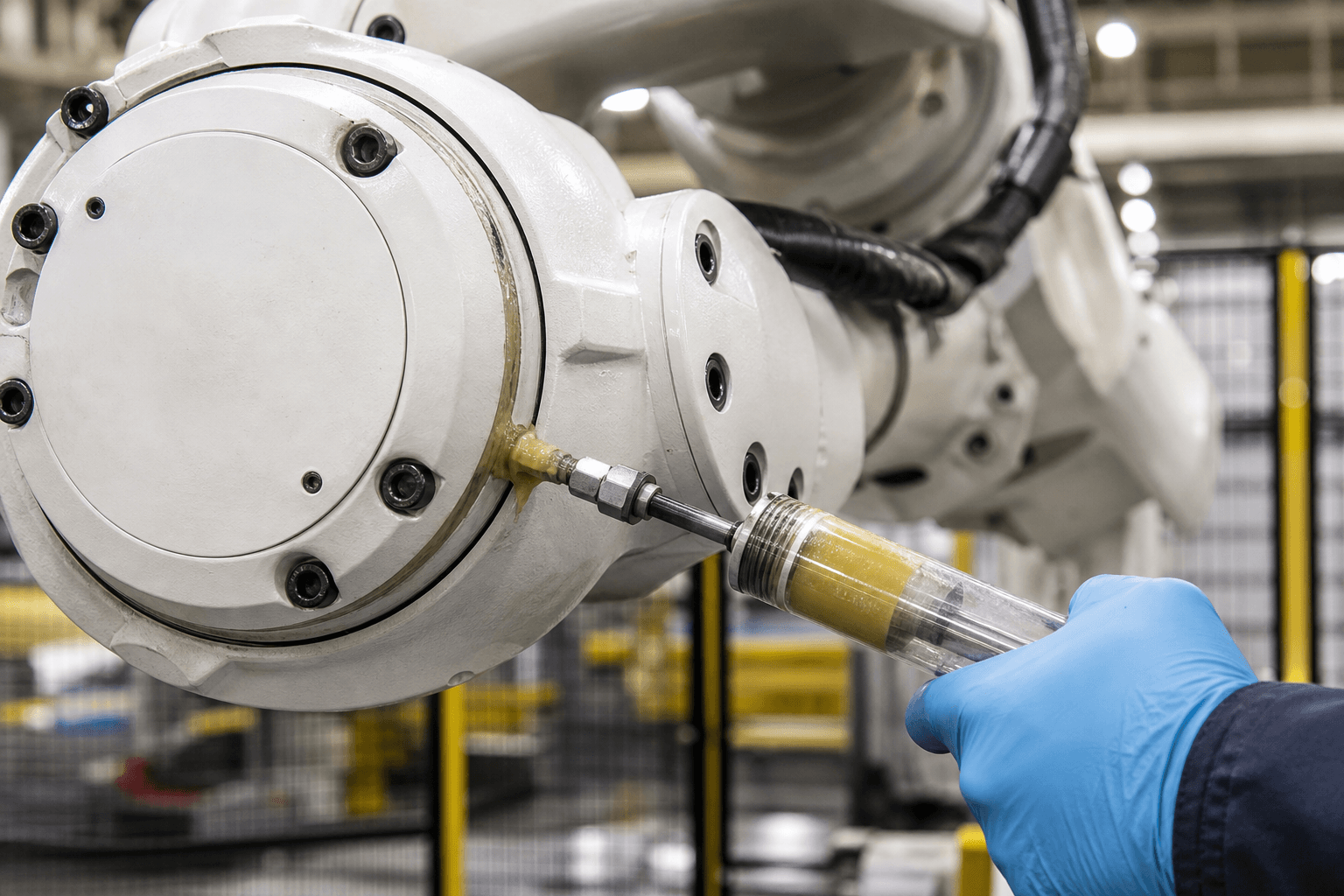
Field guide: when joint grease becomes the robot’s environment tax
Sealed-joint grease purge, paint mist, and weld spatter decide axis life by environment class—robotics reliability field guide, not dress-pack cable routing, not tool-changer docking, not cobot ISO safety theory.
27 Jul 2026
Robotics
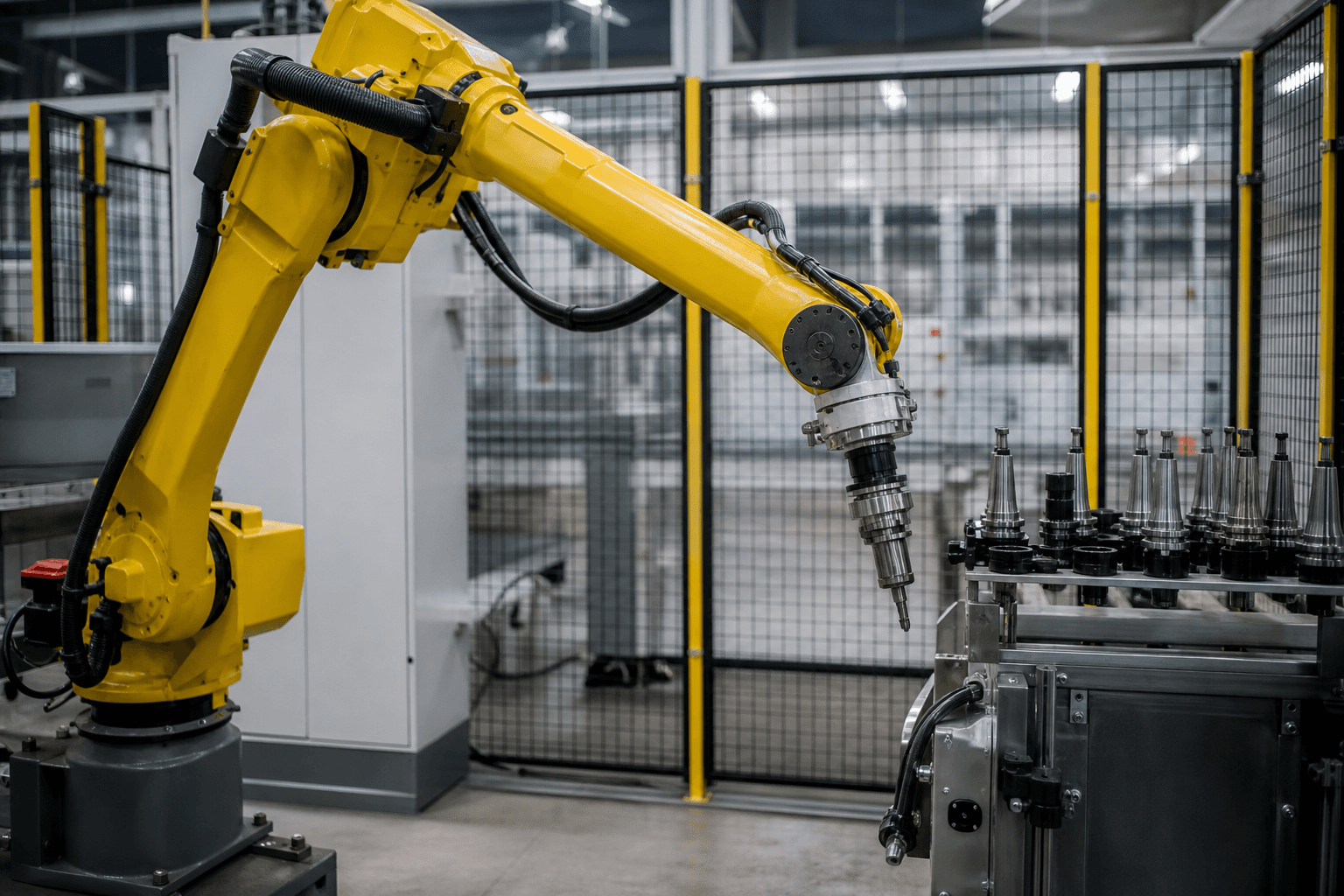
Tool-changer faults look like servo bugs: air, docking, and tool ID first
Automatic tool changers, coupler seals, and tool-ID discipline decide high-mix cell uptime—robotics reliability story, not dress-pack cable management, not screwdriving torque, not adhesive dispense cells.
25 Jul 2026
Robotics
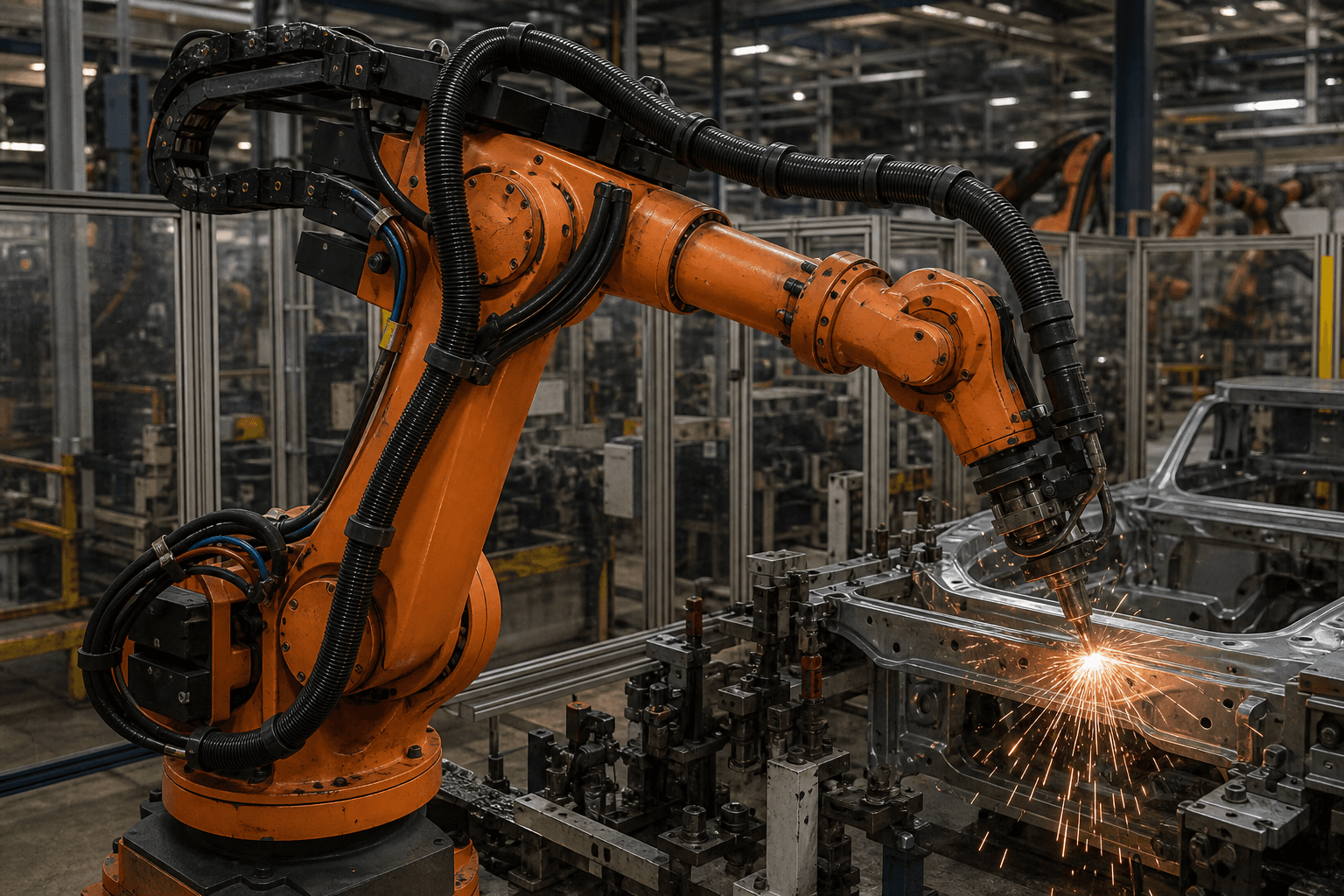
Dress-pack failures look like robot faults: cable management before the controller log
Cable carriers, dress-pack routing, and flex-life discipline decide multi-axis uptime—robotics reliability story, not wire-harness assembly cells, not laser weld monitoring, not screwdriving torque.
24 Jul 2026
Robotics
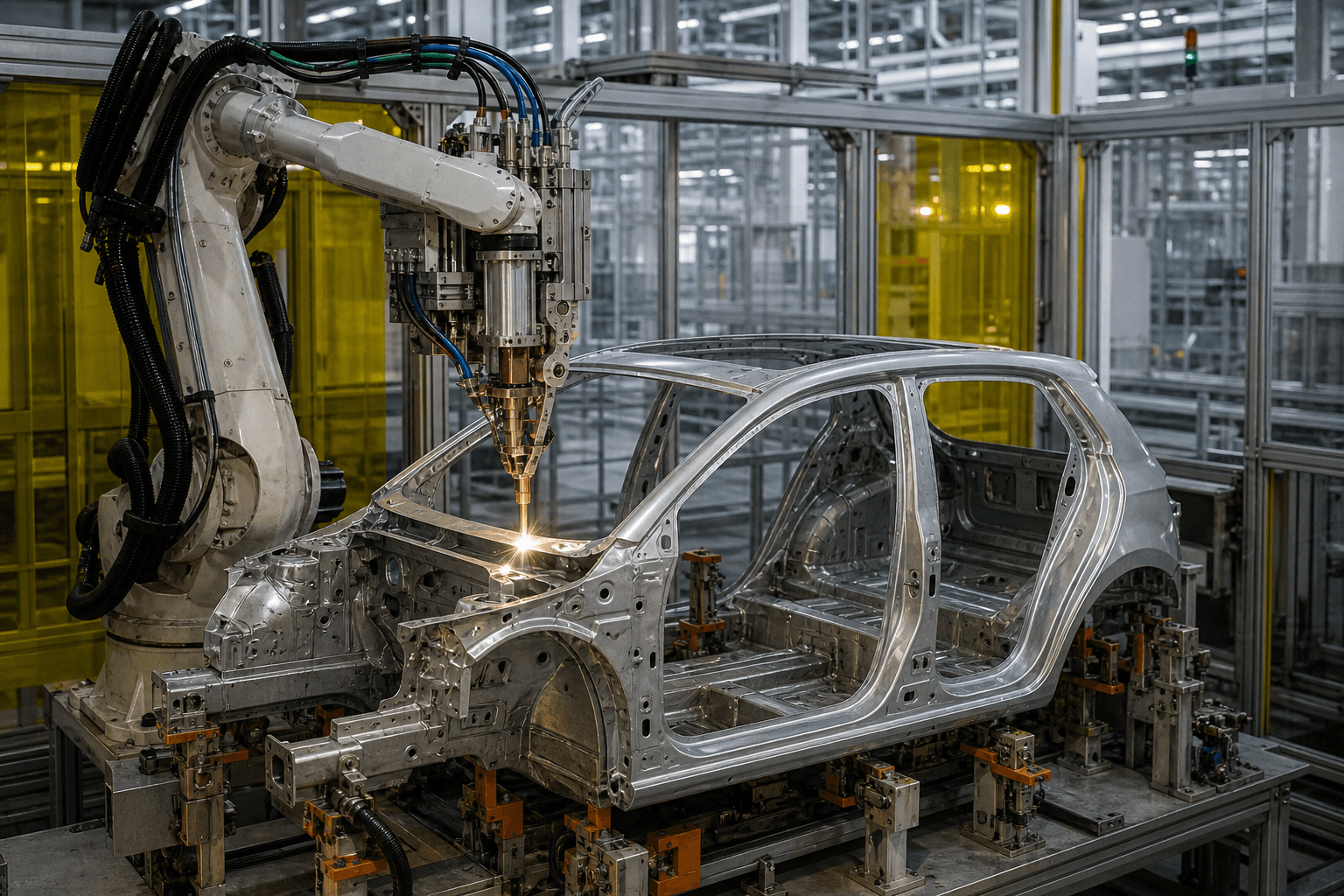
Seven truths a laser-weld cell must satisfy before EV takt time is real
In-process seam monitoring, fixtures, and beam delivery make laser welding a controlled cell—robotics anatomy for EV lines, not wire-harness routing, not tank cleaning, not ultrasonic NDT.
23 Jul 2026
Robotics
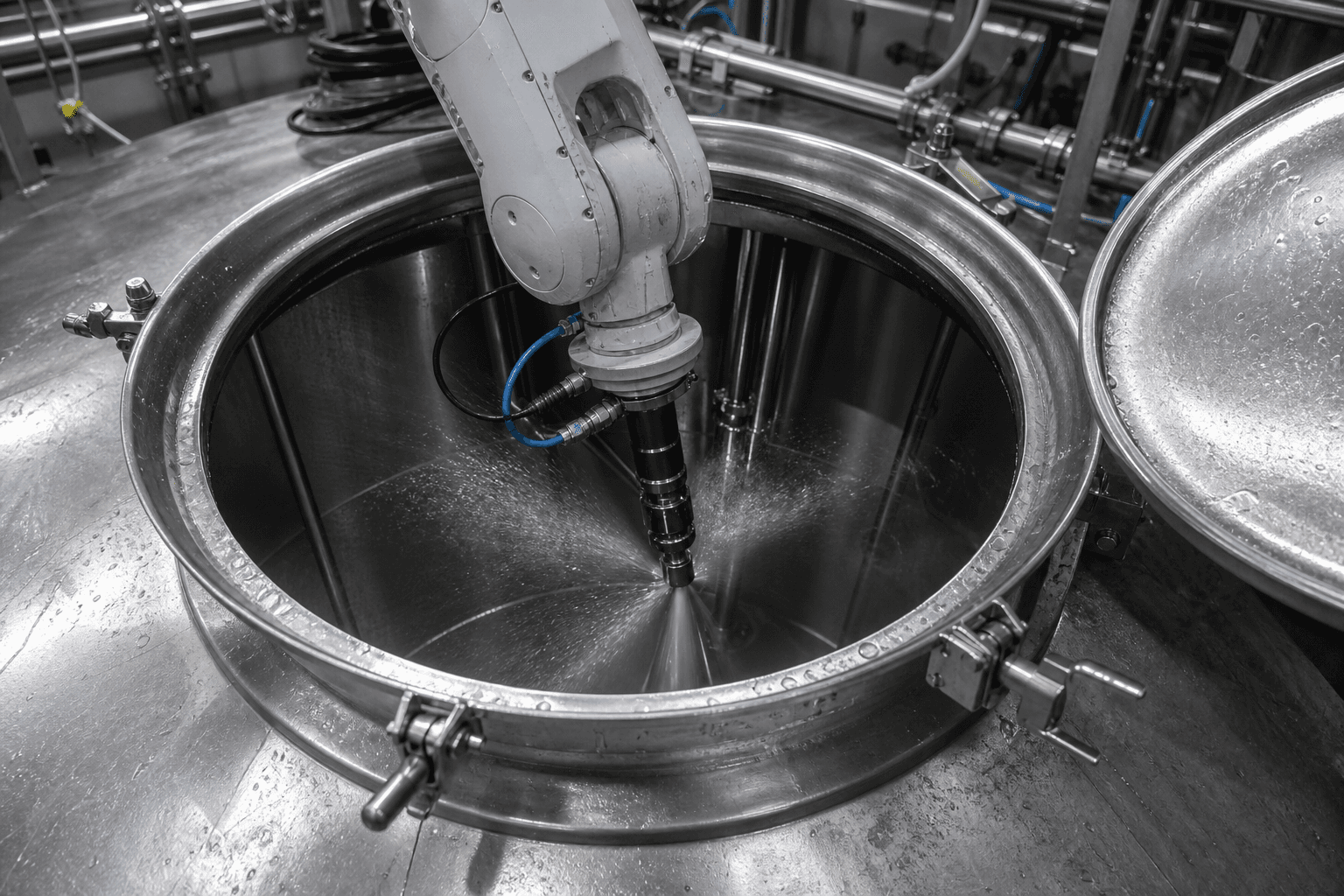
Anatomy of a tank-cleaning cell: what must be true before anyone skips the manway
Nozzle path, effluent handling, gas testing, and permit interfaces—robotics teardown for vessel clean-in-place, not NDT scanning or spray-paint cells.
21 Jul 2026
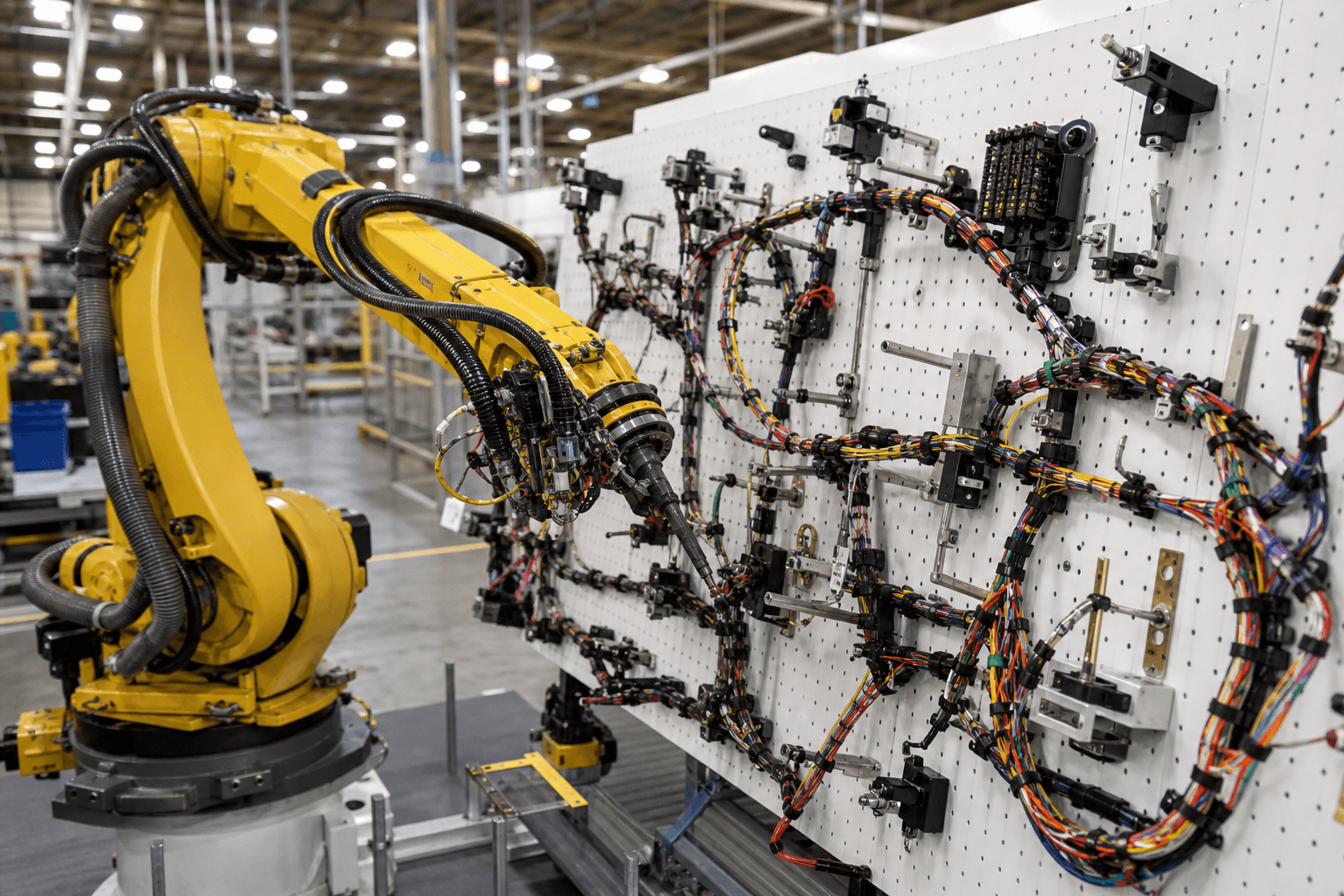
Robotics
Robotic wire harness assembly turns routing and connectors into a controlled cell
Formboard robots own insertion force, routing path, and electrical test hooks—distinct from screwdriving, adhesive cells, and bin picking.
21 Jul 2026
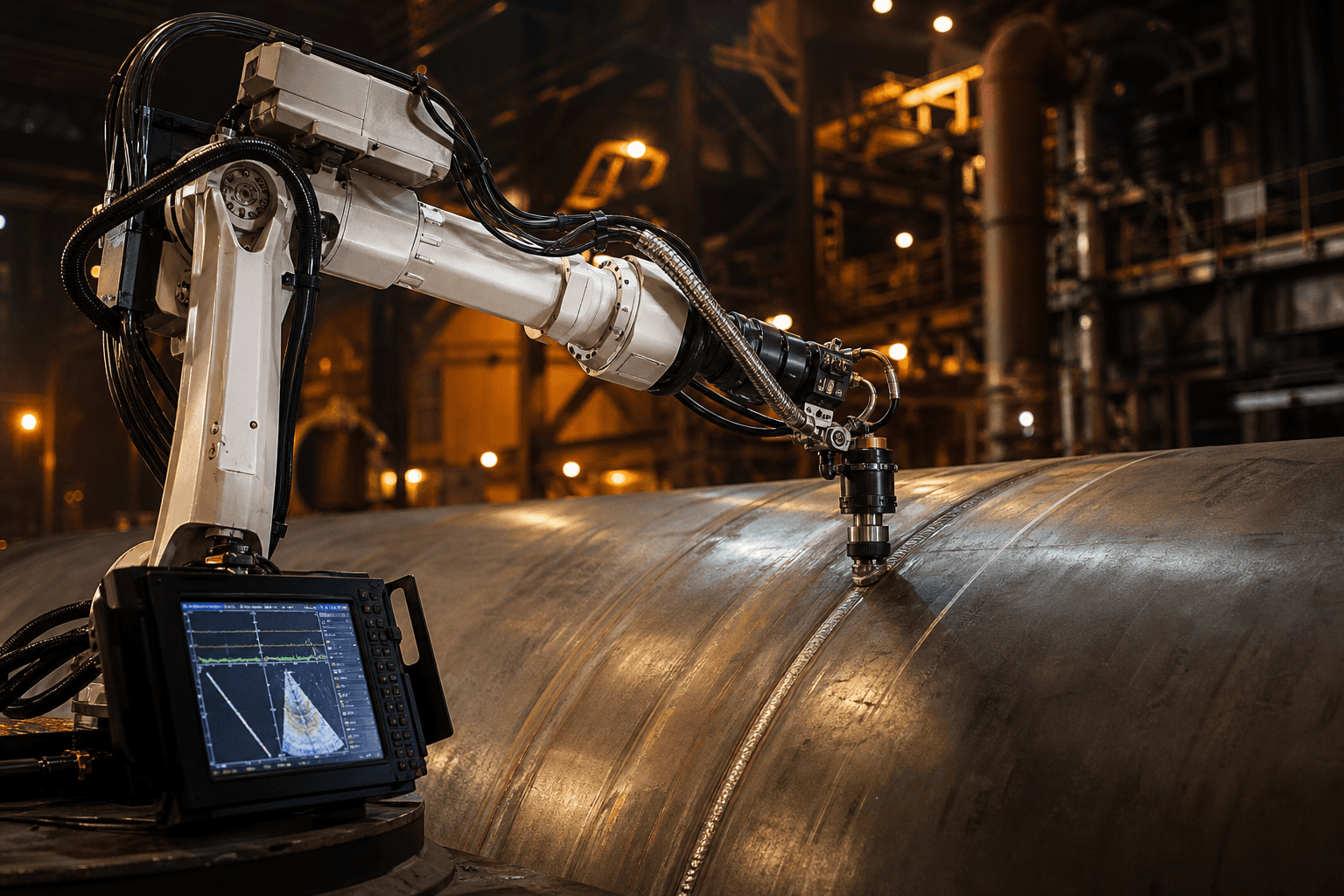
Robotics
Robotic ultrasonic NDT turns inspection into a programmed scan path
Phased-array and UT cells own coverage and records on vessels and welds—distinct from vision quality, quadruped rounds, and welding robots.
20 Jul 2026
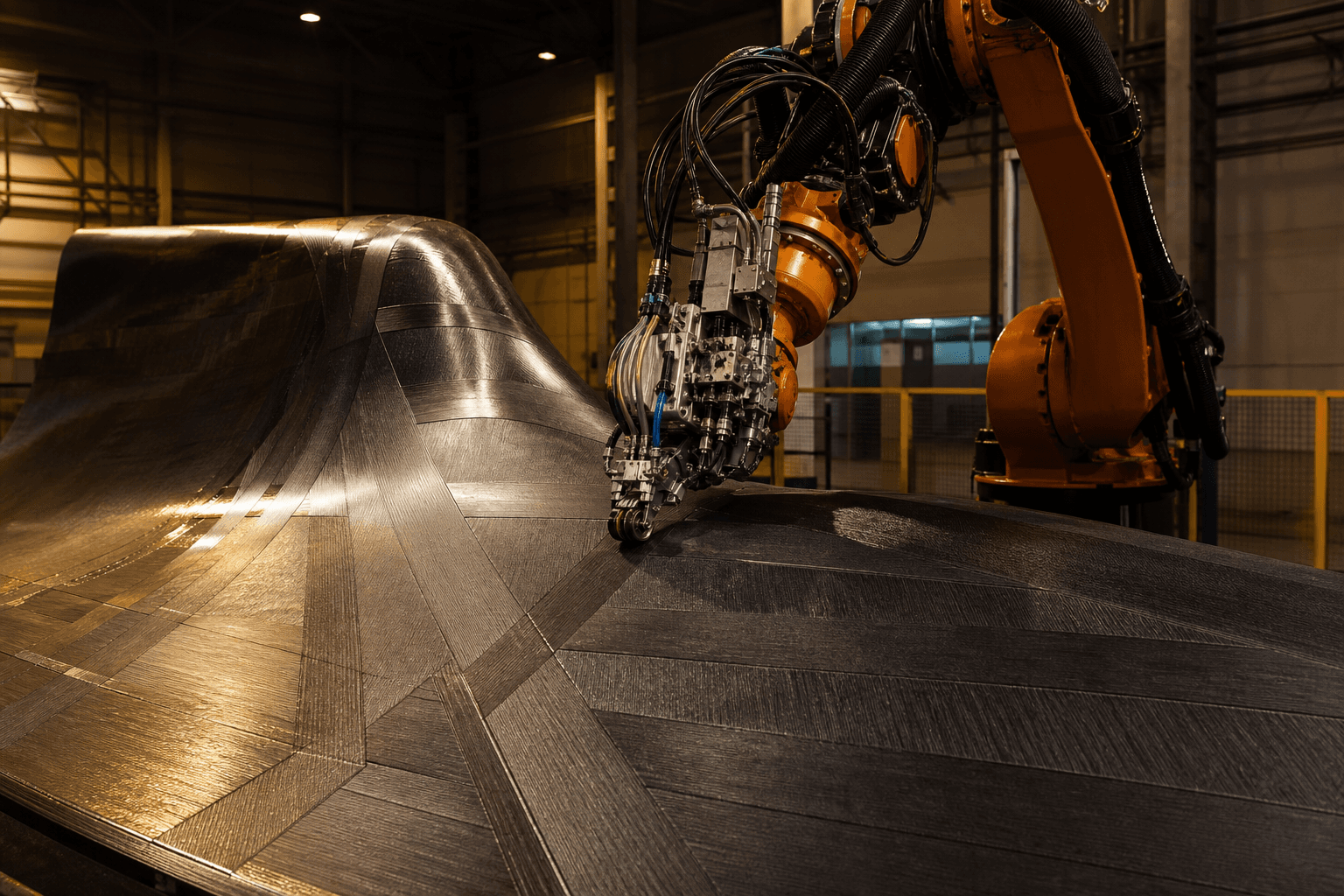
Robotics
Automated fiber placement turns composite layup into a programmed cell
AFP cells own tow path, compaction, and scrap on large structures—distinct from spray coating, welding, adhesive dispense, and CNC tending.
20 Jul 2026
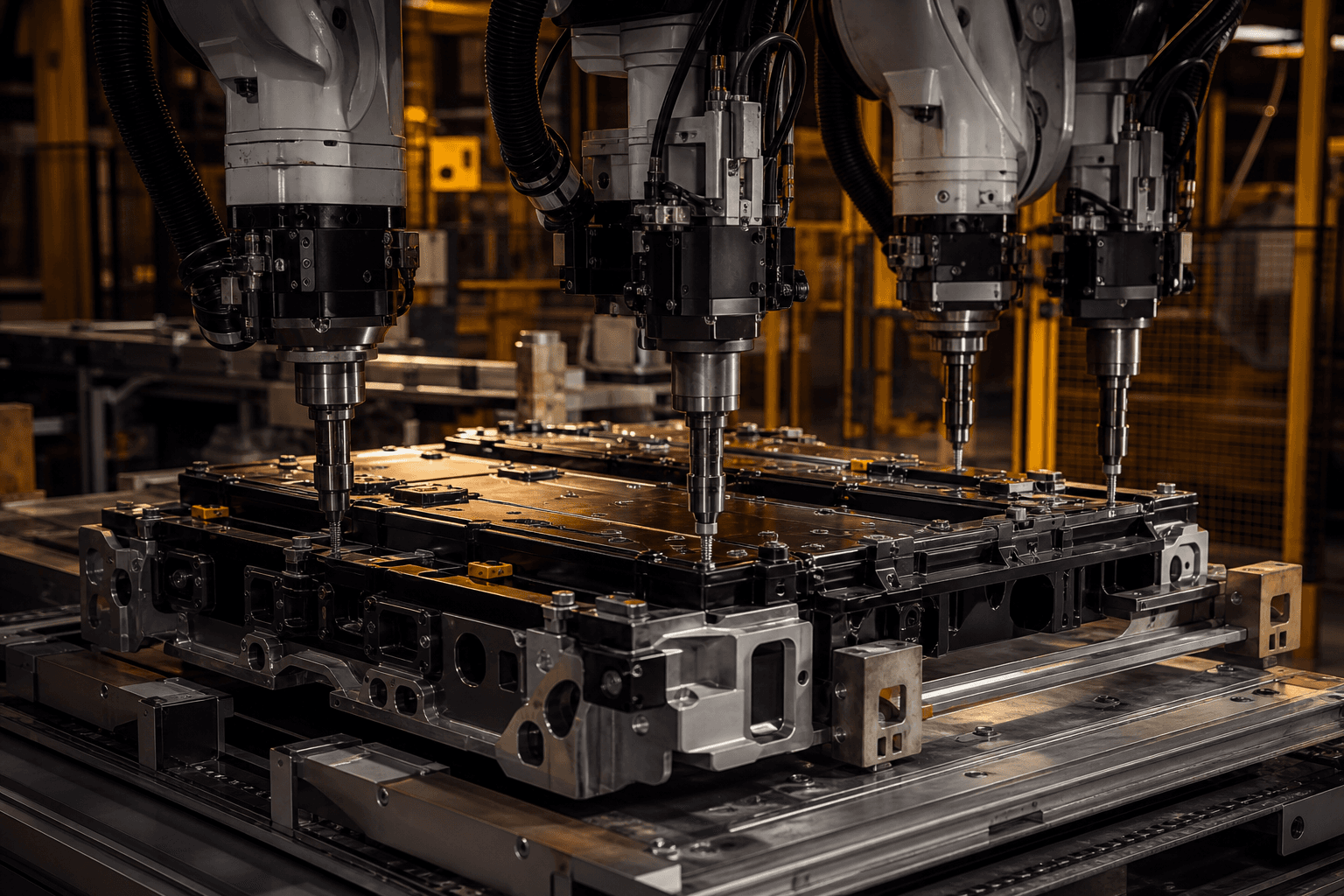
Robotics
Robotic screwdriving cells turn torque and angle into controlled fastening
Multi-spindle fastening recipes own joint OK/NOK—distinct from force-torque fit-up, adhesive dispense, welding, and spray coating.
19 Jul 2026
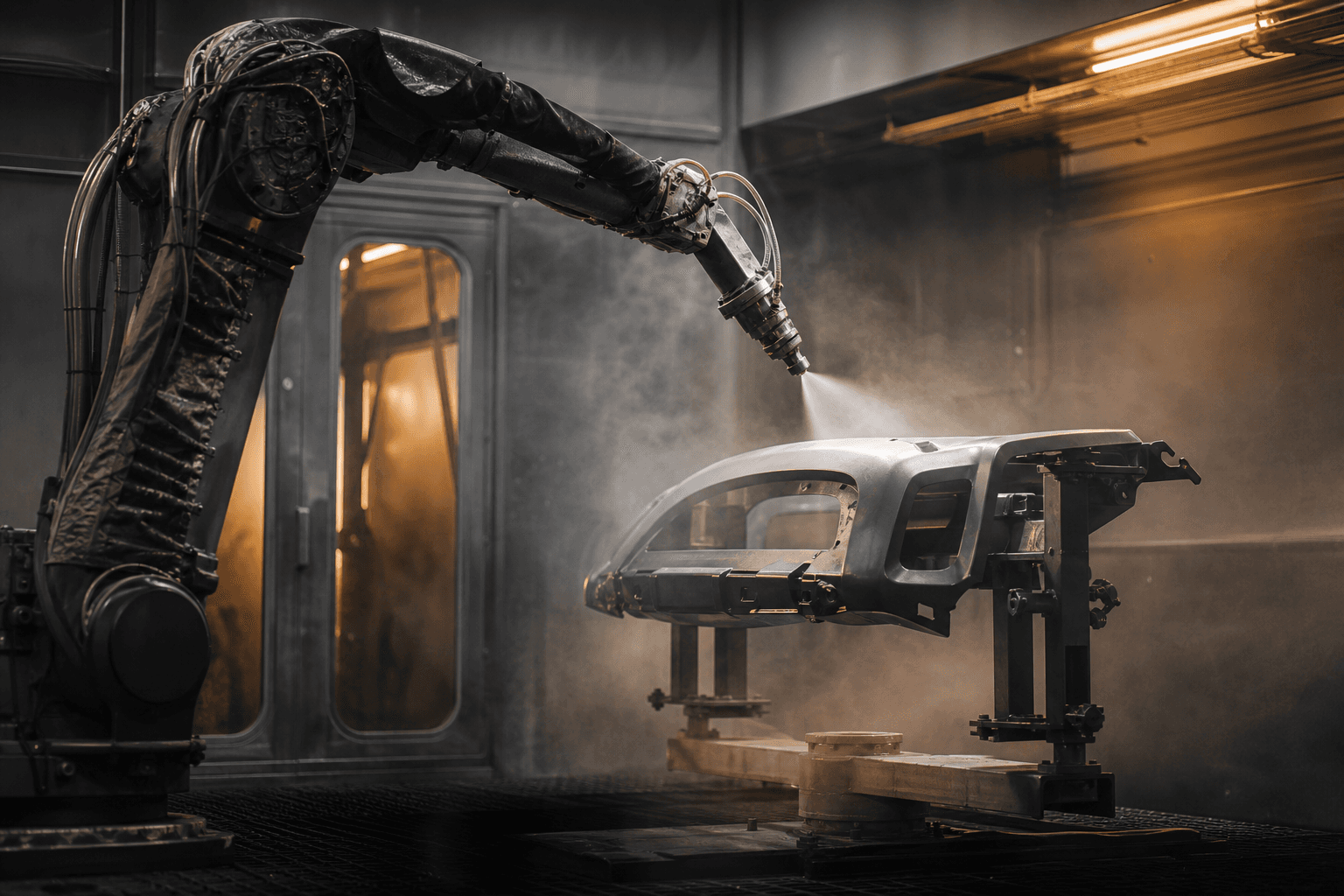
Robotics
Robotic spray coating cells leave the paint-booth demo
Path-controlled spray and film-build cells scale wet finish—distinct from adhesive dispense, welding, deburring, and CNC tending.
18 Jul 2026
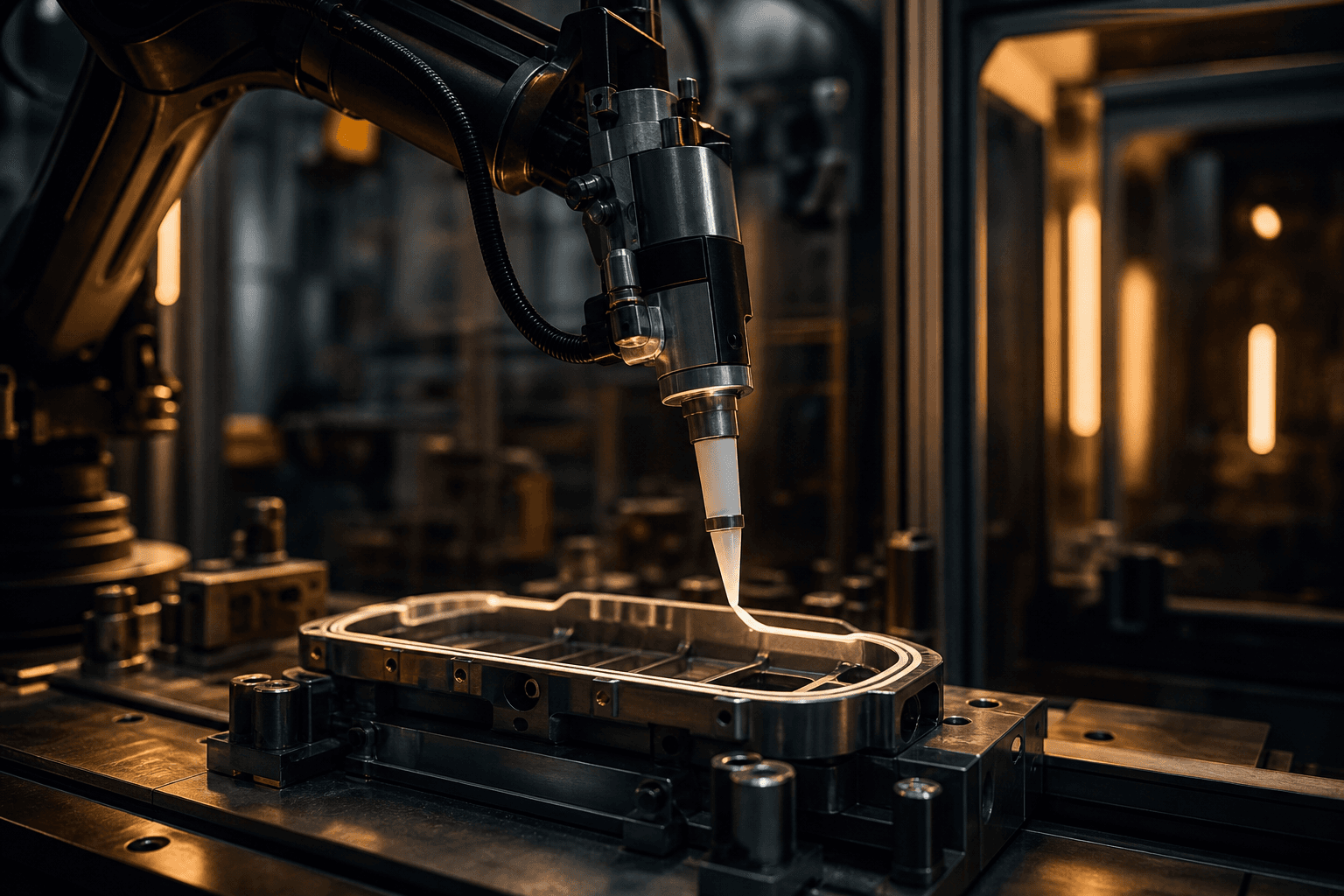
Robotics
Robotic adhesive dispensing cells leave the sealant demo booth
Metered bead and potting cells scale bonding work—distinct from force-torque fastening, welding, deburring, and CNC tending.
15 Jul 2026
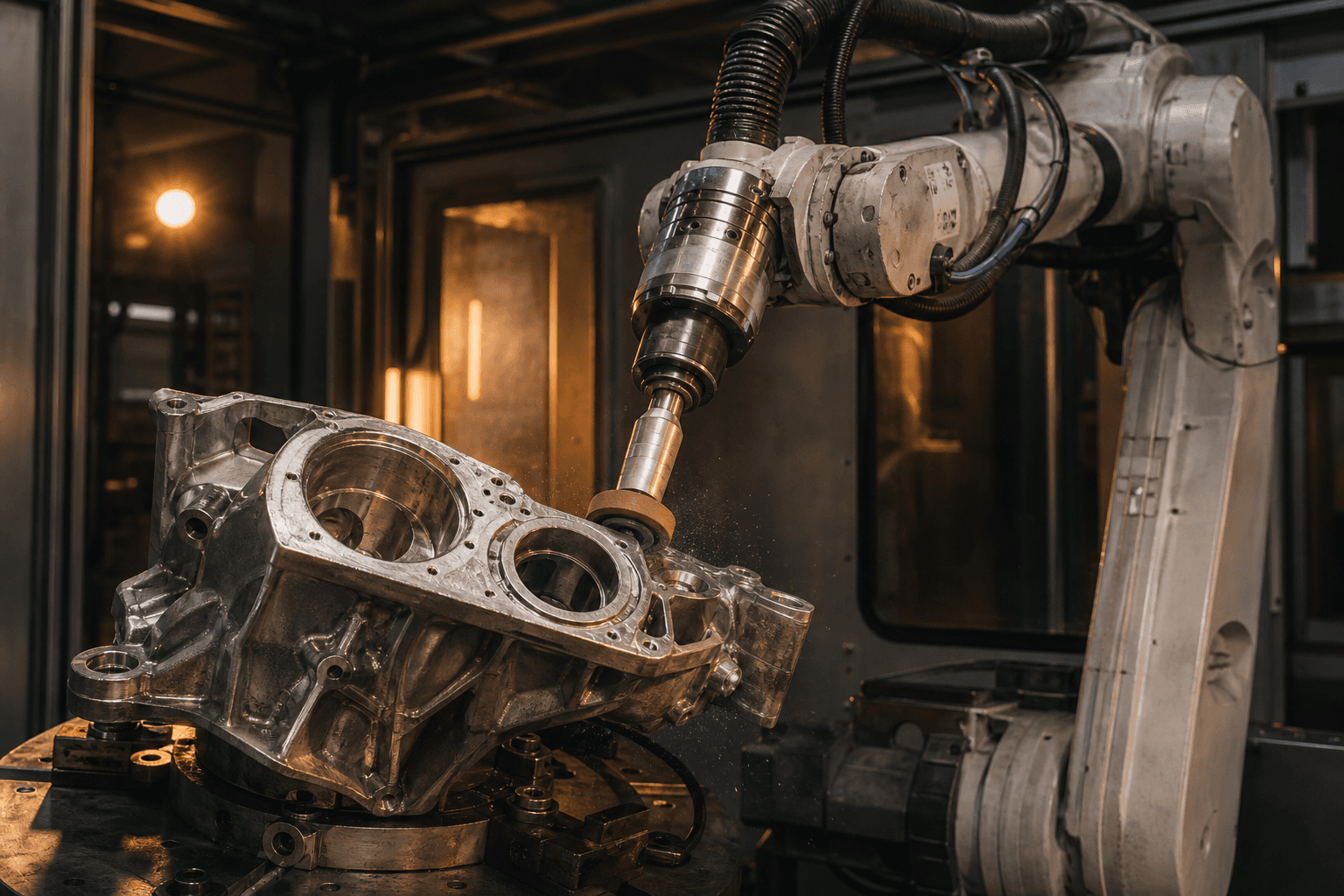
Robotics
Robotic deburring and finishing cells leave the polish demo booth
Force-guided abrasive finishing after machining—distinct from CNC tending, force-torque fastening, and adaptive welding.
13 Jul 2026
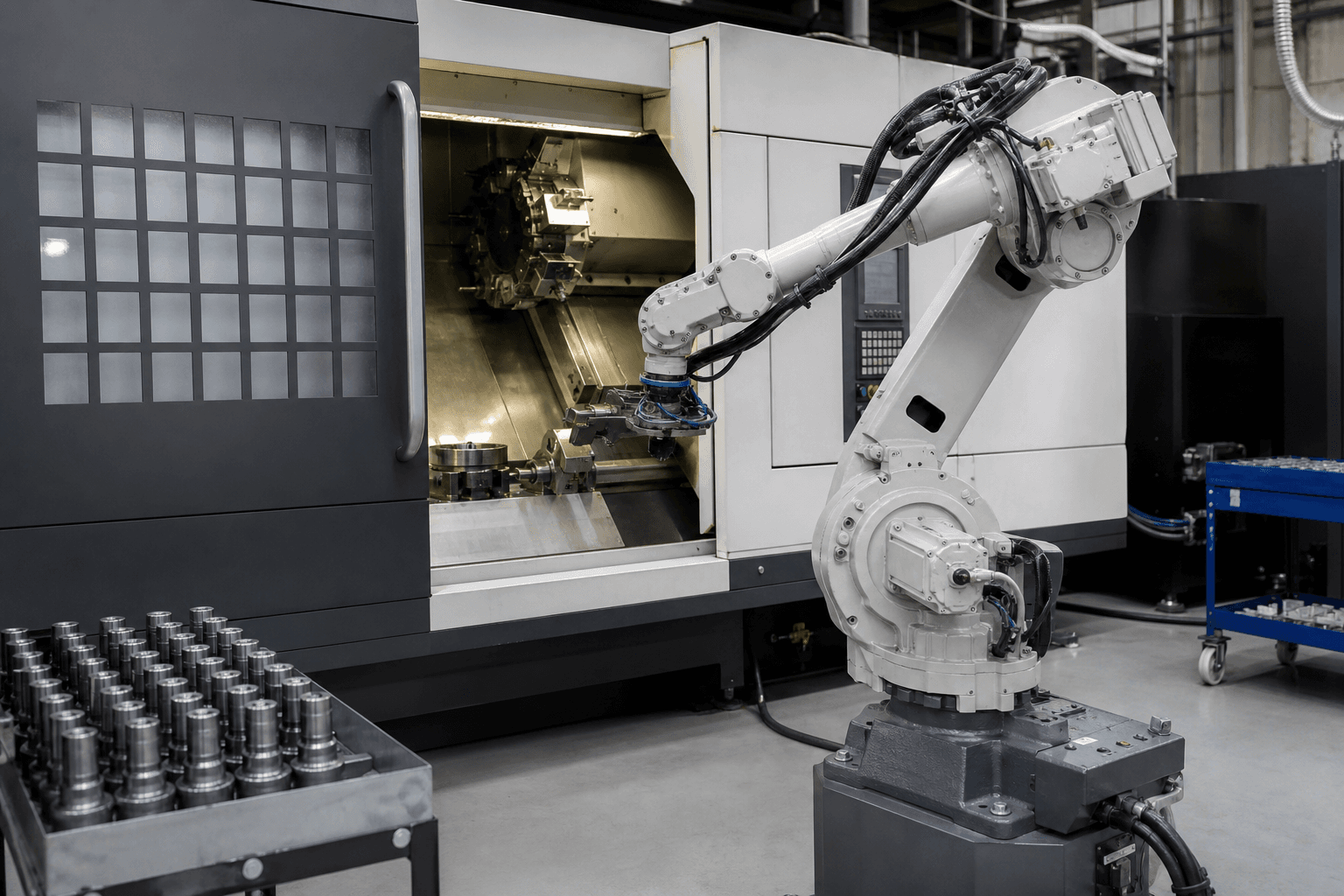
Robotics
CNC machine tending becomes the quiet robot volume play
Door-open, fixture, and unload cycles scale faster than glamorous picking demos—where force assembly owns fasteners, tending owns spindle utilization.
08 Jul 2026
Robotics
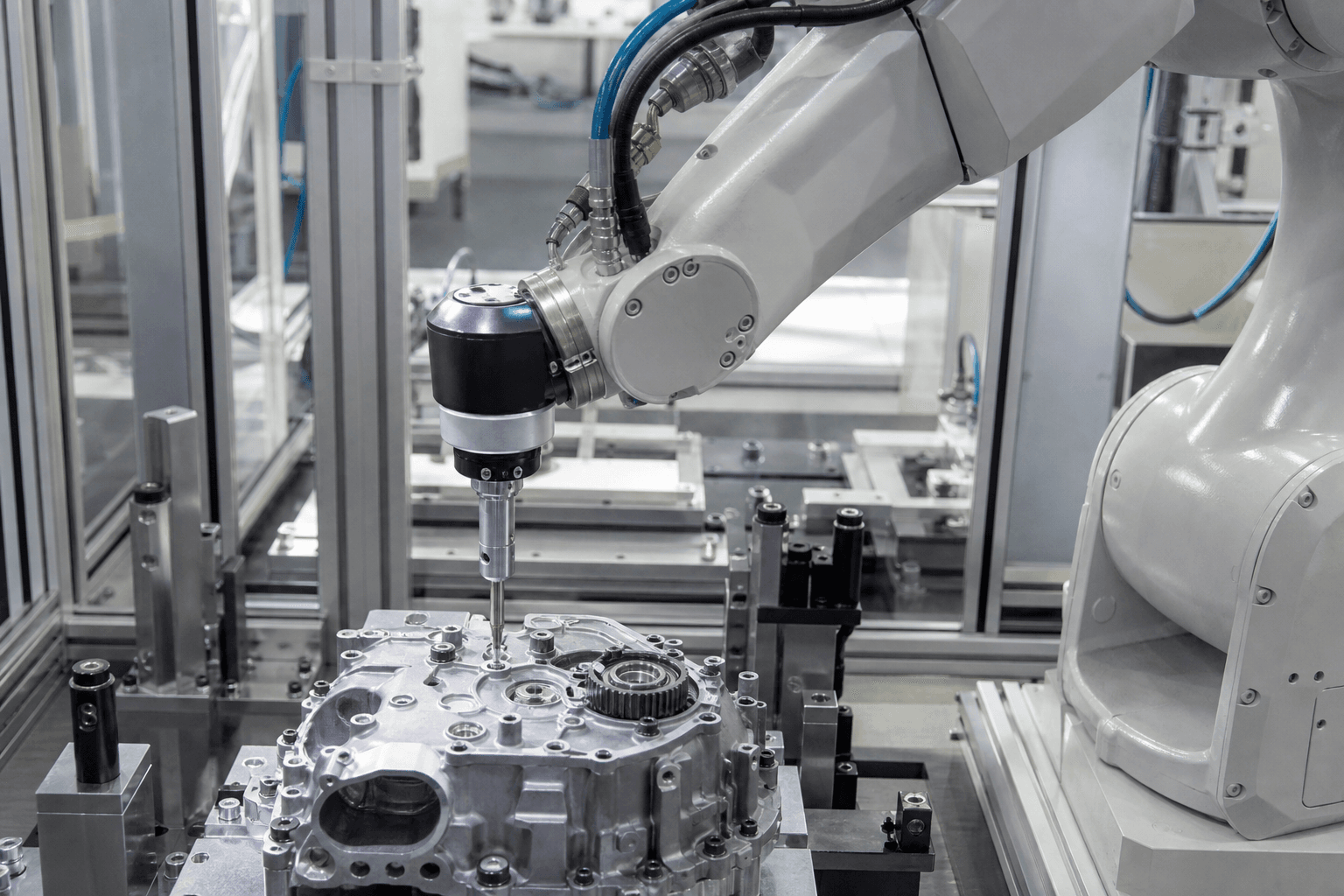
Force-torque robots take precision assembly from teach pendants
Wrist sensing and compliant control turn fastening and fit-up into measured processes—where bin picking grabs parts and welding follows seams, assembly must feel the joint.
03 Jul 2026
Robotics
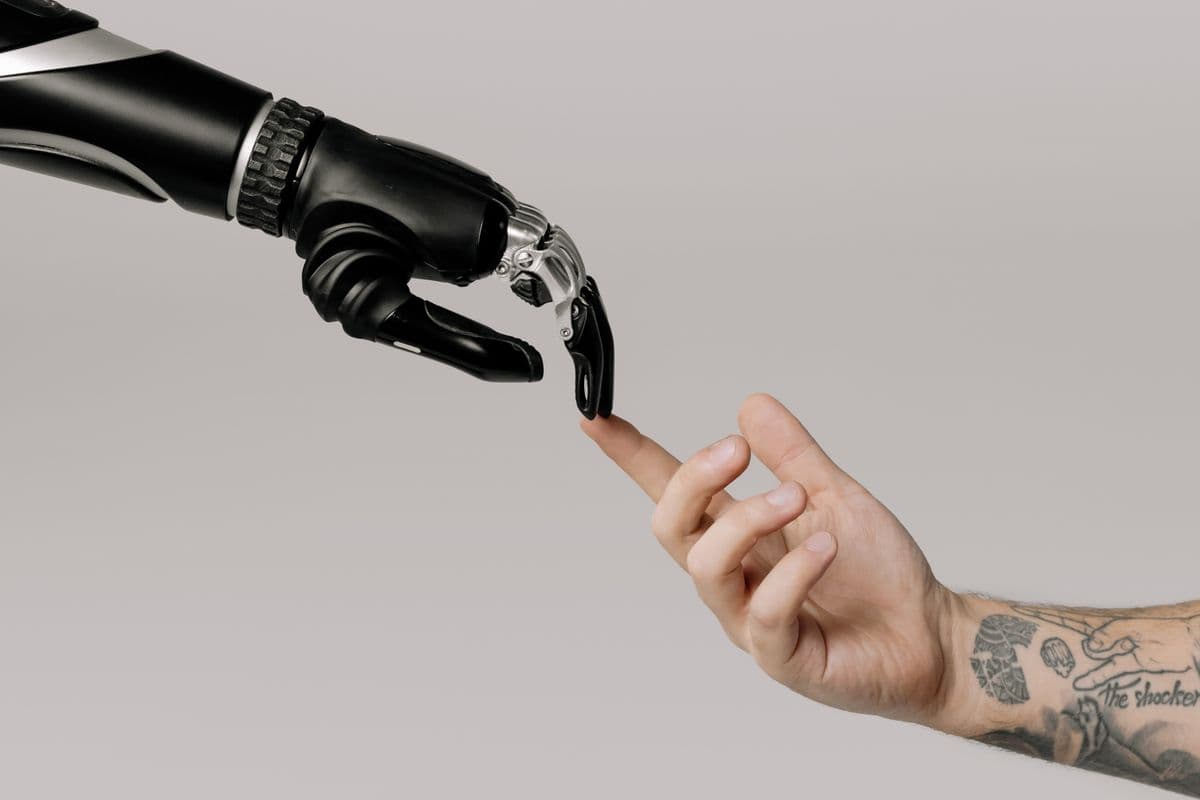
AI bin picking leaves the demo cell for production uptime
Random bin picking is finally judged on cycle time, grasp success, and recovery—not conference videos—as vision-guided robots take unstructured parts feeding off the critical path.
26 Jun 2026

Robotics
Robotic palletizing reclaims the end-of-line bottleneck
Mixed-SKU pallet cells with vision and adaptive gripping are winning CapEx where labor turnover is highest—closing the gap between the last conveyor and the truck.
22 Jun 2026

Robotics
Adaptive AI welding robots close the skilled-welder gap
Vision-guided parameter control is moving arc and laser cells from teach-pendant paths to live seam tracking—useful where labor is scarce and joint variation kills fixed programs.
17 Jun 2026
Robotics
Mobile manipulators bridge AMR fleets and fixed robot cells
A base that drives plus an arm that picks—MoMa platforms target machine tending and kitting where pure AMRs only carry and fixed cobots never leave the cell.
12 Jun 2026

Robotics
Quadruped robots take the dull, dangerous plant rounds
Four-legged inspection platforms are moving from novelty videos into scheduled OT rounds—thermal, acoustic, and visual checks in spaces wheeled AMRs cannot climb.
07 Jun 2026

Robotics
Trailer-unloading robots scale where humanoids still pilot
Purpose-built case-handling mobiles—Stretch-class systems expanded with major 3PLs in 2026—are winning warehouse CapEx by owning one brutal job: emptying trailers and moving cartons.
02 Jun 2026

Robotics
Humanoid robots enter factories as pilots, not replacements
Bipedal platforms promise to reuse human-designed workspaces—but battery life, dexterity, safety cases, and total cost still decide whether pilots become lines.
28 May 2026

Robotics
Digital twins move from slideware to line commissioning
Virtual validation of cells and lines is cutting CapEx risk and changeover time—when the twin stays tied to MES reality, not a disconnected 3D model.
13 May 2026

Robotics
Industrial robots move from pilot cells to multi-line scale
Buyers are asking for uptime, changeover speed, and MES integration—not demo reels. The next wave is copyable cells across plants.
12 May 2026

Robotics
AMRs bring edge AI into factory logistics
Autonomous mobile robots are shifting from mapped routes to vision-led navigation and on-device decisions—where latency, safety, and fleet orchestration decide scale.
11 May 2026

Robotics
Cobot cells live or die on ISO safety engineering
Collaborative robots are not a product category alone. ISO 10218 and ISO/TS 15066 force a full cell risk assessment—speed, force, sensing, and layout—before ‘fenceless’ means safe.
09 May 2026