
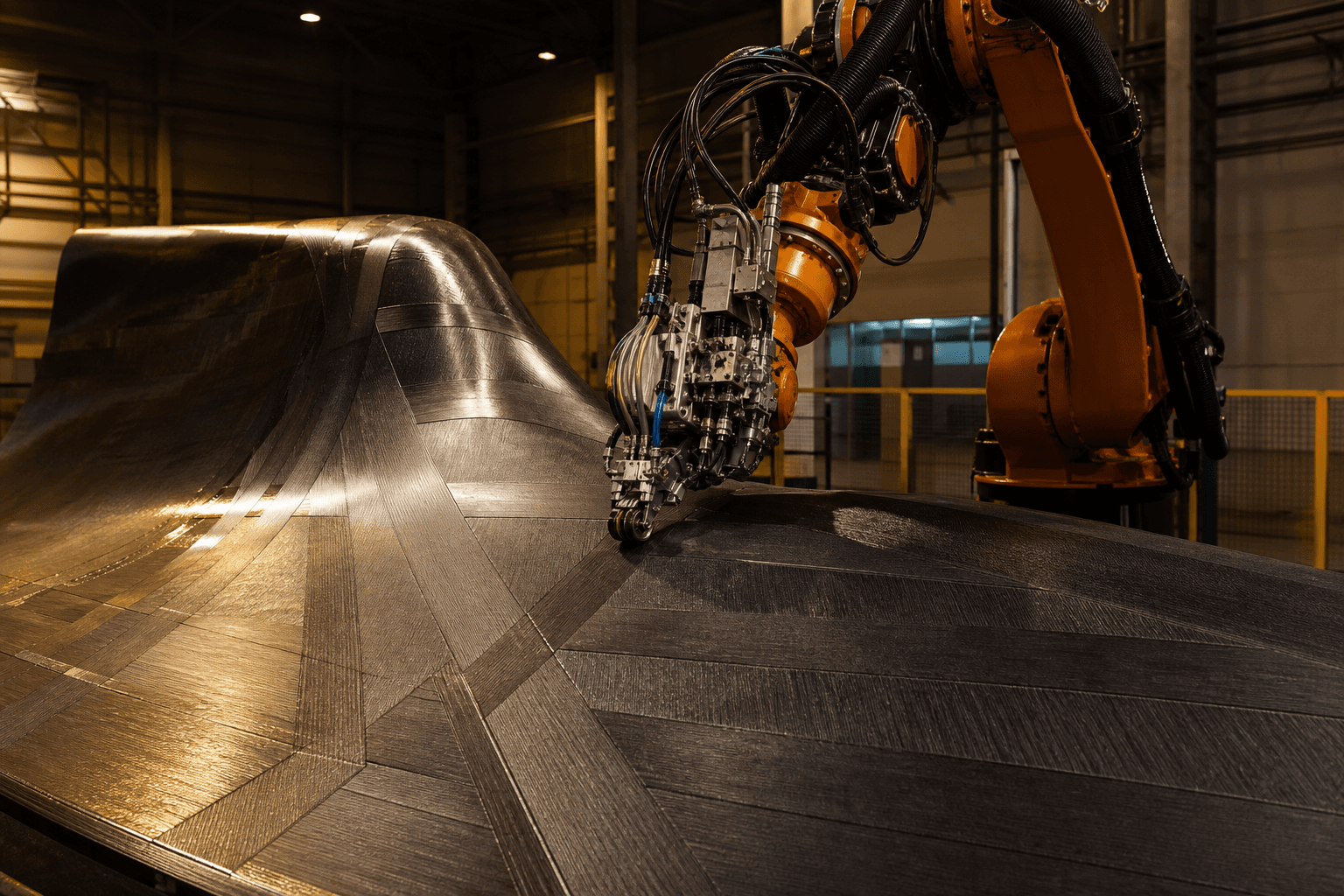
Spray coating owns film build. Welding closes metal seams. Adhesive cells meter beads. CNC tending feeds chips. What still decides cycle time and scrap on large aerostructures, wind spars, and industrial composite tools is layup: how fiber tows land, compact, and stay within design allowables when hand draping cannot scale.
Automated fiber placement (AFP) and related tape-laying cells are moving from aerospace showpieces into programs that treat the head path as a controlled process—not a craft demonstration.
The industrial point is a programmed laminate with measured gaps, overlaps, and tow drop. A robot waving carbon over a mold without ply-book discipline is expensive theater.
Why hand layup hits a wall on large structures
On big skins and spars, manual ply kits burn labor hours and create variability that shows up only after cure—when scrap is a multi-meter part. Published AFP programs commonly target multi-meter/minute placement rates on suitable geometries, with in-process inspection catching tow faults before the autoclave or oven locks them in. That economics only holds when the part geometry, tooling, and design allowables were written for machine placement—not when AFP is bolted onto a hand-layup design late.
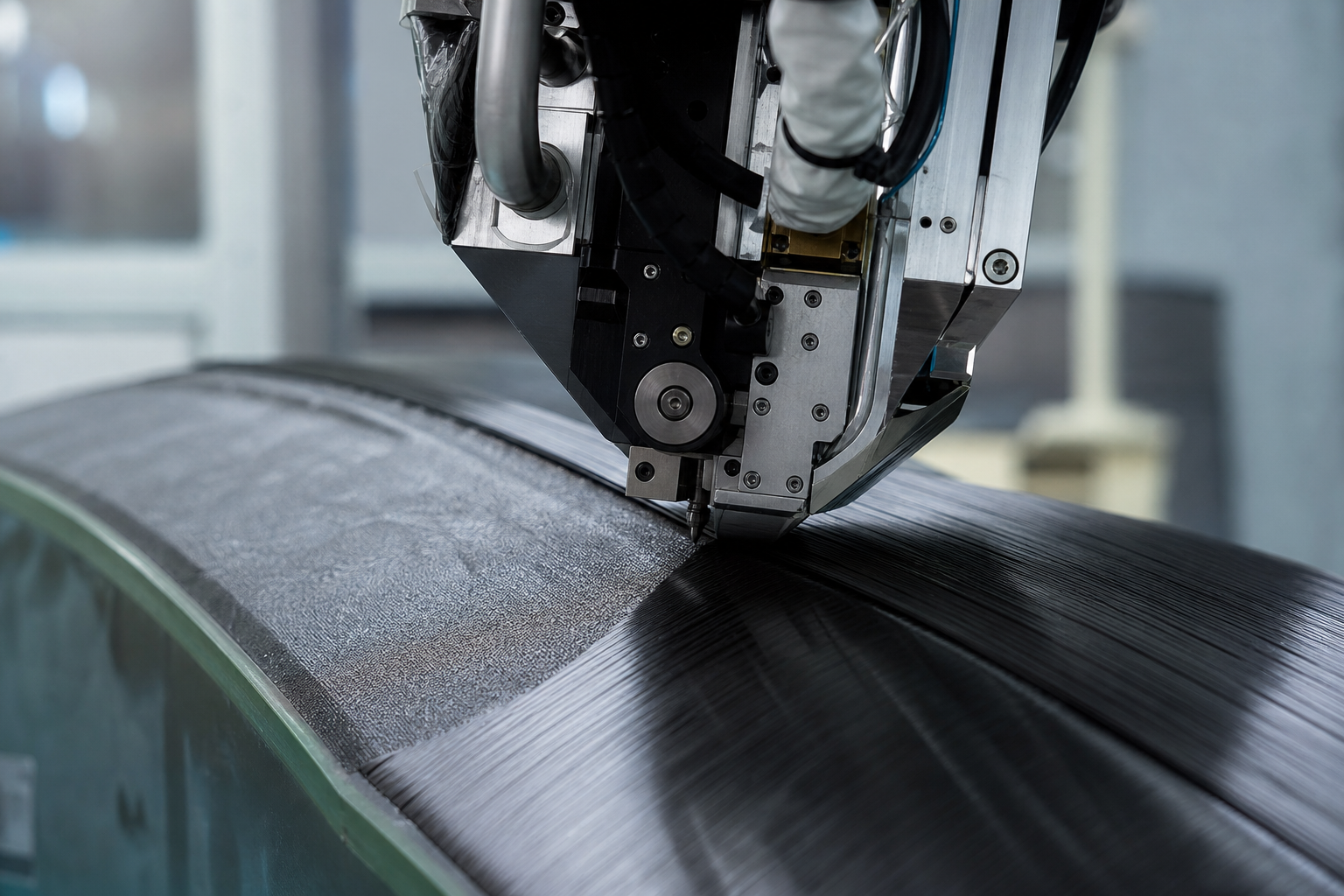
Placement head path, tension, and compaction are the process recipe—not just arm motion.
An anonymized Tier-1 aerostructures cell running AFP on a wing-skin family cut rework hours when laser-guided tow steering and gap/overlap metrology were tied into the same recipe release as the NC path. The win was not “a robot in the clean room”; it was fewer late NCR escapes after cure.
What a serious AFP cell actually controls
- Tow path and steering limits — Courses that respect minimum radius and design fiber angles.
- Compaction and heat assists — Process windows that keep tack and voids inside limits.
- In-process defect flags — Gap, overlap, twist, and missing tow caught before bagging.
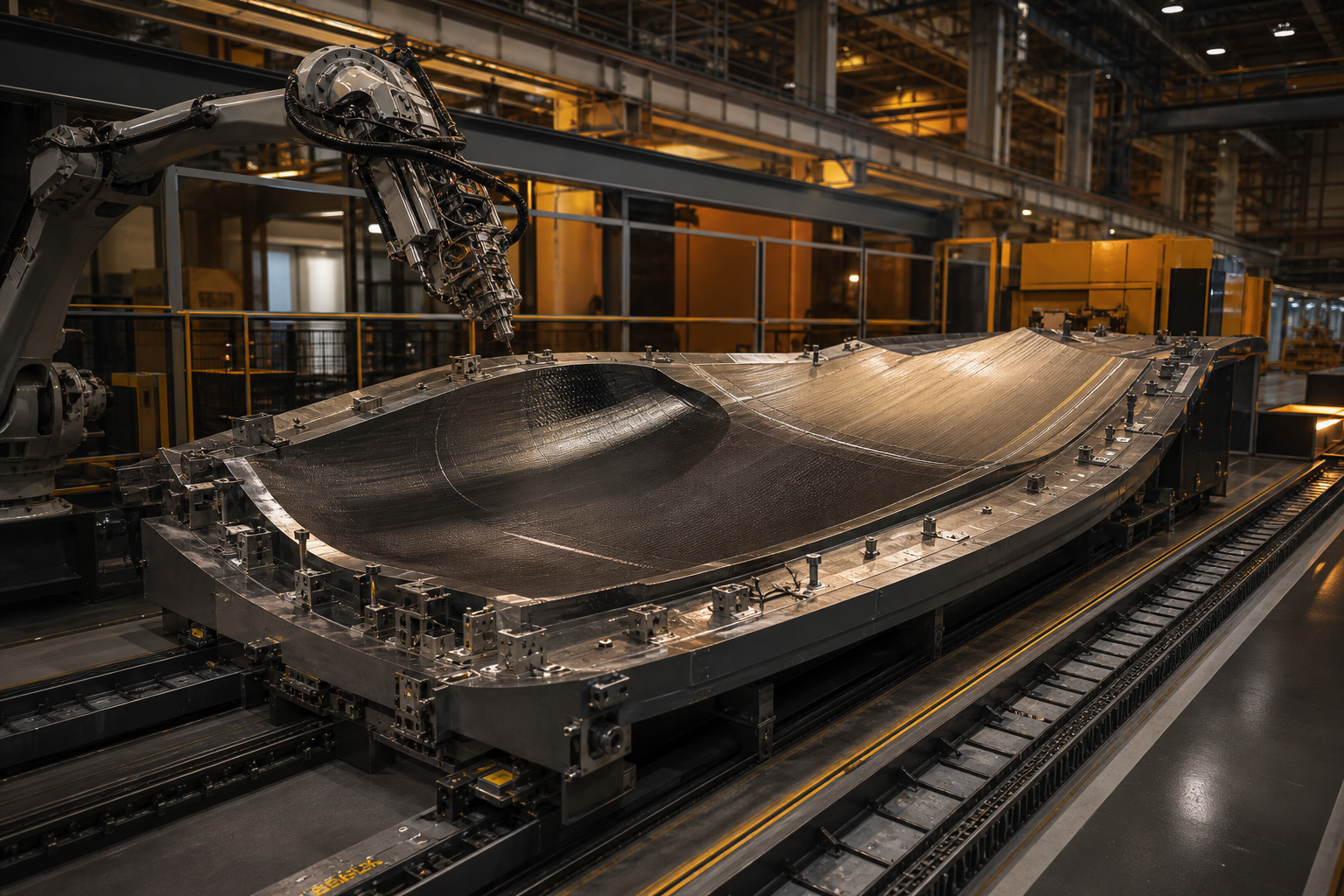
Tooling and cell layout decide whether AFP is a production asset or a pilot island.
Where AFP programs still fail
Treating AFP as a drop-in replacement for every hand ply—including complex contoured regions better left to AT or hand. Ignoring foreign-object and clean-room discipline around carbon dust and backing film. Buying a head without a digital ply book, NC post, and quality loop.
This is not spray painting, not arc or laser welding of metals, not adhesive bead dispense, and not CNC metal tending. Those processes do not own laminate allowables.
What to watch on the next CapEx review
- First-pass laminate yield after cure versus hand-layup baselines on the same part family.
- Whether in-process tow metrology survives production dust and schedule pressure—or gets bypassed.
- Design-for-AFP rules written into the next product generation—not only the current rescue program.
Buyer checklist (short)
- Geometry fit — Which plies are AFP-eligible vs AT/hand by design?
- Recipe ownership — Who releases path, heat, and compaction together?
- Scrap economics — Cost of a cured reject versus cell utilization claims?
- Skill shift — Are NC/composites programmers funded, or only robot operators?
Hand layup still wins complexity niches. AFP wins when the structure is large, repetitive, and designed for the machine.