
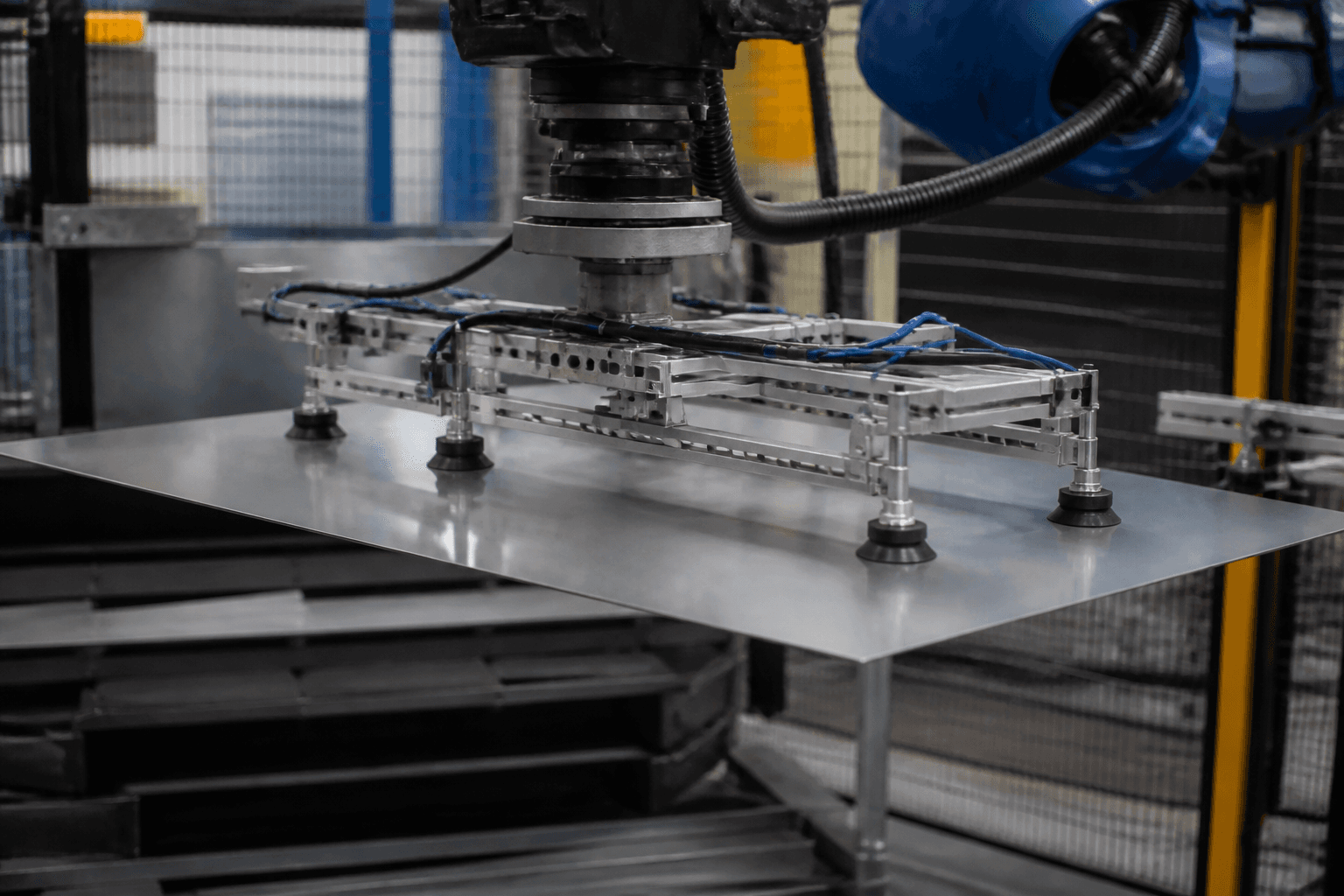
Vacuum grippers look simple: cups, a manifold, a generator or pump, a digital vacuum switch. The failure is simple too, and usually mislabeled. A part shift in the fixture becomes a "vision problem." A drop on a fast rotate becomes a "payload" or "inertia" problem. Often it is one cup that no longer seals, pulling the whole pad below the switch setpoint for a few milliseconds that the slow PLC filter ignores.
This is not finger-wear photography for mechanical grippers and not a tool-changer air story. It is elastomer contact and vacuum integrity at the end of arm.
Measure vacuum where the seal is
A healthy pump gauge with a leaking cup is a lie. Fit sensing as close to the manifold as practical, and trend the vacuum rise time at pick. A cup that once reached setpoint in 80 ms and now needs 200 ms is worn or contaminated—even if it still eventually trips the switch in a slow teach cycle.
Single-cup isolation valves or individual sensors earn their keep on large pads. Without them, one leaker starves the array and the fault looks systemic.
Cups are geometry and chemistry
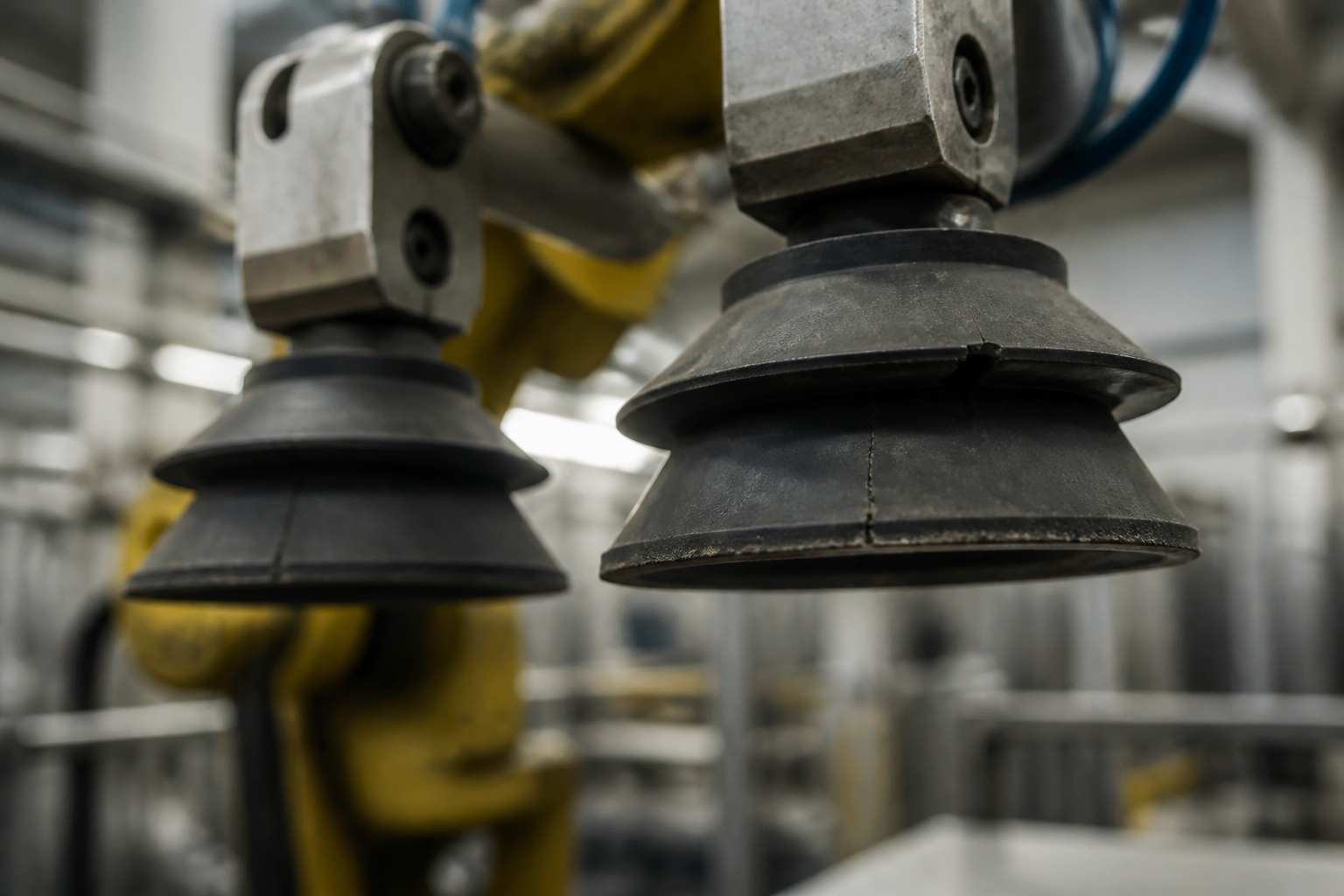
Lip wear, glazing from oily sheet, and cracks from ozone or UV change the seal area. Durometer and cup shape are application choices; the wrong hardness on textured steel is a permanent slow leak. Change cups on a pick count or on rise-time trend, not when someone notices shiny rubber.
Filters and mufflers on the vacuum generator clog with dust and packaging fines. A generator that "still sounds fine" can lose flow and extend evacuate time until motion outruns the seal.
After a cup change
Check: rise time to setpoint on production parts, hold under a short shake or rotate that matches the worst move, and leak-down with cups sealed on a flat plate. Skipping the plate test because "we only changed rubber" is how a cracked manifold gasket becomes a week of intermittent drops.
The robot repeats the path. The grasp repeats only if the cups and the vacuum path repeat. Service them as process seals, not as free bin hardware.