
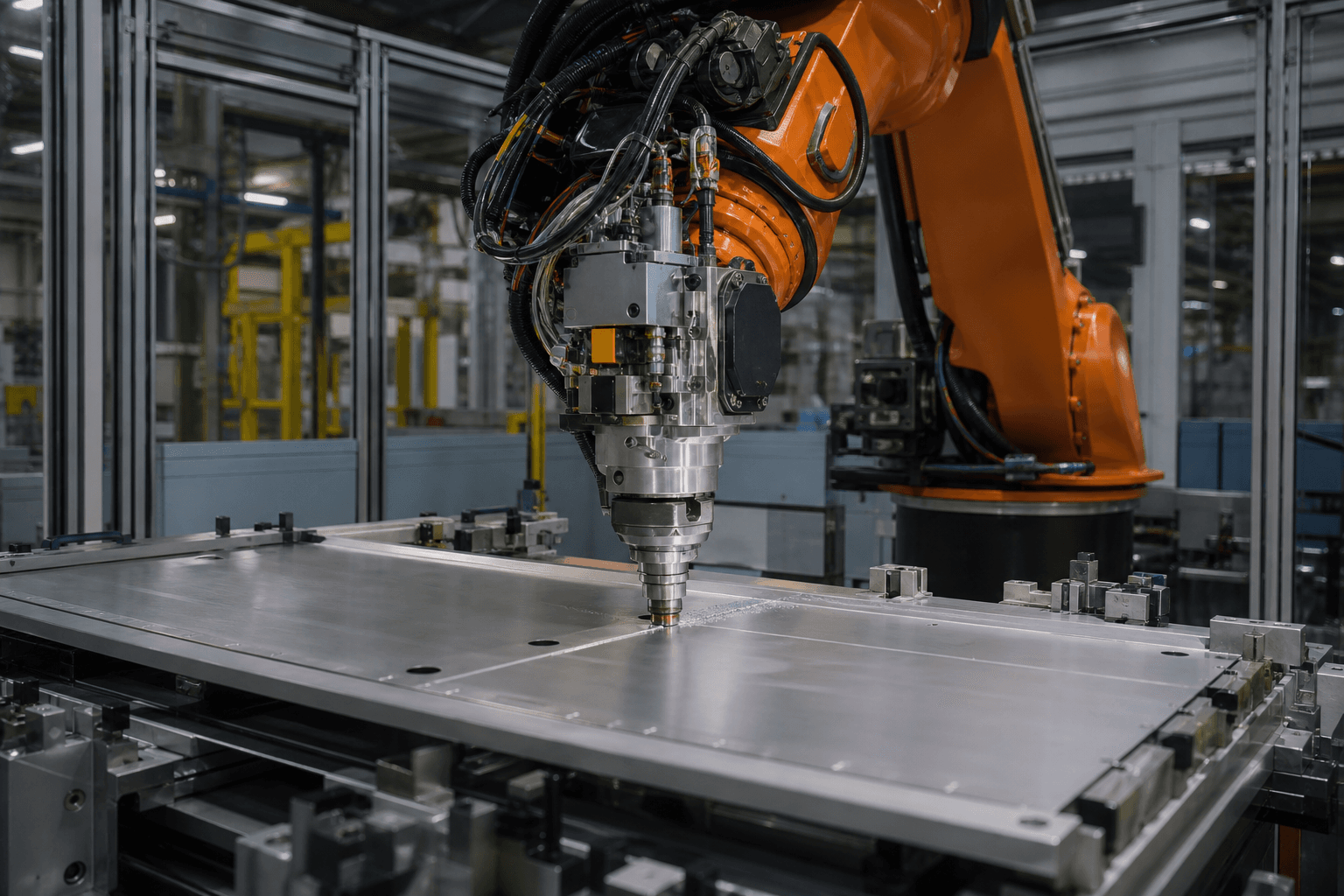
Friction stir welding (FSW) joins without a conventional melt pool: a rotating tool plunges, traverses, and forges a plasticized seam. Robots and gantries make the path repeatable. They do not forgive a worn pin, a soft fixture, or aluminum prep that still carries oxide and oil. Adaptive arc welding owns seam tracking with filler. Laser EV cells own keyhole monitoring. This brief owns robotic FSW as a process cell: force, RPM, travel, and tool genealogy.
What the cell must control before takt talk
- Tool pin/shoulder life — meters of weld logged; dull tools invent wormholes.
- Downforce / forge control — not only TCP path beauty.
- Fixturing stiffness — deflection looks like “robot tuning” and is not.
- Joint prep and gap — FSW hates mystery gaps and contamination.
- NDT sampling — phased array/UT plans that can stop a lot.
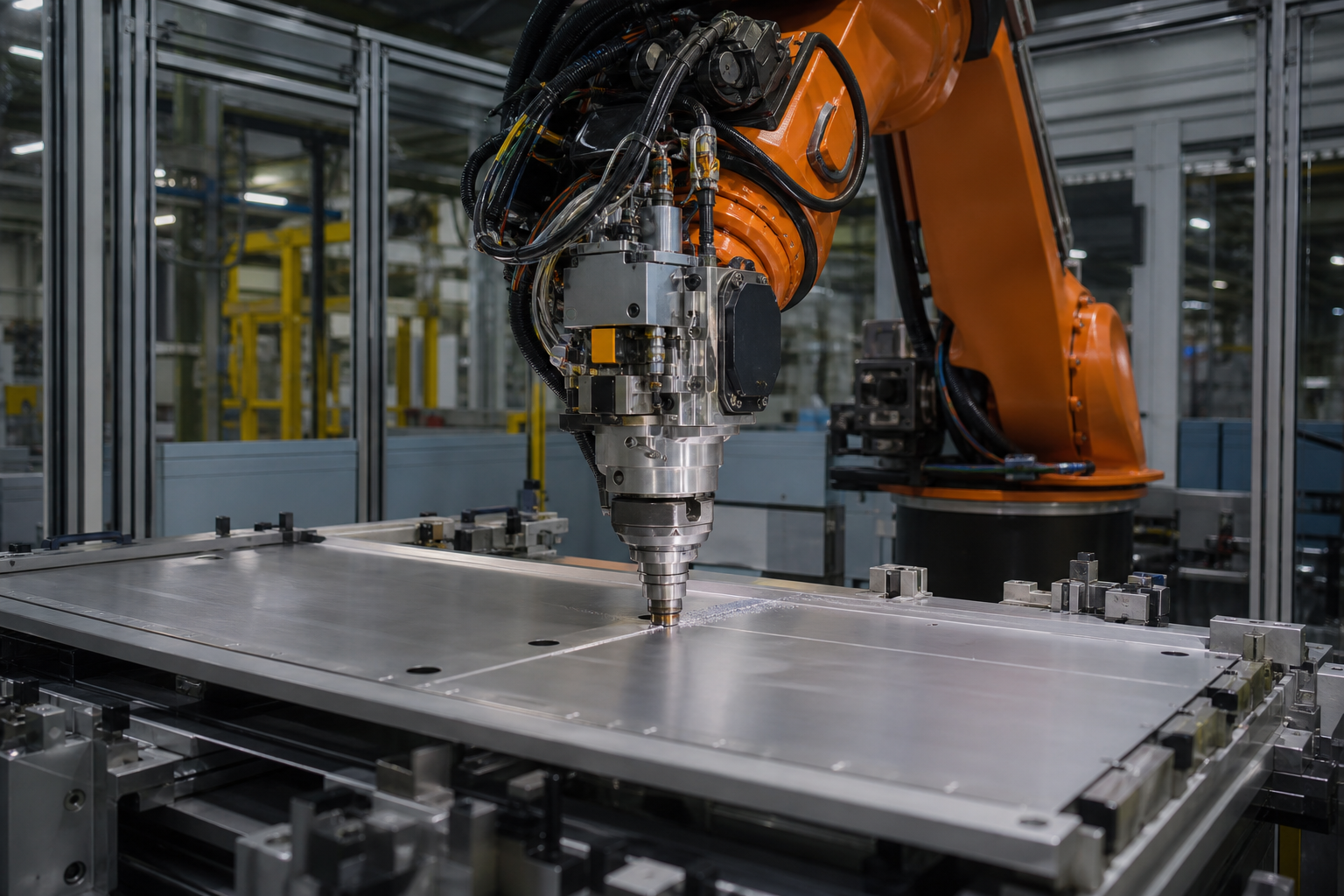
A smooth TCP plot is not a sound nugget.
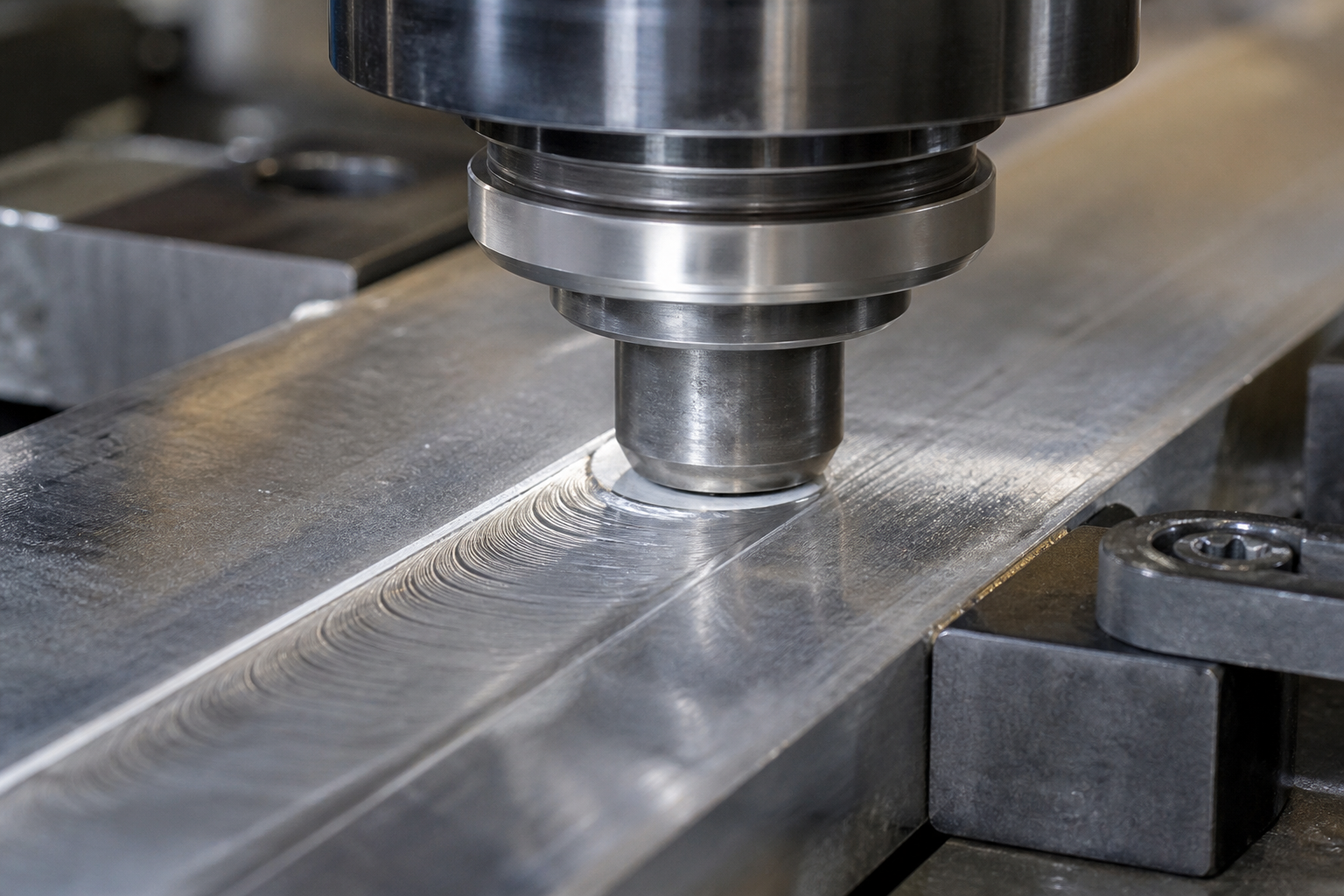
Pin meters are consumable process parameters.
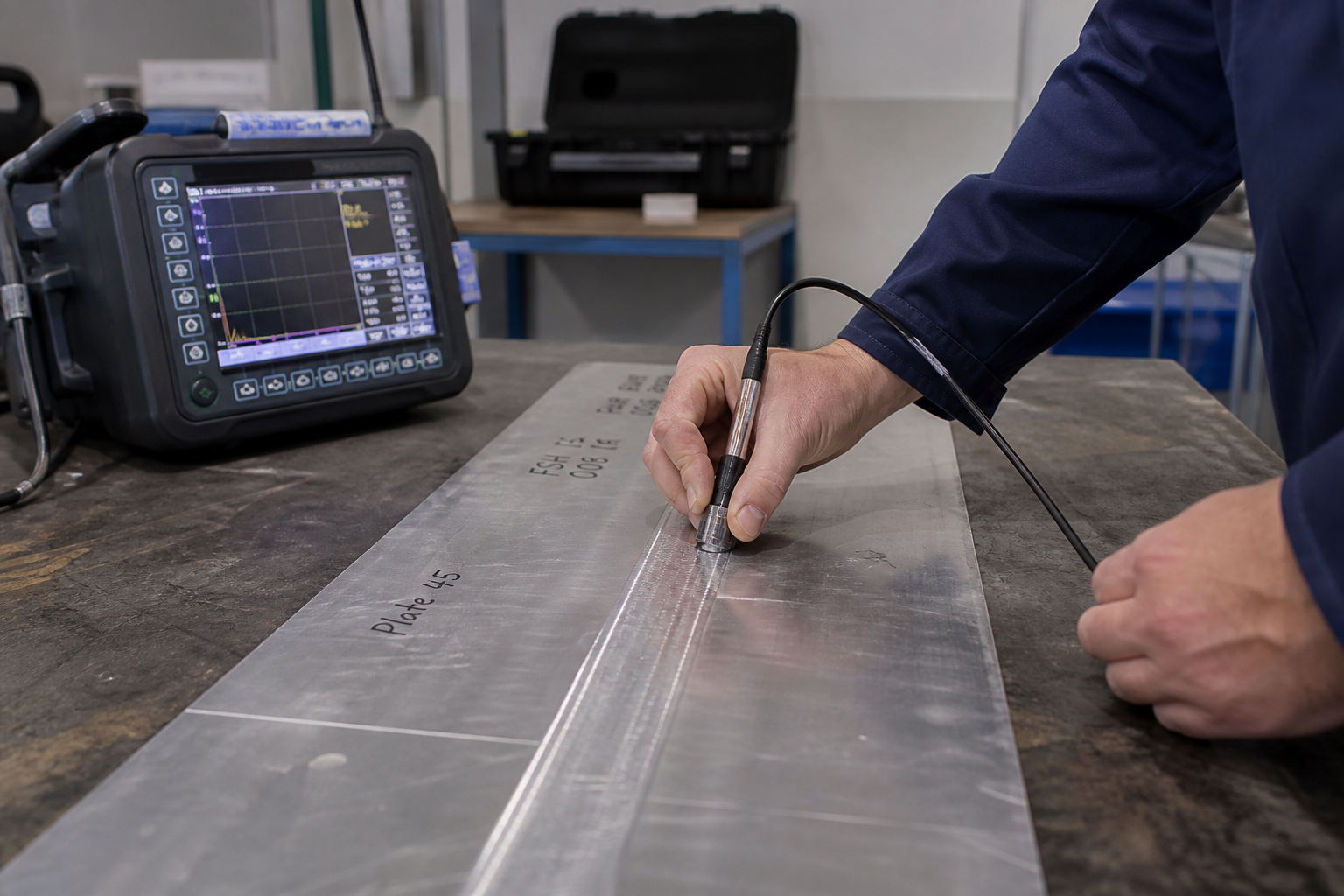
If inspection cannot hold the lot, path repeatability is vanity.
Short rules
- Freeze RPM, travel, forge, and tool ID as one MoC set with the robot program.
- Retire pins by meter count—not by “still looks OK.”
- Treat fixture changes as process changes equal to a path edit.
Adjacent fences
Adaptive AI welding owns arc seams. Laser weld monitoring owns EV tab/bus joins. Robotic NDT owns scan paths. This page owns FSW as solid-state joining robotics. Do not buy a heavy-payload arm and discover tool wear was never in the acceptance test.