
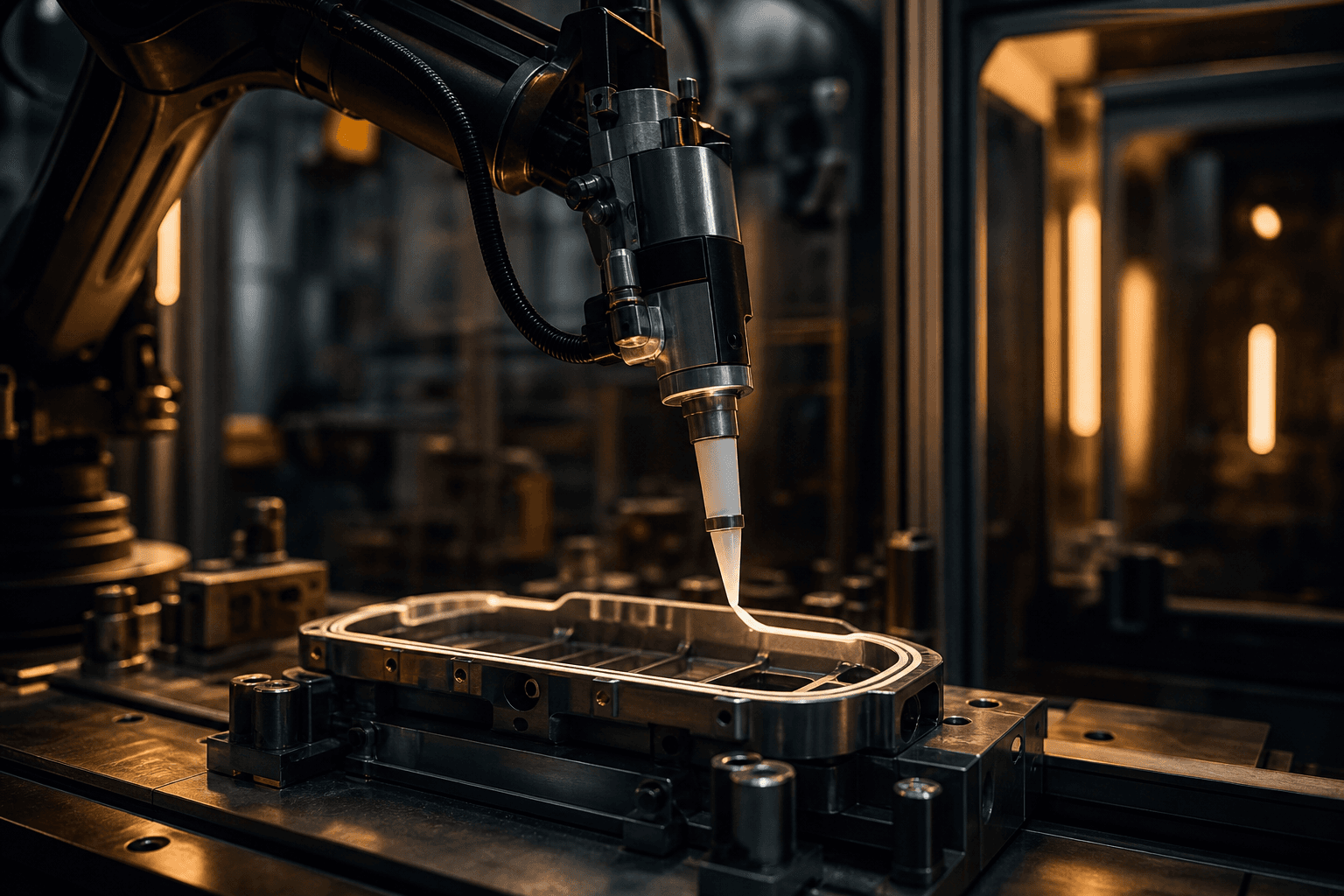
Force-torque cells tighten fasteners. Welding robots close seams. Deburring finishes edges after machining. CNC tending feeds spindles. What still burns manual hours on many lines is adhesive and sealant work: bead paths, potting volumes, and cure windows that reject silently when flow drifts.
Dispense cells combining volumetric metering, path force, and in-line bead inspection are moving from trade-show sealant demos into electronics, battery pack, and structural bonding lines.
The industrial point is wet-process capability with scrap you can measure. A pretty bead video without Cp/Cpk on volume is still a booth.
What adhesive robots change
- Metered recipes — Volume, speed, and temperature as controlled process parameters.
- Bead inspection loops — Vision or laser confirming width before cure.
- Mix and pot life discipline — Two-part systems tied to open-time alarms, not guesswork.
What still fails
Open-loop squeeze-out that floods connectors. Cells without purge, humidity, and material lot traceability. This is not fastener insertion, not weld-path AI, not abrasive finishing, and not CNC load-unload.
What to watch next
- Measured rework cuts versus manual dispense baselines.
- Whether bead metrology survives dusty or oily adjacent stations.
- Standardized dispense recipes shareable across sister plants.
Assembly feels the joint. Dispense owns the bond chemistry that no torque wrench can recover.