
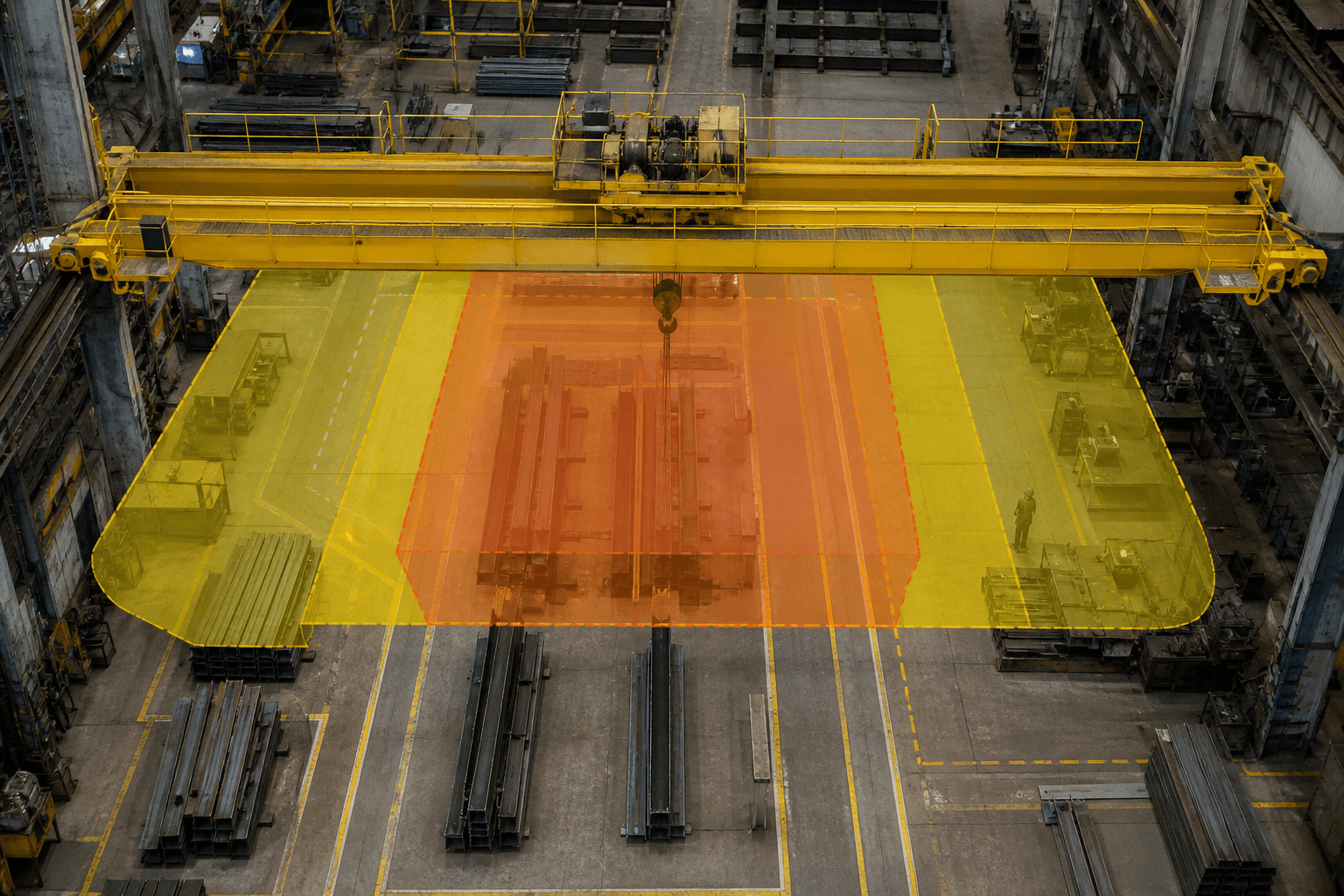
Heavy bays solve congestion by hanging tonnes from runways. Two cranes on a shared runway—or a crane sharing air with a temporary jib, a forklift mast, or a human on a lift—create collision geometry that floor AMR rules do not cover. Anti-collision packages sell lasers, radios, and pretty HMI maps. They fail when the zone map lies: keep-clear volumes that never matched the steel, proof tests that never ran after a layout change, or mute jumpers left from a weekend outage.
AMR deadlock briefs own floor robots. Cobot ISO briefs own collaborative cells. This brief owns overhead crane anti-collision as industrial robotics in the literal sense—machines that move energy through the air people walk under.
What must be true before “sensors installed” means safe
- Named zones in the same coordinate language as the crane drives—not a contractor PDF.
- Speed and stop curves proven under load, not only empty-hook demos.
- Mixed traffic rules for manned lifts, temporary equipment, and adjacent runways.
- Proof-test cadence after MoC: runway extension, new columns, new max load.
- Mute/bypass hygiene with expiry—identical in spirit to scanner muting discipline.
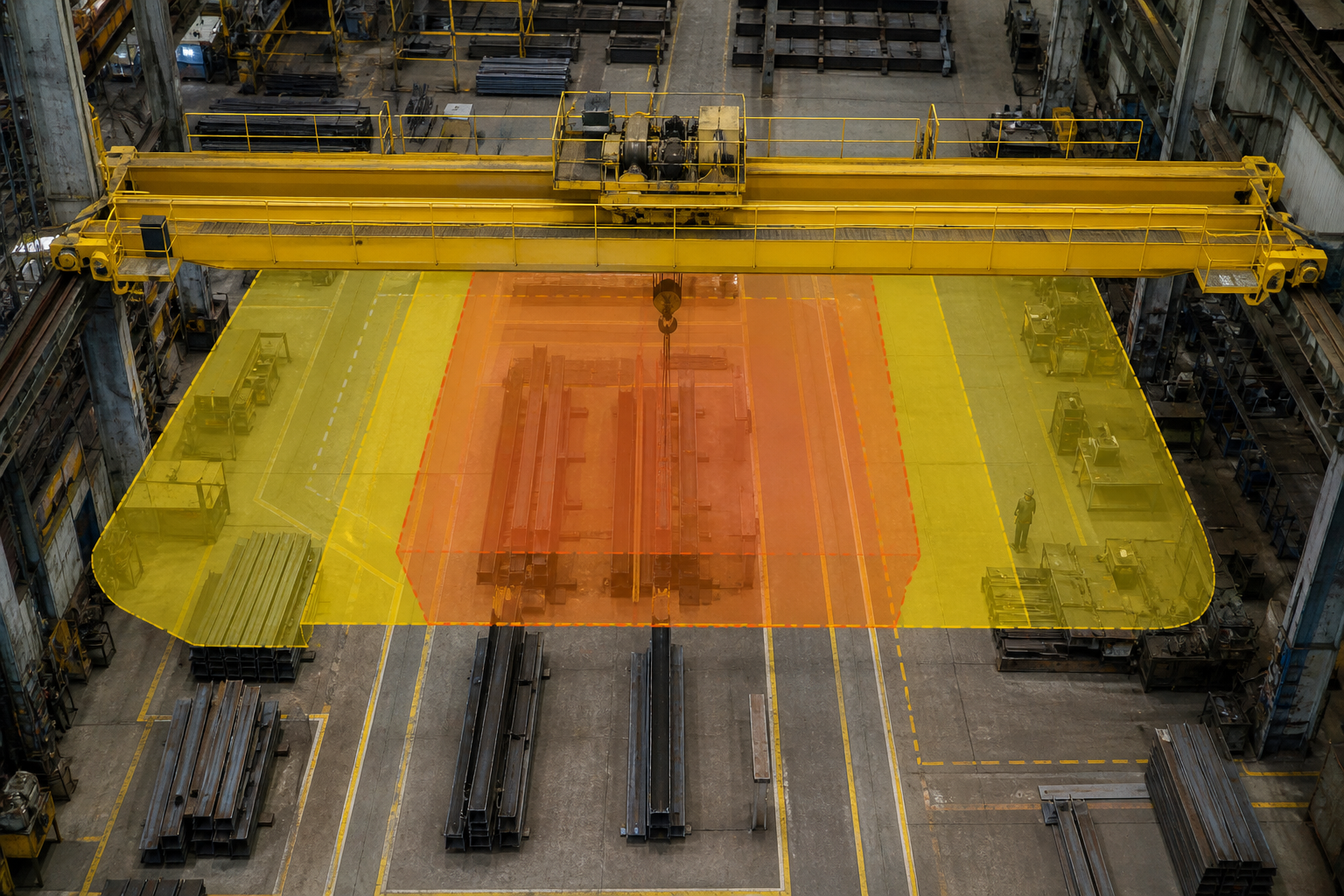
Paint on the floor does not define the volume a hook can occupy.
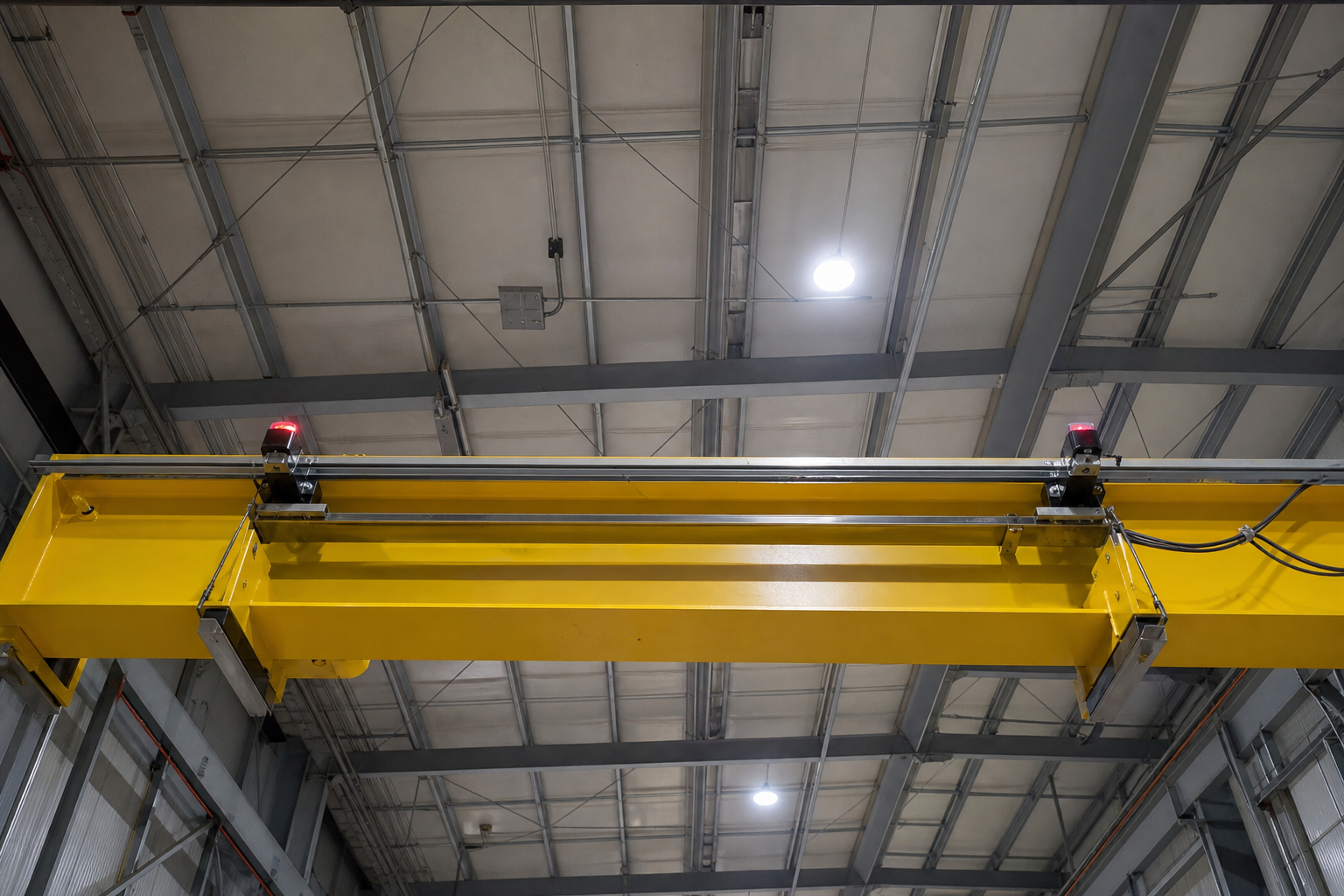
Hardware without a revalidated map is a sticker.
Short operational scoreboard
| Metric | Healthy signal | | --- | --- | | Near-miss logs | Rising reports that trigger layout tickets, not blame | | Bypass hours | Near zero; every hour has a ticket and end time | | Proof-test currency | Dated after last runway/layout MoC | | Operator training | Same zone names on pendant and paper |
An anonymized fab utility bay that added a second crane “temporarily” without rewriting anti-collision zones invented a near-miss that looked like operator error and was really a map error. Temporary became six months. The map stayed one crane wide.
Adjacent fences
AMR intersections own floor fleets. Safety-scanner muting owns cell light curtains. Trailer-unloading robots own docks. This page owns overhead crane collision geometry. Do not hang a second hook and leave last year’s zones in the PLC.