
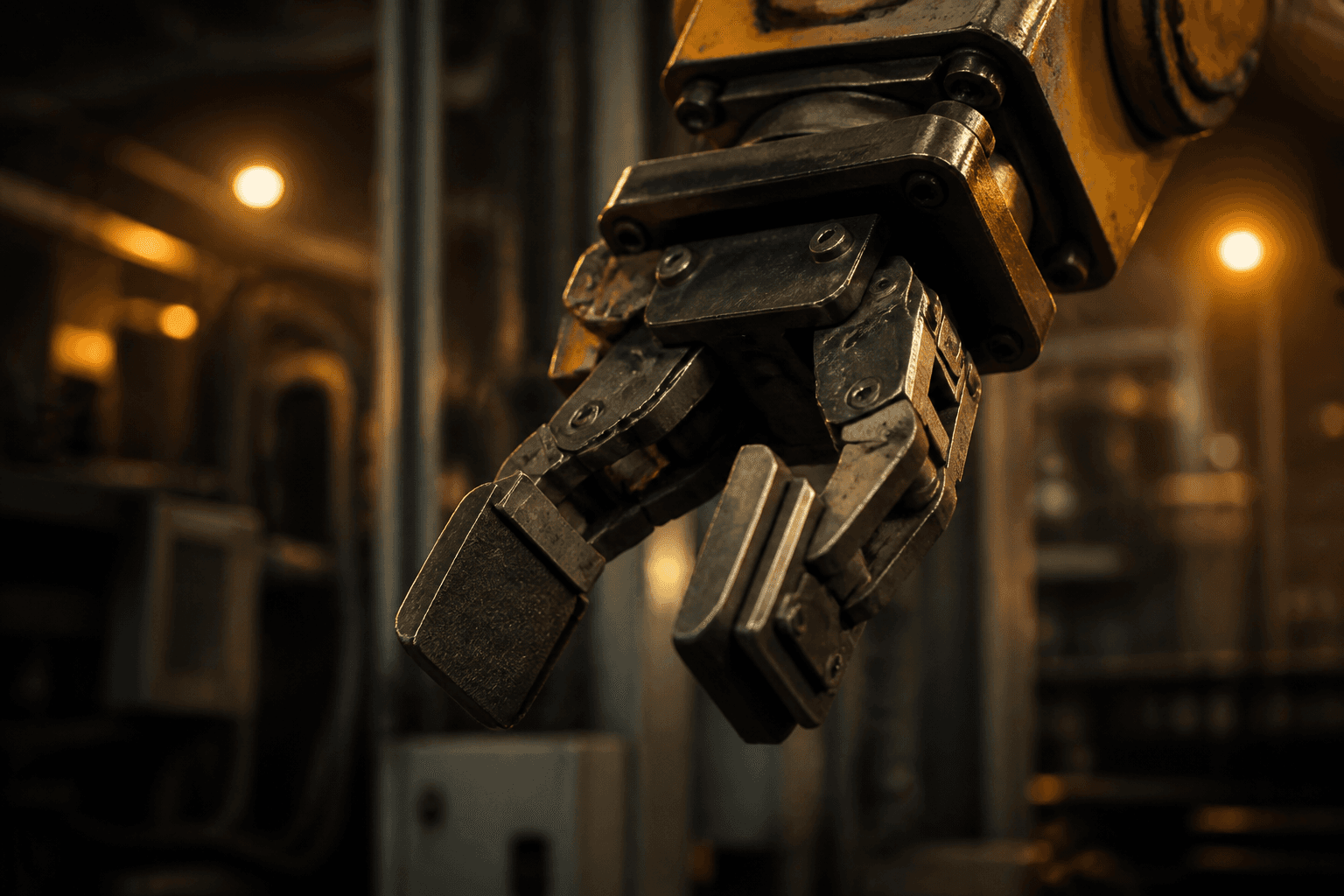
Log: GR-18 · EOAT finger / pad photo series
Cell: High-mix pick (anonymized)
Format: Photo log with captions. Not an EOAT catalog.
Frame 01 — Install day
Fingers sharp, pads matte, edges square.
CMMS: "new gripper."
Caption: baseline. Without this photo, later arguments are theology.
Frame 02 — Week 3
Polished flats on contact faces. Still "grip OK."
Retry count +12%. Nobody owned retries yet.
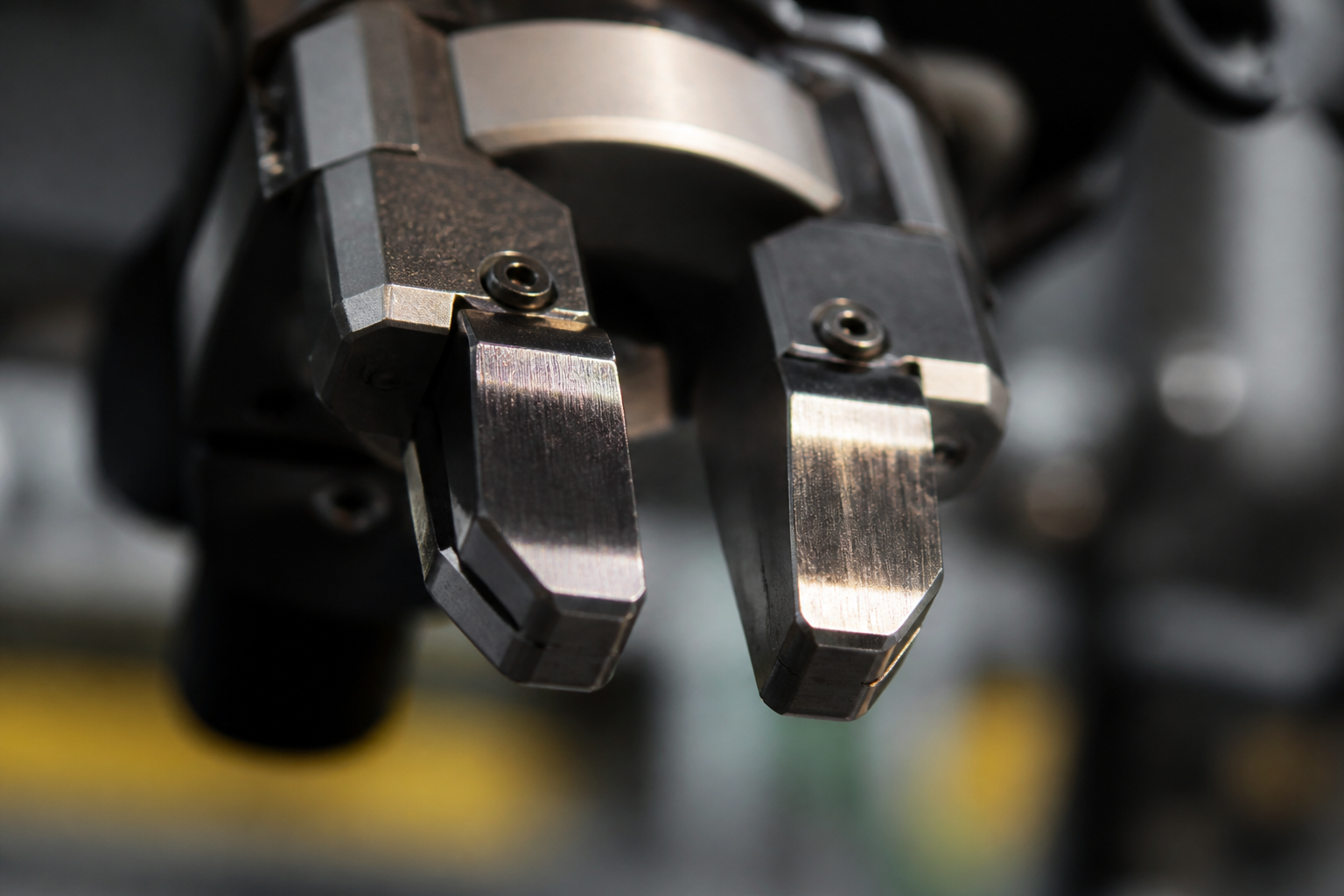
Polish is data. Retries are the invoice.
Frame 03 — Week 6
Chip-out on left finger corner. Part slip on glossy SKU only.
Production: "robot problem."
Photo: geometry problem.
Frame 04 — Week 7 (after 'clean pads')
Solvent clean glazed pads harder. Friction down. Retries spiked.
Caption: cleaning ≠ renewal.
Frame 05 — Replace
New fingers. Retry rate returns.
CMMS finally gets a photo attachment rule.
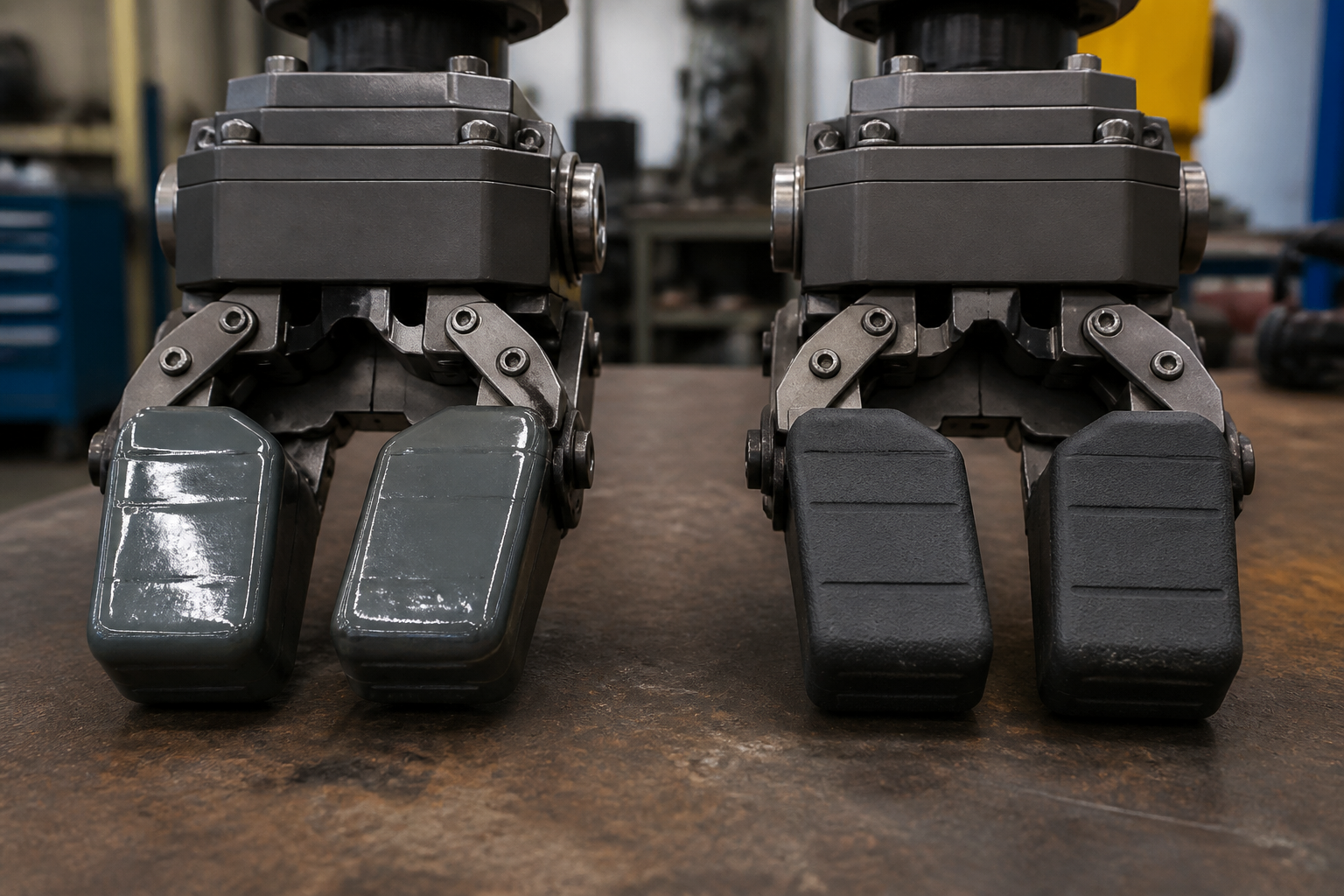
If the pad shines like a shoe, friction already left.
Photo-log rules
- Baseline photo at install (serial visible).
- Weekly contact-face photo at same angle / light.
- Any chip-out → red tag, not "monitor."
- Solvent clean logged; if glaze appears, replace pads.
- Retries trend linked to photo ID in ticket.
Adjacent fences
Cycle waterfalls own where seconds go. Payload logs own mass/inertia lies. Tool-changer briefs own dock seals. Dress-pack guides own cables. GR-18 owns wear visible in pictures. Do not raise grip force to hide a chipped finger.
Close
The gripper keeps a better timeline than the CMMS—if you take the pictures.