
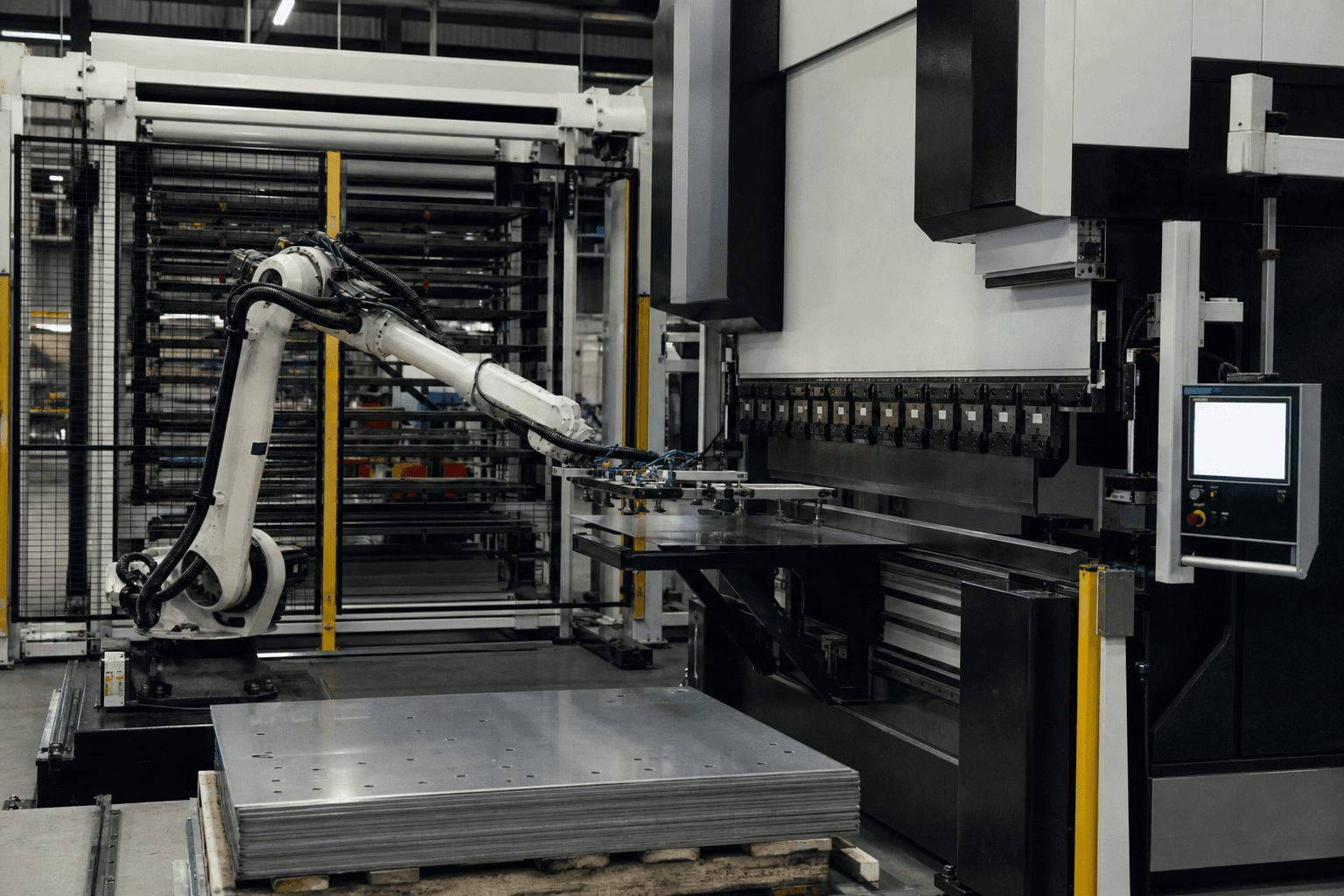
Loading blanks into a press brake looks like classic machine tending. It is not. The robot must present sheet to backgauges, survive flange growth after each bend, and often re-grip between steps without crumpling cosmetic faces. Pick success rates from a demo nest do not predict whether the cell holds angle tolerance across a tool change.
CNC tending briefs own lathe/mill load-unload. Palletizing owns end-of-line stacks. This brief owns robotic press-brake cells as a fabrication robotics problem: sequence, springback, and measurement inside the cycle.
What the cell must solve besides reach
- Blank orientation and grain — wrong face up invents scrap later.
- Gauge and robot handshake — collision envelopes change as flanges rise.
- Bend sequence — some orders make later grips impossible.
- Springback compensation — angle feedback or adaptive crowning hooks.
- In-cell check — laser/probe sample so scrap does not wait for the QC table.
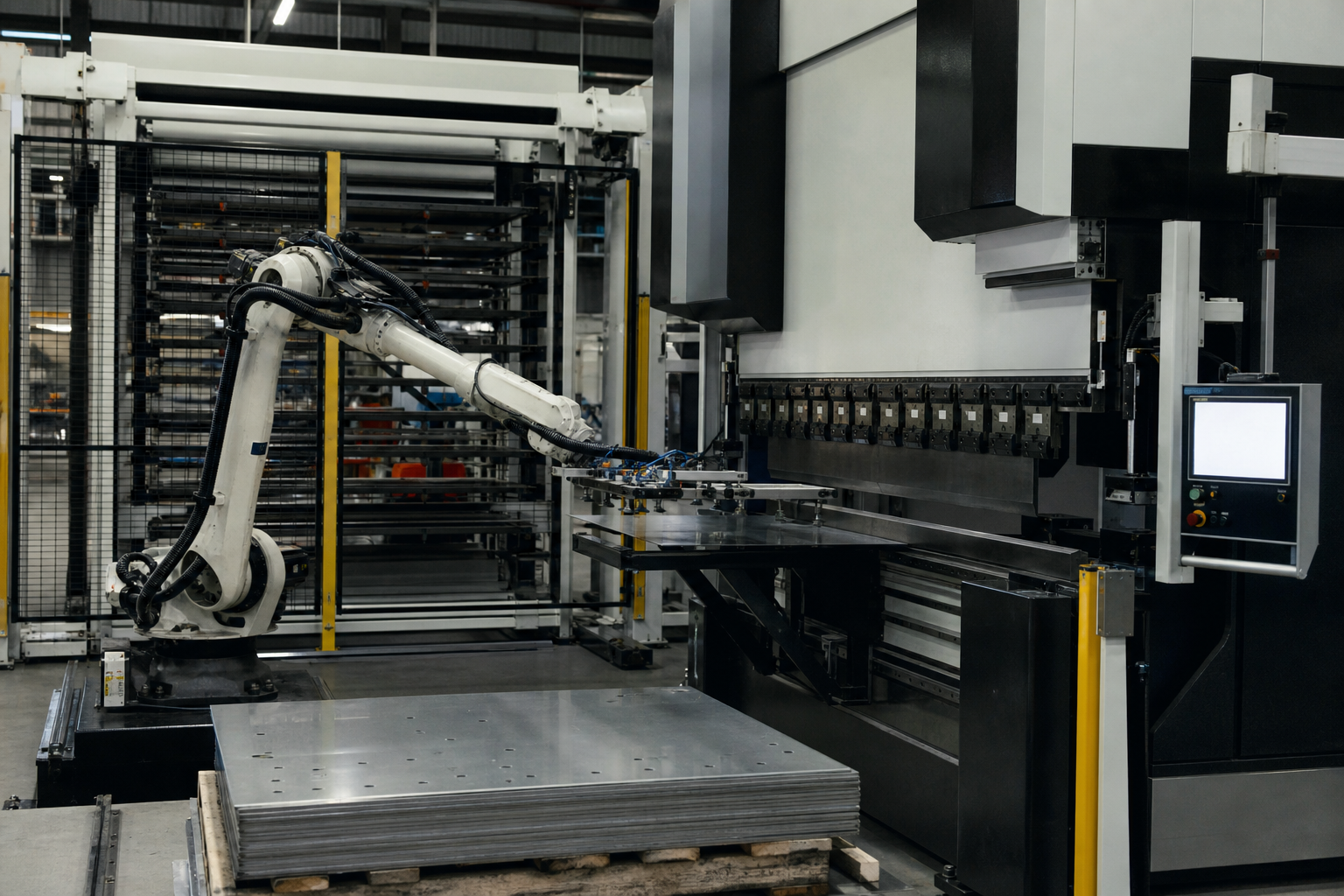
A successful pick is the easy frame of the video.
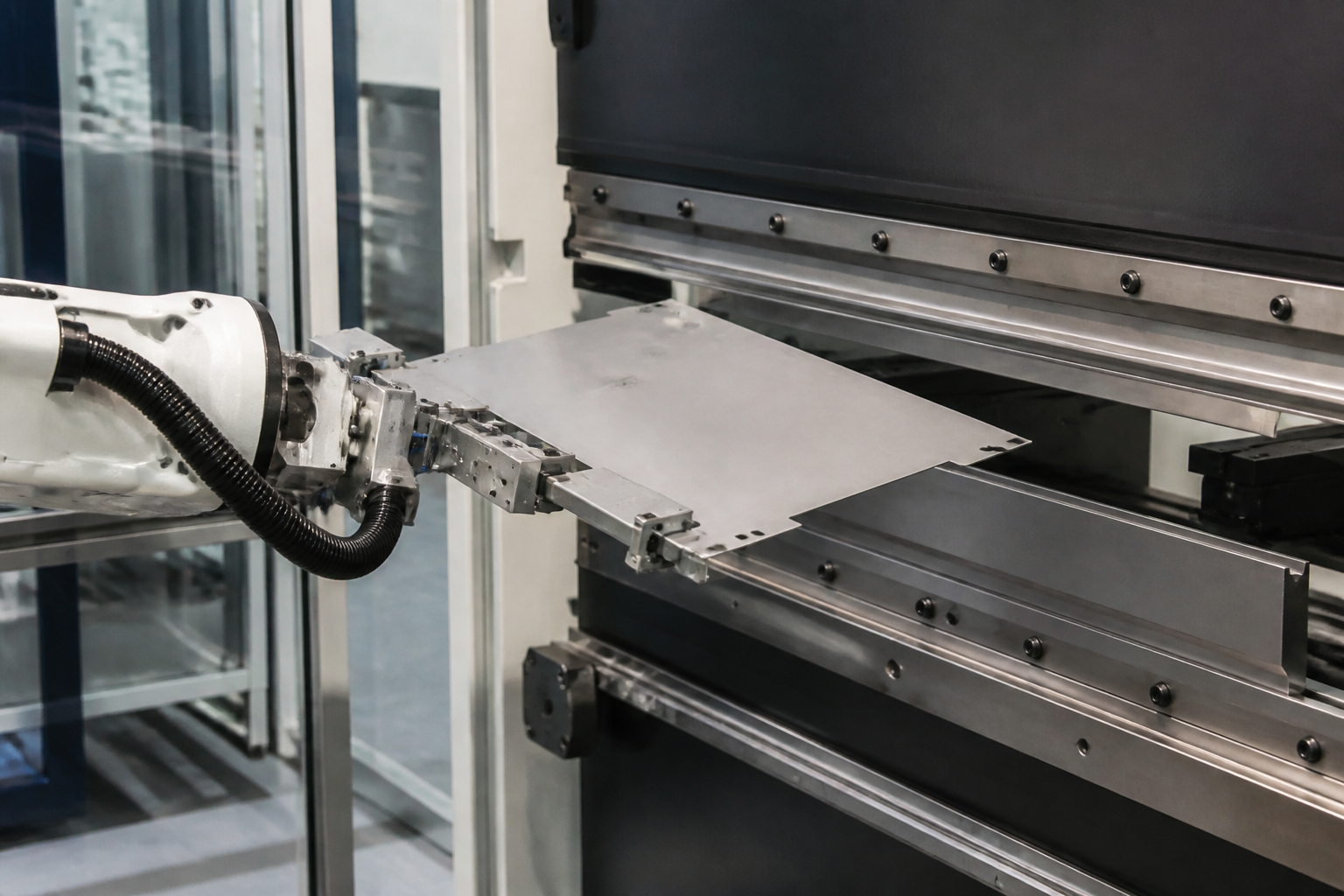
Flange growth rewrites the collision map mid-cycle.
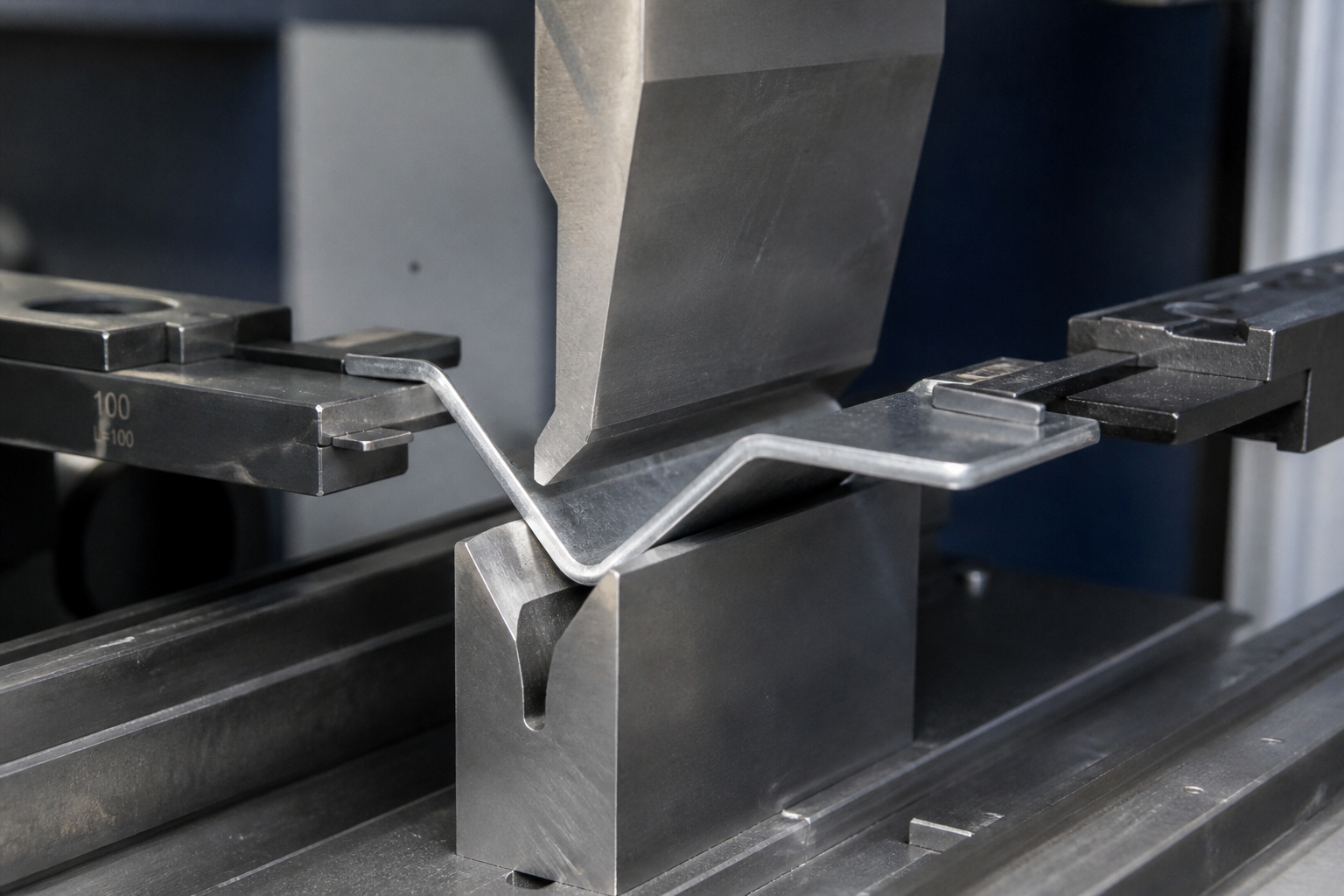
Angle truth belongs in the cell, not only in the CMM room.
Short rules that keep fabrication robotics honest
- Freeze tool setup, robot paths, and gauge programs as one MoC set.
- Ban “same robot job, new thickness” without a springback trial.
- Count first-article angle escapes as cell KPIs, not only robot availability.
Adjacent fences
CNC tending owns chip-making machines. Deburring cells own edge finish. Force-torque assembly owns precision inserts. This page owns press-brake tending as bend-process robotics. Do not buy a six-axis and discover springback was never in the acceptance test.