
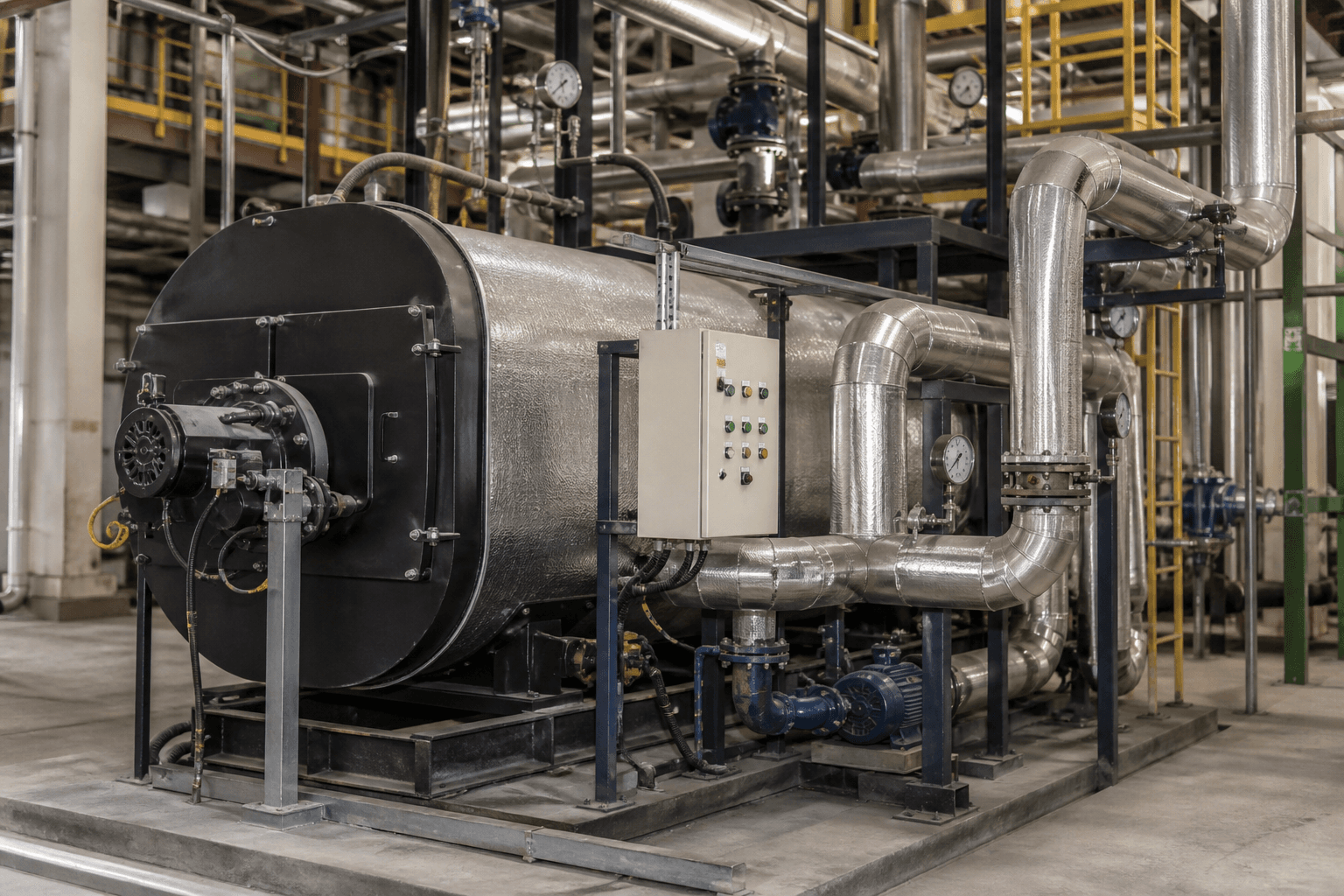
Hot-oil (thermal oil) loops carry process heat where steam is inconvenient, where freeze risk matters, or where a closed organic fluid fits the temperature band better than water. Plants often treat the heater as a black box with a set point and a pump. The failure modes are slower and uglier: oxidized fluid that thickens, coke films that raise metal temperature, expansion tanks that breathe wrong air, and relief paths that nobody walks until a smell appears in the mechanical room. Electrode boilers own electrified steam CapEx. Industrial heat pumps own mid-range reclaim. This brief owns thermal-oil heater integrity—fluid life, film temperature honesty, and the mechanical envelope that keeps a “stable oil temperature” from becoming a fire investigation.
The three truths the loop must keep
- Bulk temperature is not film temperature. A tidy outlet TI does not prove the heater tube wall is living inside the oil’s rated film limit.
- Fluid is a consumable with a chemistry biography. Acid number, viscosity, flash point drift, and insolubles are process variables—not lab hobbies.
- Expansion and inerting are part of heat transfer. A neglected expansion tank turns oxygen into an oxidizer feed and water into a flash risk.
Miss any one and the plant will still report “oil temperature OK” while the heater quietly cooks deposits.
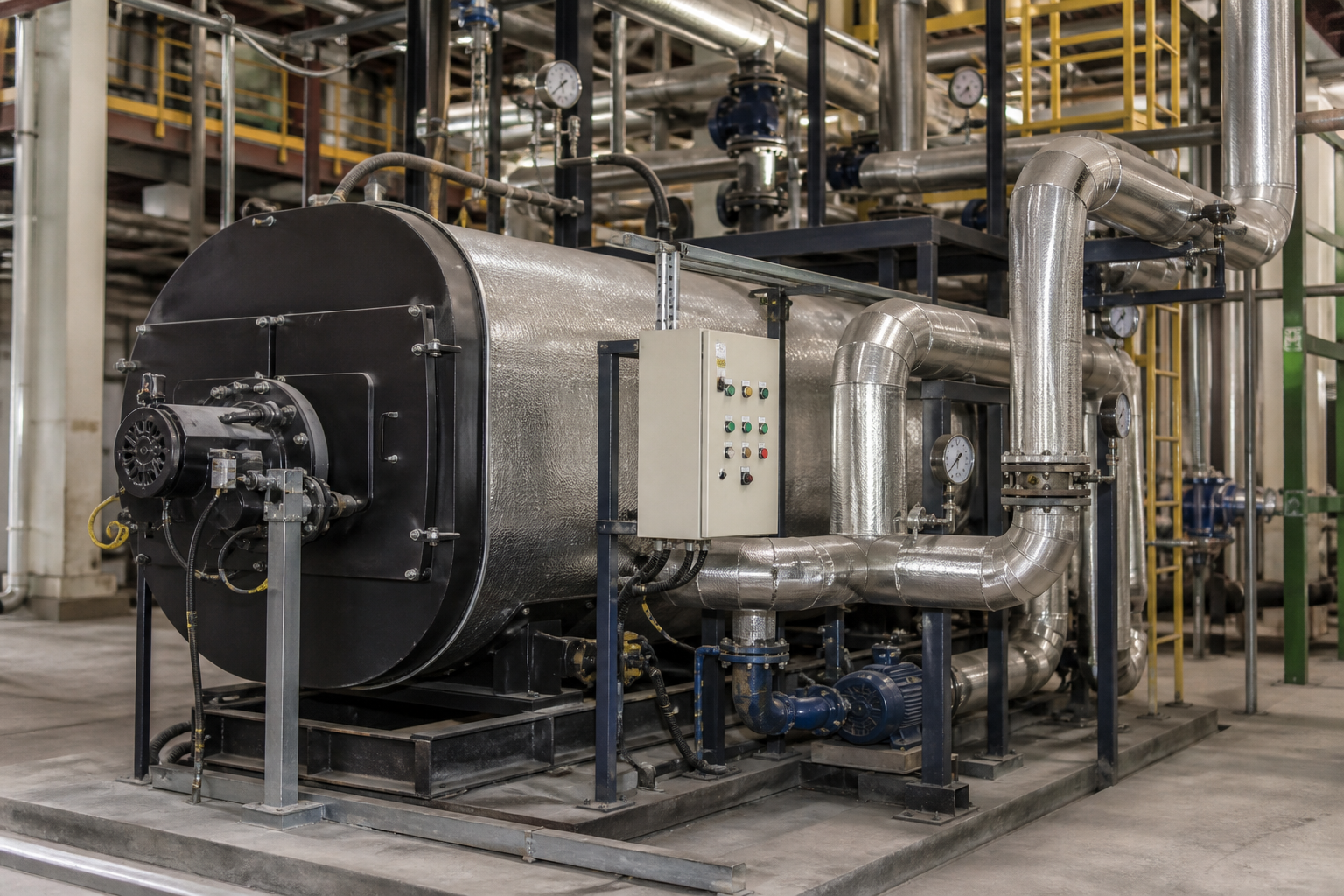
A green outlet temperature is not a film-temperature certificate.
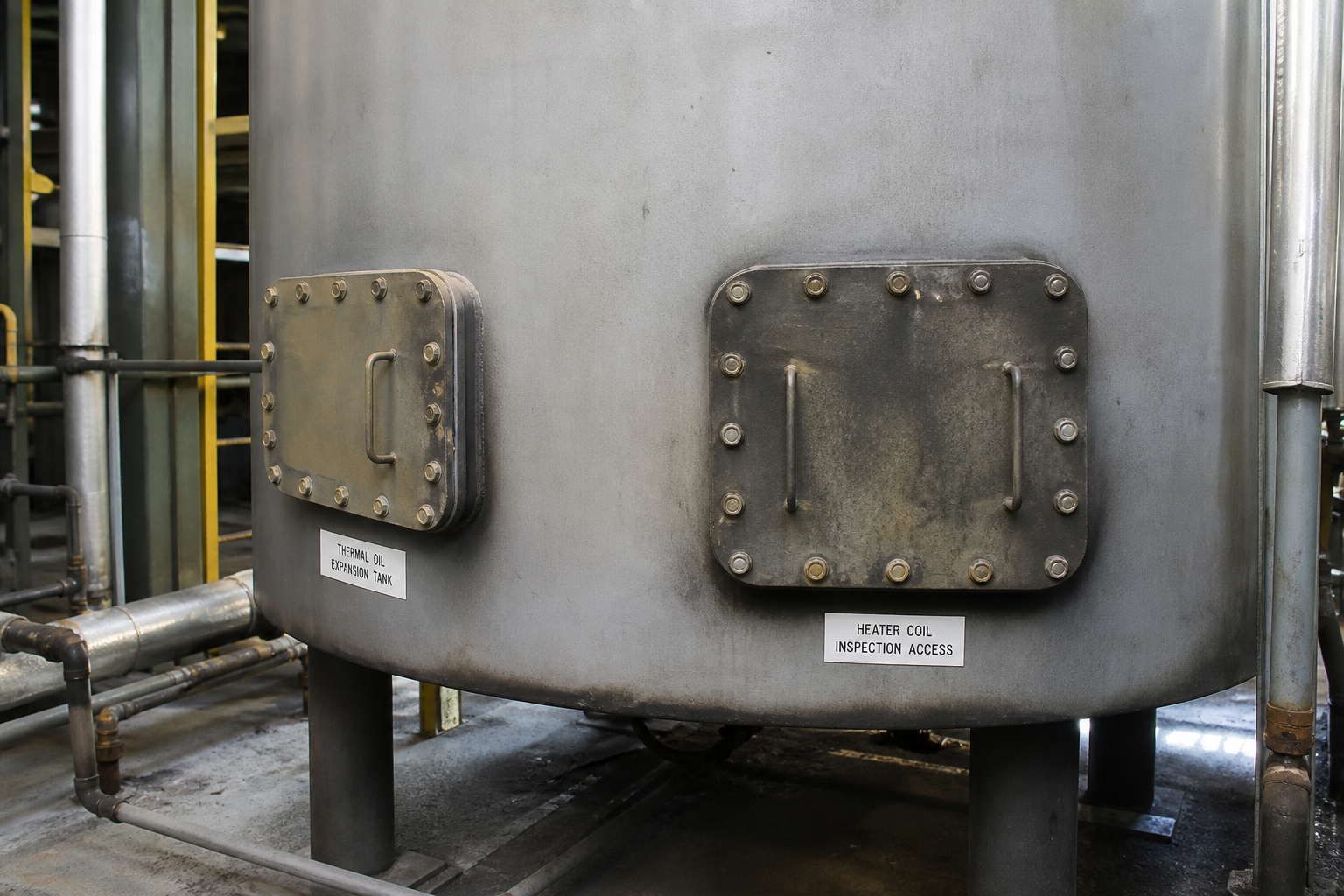
Expansion tanks decide whether the fluid ages as designed or as an open oxidizer experiment.
What integrity programs actually sample
| Check | Asks | Neglect looks like | | --- | --- | --- | | Fluid analysis trend | Is degradation accelerating? | Sudden viscosity jump, varnish, filter plugging | | Heater differential / firing vs load | Is heat transfer fouling? | More fire for same process duty | | Expansion tank level / blanketing | Is air or moisture ingress normal? | Foam, corrosion products, odor events | | Tube / coil inspection windows | Is coke building where TI cannot see? | Hot spots, tube thinning narratives after the fact | | Circulation interlocks | Can you fire without flow? | Classic heater damage path |
An anonymized specialty-chemicals site ran hot oil for years on “change oil when it looks dark.” A planned heater inspection found film-side deposits thick enough that the effective film temperature had been living above the supplier’s guidance while the bulk TI stayed polite. The oil change alone would not have fixed the heater geometry problem. They needed both: fluid refresh and a firing/load discipline that stopped chasing process demand by overfiring a fouled coil.
Operating rules that survive audits
- Treat maximum film temperature as a design constraint, not a sales footnote.
- Trend fluid labs on a calendar tied to heater hours and peak film estimates—not only to the last filter change.
- Never leave circulation and low-flow trips as “nuisance” alarms during cold starts.
- Document nitrogen blanketing or dry-air policy for the expansion system; open breathers are a chemistry decision.
- Tie heater MoC to burner, coil, and fluid brand changes with the same seriousness as a steam boiler fuel swap.
Adjacent fences
Industrial heat pumps own reclaim where temperatures fit. Electrode boilers own steam electrification. CHP owns combined heat-and-power products. Cooling-tower chemistry owns the wet rejection side. This page owns hot-oil heater and fluid integrity as process-heat reliability. Do not electrify the steam plant and ignore the thermal-oil loop that still sets reactor jacket truth.