
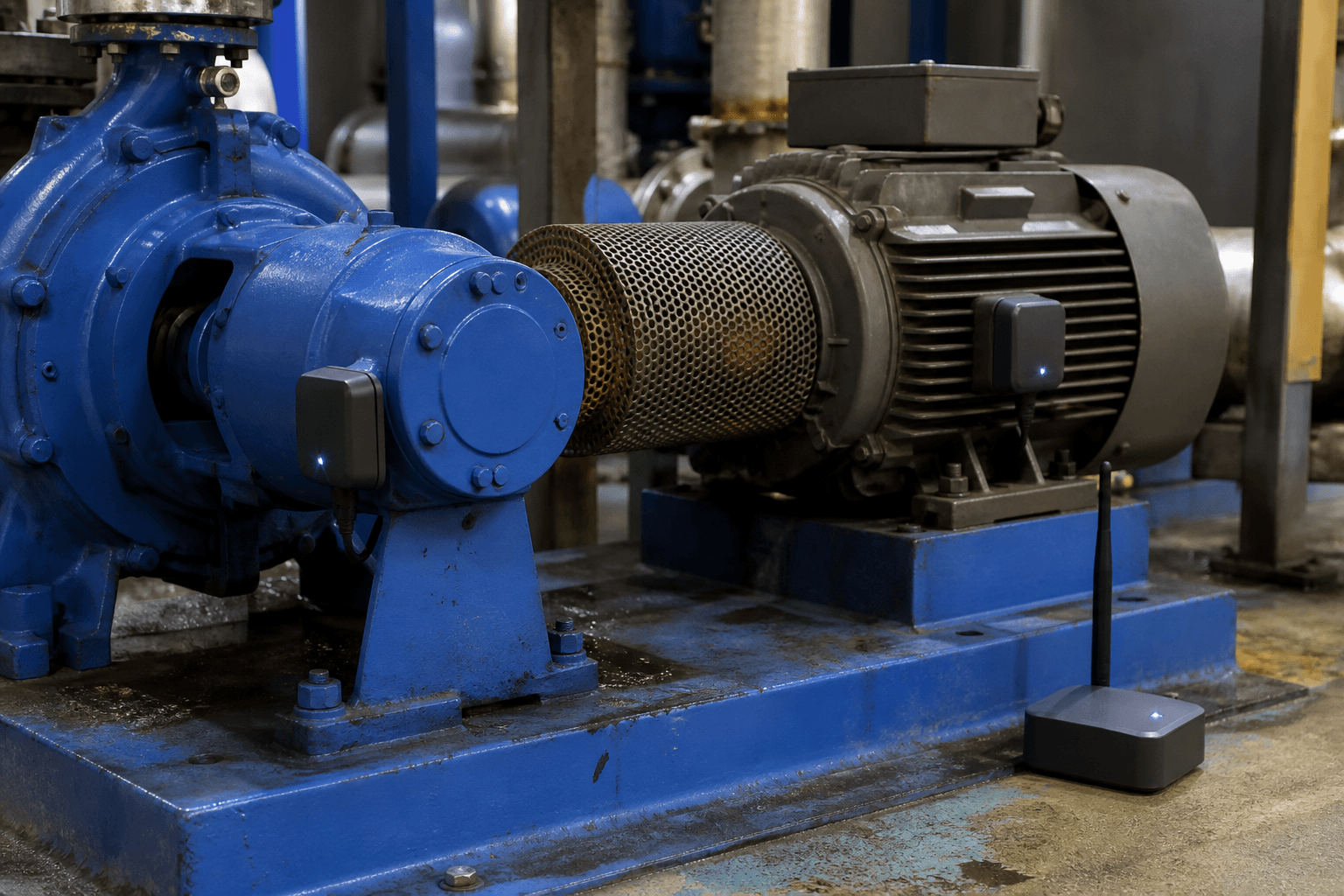
Wireless vibration sensors promise coverage without the cable tray politics that kill many PdM programs. The industrial failure mode is subtler than “sensor fell off.” Mesh congestion, gateway brownouts, battery duty-cycle throttling, and store-and-forward delays create gaps that feature pipelines treat as calm. A bearing that screamed for twelve minutes during a radio blackout can look like a healthy trend once the buffer flushes a downsampled peace. Historian compression traps own lossy storage of tags that already arrived. Tag-alias collisions own wrong-signal training. This brief owns missingness as a model poison in wireless vibration meshes: if your PdM stack cannot distinguish “quiet machine” from “quiet radio,” it will schedule confidence, not maintenance.
What the mesh must prove before models deserve trust
- Delivery ratio by asset and by hour—not a site-wide “99% uptime” vanity metric.
- Gap flags in the feature store—explicit missing intervals, not interpolated lullabies.
- Clock discipline—skewed timestamps turn spectra into fiction across gateways.
- Battery / duty-cycle policy that does not silently drop high-value bursts to save a coin cell.
- Gateway capacity math—node count × report rate × retry storms under interference.
Models trained on “complete-looking” series that were actually gappy learn the plant’s radio geography, not its bearings.
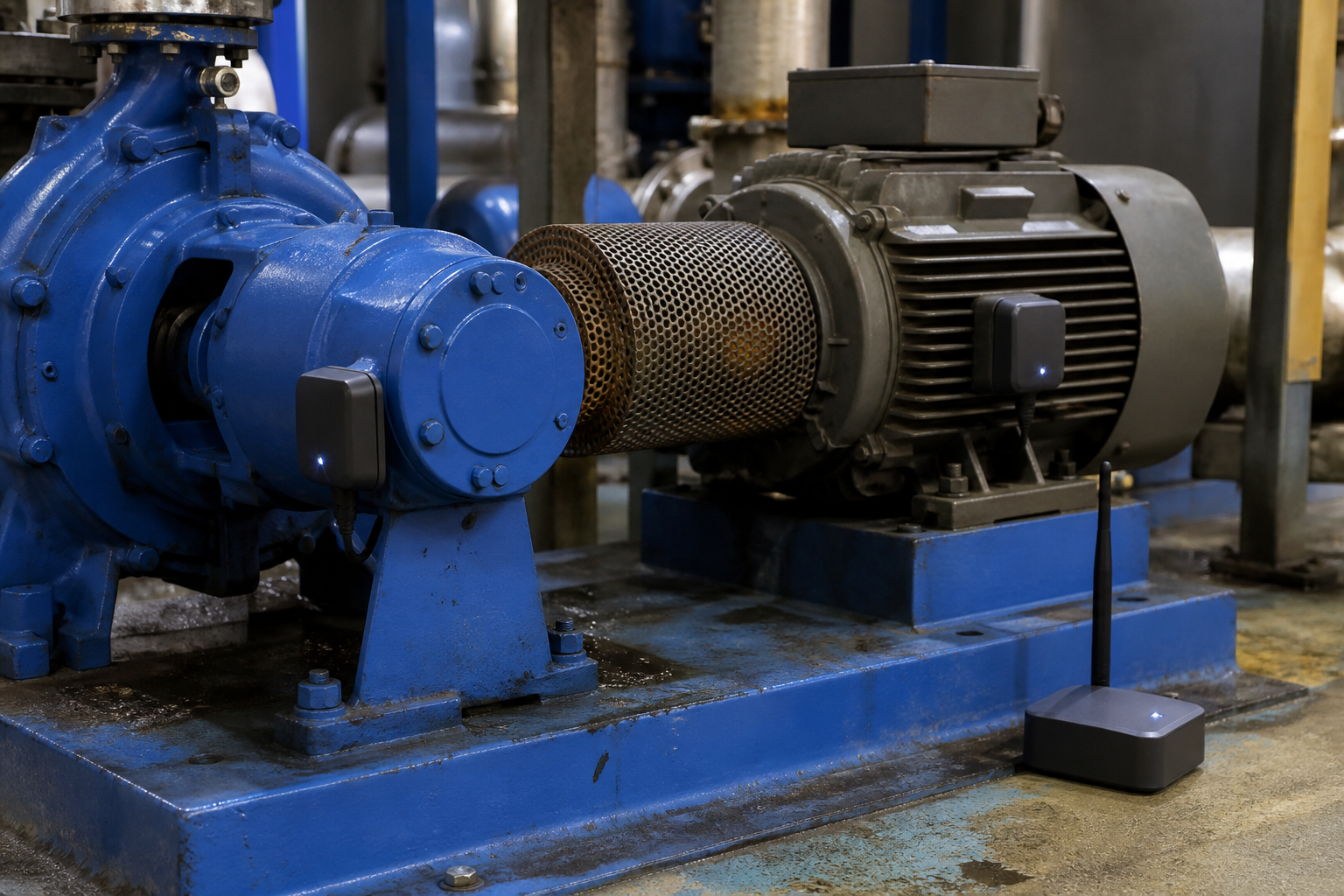
A mounted sensor is not a delivered spectrum.
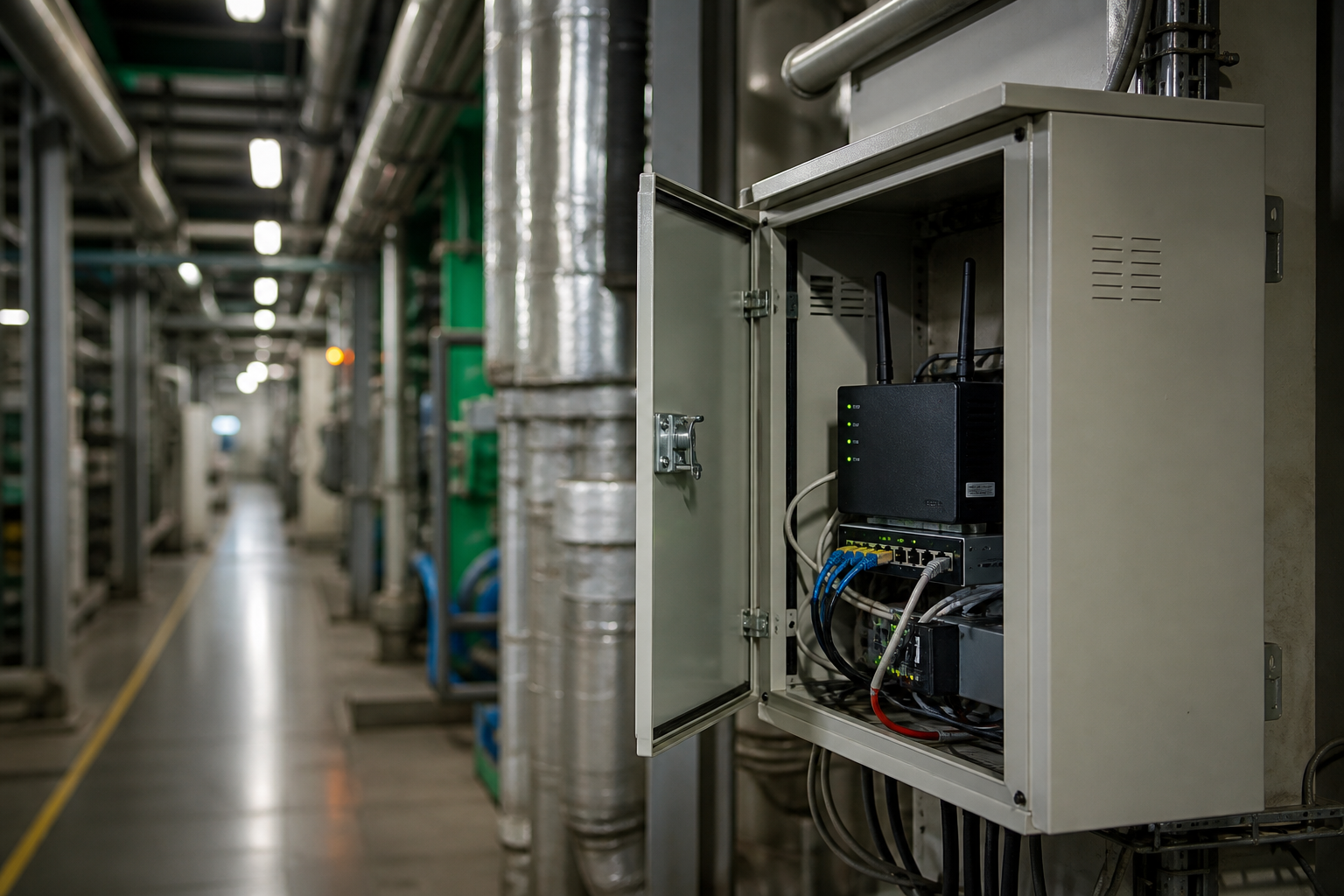
Gateways are process equipment; treat congestion like a process limit.
How gaps become false negatives
| Mesh event | What the feature pipeline often does | PdM lie that follows | | --- | --- | --- | | Multi-minute radio outage | Forward-fill or skip; treat as no event | Missed transient fault | | Burst retries after restore | Late timestamps mixed into “current” window | Phantom severity or washed peaks | | Duty-cycle throttle | Fewer samples labeled as “normal low energy” | Under-alarm on degrading assets | | Gateway reboot | Silent hole across many assets at once | Fleet-wide “improvement” mirage | | Wrong AP / mesh hop saturation | Chronic thin data on one aisle | Model thinks that aisle’s machines are saints |
An anonymized food-processing plant rolled wireless vibration across pumps and fans, then celebrated a drop in “alerts.” A post-incident review after a pump seizure found the mesh had been dropping the worst aisle during washdown interference for weeks. The dashboard looked calmer because the evidence never arrived. They did not need a fancier neural net first. They needed gap KPIs on the same screen as overall vibration health.
Practical gates for AI / PdM owners
- Refuse production PdM go-live without per-asset gap budgets and alarm on chronic missingness.
- Store raw arrival metadata (sequence, RSSI/link quality where available, gateway ID) with the vibration features.
- Train and evaluate models with explicit missing-data regimes—not only with clean lab captures.
- Separate “sensor fault,” “mesh fault,” and “machine fault” in work-order taxonomy so CMMS learns the real failure modes.
- Treat gateway firmware and channel plans under MoC the way you treat PLC firmware—because they change the data truth.
Adjacent fences
Historian compression owns lossy storage after points arrive. Tag aliases own wrong-tag training. Time-series foundation models own model-class choice on OT historians. Soft-sensor model cards own virtual measurement governance. This page owns wireless vibration mesh delivery and gap honesty as PdM data integrity. Do not buy more sensors until missingness is a first-class signal.