
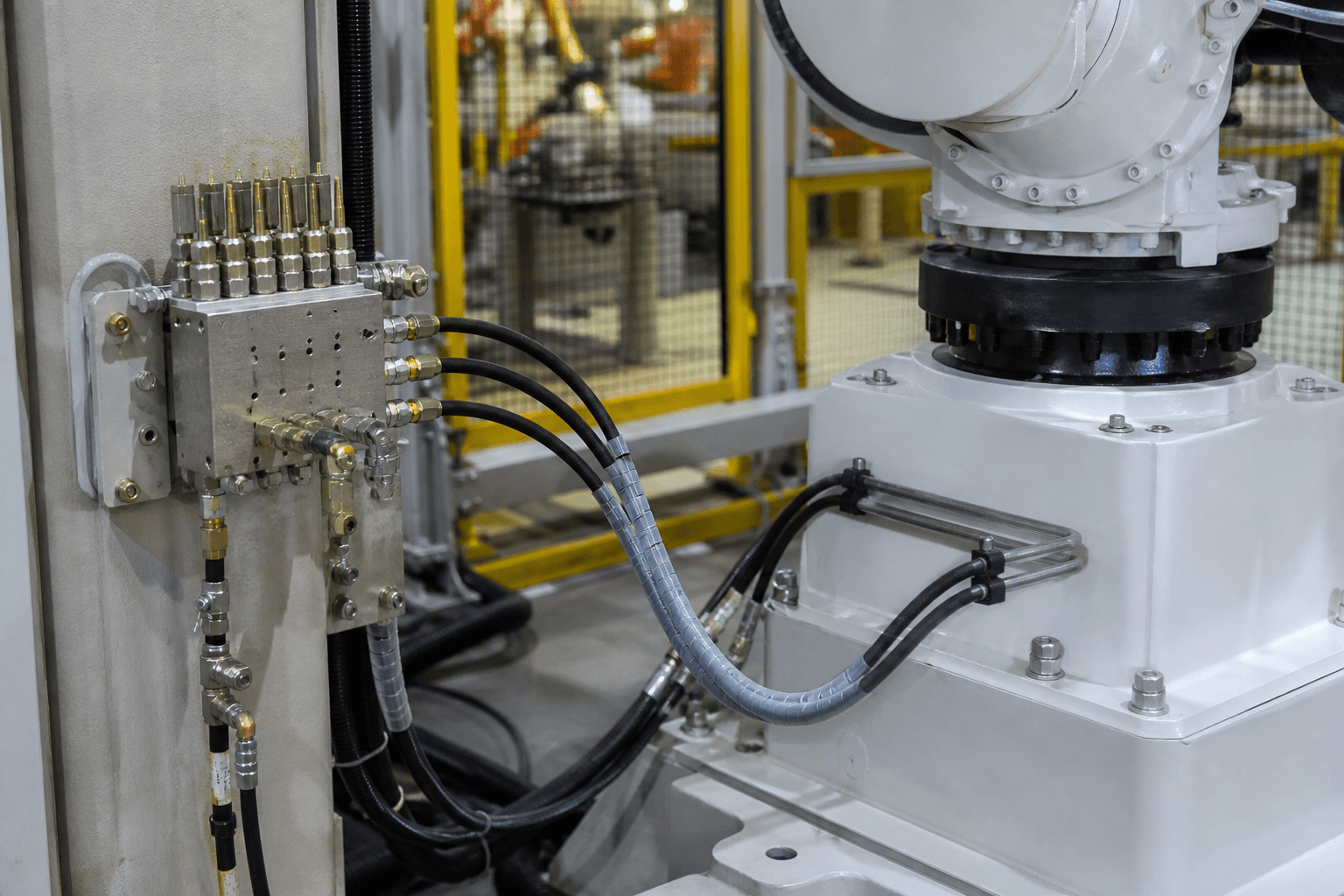
Centralized or progressive grease systems on robot cells are sold as set-and-forget reliability. The pump cycles on a timer. The alarm stays dark. One axis still wears early. Progressive divider valves meter grease in sequence; when a piston sticks or an outlet plugs, downstream points starve while upstream points may over-grease. The hourmeter looks healthy. The wrist does not.
This is not dress-pack cable management, not joint grease contamination chemistry alone, and not recommissioning after a motor swap. It is divider and distribution honesty for automatic lubrication.
What the divider is doing
A progressive block moves grease port-by-port. A jammed piston or capped outlet that was “temporary” during install breaks the sequence. Some designs alarm on cycle failure; many cells only prove that the pump motor ran. Proximity or cycle switches that were bypassed after nuisance trips invent silent starvation.
Grease grade, NLGI, and base oil must match OEM and ambient. Mixing tubes of incompatible grease turns dividers into glue factories.
Practices that hold
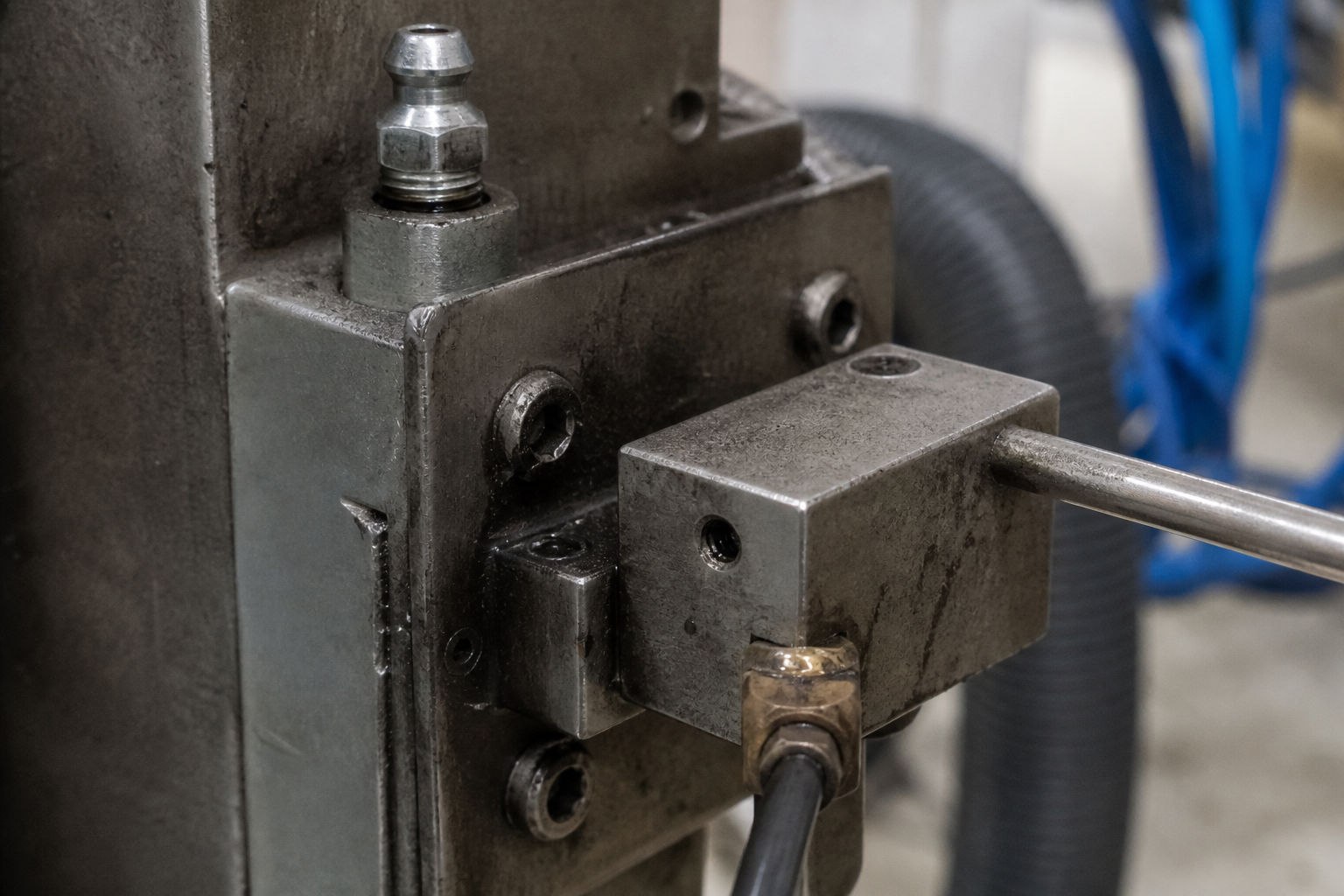
Verify cycle-switch pulses, not only pump contactor hours. Periodic manual checks at the farthest and highest points confirm grease arrival. After hose or EOAT changes, confirm no outlet was left plugged. Trend axis temperature or torque for early dry running when the lube system is the suspect.
Spare divider sections and correct grease SKUs belong in the cell kit—not a generic cartridge from the wrong bay.
What maintenance meetings should stop doing
Stop replacing reducers on a recurring wrist before proving the divider sequence. Stop silencing cycle alarms because “the pump sounds fine.”
The pump moves volume. The divider decides which joint lives. Watch the pistons, or keep buying bearings.