

On a bad shift, someone opens the quality HMI and eases the reject threshold until the line runs. Scrap falls. Escapes may rise. No model file changed. No MoC number was issued. The decision boundary moved anyway—and next week’s champion metrics are scored against a different plant.
Reject-cost economics explain where the cutoff should sit. Canary and champion–challenger explain model promotion. Inter-annotator agreement owns label definitions. This note is threshold change control for scoring systems—vision scores, soft sensors, and similar online cutoffs.

A threshold is part of the process specification. Moving it is a process change: it alters which units ship, which units scrap, and which units rework. Temporary “weekend values” that never revert are permanent changes with amnesia. So are per-shift tribal settings that disagree across lines making the same SKU.
Minimum control that works on a floor
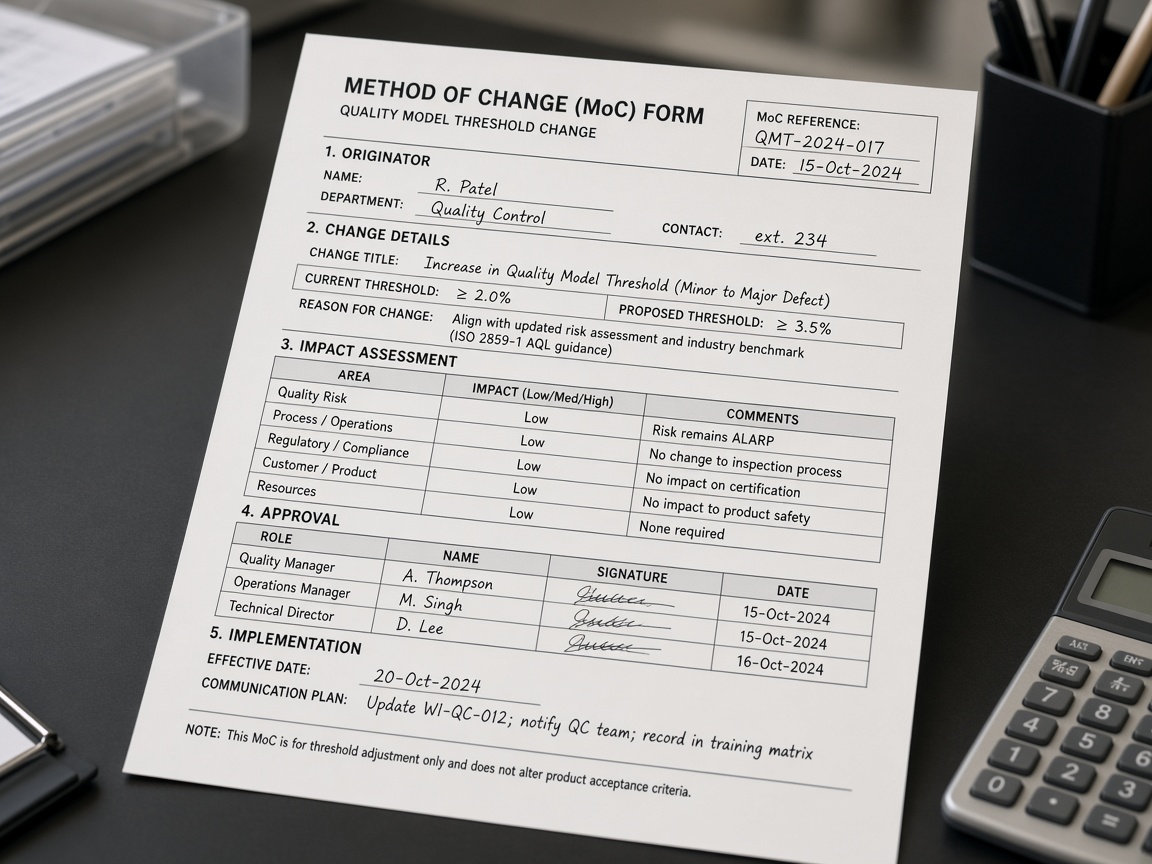
Require a named owner, before/after values, reason code, and review date for every threshold edit—logged, not oral. Tie edits to a MoC or equivalent for production SKUs. Trend false-reject and escape proxies by threshold version, not only by model version. Rollback must be one action to the last approved number.
If the model card says v3.2 but the cutoff is “whatever third shift typed,” you do not have a controlled quality system. You have a slider. Lock the slider with the same seriousness you lock the recipe.