
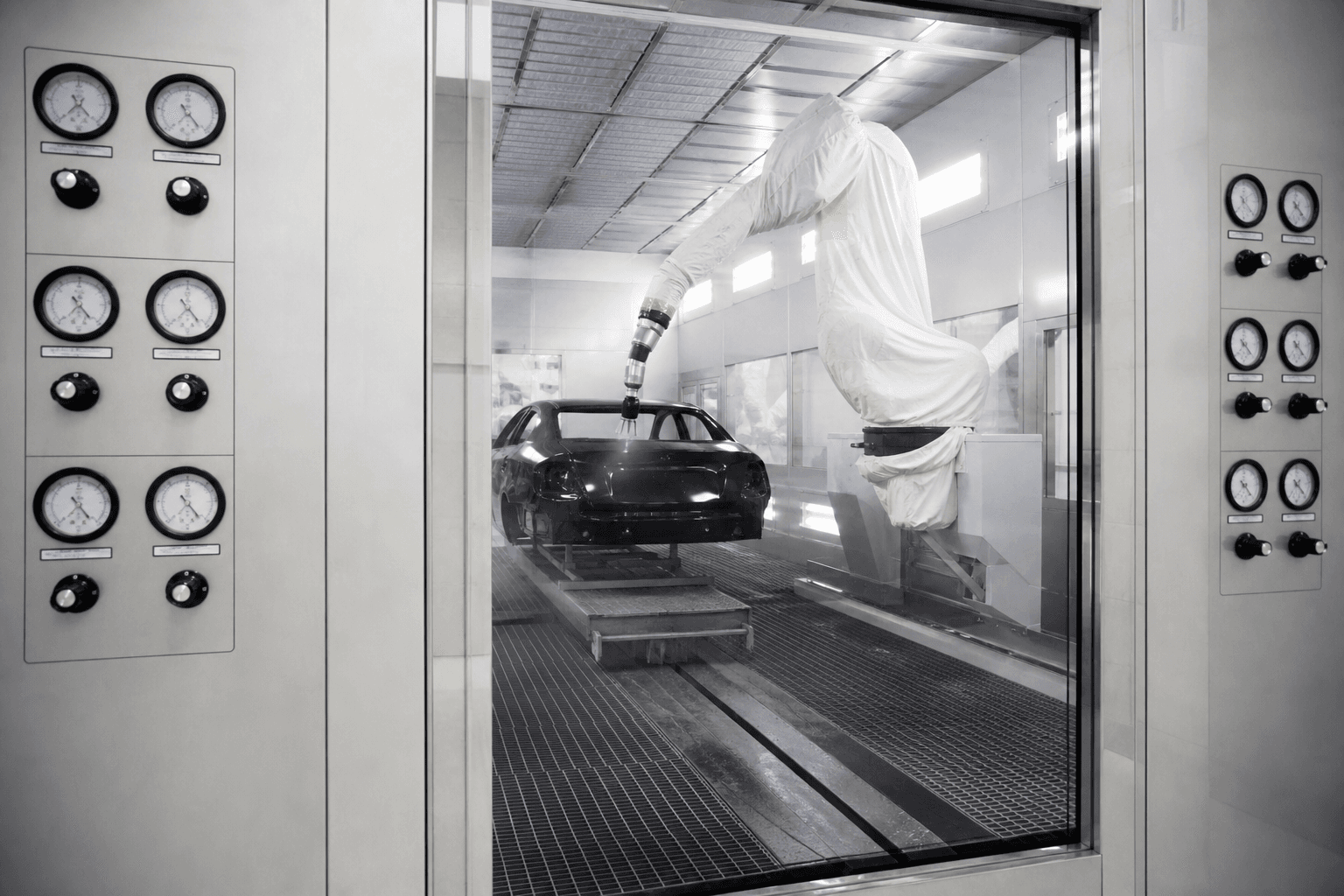
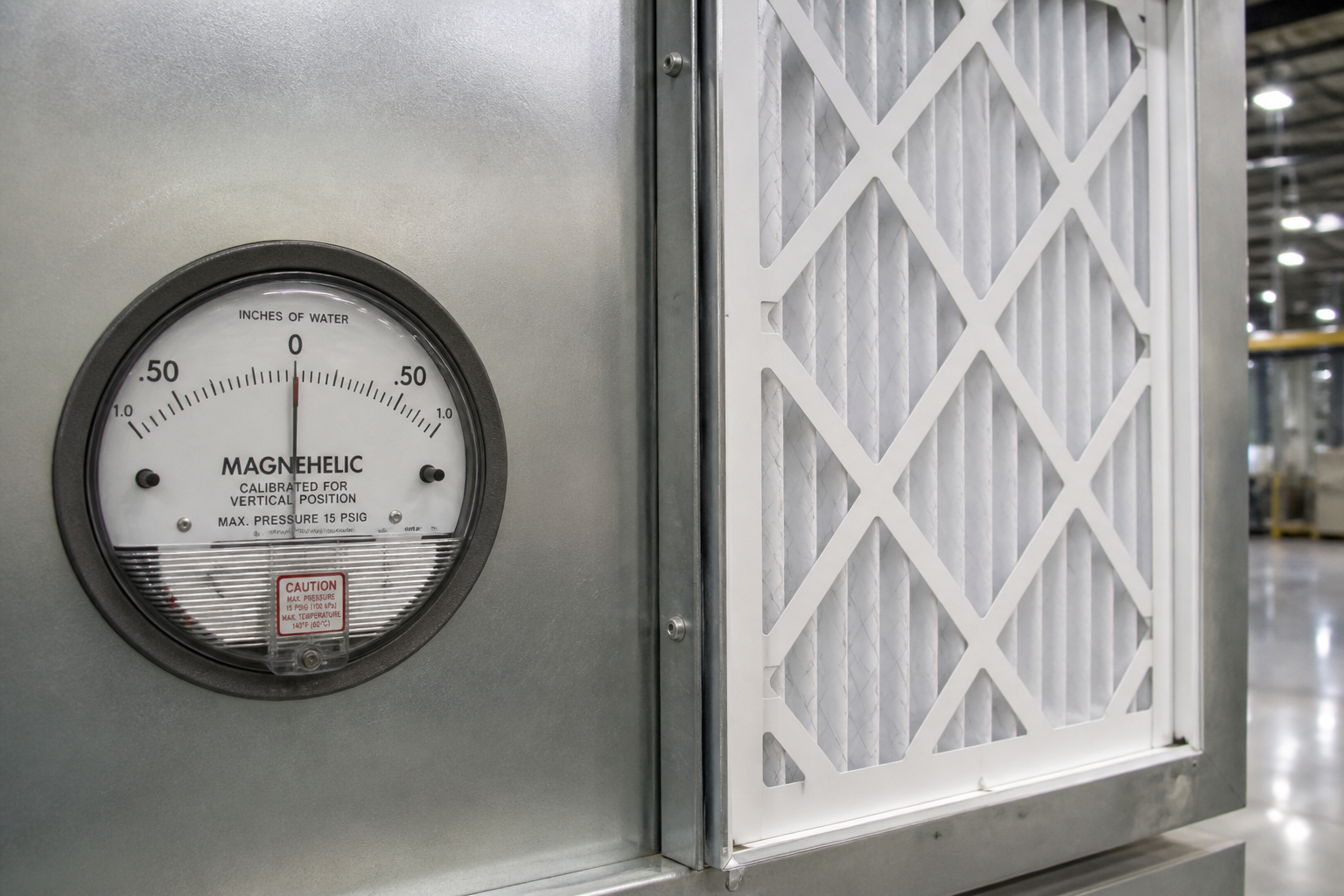
Tuesday’s color booth started throwing mottling on vertical panels. Path and gun distance were unchanged. Paint kitchen viscosity was in range. The manometer on the booth door had been ignored for a month: filters loaded, exhaust still pulling, supply lagging. The robot atomized correctly into a moving air war.
Robotic spray-coating cells own gun, path, and recipe. This brief owns booth airflow balance as the environment the EOAT cannot fix.
What the booth is doing
Supply and exhaust must hold a designed differential and flow pattern so overspray leaves through filters—not across the next car or into a dry zone that skins the film wrong. Loaded exhaust filters raise ΔP; operators open bypasses or slow supply to “stop dust,” and the envelope collapses. Cross-drafts at door openings yank the spray plume mid-stroke.
Humidity and temperature are process parameters for many coatings; they are not a substitute for balanced air volume.
Practices that hold
Trend booth ΔP and filter change-outs on the same board as robot faults. After filter service, verify balance setpoints—not only “fan running.” Smoke or tissue checks at openings catch door and seal lies. MoC any change to supply/exhaust VFDs, filter media, or booth openings the same way you MoC a gun tip.
When defects follow a booth bay and not a robot serial, walk the air before re-teaching path.
What quality meetings should stop doing
Stop blaming robot speed for orange peel when the manometer is in the red. Stop celebrating path polish in a starving booth.
The robot repeats the stroke. The booth decides where the droplets go. Balance the air, or keep sanding the same panel.