

Sheet: TV-3 · Cell R4 EOAT change
Trigger: Tip replace + weekend mastering
Claim before run: “TCP fine — we taught it last month.”
Format: Verification sheet. Not a kinematics lecture.
Pre-checks (as ticked)
| Check | Tick | Field find | | --- | --- | --- | | Mastering all axes | ☑ | J4 off by one pulse after battery work | | EOAT ID in controller | ☑ | GR-C loaded; mechanical tip was GR-B length | | TCP XYZ verify | ☐ skipped | “no time” | | 4-point / ABC verify | ☐ skipped | — | | Fixture datum touch | ☐ skipped | Datum block missing |
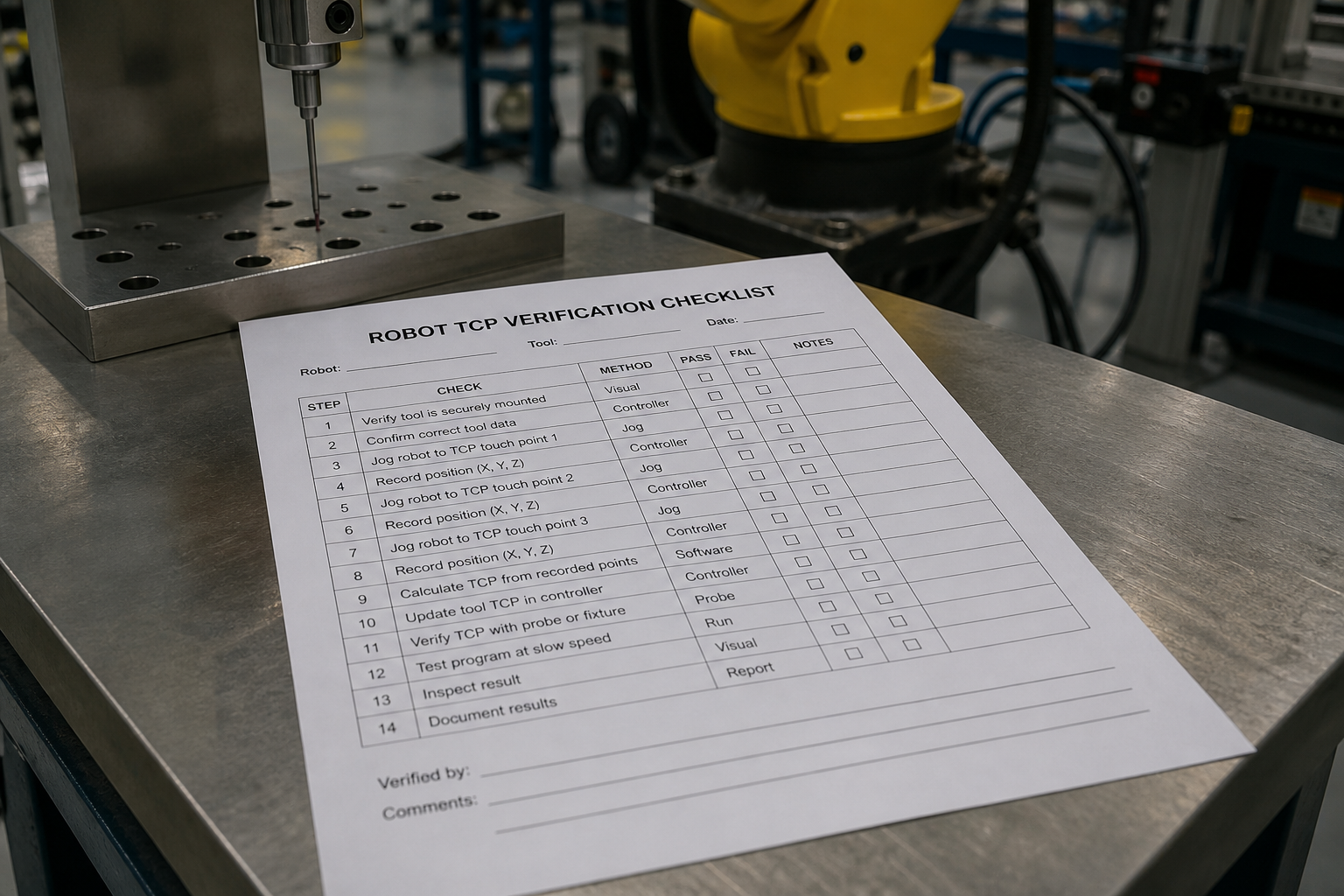
A skipped TCP line is a pre-authorized miss.
First AUTO result
Path looked “almost.” Insert miss 1.8 mm.
Scrap × 11 before protective stop.
Collision dump blamed geometry; TCP sheet (blank) was the earlier witness.
Required TV-3 closeout
- Mastering validate print attached.
- EOAT length/ID match mechanical + software.
- TCP verify within tolerance (write numbers, not “OK”).
- One fixture datum touch recorded.
- Dry-run at reduced speed signed before AUTO.

If the tip and the number disagree, the path is fiction.
Adjacent fences
Collision dumps own forensic stops. Cycle waterfalls own lost seconds. Gripper photo logs own wear. Payload logs own mass lies. TV-3 owns whether the tool point is still true. Do not teach around a wrong TCP and call it process knowledge.
Close
Millimeters are not opinions. TV-3 makes them signatures—or scrap makes them invoices.