
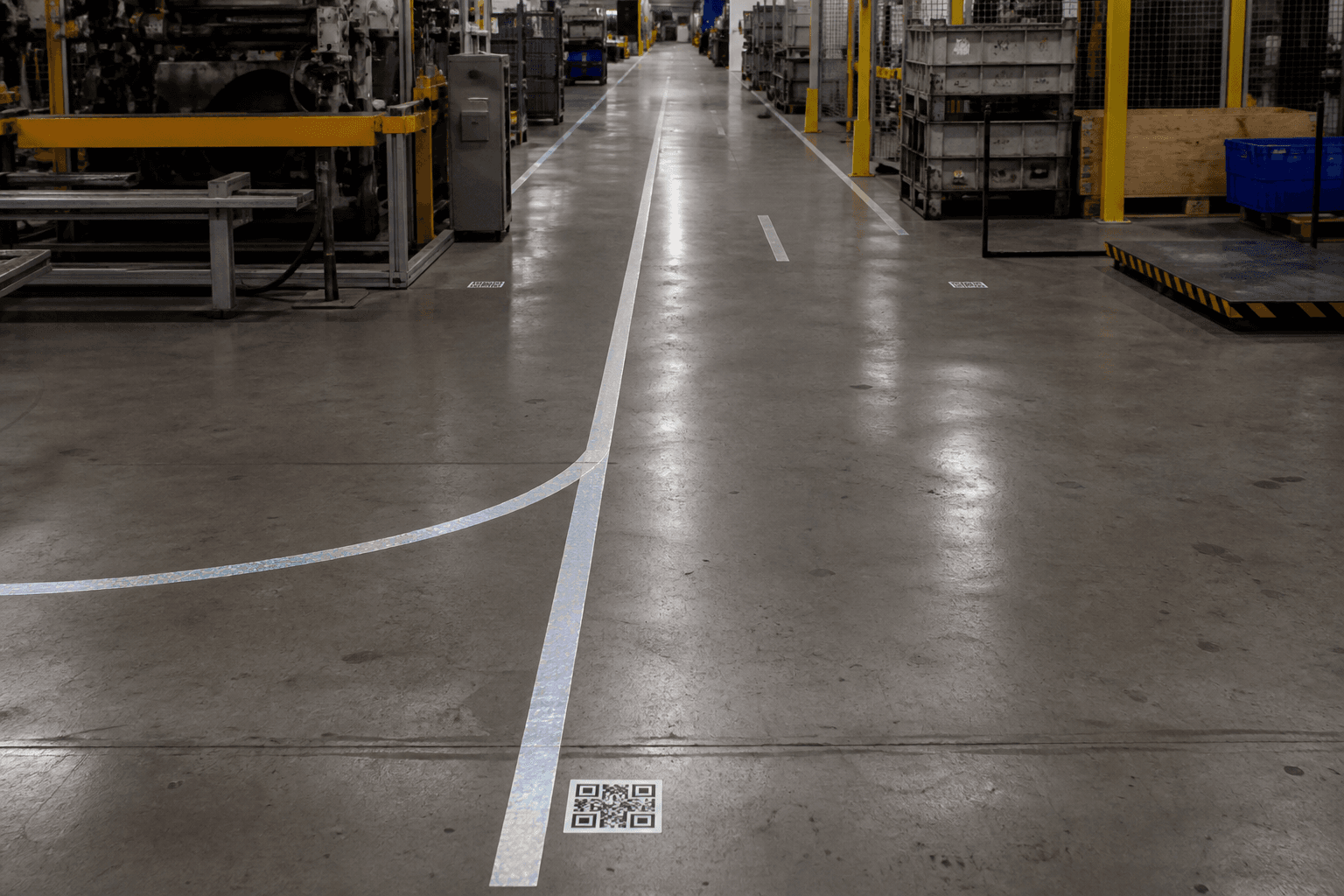
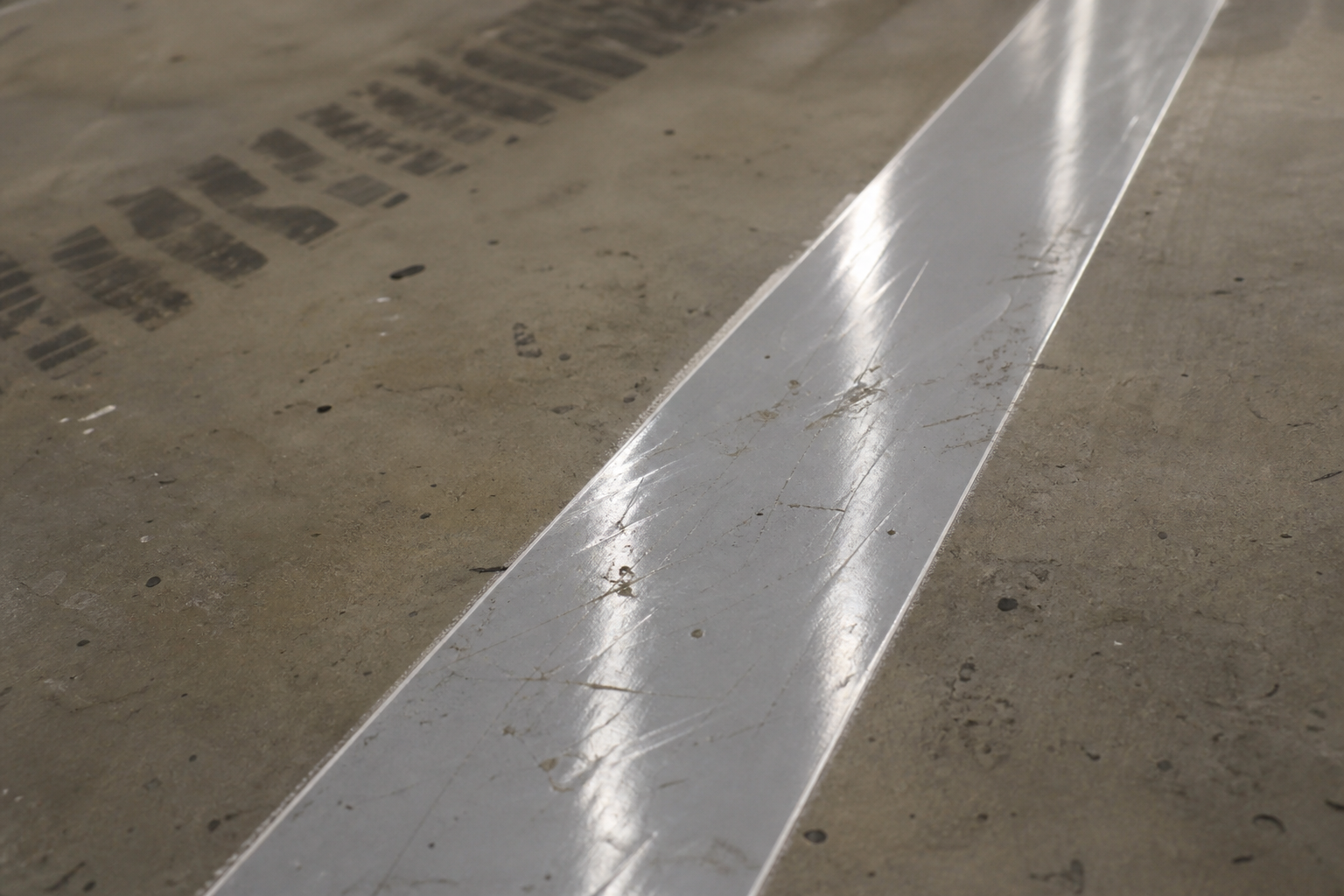
The fleet froze at the same aisle mouth three shifts in a row. Localization confidence dipped, recovered, then dumped the robot into a manual recovery pose. Lidar looked fine. Motor temps were fine. The ticket blamed “RF noise” until someone walked the route with a torch and found reflector tape scuffed white by pallet drag, a QR island coated in tire film, and a new gray epoxy patch that was not in the fleet map.
AMR intersection and traffic briefs own deadlock and priority rules. This brief owns floor infrastructure as a sensor—tape, fiducials, and reflectivity maintenance.
What the floor is doing
Many AMRs fuse lidar with retroreflective tape or painted features and periodic QR corrections. Tape that loses reflectivity makes edge extraction ambiguous. Dirty fiducials fail decode; the robot falls back to dead reckoning until error grows. Unmapped floor repairs change the return pattern even when geometry looks unchanged.
Cleaning contracts that strip tape gloss, forklifts that cut corners across markers, and “temporary” epoxy that becomes permanent are how localization dies in place.
Practices that hold
Maintain a floor asset map: tape segments, QR IDs, reflectivity check dates, and epoxy patch MoC. After any floor repair, schedule a driven survey before releasing the aisle to auto mode. Include tape and fiducial inspection in the same PM family as charger contacts—not only battery cycles.
When a robot loses pose at a recurring coordinate, inspect the floor before recalibrating the lidar.
What logistics meetings should stop doing
Stop doubling fleet size on aisles with unmaintained markers. Stop treating tape as facilities décor instead of instrumentation.
The robot navigates the floor it is given. Keep the floor as calibrated as the robot.