
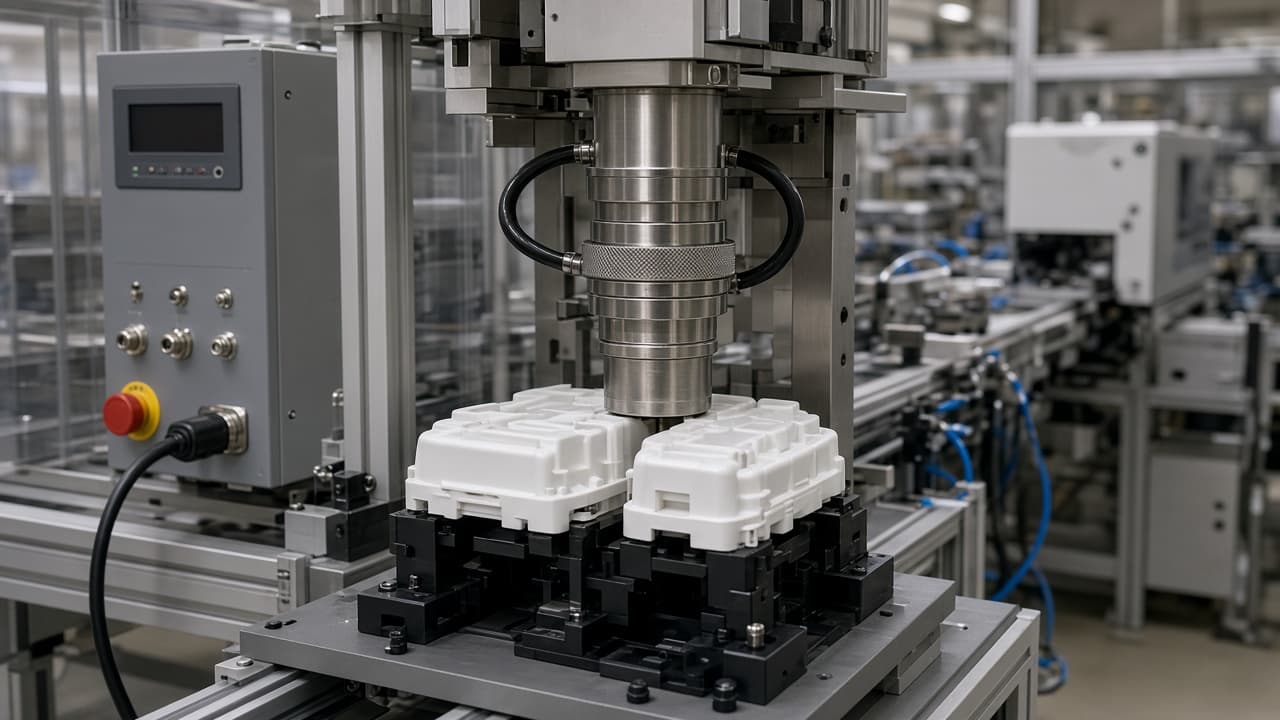
Heat staking owns tip temperature and dwell on another joining method. Spot-weld tip life owns electrode caps on metal. Ultrasonic plastic welding is different physics: a converter, booster, and horn (the acoustic stack) drive high-frequency vibration into the joint. Heat at the interface scales strongly with amplitude—practical references treat heating as rising with the square of horn-face displacement—so a small amplitude error outweighs a tidy tweak to weld time.
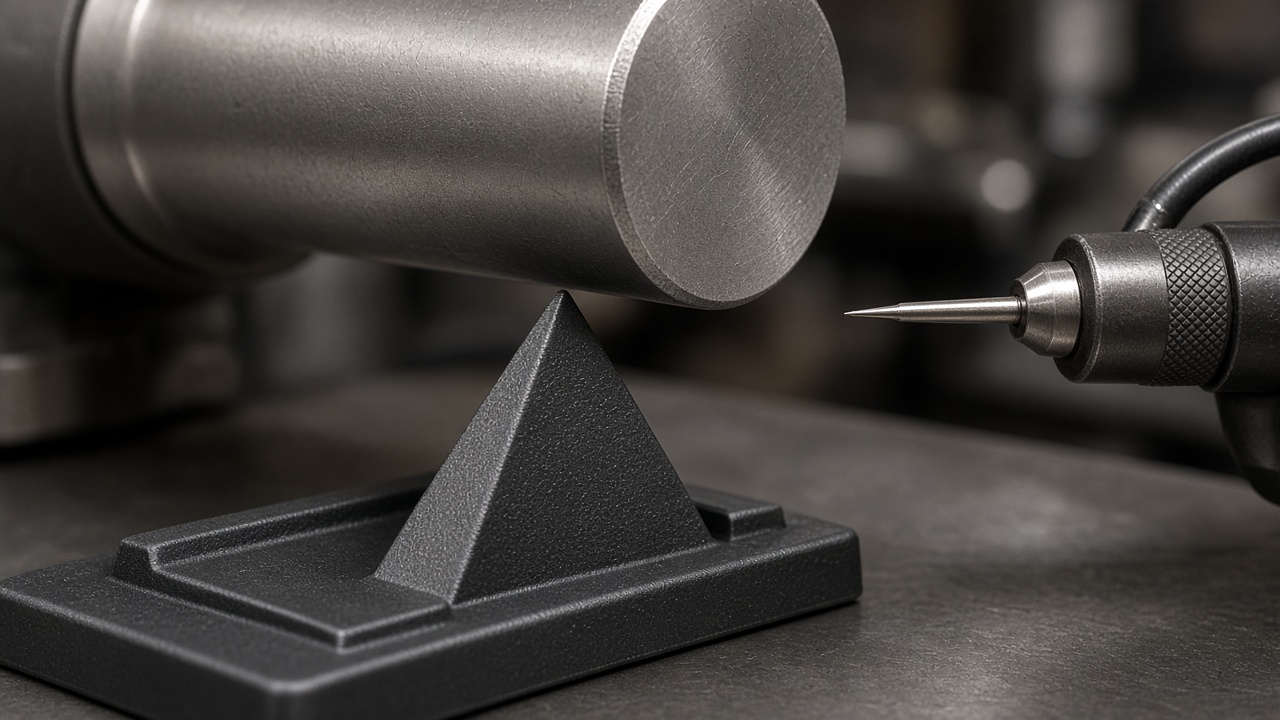
Energy directors—small molded triangles along the joint—focus that energy. Amorphous resins commonly use a right-angle apex; semi-crystalline grades often use a sharper (~60°) director. Heights are typically a fraction of a millimeter. A worn, nicked, or cracked horn changes the delivered amplitude and the contact pattern even when the generator display still shows “100%.”
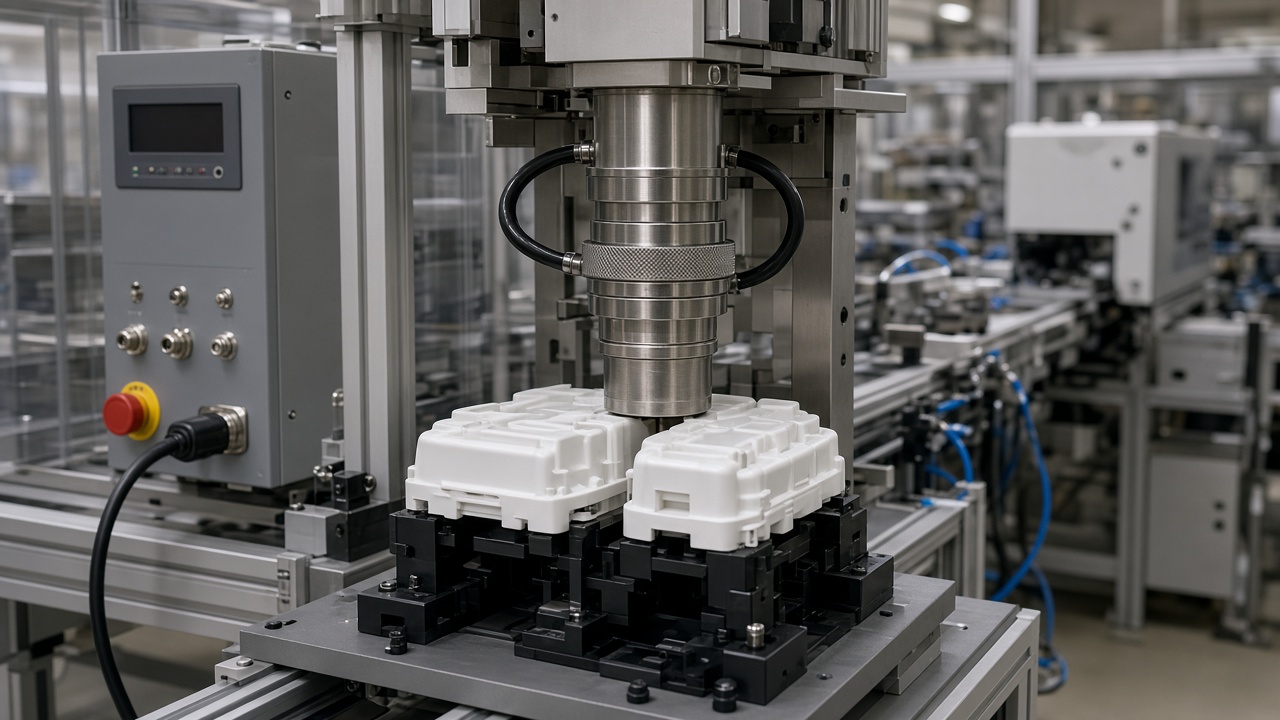
Qualify amplitude for the resin and joint, not for the neighboring cell’s ABS recipe. Measure or calculate stack amplitude from converter output and booster/horn gains; verify with a meter when the application is critical. Inspect horns for cracks, gouges, and abnormal noise or wattage—retire damaged tooling instead of “turning time up.” Prefer energy or collapse-distance modes with clear abort limits over open-ended time welding when the QMS needs traceability. After a horn, booster, or fixture change, re-run the destructive or leak coupon set before releasing production.
If the only controlled parameter on the traveler is “weld 0.4 s,” the plant is controlling a clock, not a melt. Control amplitude, joint design, and stack health—or accept flash, weak bonds, and leaks as process noise.