
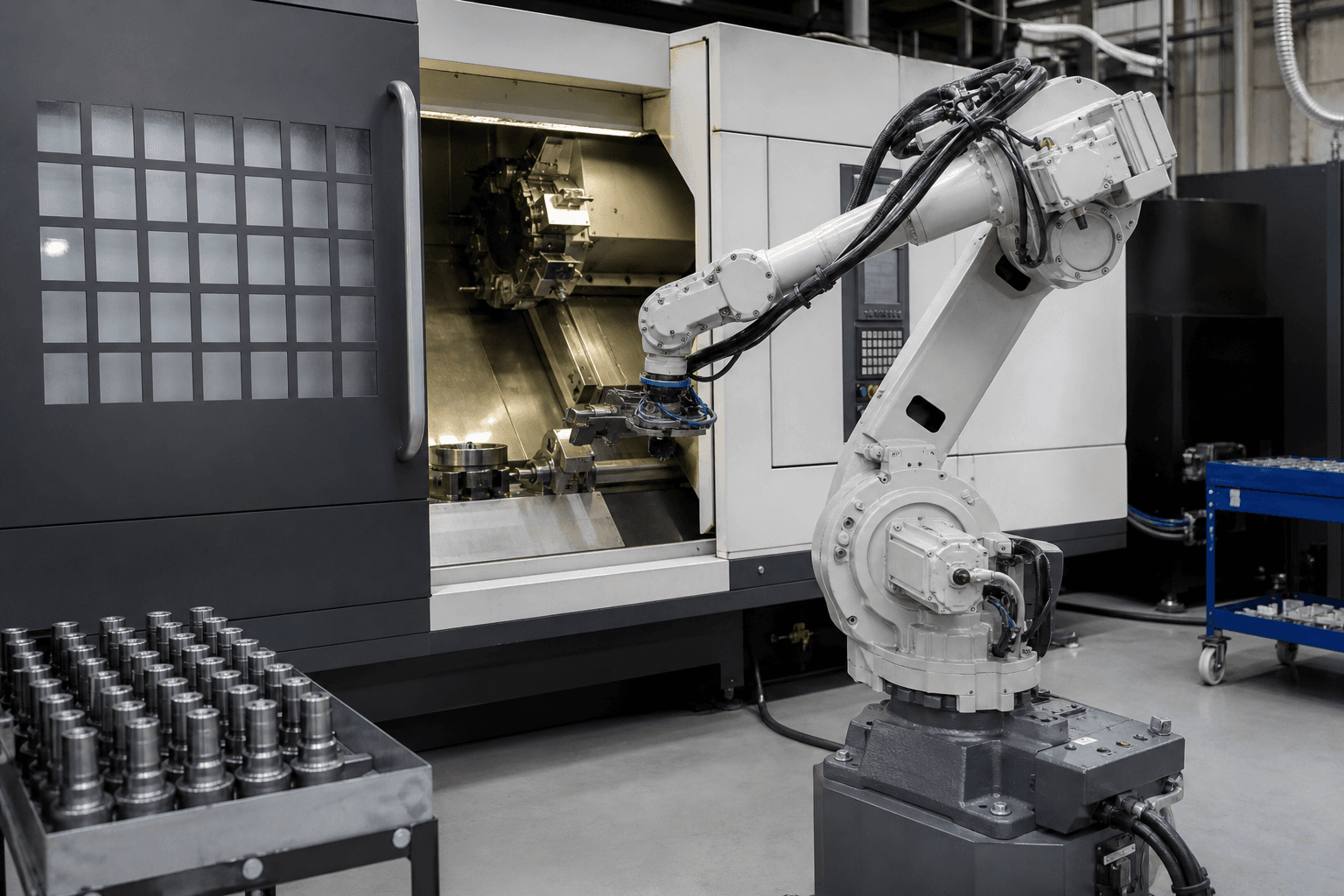
Bin picking fills totes. Force-torque cells fasten joints. The highest robot count in many machine shops is still the unglamorous tender: open the CNC door, load a blank, clear chips, present for gauge, restack finished parts. Integrators are packaging vision-light, drawer, and dual-machine tend cells that run lights-out shifts without rewriting the entire line.
The industrial point is spindle hours and labor coverage on second/third shift—not a viral demo. A tend cell that cannot recover from a jammed vise or door fault creates more downtime than it saves.
What machine tending changes
- Utilization — Keeping mills and lathes cutting while operators cover more machines.
- Repeatability — Consistent load pose and clamp checks for quality.
- Lights-out paths — Bounded autonomy inside a cell with clear recoveries.
What still limits rollout
Fixture variety, chip nests, and coolant mess that vision and grippers hate. Cells without MES call-offs and tool-life hooks stay islands. This is not palletizing docks, not trailer unloading, and not mobile manipulators roaming the aisle.
What to watch next
- Which machine OEMs ship native robot interfaces as standard options.
- Measured OEE lifts on multi-machine tend cells versus single-machine pilots.
- Whether drawer and pallet-pool systems outsell fully custom grippers.
Assembly feels the joint. Machine tending keeps the spindle paid for.