
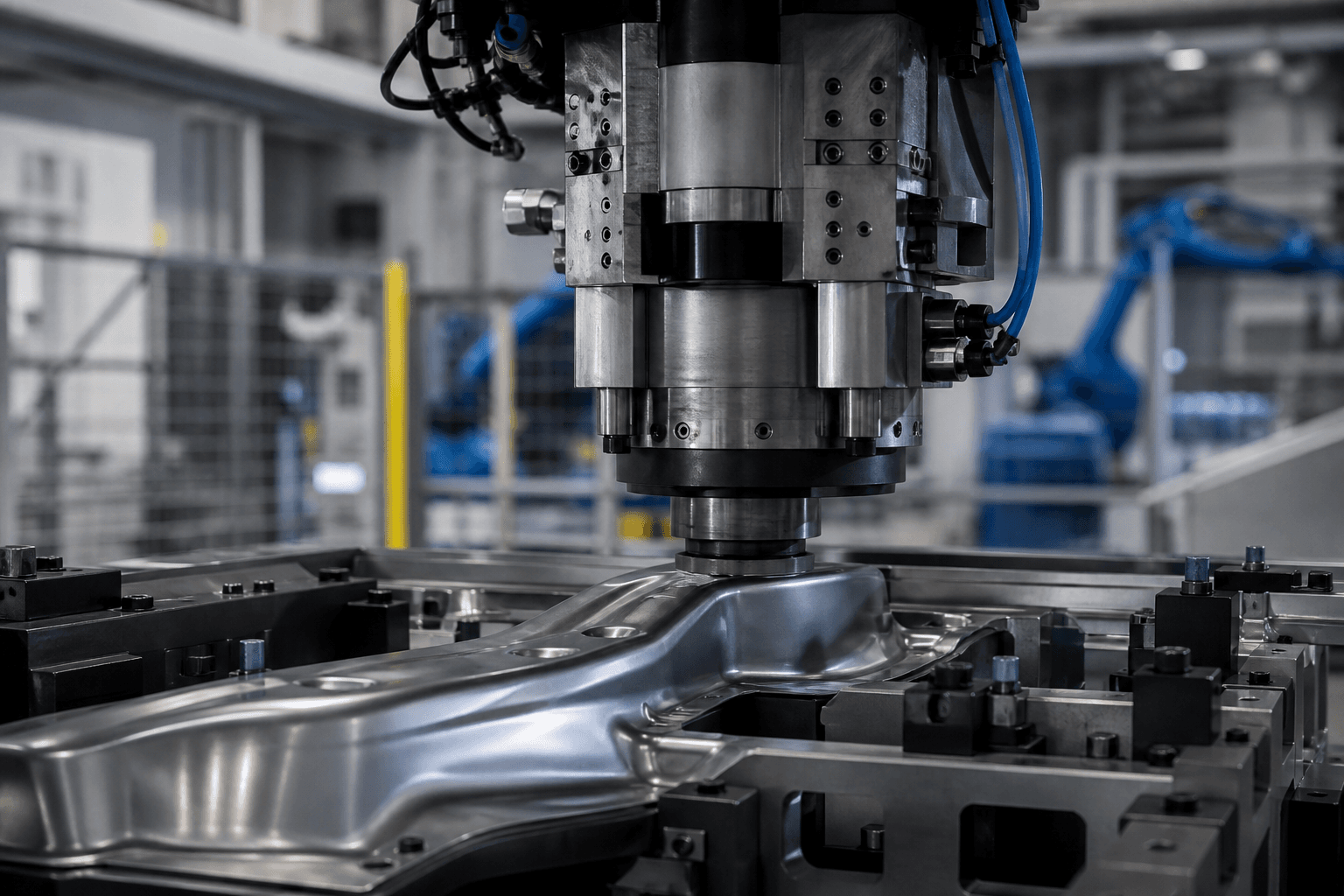
Robotic clinching and servo-press joining are sold as clean, fastener-free assembly. The robot brings the stack to the die. The joint sees a force–distance path that extrudes and locks the sheets. When peel strength drops or buttons look flat, the first suspects are path and vision offsets. Those matter for hole-to-feature aim. The bond physics lives in punch/die wear, lubrication, sheet thickness tolerance, and whether the press curve still matches the qualified window.
This is not ultrasonic tab welding, not resistance spot-cap dressing, and not screwdriving torque-angle cells. It is clinch tooling and servo-press signatures.
What the curve is saying
A healthy clinch has a characteristic force rise, a plastic-flow region, and a final lock. Soft sheets, hard coatings, or a worn punch shift the curve: peak force early, shallow button, or cracked button lips. Monitoring that traces against a golden window catches die wear before the tear-down audit does.
Nest spring and clamp slip let the stack breathe during the stroke. The robot pose repeats; the metal relative positions do not.
Tooling life as process control
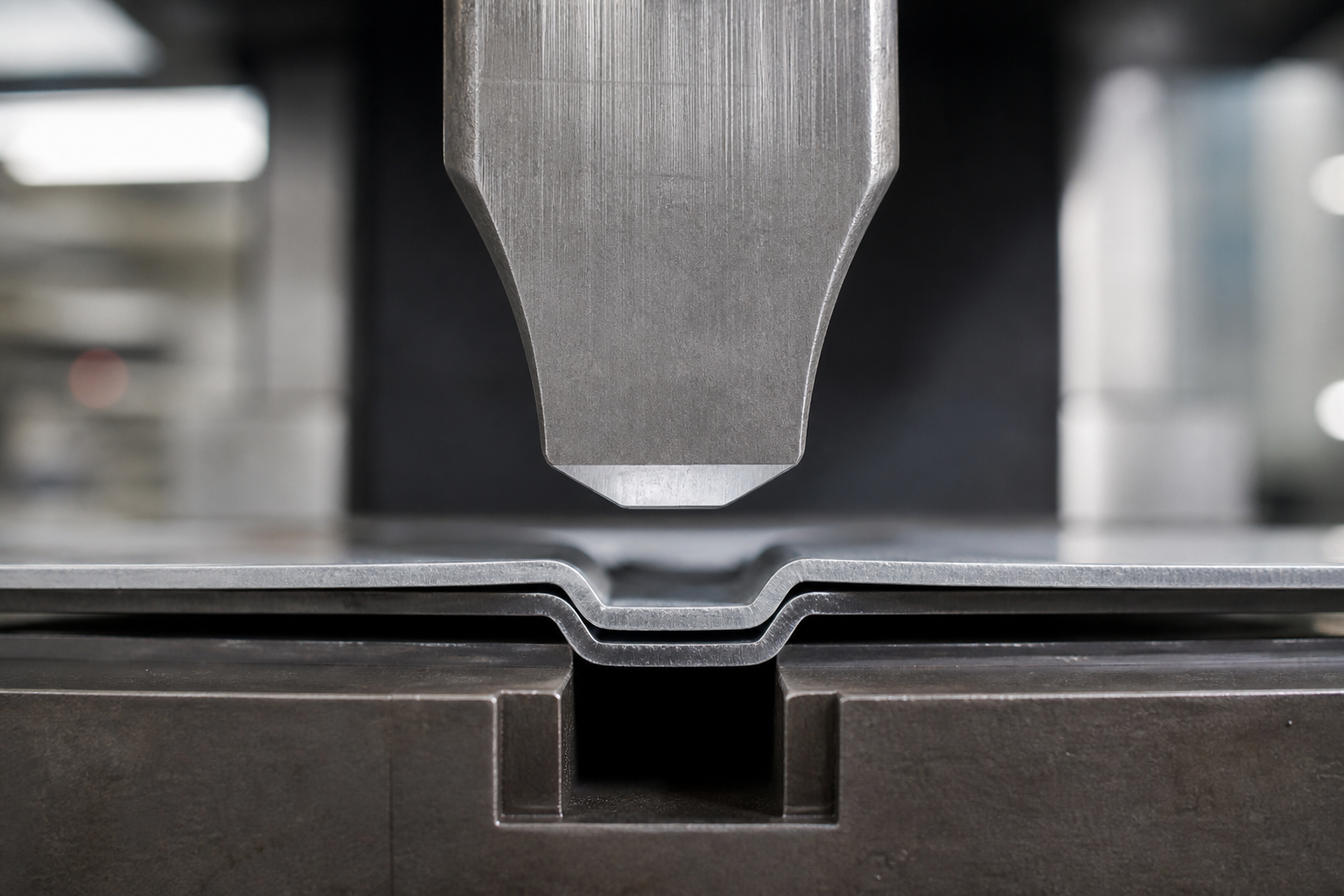
Punch and die are consumables with geometry specs—button diameter, interlocking depth, and surface finish. Dressing or replacing on stroke count, or on curve drift, is the control. Raising force to “make it look locked” on a worn die buys cosmetic buttons and latent peel fails.
Material dual-sourcing without re-qualifying the curve is a process change. So is changing oil wipe or dry-lube on the stack.
What to verify after a die change
Coupon matrix across thickness min/max, peel or peel-equivalent per control plan, and curve overlay against the POR window. Skipping coupons because “only the die changed” is how a wrong polish becomes a week of field returns.
The robot repeats the approach. The clinch repeats only if the punch, die, and force path repeat. Service those as the join process, not as press accessories.