
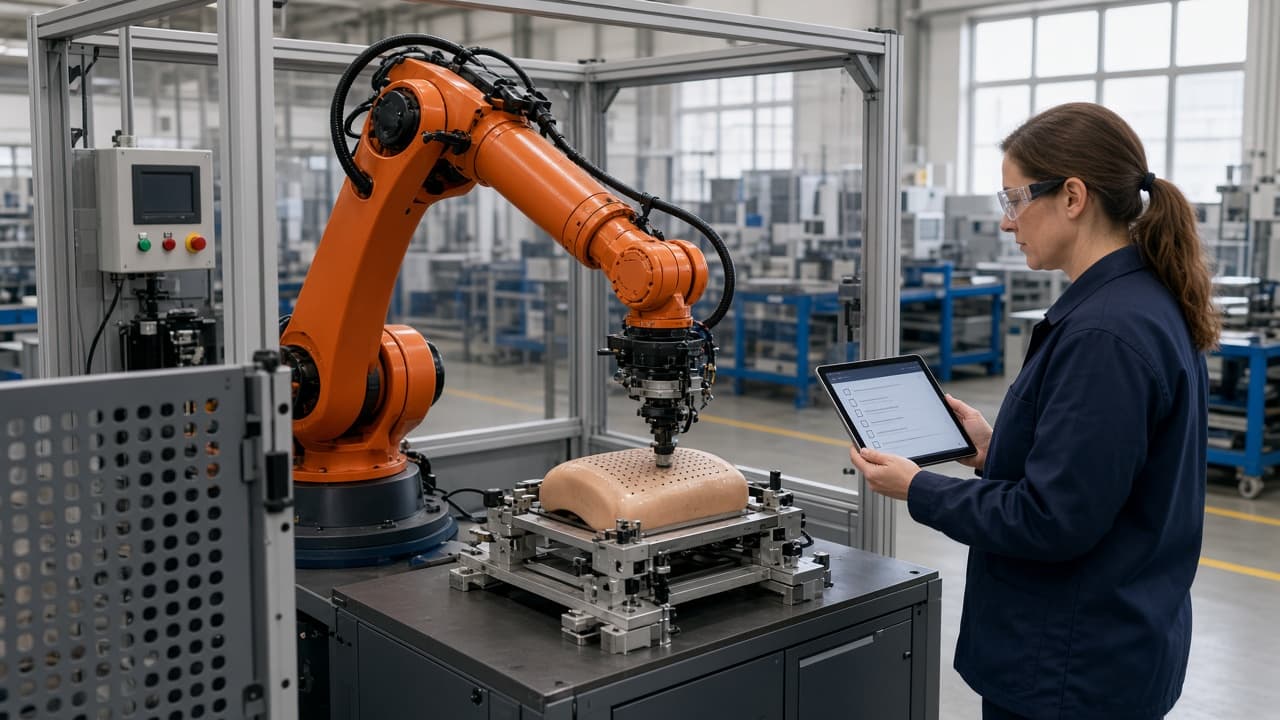
A collaborative robot can run beside people when the application relies on power and force limiting (PFL). The controller watches joint effort and can stop or reverse on overload. That is necessary. It is not sufficient. Contact pressure still depends on the shape of the tool, the cover, the workpiece edge, and how the motion approaches the body region in the risk assessment. A rounded demo EOAT that passed last year does not vouch for this year’s sharp gripper finger.
Collision-sensitivity briefs own payload versus trip thresholds on industrial arms. SMS stop-proof notes own safety functions after faults. Mastering briefs own joint zeros. This page is PFL validation with force and pressure measurement against the limits associated with ISO/TS 15066 (used with the ISO 10218 collaborative framework).
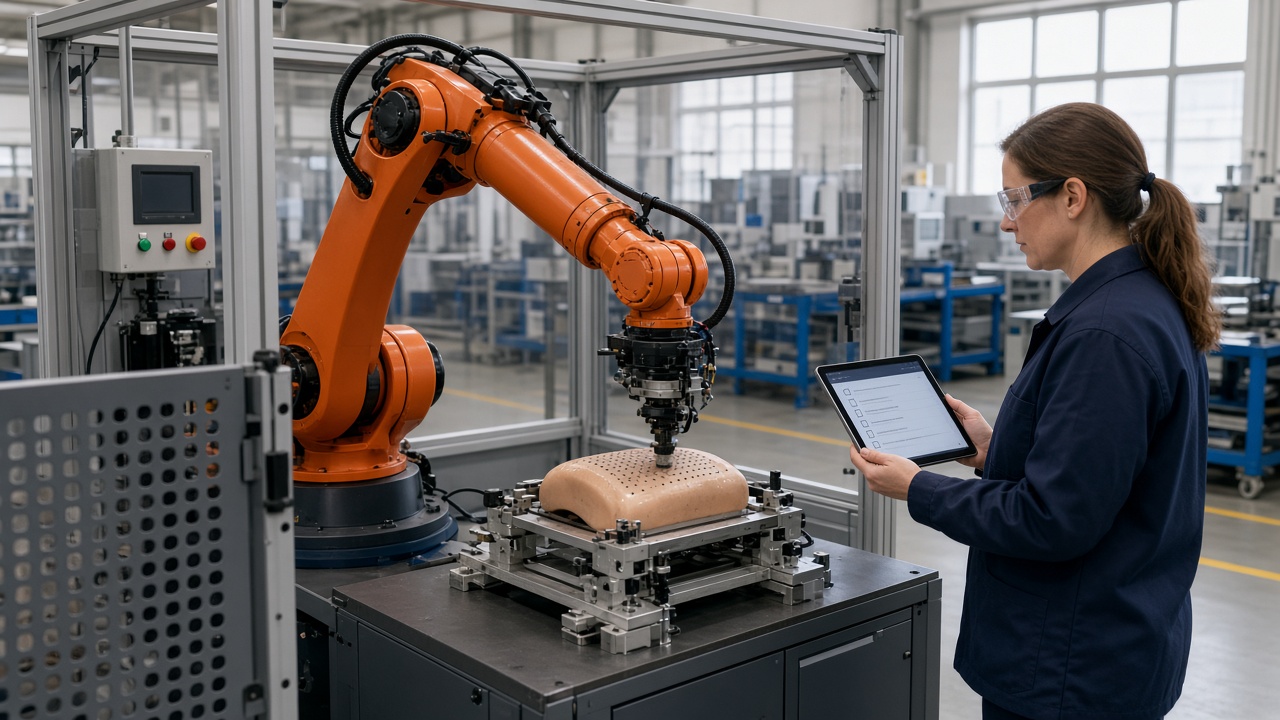
Start from the risk assessment, not from a convenient pose. List every credible quasi-static clamp and transient impact the application can create. Measure with a biofidelic instrument that records force over time and pressure distribution while approximating the stiffness of the relevant body region. Mount the sensor rigidly; soft stands and flexed fixtures add scatter that interlaboratory studies have already shown can swamp the electrical uncertainty of the meter. Use the production robot, tool, payload, speed, and controller settings—not a stripped lab arm.
Re-test when anything that changes contact geometry or dynamics changes: EOAT, cover, payload mass, TCP, speed, or force parameters. Document body region, limit used, peak force, peak pressure, sensor ID, fixture photo, and pass/fail. Interlaboratory work on PFL tests has also shown that some configurations are sensitive to reach and fixture; treat a single “good” hit as incomplete if the assessment named several approaches.
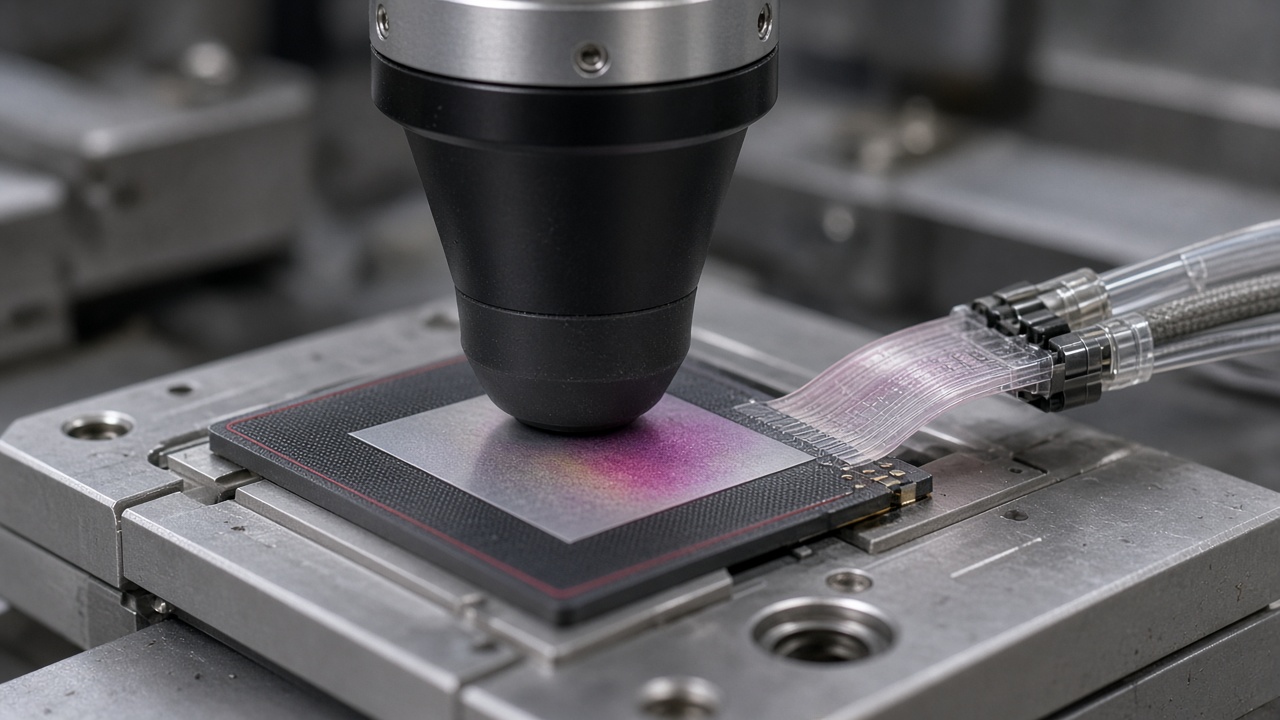
“Cobot mode enabled” on the pendant is a configuration bit. A signed force-pressure report tied to the current tool revision is the evidence that collaborative contact stays inside the biomechanical envelope the plant claimed.