
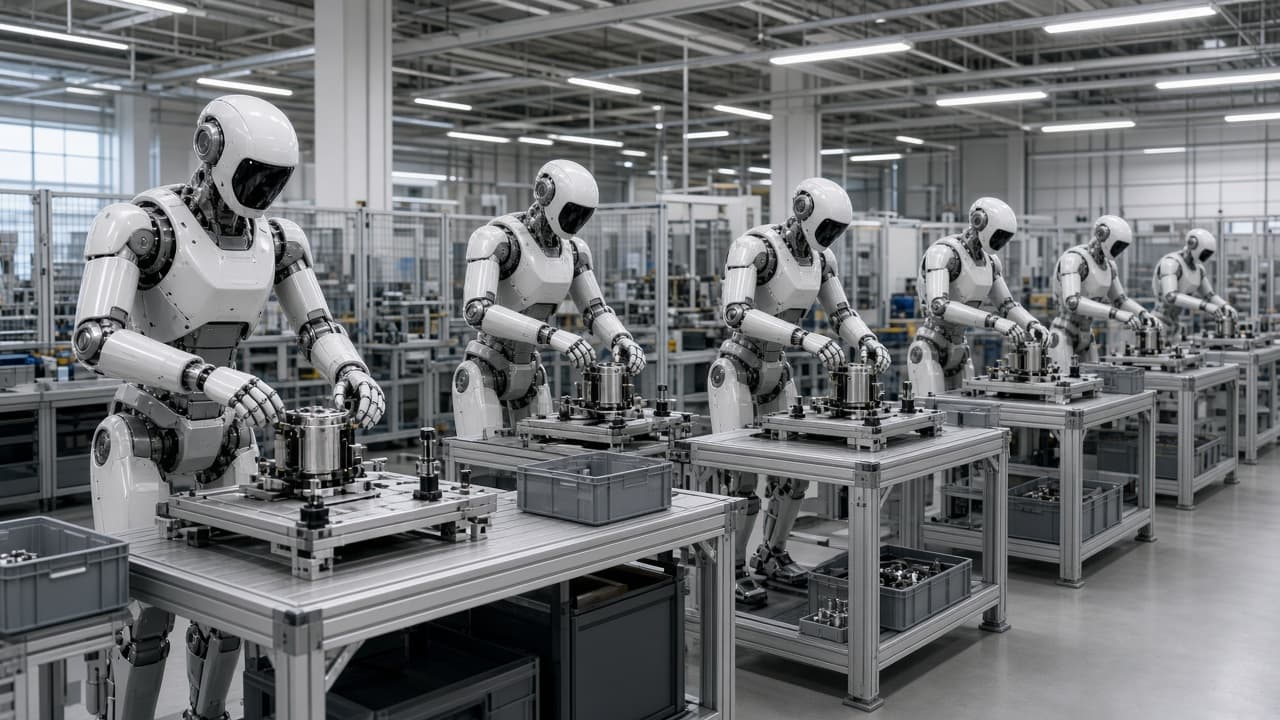
Schaeffler opened a factory in Taicang on 20 October and was unusually concrete about the headcount on the line. Six humanoid robots. Five stations. The parts are joint modules—linear and rotary actuators—for the next generation of humanoids. The robots stage and sort, join, inspect, label, and pack. The building is about 7,500 square meters and also holds a training and data-capture center, a digital-twin platform, and a data center. Sensors record assembly accuracy, how long each step takes, energy use, and asset condition. Changes are tried on the twin before they reach the fixtures.
Incoming orders for the humanoid business were put at about 400 million euros, after two new customers in Greater China in the third quarter. Chief operating officer Jochen Schröder called the hall a closed loop, humanoids assembling components for humanoids, and the start of mass production of those components. Yilin Zhang, regional chief executive for Greater China, tied the opening to Schaeffler’s manufacturing base in China.
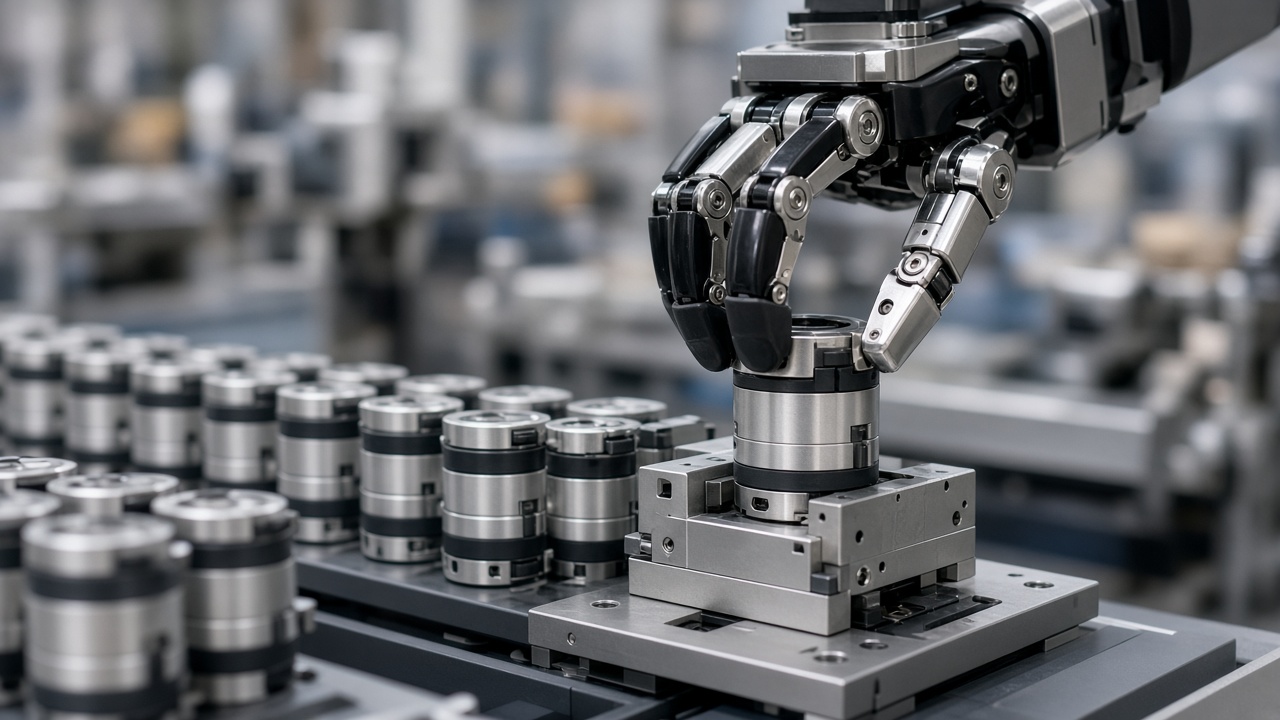
The release stops where a process engineer would start a follow-up. No cycle time. No first-pass yield. No interventions per hour. No statement of how many of the five stations still wait on a person. “Mass production” is Schaeffler’s description of the component start. It is not an audited uptime figure for the bipeds.
The training floor is aimed at work that already exists in Schaeffler plants: visual checks, packing, moving containers, replenishing a line. The company says those practice environments follow conditions across roughly 100 of its factories, so a skill tried in Taicang can be attempted again on a real line. That is a library with a place to rehearse. It is not a bearing plant that has already retired a cell.
Building the actuator under Schaeffler’s own roof, with a twin and a data path, is a fact as of 20 October. Treating the humanoid as the default assembler of everything else in the network is a later claim. It waits on a station that will say how often someone still steps in.