
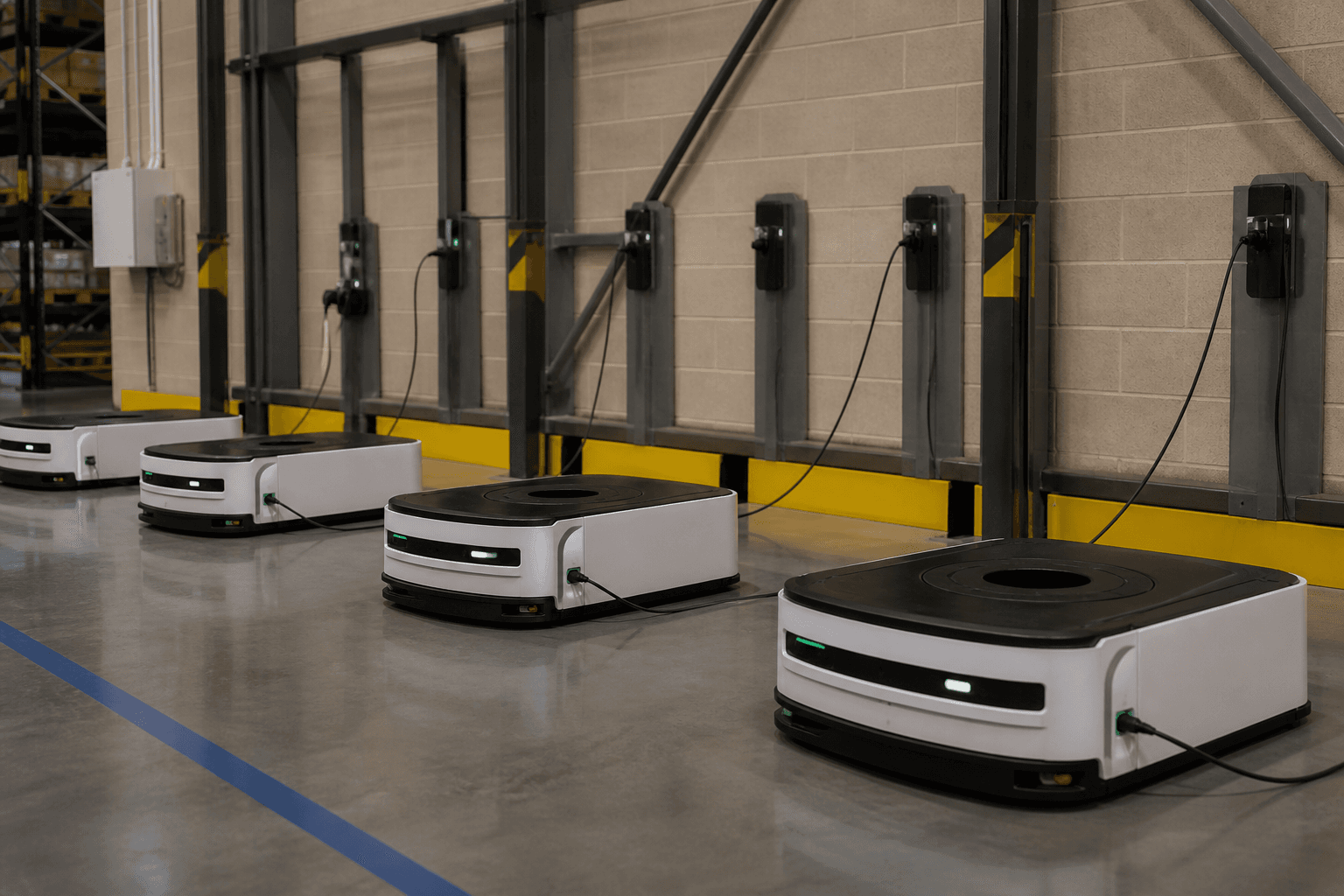
Warehouse and intralogistics teams buy AGVs for labor and consistency, then run them like forklifts with autopilot. Batteries are chemistry with calendars. Opportunity charging only works when the fleet manager, WMS, and maintenance agree on when a vehicle must stop serving missions and take electrons.
Thursday’s e-commerce wave proved it. Three AGVs parked at dead lanes with 11% state of charge while pick stations starved. Two others queued at one charger because reservation logic favored “nearest” over “lowest SOC.” A manual pallet jack covered the gap—exactly what the ROI slide said would retire.
This is not AMR reflector cleaning and not traffic-rule tuning alone. It is fleet energy policy as operations engineering.
Policy levers that actually hold
Hard SOC floors. Below the floor, the vehicle may finish the current leg if safe, then must charge—no new missions. Soft floors are how you learn forklifts still exist.
Charger reservation. One vehicle per contactor, with queue fairness by SOC and mission criticality—not FIFO by arrival at the aisle.
Mission preemption. Low-priority loops yield slots when high-priority outbound waves run. Without preemption, opportunity charging becomes “when nothing is busy,” which is never during peak.
Battery asset rotation. Same serial always on the worst route is how you buy a capital replacement in year two. Log cycles per AGV ID.
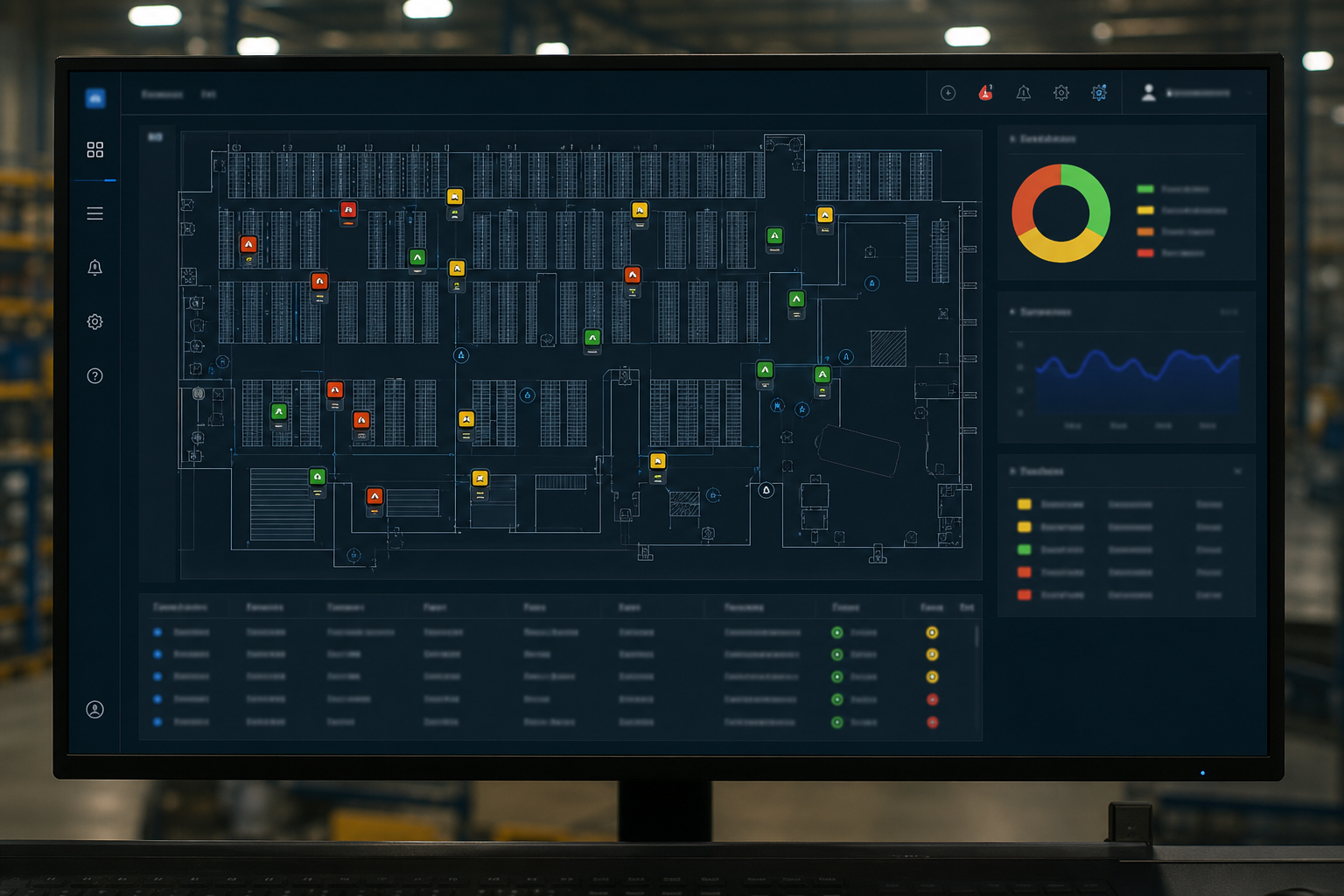
Metrics for the weekly logistics stand-up
- Count of missions declined for SOC in the last shift.
- Time spent waiting for charger vs. time charging.
- Oldest battery by cycle count still on the highest-mile route.
- Manual intervention events (push to charger, swap battery).
If declined missions rise while average SOC looks healthy, your floors are too low or your reservation is broken—not your pick paths.
What not to do
Do not solve chronic low SOC by raising speed limits. Do not add chargers without updating reservation— you will queue at more plugs. Do not treat battery replacement as surprise maintenance; it is consumable planning tied to route miles.
AGVs execute moves. The charging policy decides whether the fleet is a system or a collection of nearly-empty robots waiting for a hero operator.