
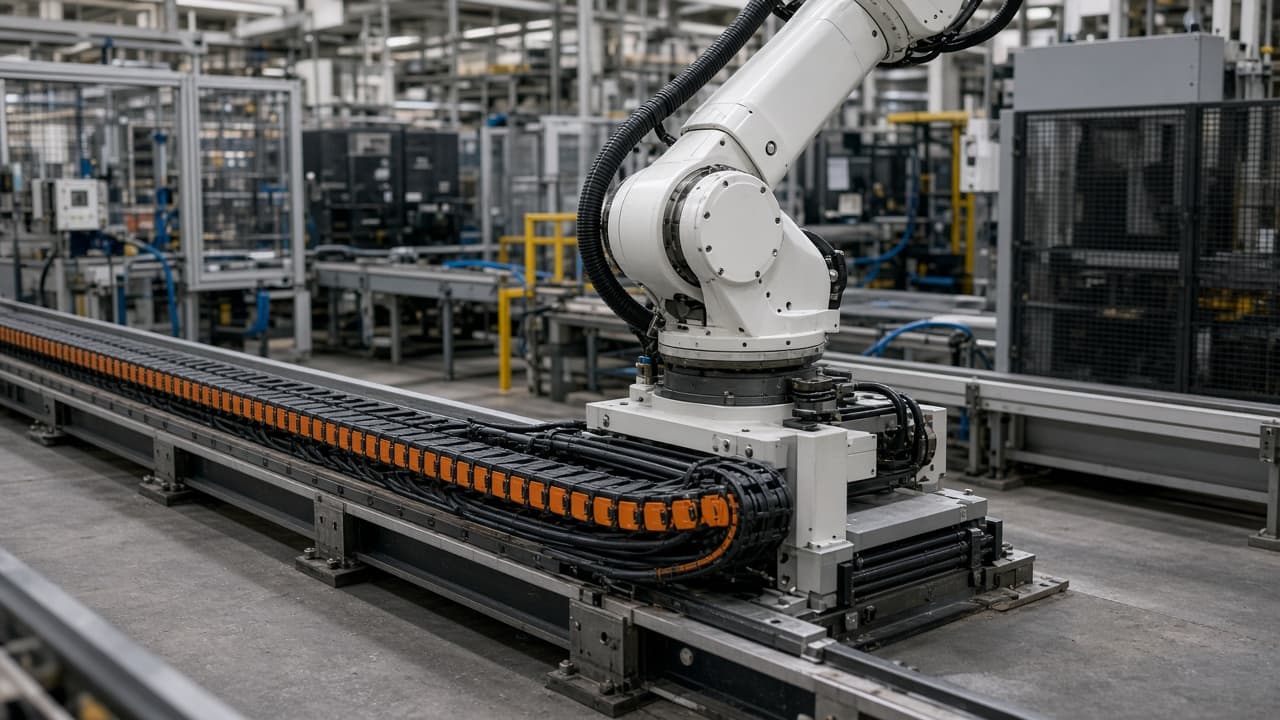
Intermittent encoder drops, random etherCAT glitches, and “soft” axis faults on long-travel robots often get written up as drive firmware or grounding. Pull the energy chain open and the story is usually simpler: a conductor that has been flexing past its rated bend radius in a carrier full of abrasive dust.
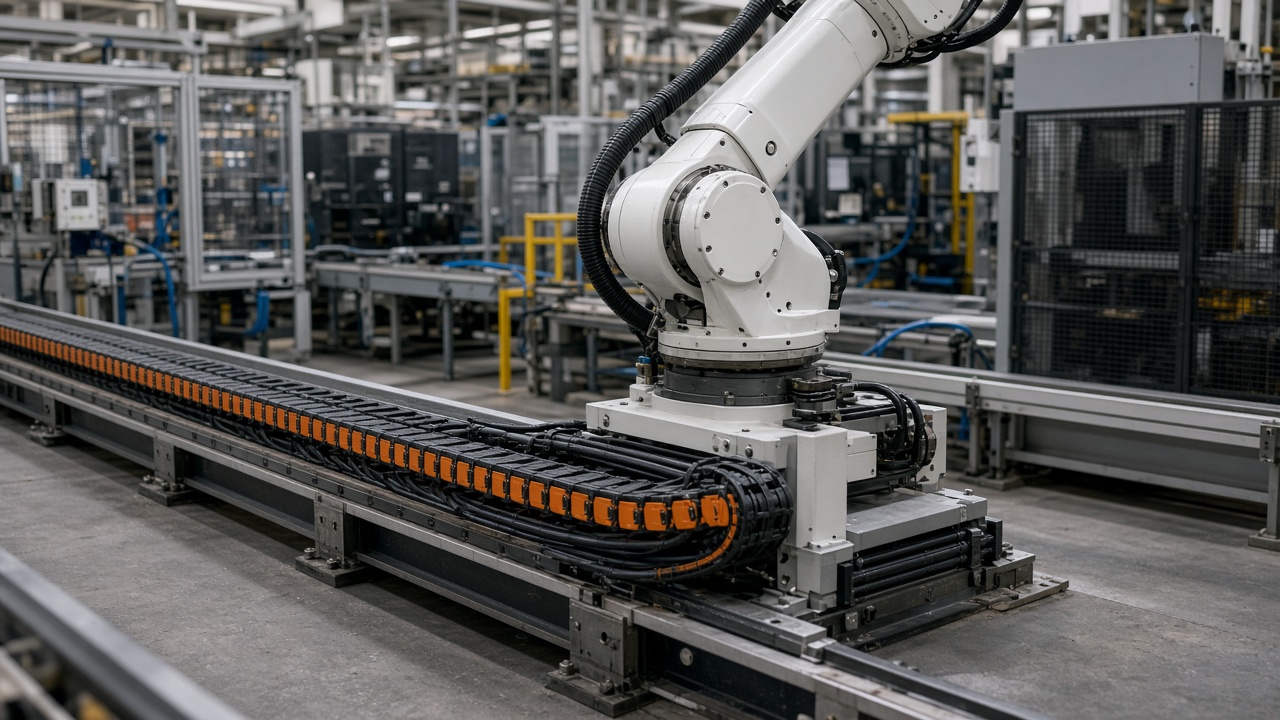
Cable carriers (energy chains) exist to guide flex life. They do not invent flex life. If the chain’s minimum bend radius is smaller than the cable’s, if the fill ratio packs jackets until they abrade each other, or if broken links let the bundle twist, the copper and shields fail on a cycle count—not on a calendar that says “dress pack OK.”
Wear modes worth naming
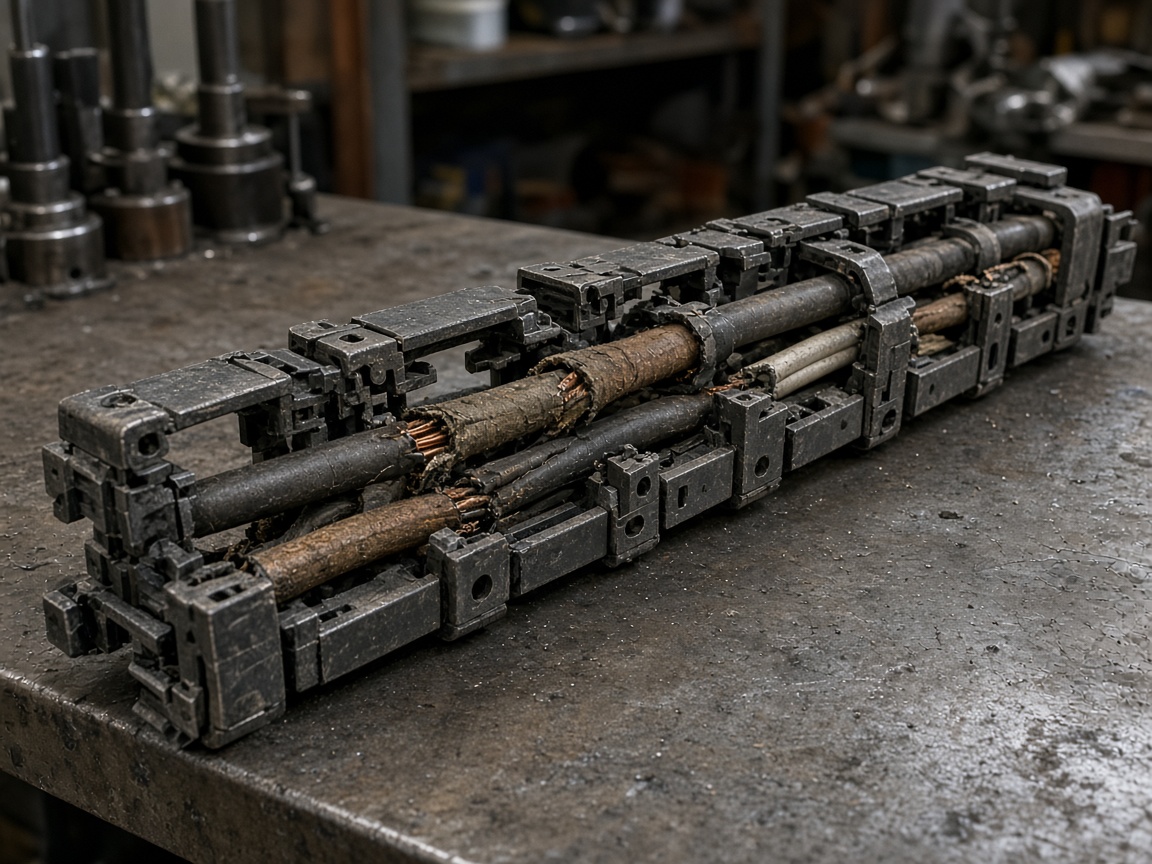
Broken or missing plastic links change the path geometry. Grit inside the chain acts like sandpaper on jackets. Mixed cable diameters without separators let thick power leads crush thin signal pairs. Fixed-end clamps that bite the jacket create a stress riser exactly where motion begins. Oil mist softens some plastics and accelerates crack growth at the outer bend.
Holding-brake wear, absolute-encoder battery loss, and wrist singularity path planning are different tickets. This one is mechanical cable life inside the carrier.
What a useful inspection looks like
On planned downtime, open representative sections—especially the travel extremities and any vertical loops. Look for flattened jackets, exposed braid, cracked links, and dust packed into separators. Measure or verify bend radius against the cable datasheet, not against “what fit at install.” Confirm the chain’s unsupported length and acceleration still match the OEM table after a speed or payload change.
Replace cables as a set when one signal pair shows wear; the neighbors have the same cycle history. Do not splice inside the moving envelope to “get through the week” unless the temporary repair is tagged, timed, and removed—splices become the next intermittent.
When the fault clears after a power cycle and returns after an hour of seventh-axis travel, open the chain before you reorder a servo pack. The carrier already voted.