

The first alarm was a “servo following error.” It was really a soft-docked tool that lost air mid-path, followed by a tool-ID mismatch that the PLC treated as a random I/O glitch. Only when maintenance pulled the changer did they find a scored pneumatic coupler, a dirty locking taper, and a teach point that kissed the dock at an angle every fiftieth cycle.
Automatic tool changers sit in the blind spot between robot OEM warranties and production takt. Mechanical owns the master/tool plates once. Controls owns the handshake bits. Production owns the stop count. Nobody owns the living system: approach geometry, coupler seals, locking force, contamination, and ID integrity under change control.
This brief is that ownership map—not an EOAT catalog, and not another dress-pack cable piece.
Symptom → likely owner (before you blame the servo)
| What you see | Often not the servo | First place to look | | --- | --- | --- | | Mid-path air loss / soft grip | “Hose leak myth” | Coupler seals, CDA at dock, lock confirm | | Tool-ID mismatch / wrong payload | “PLC glitch” | ID pins, RFID, teach docking angle | | Crash near dock | “Programmer error” | Approach path, compliance, wear on taper | | Intermittent “locked” bit | “Sensor noise” | Proximity adjust, debris on face | | Repeat after seal kit | “Bad batch” | Dock geometry, contamination source |
The point of the table is ownership: controls owns handshake logic; maintenance owns plates and seals; production owns takt—but only a named tool-changer owner connects them before high-mix becomes high-stop.
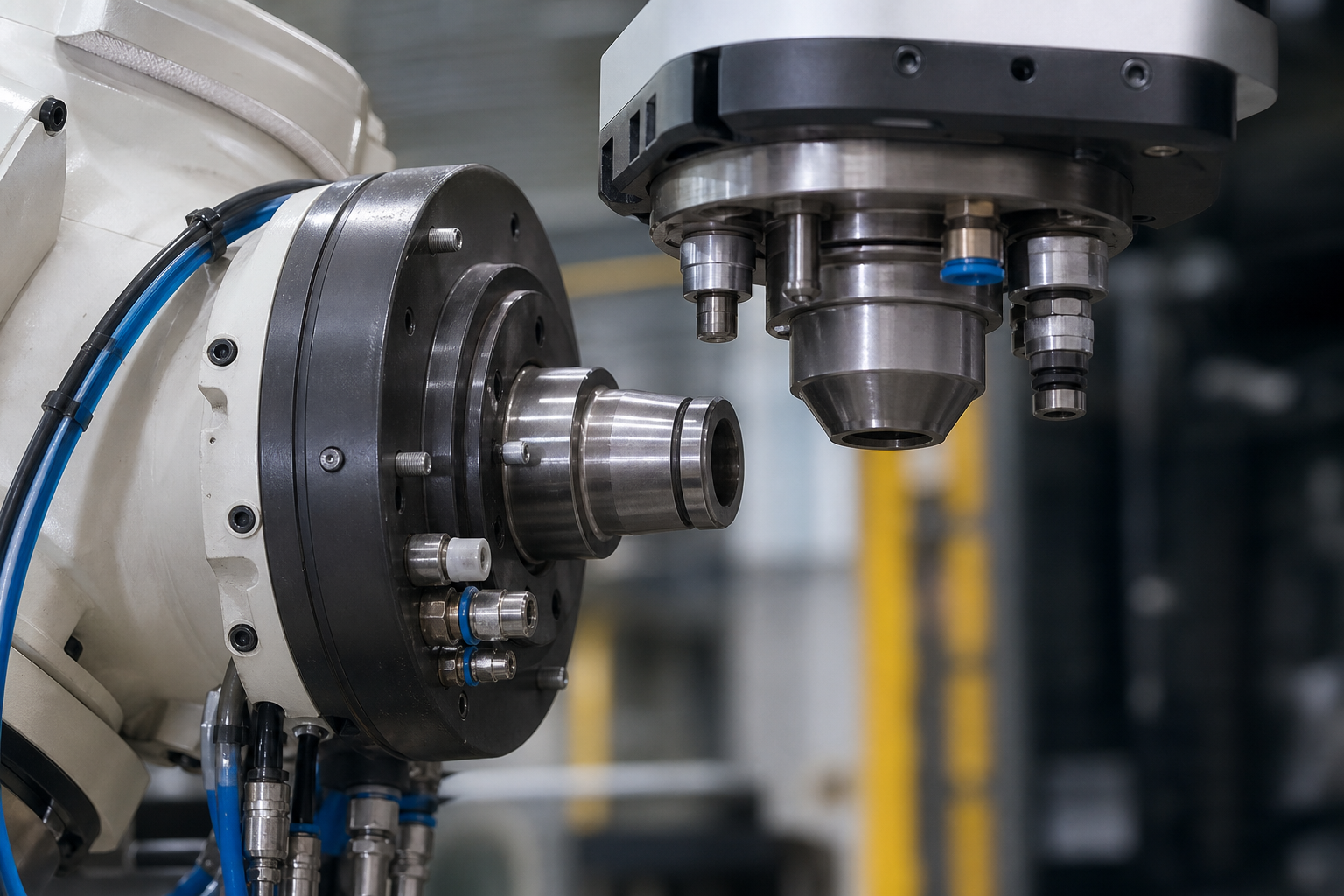
A green “locked” bit is not a seal health certificate.
What a tool-changer program actually controls
ATC reliability is not “buy a better brand.” It is process: approach vectors that do not side-load the taper, CDA quality at the dock (wet air kills seals), cleaning intervals keyed to environment (weld spatter vs clean packaging), and tool-ID under the same change control as the robot program. Mature cells keep master/tool plate wear criteria, spare coupler kits staged by cell family, and a rule that any air-loss stop inspects the dock before a servo retune.
High-mix amplifies sins. A cell that swaps five tools per hour will teach one dirty dock into five scrap modes. Sites that “fixed” dress-pack cables and still see tool faults are usually looking at the wrong flex point—the dock face.
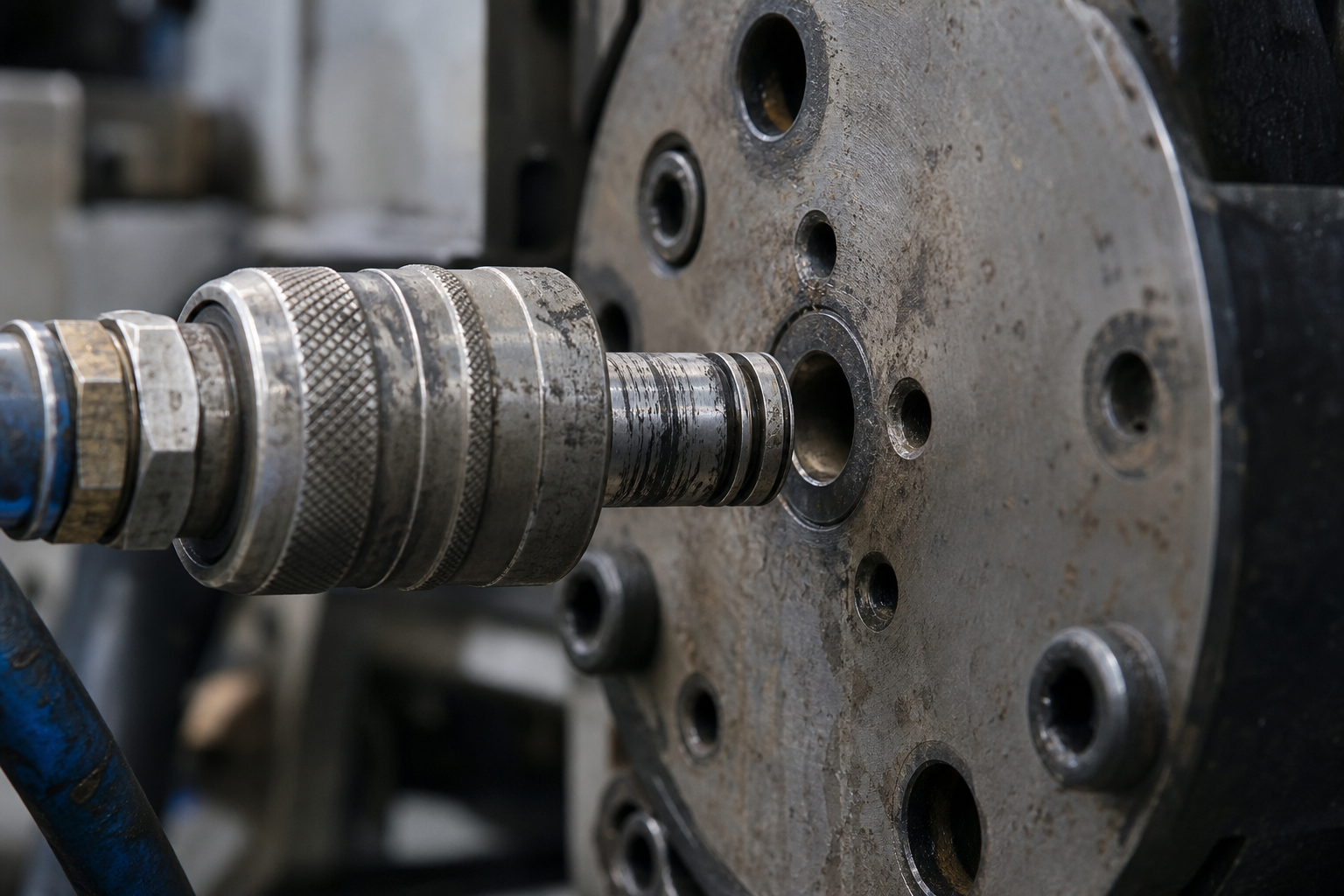
If the dock face is tribal knowledge, every teach is debt.
An anonymized changeover that should have been a dock PM
A consumer-electronics cell lost nine hours across two shifts after tool swaps during a promotion SKU ramp. Ticket trail: tool-ID collisions after a spare plate was cloned without rewriting RFID, coupler O-rings past cycle life, and approach speed raised “to hit takt” without re-validating dock angle. Post-mortem was not servo tuning. It was a missing rule: any unplanned ATC air or ID fault blocks further tool swaps until dock inspection—same shift, named owner.
Magnitudes without brochure theater
Exact lock force and seal life belong to your ATC OEM and your duty cycle. Ordering is portable: lost changeover minutes outrank deferred seal kits; documented dock geometry outranks tribal teach fixes; ID change control outranks blaming the last PLC download. Cells that only monitor servo faults will keep celebrating “stable paths” while the dock quietly writes the next stop chapter.
Adjacent topics that stop here
Dress-pack cable management owns carrier flex life. Screwdriving cells own torque-angle verification. Adhesive dispense owns bead health. CDA programs own plant air quality. None of them own master/tool plate wear, coupler seal cycles, or tool-ID discipline at the dock. Do not replace a dress pack and expect ATC uptime.
Questions that replace hope
Who can alter dock approach without a path revision? When did you last measure coupler leak-down at production pressure—not glance at it? Are tool-ID changes under the same MoC as robot programs? If the ATC OEM disappeared for a month, would your CMMS still know plate serials, seal kit lots, and which SKUs share which tool stand?
Tool changers are not accessories hanging on a flange. They are the reason your “healthy” servo still drops a tool at takt. Inspect the dock, control the ID, and treat ATC as motion equipment—because the path already depends on it.