
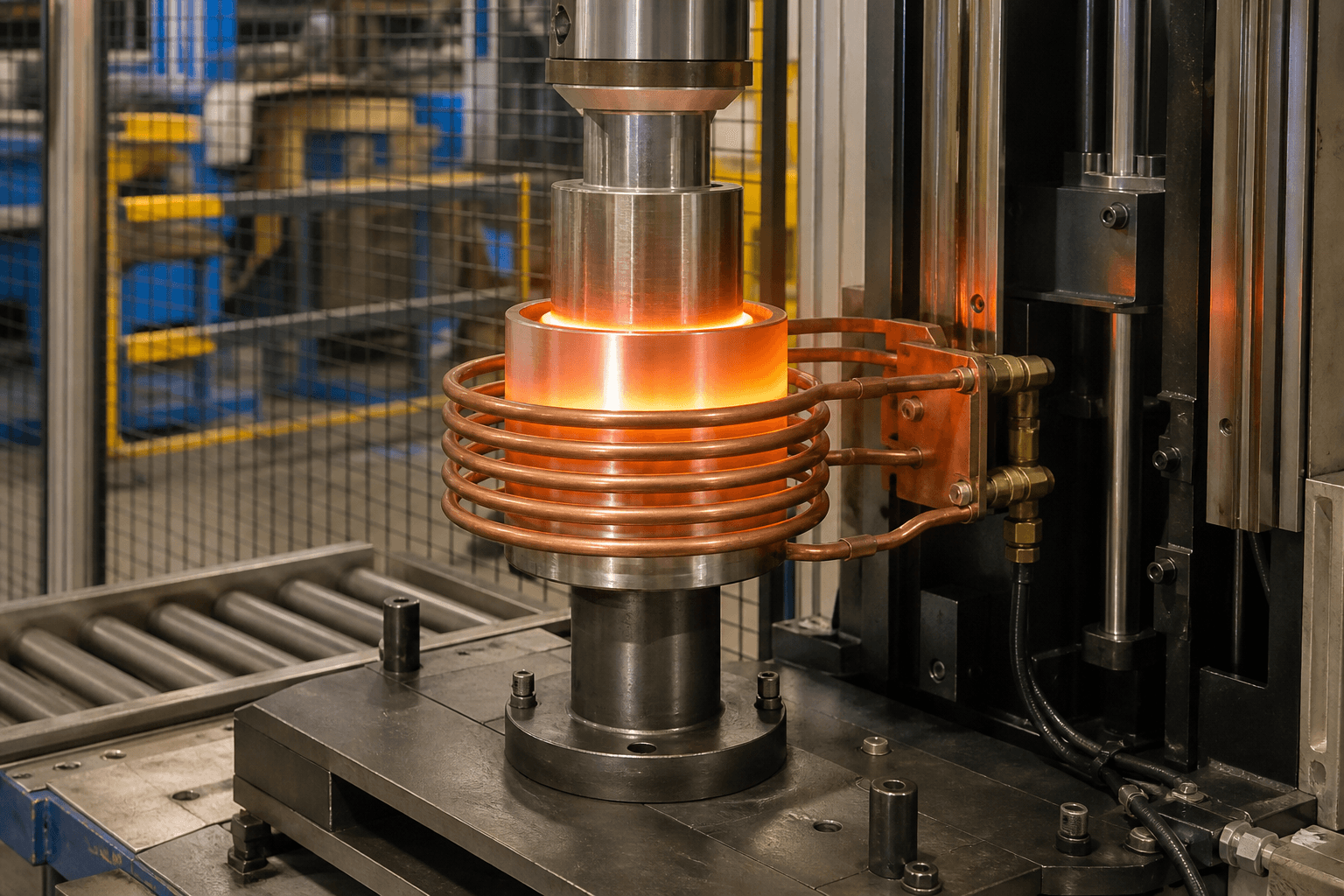
Thursday’s gearbox cell pressed a heated hub onto a shaft that had just come off a cold wash. Coil recipe assumed 20 °C ambient stock. The hub seized mid-travel, scored the journal, and the robot still logged “assemble complete” because the force limit was set for a free slide that never happened.
Shrink-fit and induction assist own temporary clearance from controlled ΔT, not brute force. Robotics cells that treat the heater as a black box invent scrap that looks like “press problems.”
What keeps interference honest
Measured expansion. Target temperature and soak must match the calculated diametral clearance for that fit class—crayon or pyrometer on the hub, not “coil looked bright.”
Shaft and hub temperature together. A cold shaft steals clearance as soon as contact starts. Stock temperature is process, not weather chat.
Seat time and stop. Incomplete travel leaves residual stress and wrong axial position; overshoot heats seals and coatings. The cell needs position and time gates, not only force.
Cool-down under control. Quenching or clamping wrong while cooling can walk the assembly off square.
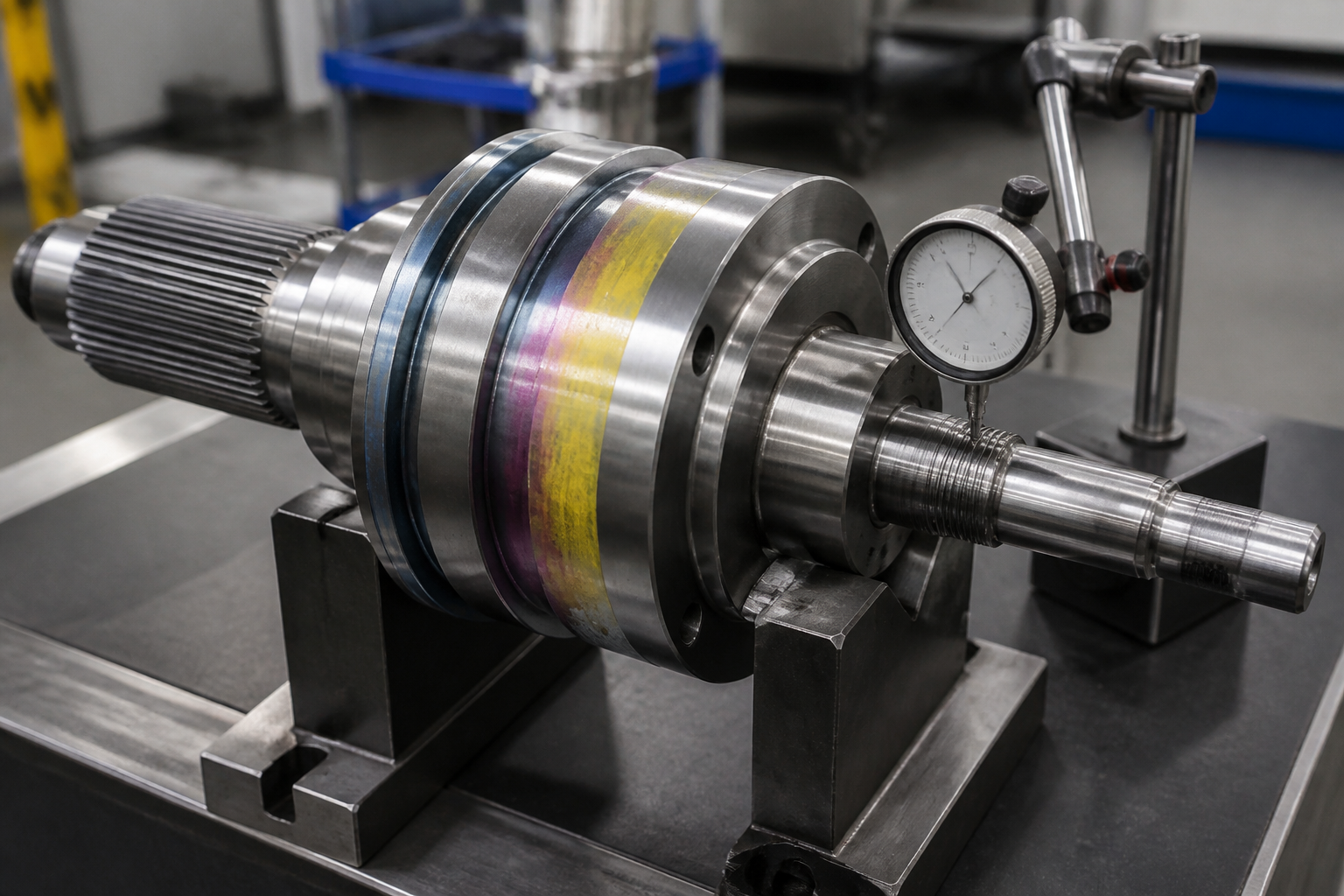
Review pack for the cell
- Fit class, ΔT target, and measured hub/shaft temps on the traveler for each serial.
- Force–position curve for seating; abort if force rises before target depth.
- MoC when material, coating, or ambient staging changes.
Do not raise coil power to “make it go” after a cold shaft. Do not celebrate cycle time that skips pyrometer checks.
The robot owns the press stroke. The thermal clearance decides whether that stroke is an assembly or a scrap journal.