
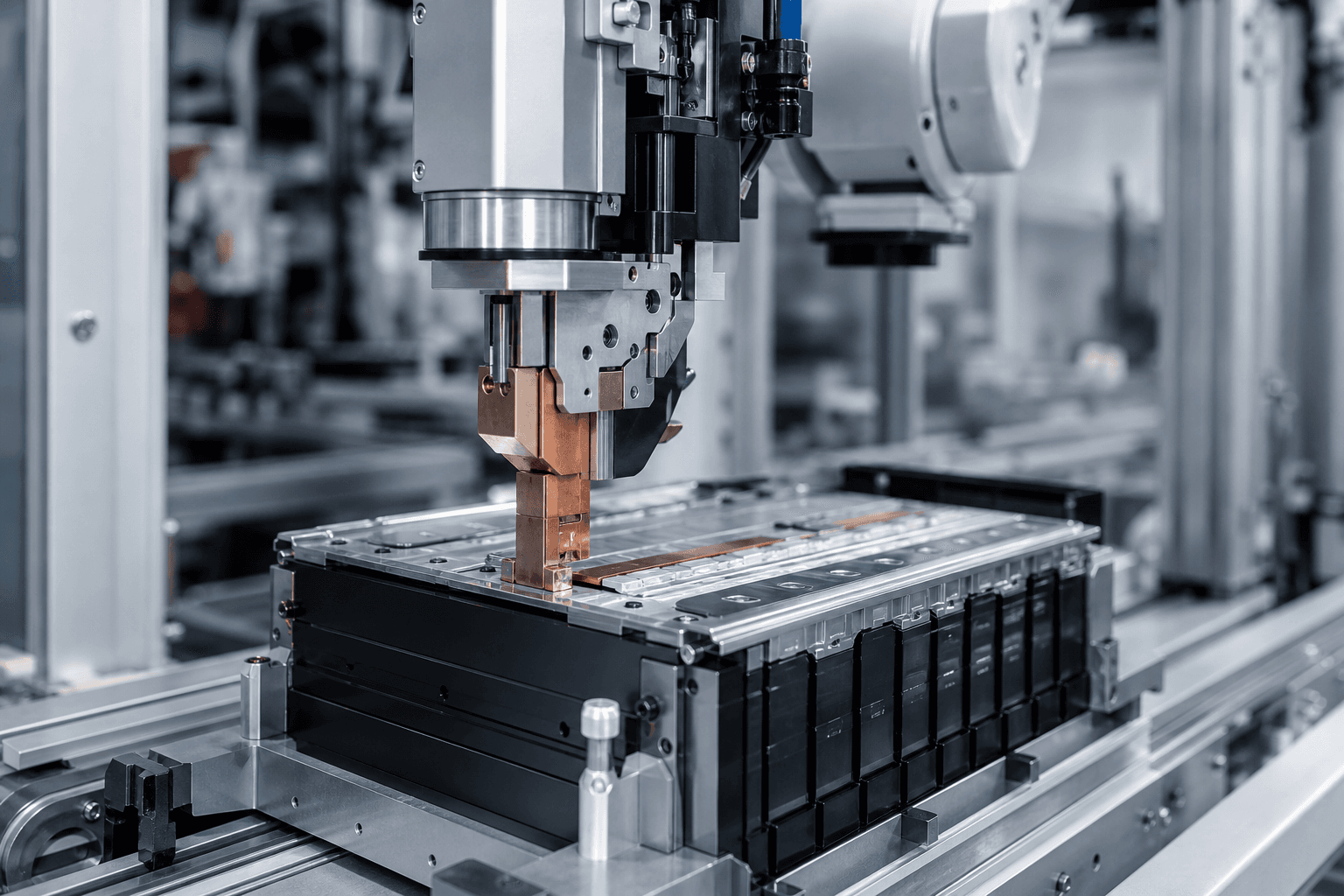
Robotic ultrasonic metal welding on battery tabs and busbars is sold as a clean, fast solid-state join. The robot brings the horn to the stack. The stack sees amplitude, force, and time at a copper or aluminum interface. When peel strength drops or resistance rises, the first suspects are path and seam finding. Those matter for location. The bond physics lives in the horn face, the anvil, and the clamp that keeps the foils from sliding while the metal yields.
This is not MIG liner folklore, not resistance spot-cap dressing, and not laser EV seam monitoring. It is ultrasonic metal welding consumables and force.
What the horn is doing
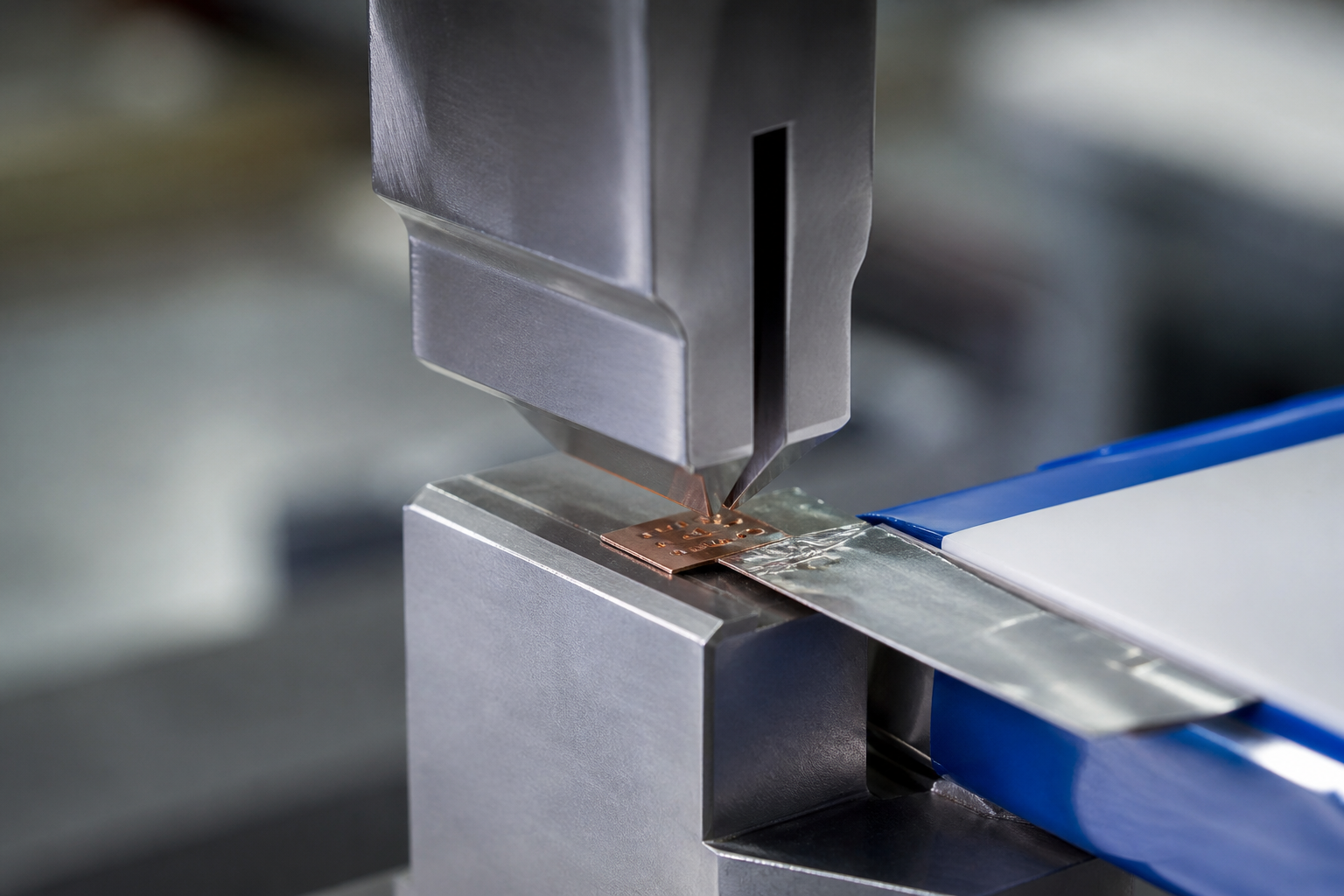
The sonotrode face is a textured tool. It wears, mushrooms, and loads with aluminum transfer. Amplitude at the stack falls even when the generator setpoint is unchanged. Energy and power traces shift. A schedule that was qualified on a fresh horn is no longer the same process.
Dressing or replacing the horn on a weld count—or on a power/energy window drift—is the control. Waiting for a destructive peel fail is late. Anvil condition mirrors the same story on the other side of the joint.
Clamp and stack-up
If hold-down force is low or the nest is dirty, foils slip and you get a scrub that looks like a weld and fails in service. Tab plating, foil count, and busbar cleanliness are part of the weld recipe. Changing foil supplier without requalifying amplitude and force is a process change dressed as a PO.
Vacuum or mechanical nests that mark soft foils create stress risers next to the bond. Inspect nests on the same interval as horns.
What to verify after a horn change
Coupon matrix at production amplitude/force/time, peel or peel-equivalent per WPS, and electrical resistance if the pack cares. Generator logs: power, energy, and collapse distance if instrumented. Skipping coupons because "only the horn changed" is how a wrong face pattern becomes a week of latent opens.
The robot repeats the approach. The joint repeats only if the acoustic tool and the clamp repeat. Service those as the weld process, not as robot accessories.