
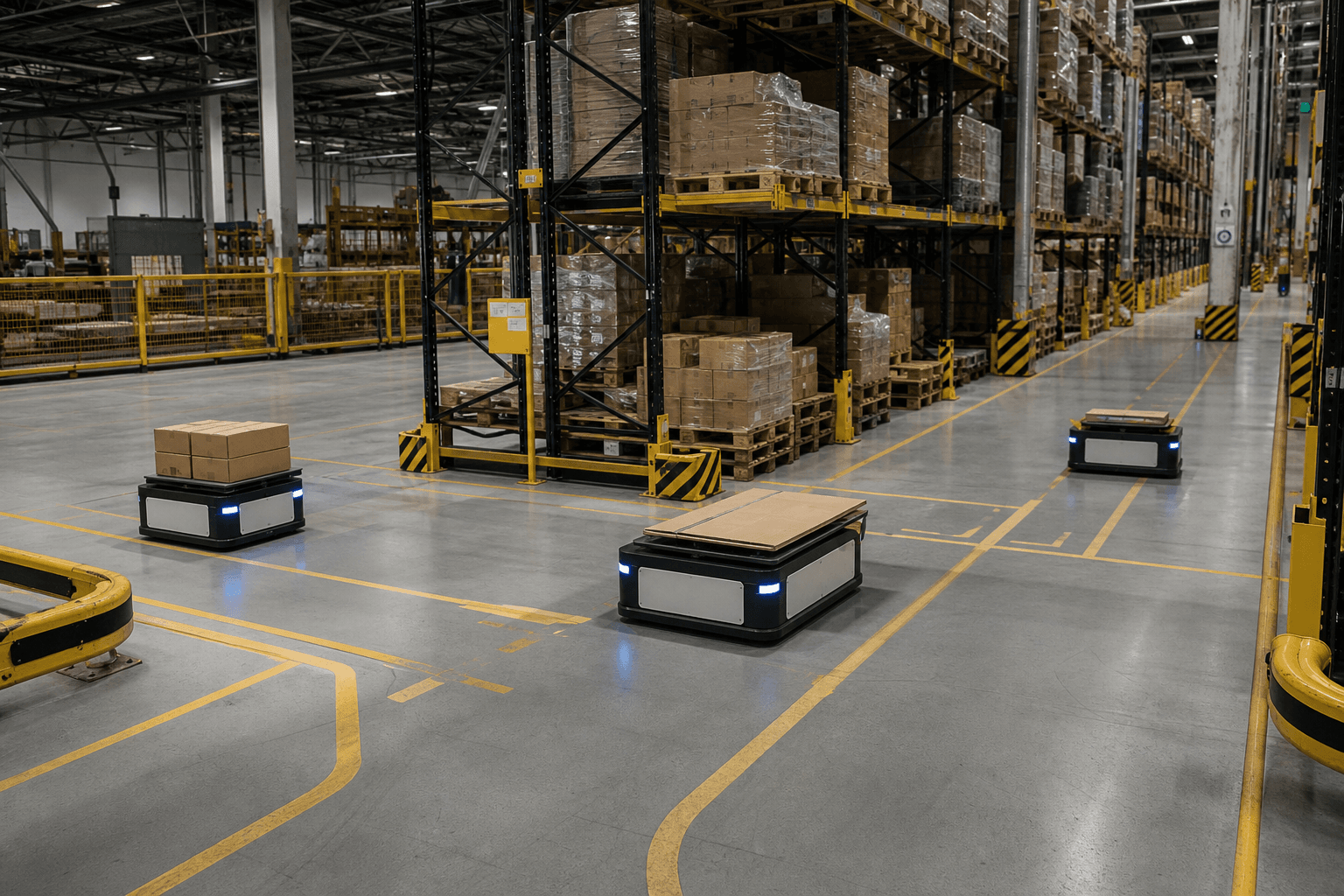
Buying more autonomous mobile robots does not linearly buy more throughput. Past a modest fleet size, the constraint moves from “can this robot navigate?” to “can these robots share the aisle without freezing the plant?” Intersections, chokepoints at elevators, and mixed zones with forklifts turn a navigation demo into a traffic-engineering project.
AMR edge-logistics briefs own onboard perception and fleet software categories. This brief owns the failure mode operations actually feels: deadlock, gridlock, and polite robots that wait forever while production waits louder.
What an intersection is on a factory floor
An intersection is any place where paths cross and a robot may block another’s only legal route: painted crosses, narrow rack mouths, airlock approaches, stretch-wrap exits, and the unmarked space in front of a popular MES kiosk. If two robots each need the other’s occupied cell, classical planning without a recovery policy produces a still life.
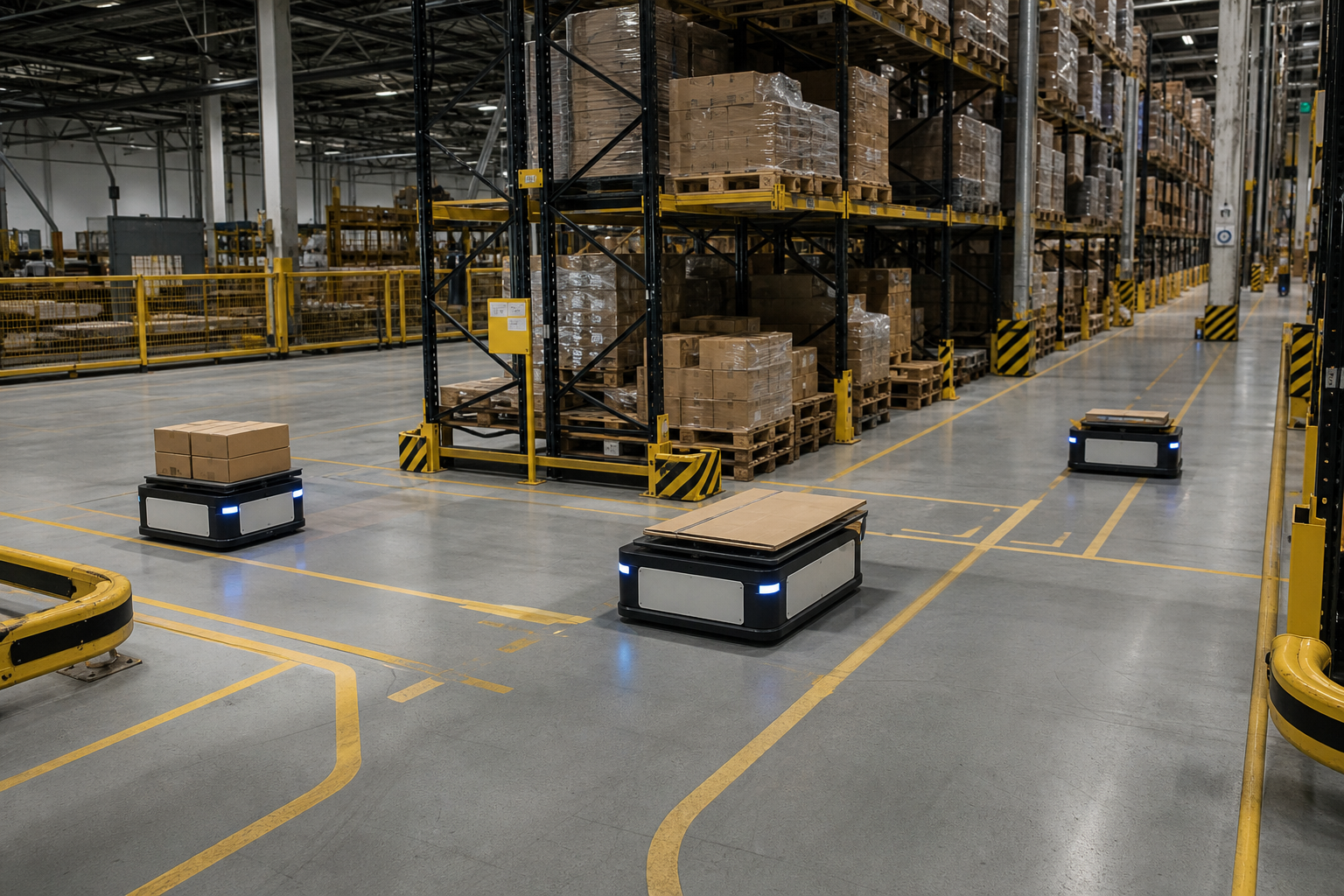
More robots without intersection rules is congestion CapEx.
Controls that actually move material
Useful fleets combine layers:
- Map semantics — One-ways, keep-clear zones, and speed limits that match real human traffic, not a CAD fantasy.
- Reservation / priority — Who owns the crossing for the next N seconds; how emergency and manned vehicles preempt.
- Deadlock detection — Timeouts that escalate before supervisors notice the aisle has become a sculpture garden.
- Recovery policies — Back-out corridors, forced reroutes, and a human call that is practiced—not invented during a customer tour.
- Mixed traffic rules — Forklift right-of-way that is trained on both sides, with near-miss logging that feeds layout change—not blame theater.
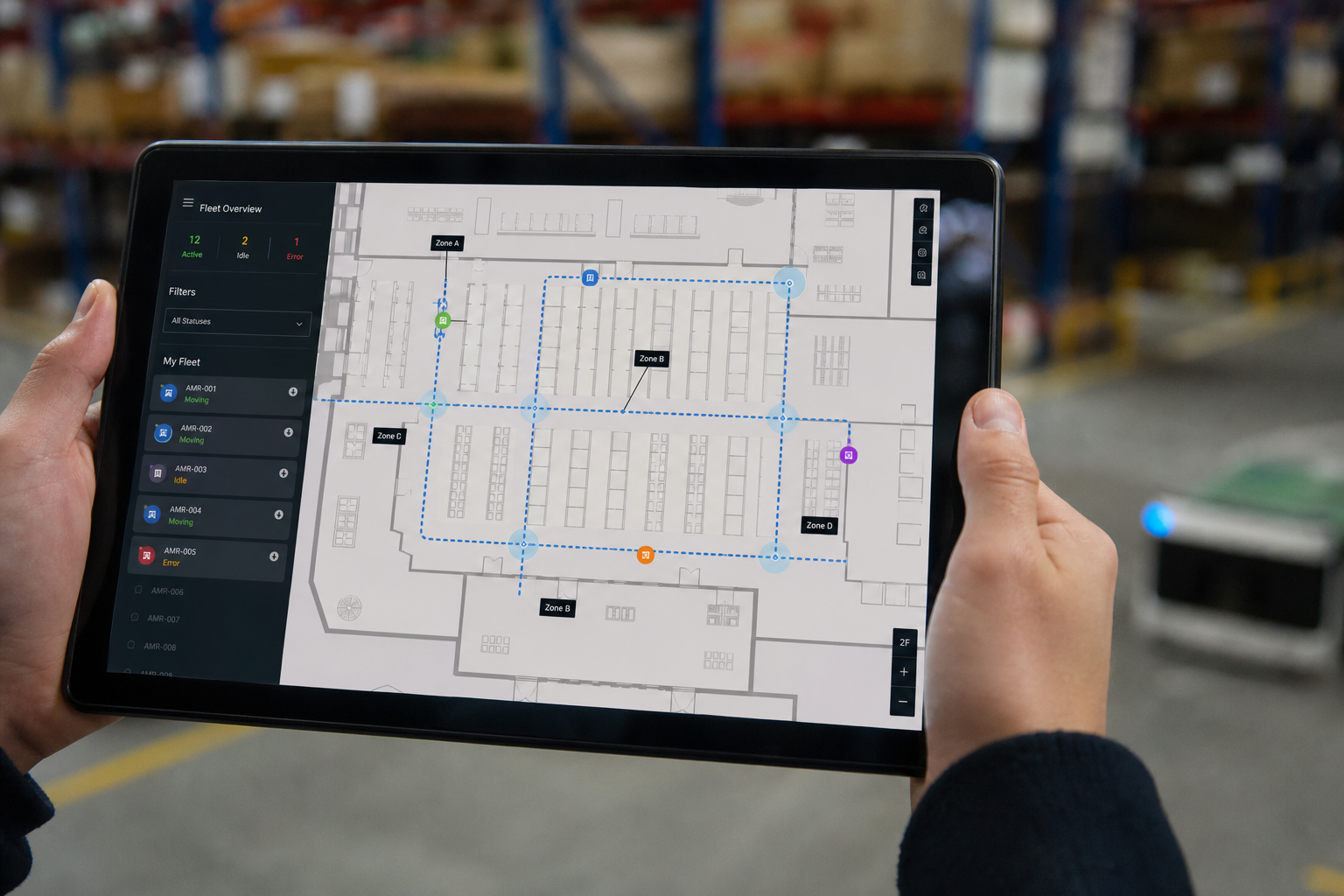
If the map has no named intersections, the fleet will invent them as incidents.
An anonymized deadlock that looked like “Wi-Fi”
Two AMRs met nose-to-nose at a rack mouth. Both waited for courtesy. Fleet software reported healthy localization. Wi-Fi was blamed for twenty minutes. The fix was a keep-clear polygon, a one-way exit from that aisle, and a deadlock timeout that forces one robot into a retreat pose. Navigation accuracy was never the patient.
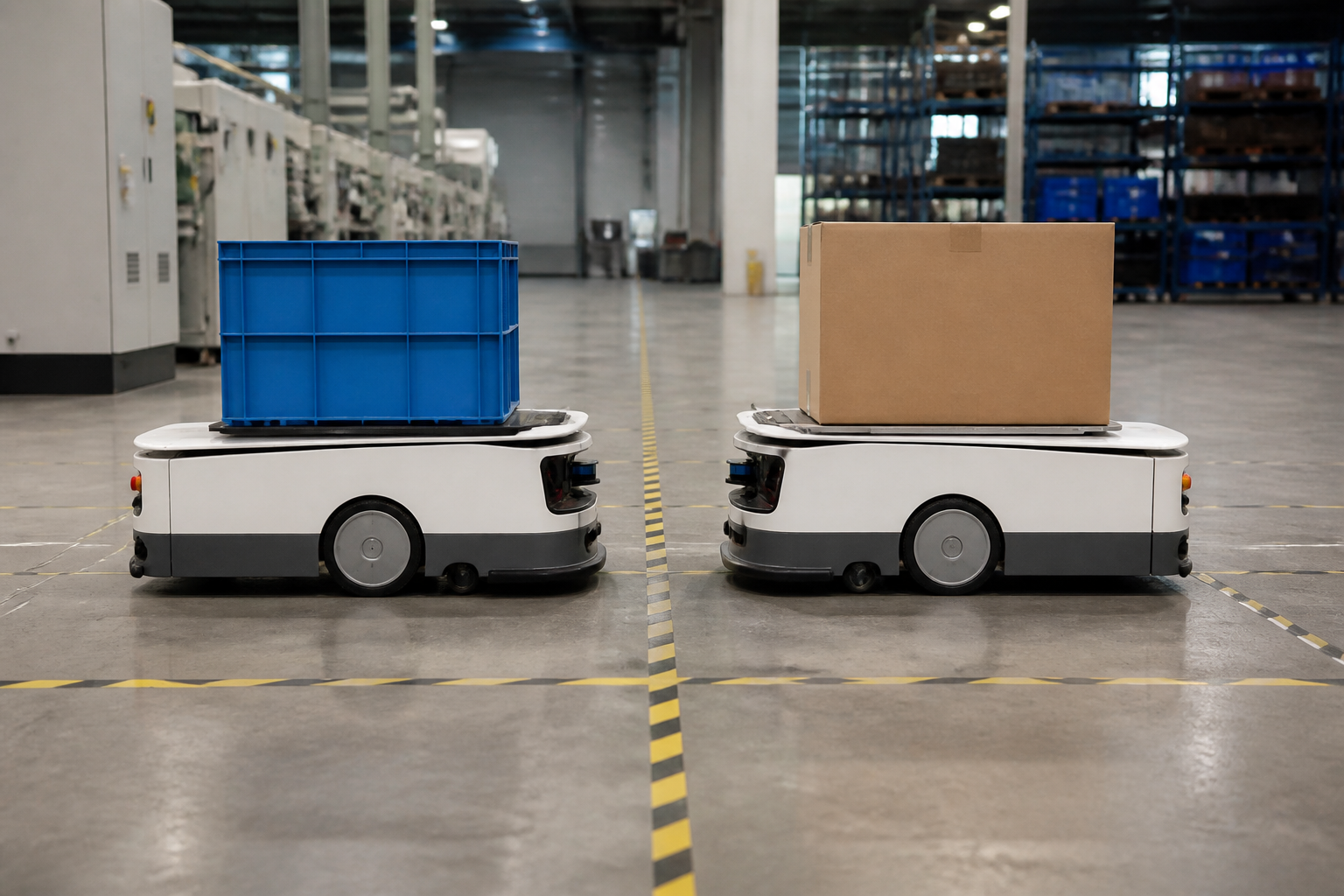
When robots are polite without a priority law, production loses.
Metrics that prove the fleet is industrial
- Mean time blocked at intersections (not only mean speed in open aisle).
- Deadlock events per 1,000 missions, with root cause coded (map / policy / obstacle / human conflict).
- Manual interventions per shift that are traffic-related versus robot-fault-related.
- Layout change tickets opened from near-miss data.
Mobile manipulators own arm-on-base work. Trailer unloading owns docks. Palletizing owns end-of-line stacks. Humanoid pilots own bipedal experiments. This page owns multi-AMR traffic as a plant reliability system. Do not double the fleet and leave intersections unnamed.