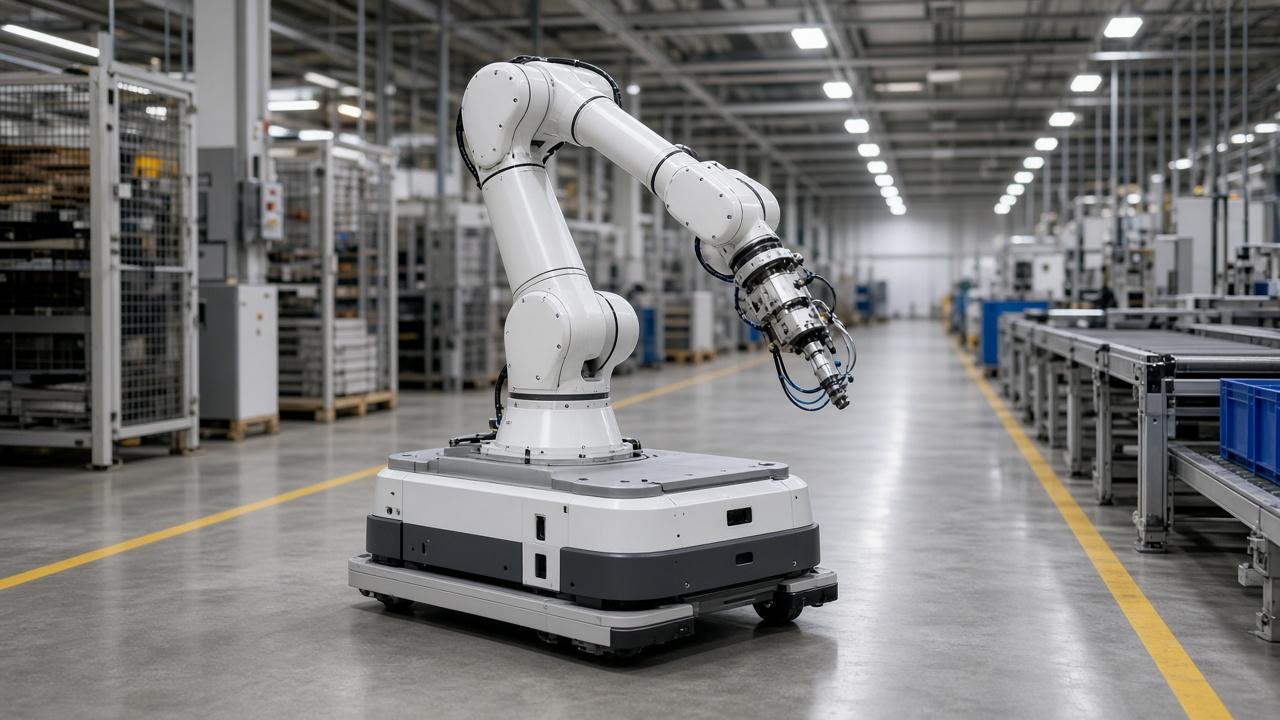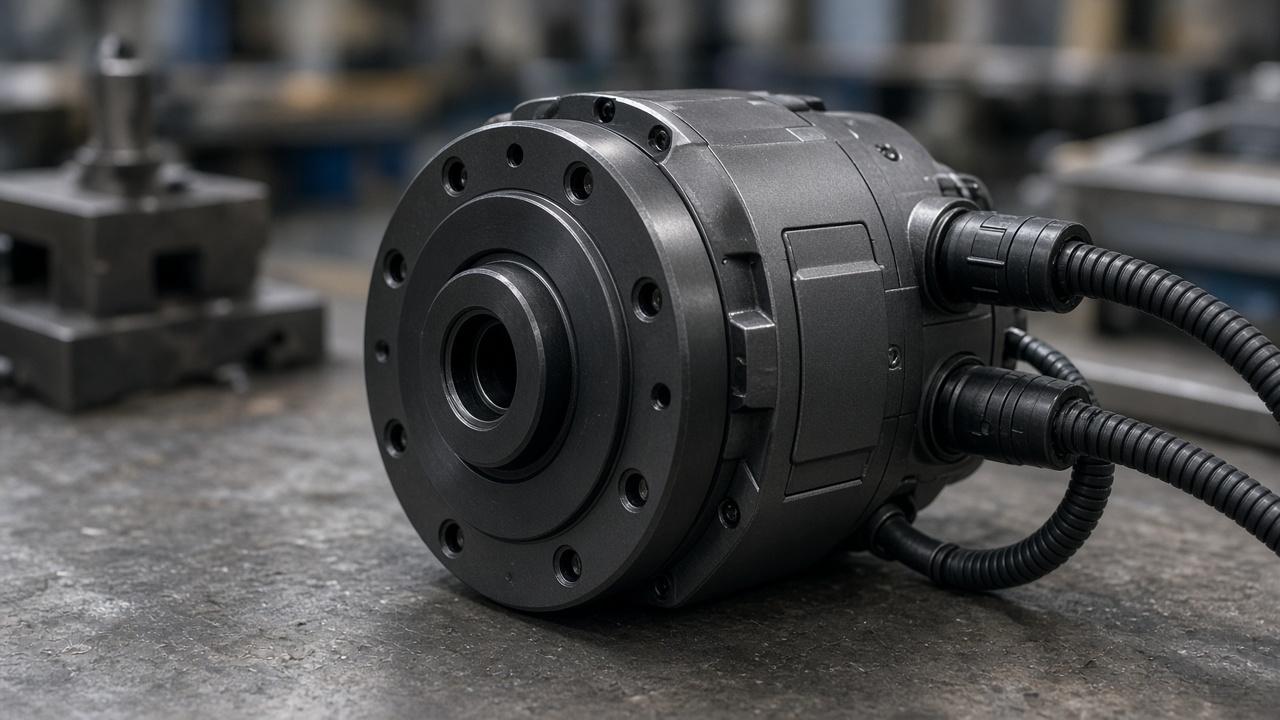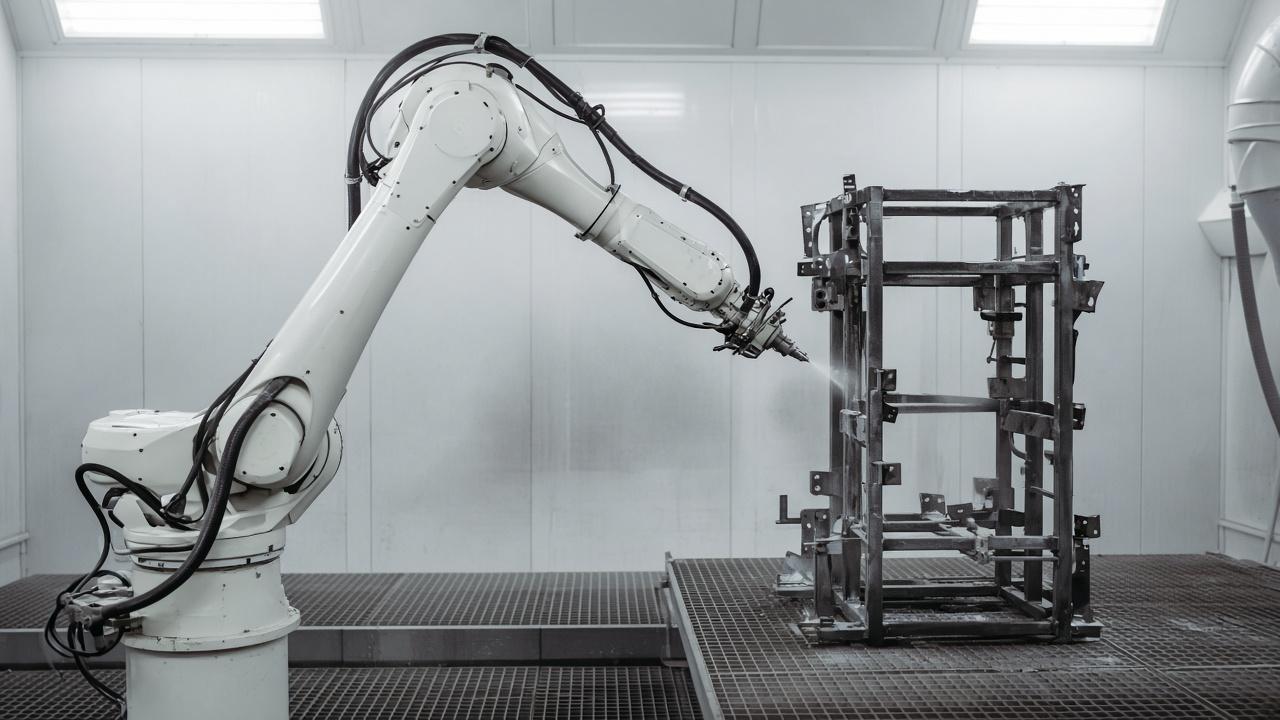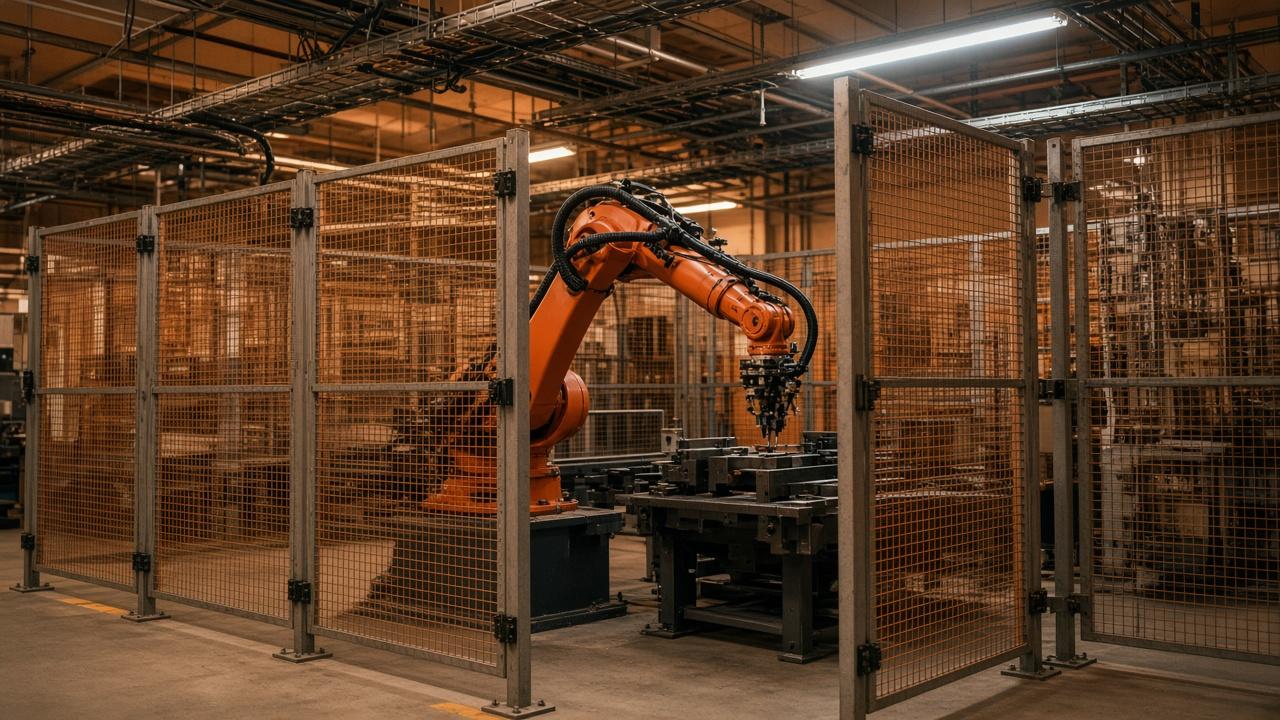
ABB Robotics introduced the IRB 1700 and IRB 1700ID at the China International Industry Fair in Shanghai, 12–16 October. The compact articulated pair runs on OmniCore controllers across five variants with payloads from 6 kg to 12 kg. ABB’s published claims include up to 20 percent shorter cycle times than comparable robots on the market, path repeatability down to 0.03 mm, joint speeds up to 700 degrees per second, up to 15 percent lower power consumption versus the predecessor IRB 1600 on the same payload with OmniCore, and oil-change intervals up to 20,000 hours. The ID variant routes cables and hoses inside the arm.
Named applications are material handling, arc welding, deburring, sanding, machine tending, and electronics work such as AI server rack assembly. Footprint is stated at roughly half the predecessor’s—useful packaging for integrators who need a smaller bay and cleaner dress packs. That catalog story does not, by itself, upgrade every existing IRB 1600 cell overnight.
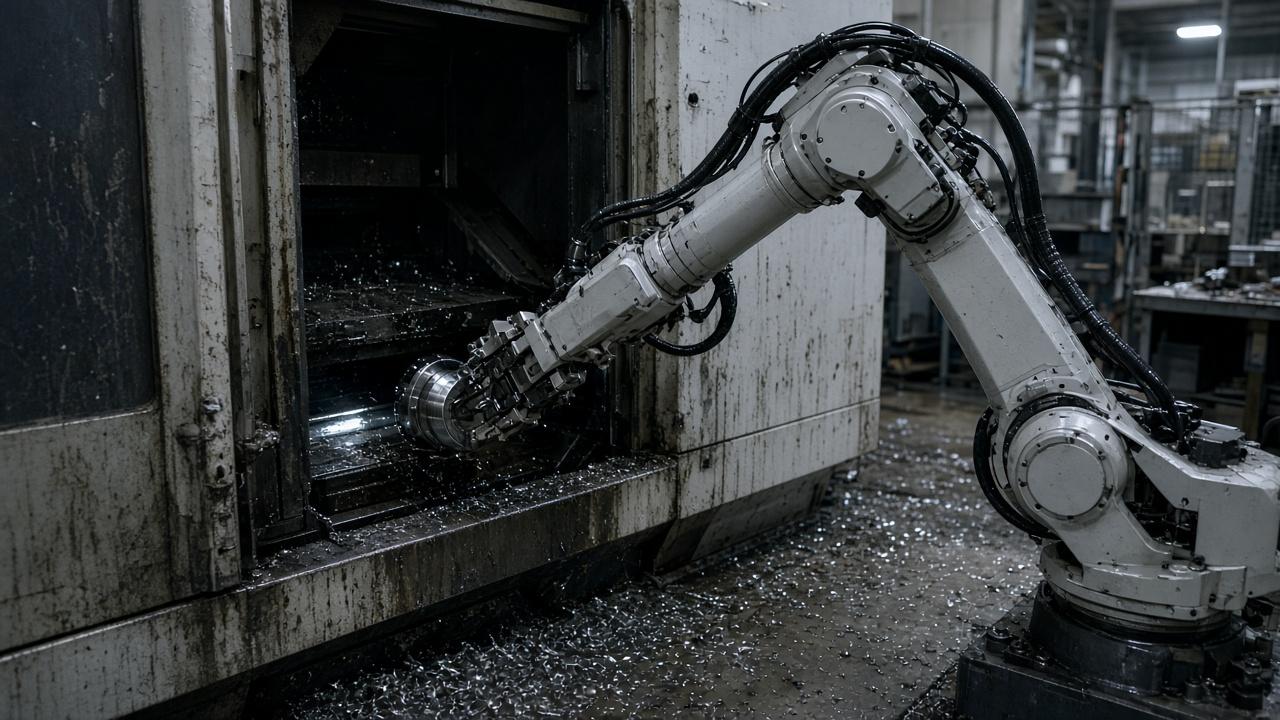
Vendor cycle-time percentages assume a comparable motion task. On a real line, gripper mass, weld schedule, sanding force, conveyor tracking, and interlocks usually dominate the stopwatch. Path repeatability of 0.03 mm is a robot specification; process capability still depends on tooling stiffness and thermal drift. Power and service-interval claims are relative to ABB’s stated baseline rather than a plant energy audit. Treat the launch numbers as vendor claims for a conventional industrial arm—not a measured 20 percent takt cut on a brownfield station ABB did not instrument.