
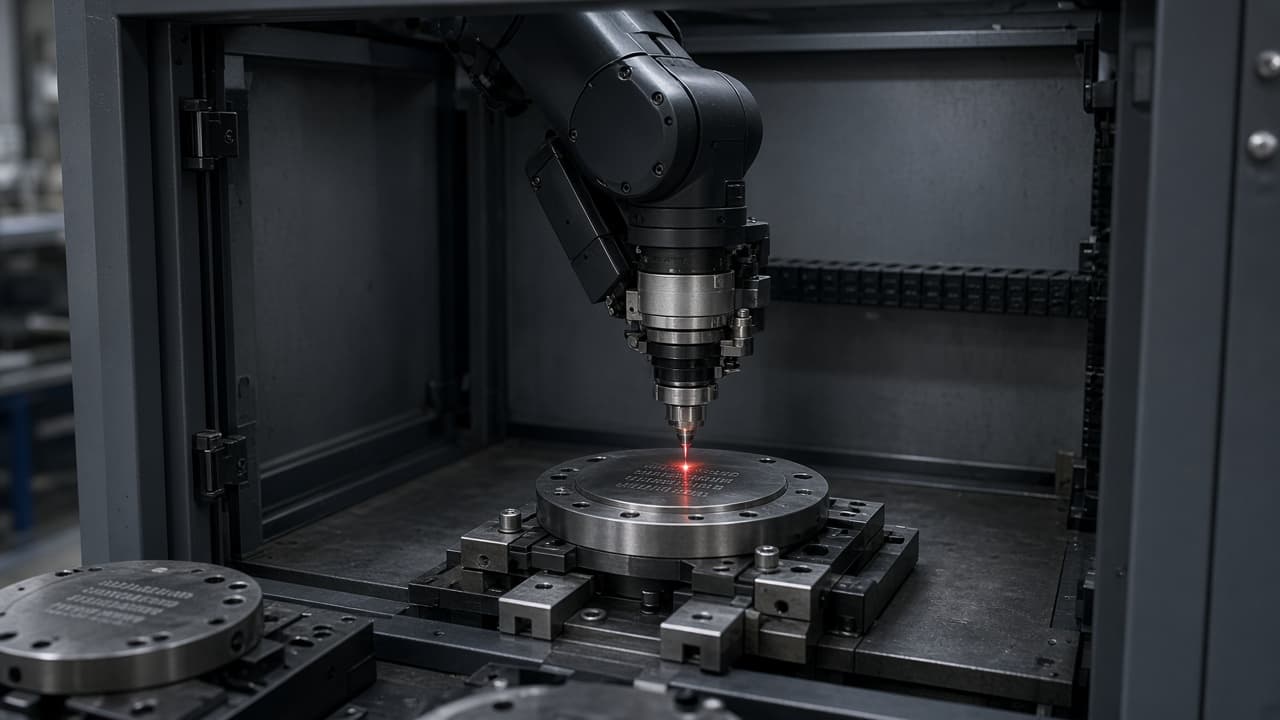
Serialized manufacturing needs marks that survive handling and remain machine-readable. Fiber or other industrial lasers mark metals and some polymers without ink. Robots or fixed stations present the part; the laser does the writing. The quality gate is not whether the cell finished the cycle. It is whether a graded verifier or production scanner can read the code under agreed lighting.
Print-and-apply labelers and lot-code OCR on cartons address marking on packaging. This note is direct laser marking on parts.
Process variables that move grade
Laser power, pulse parameters, speed, and focal position set mark depth and contrast. Surface condition—machined, blasted, coated, oily—changes absorptivity. A recipe qualified on a bright machined face can fail on a darker heat-treat lot without any robot program change. Fixture wear that tilts the part by a fraction of a degree is enough to walk the spot out of the depth of field.
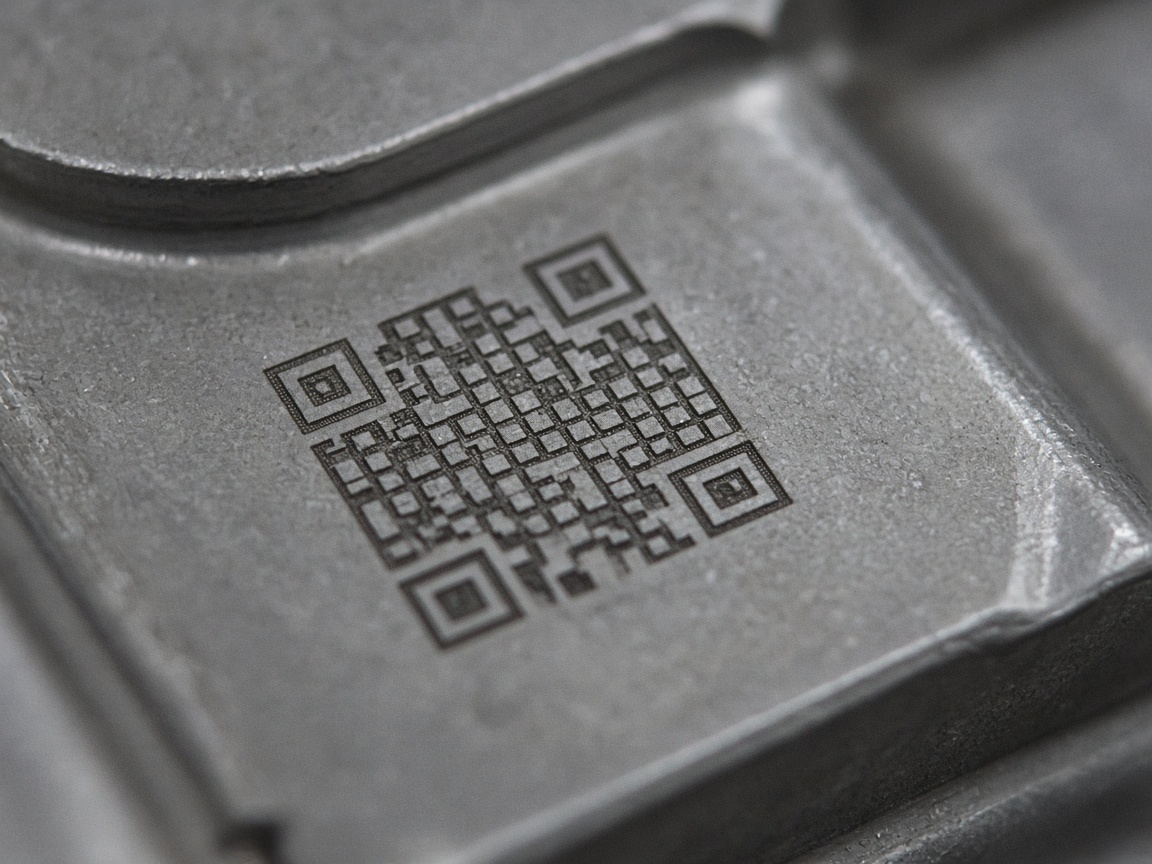
Verification belongs in the cell story
Where customers or regulations require a minimum symbol grade, keep a verifier (or equivalent graded check) in the acceptance path for recipe changes—not only a human glance at a shiny mark. Retain sample images or grade reports with the MoC for material and coating changes. If production uses handheld scanners, match the verifier lighting philosophy to what the floor actually uses, or expect “passed in the lab, failed on the line” disputes.
Change control
New alloy, new coating, new fixture, or new laser optics are recipe events. So is cleaning optics on a schedule: contamination reduces energy at the workpiece and looks like “mysterious” contrast loss. Log optic hours or clean dates next to the mark recipe ID.
The robot repeats pose. The mark recipe and the surface decide whether the pose produces a readable identity.