
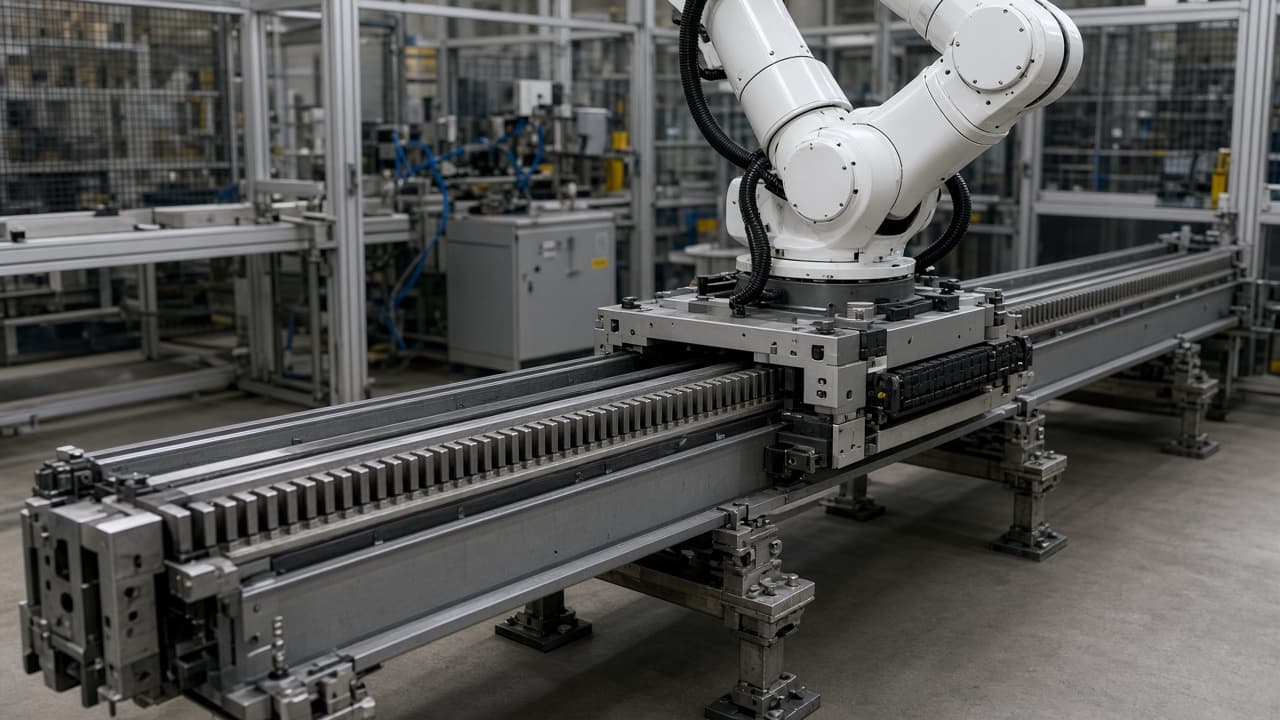
Long cells put the manipulator on a floor or overhead seventh axis so one arm covers multiple stations. When repeatability drifts along the travel, the first suspects are TCP, mastering, and the robot gearbox. Open the rack cover and you often find the cheaper truth: tooth wear, backlash growth, or a pinion that no longer meshes cleanly.
Energy-chain cable wear is the flex life of conductors in the carrier. Program backup is software discipline. This note is seventh-axis rack-and-pinion mechanical wear.
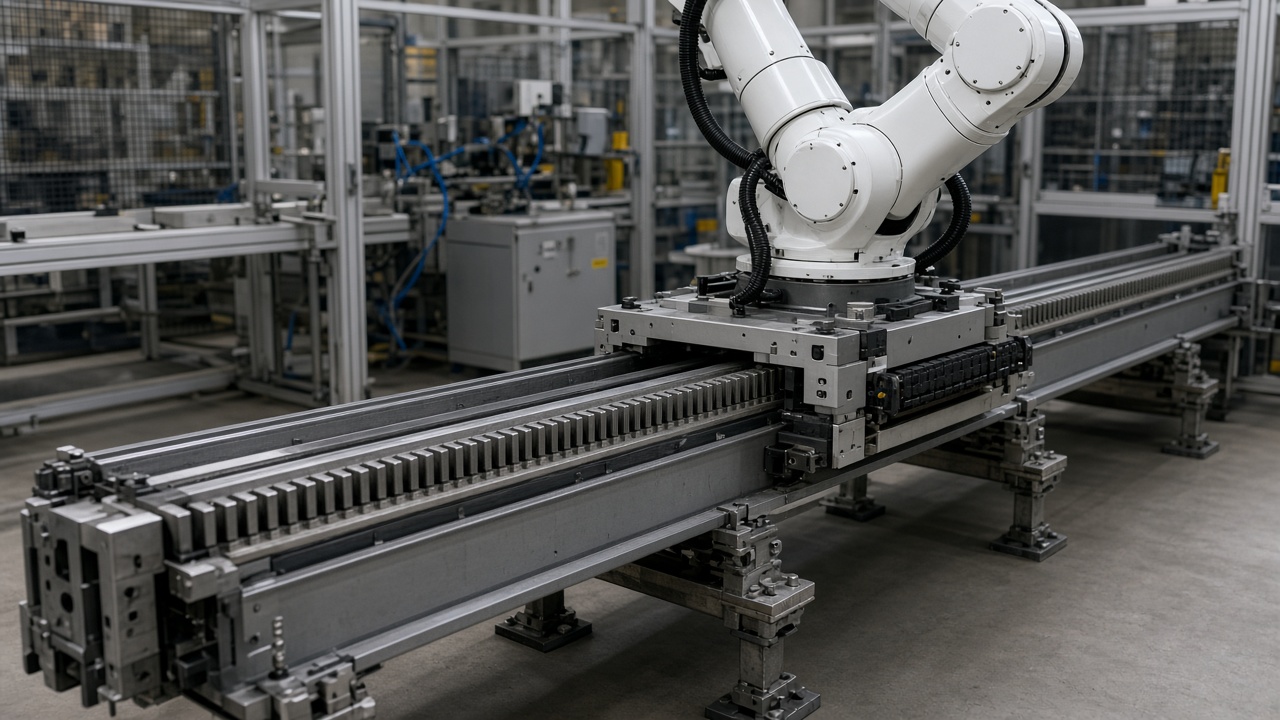
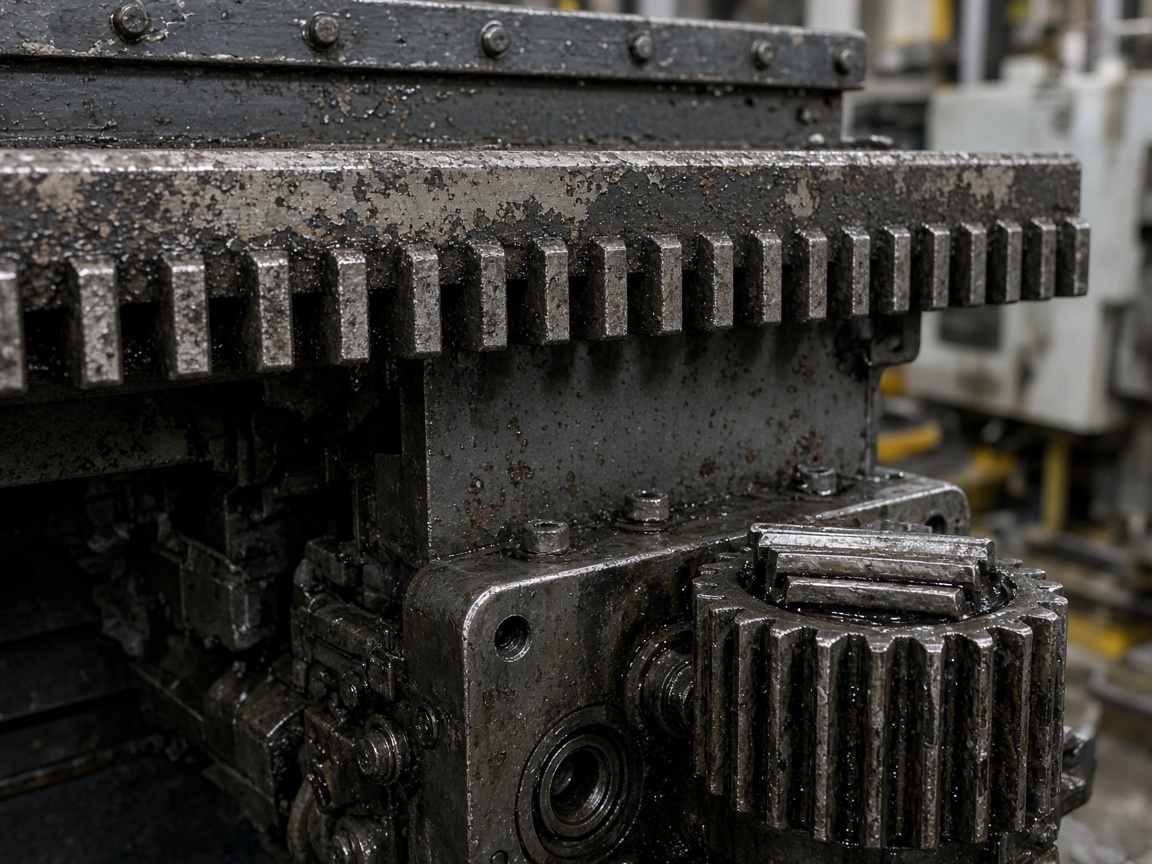
Rack teeth lose profile under grit, overload, and starved lubrication. Backlash then varies along the stroke; the servo chases a moving zero. Grease packed with metal dust is both symptom and abrasive. Mounting bolts that loosened after a floor repair tilt the rack so the pinion loads one tooth edge. None of that looks like a classic robot fault code until following error finally trips.
A short inspection beats a long argument: clean and inspect a representative rack section at both travel ends, check pinion backlash against OEM limits, verify lubrication delivery, and torque base and rack fasteners to print. Replace rack sections as matched sets when wear is uneven; mixing a new pinion with a hollowed rack recreates backlash in a week.
If pose error grows with seventh-axis position and shrinks when the carriage is locked, stop retouching robot points and service the track. The arm is reporting what the rack already decided.