
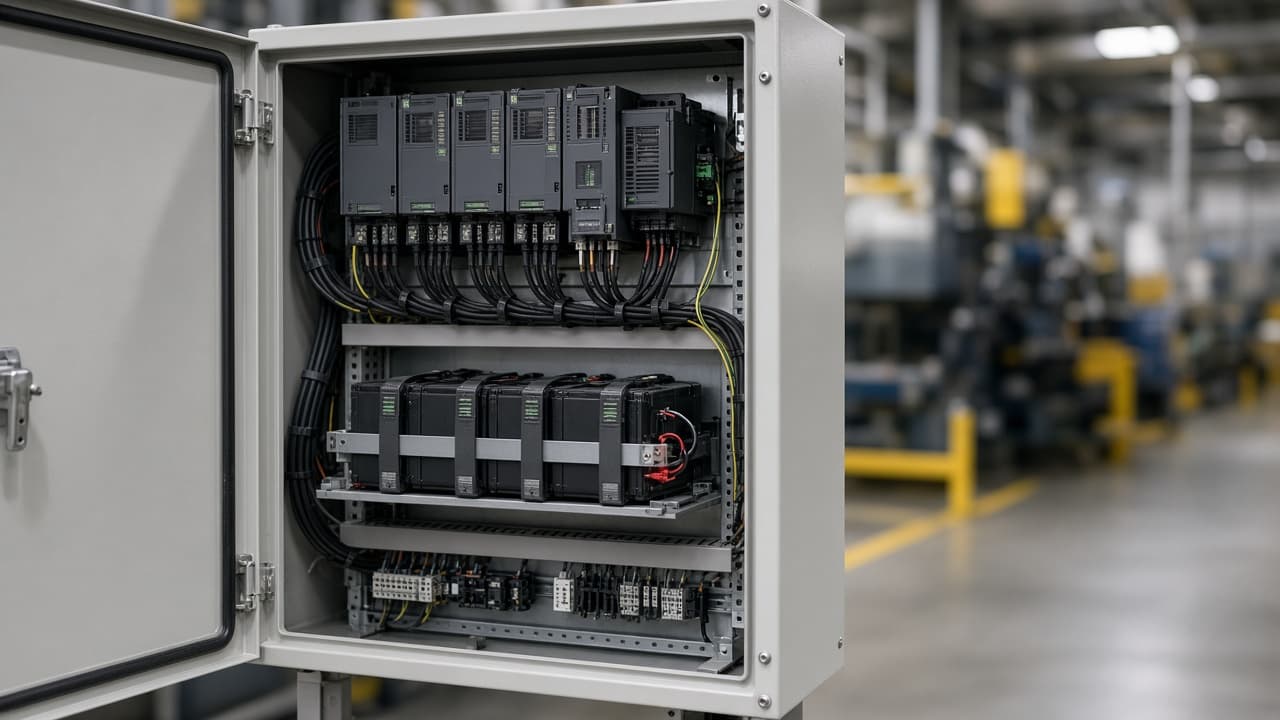
Industrial robots with absolute encoders remember joint angles across power cycles because a small battery keeps the encoder electronics alive. That battery is easy to ignore until a cold start throws encoder alarms, lost mastering, or a robot that homes to a pose that is no longer the pose you taught.
Spot-weld tip dress life and dress-pack cable management live elsewhere. This note is shorter on purpose: encoder battery health and remastering discipline.
Controllers usually warn before total loss—low battery messages, encoder backup alarms—but warnings that sit in a backlog for months become sudden production stops. Some cells only discover the failure after a weekend power-down. The first shift then inherits a robot that will not enable, or worse, enables with incorrect zeros if someone clears alarms without mastering.
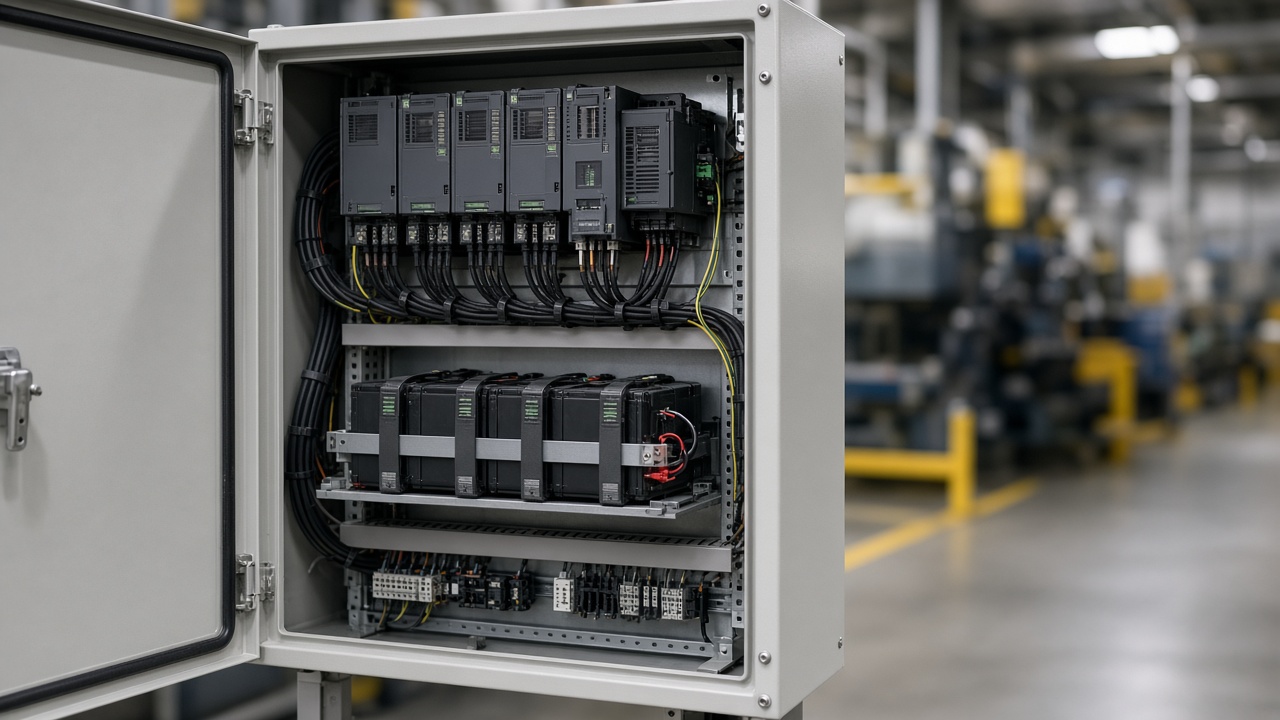
Remastering is a fixture job
Vendor mastering uses alignment pins, calibration plates, or pulse-coder procedures specific to the arm. Skipping fixtures and “jogging until it looks right” moves TCP error into every taught point. After battery replacement:
- Install the correct battery type and seat the connector fully.
- Master each axis per the manufacturer procedure with fixtures in place.
- Verify a known TCP check pose or master part before releasing the cell.
- Record battery date and next replacement interval in the CMMS—not on a sticky note inside the cabinet.

Treat encoder batteries like UPS cells: finite life, scheduled replacement, documented after power events. A robot that “lost its mind overnight” usually lost a three-volt cell first.