

Launch meetings love cycle-time charts. Laser weld cells love physics. An EV body or battery-tray line that “has lasers” still fails takt when seam quality is inspected offline, fixtures drift, or the monitoring camera becomes a museum piece behind a dirty cover. This brief lists seven truths that must be true before you treat laser welding as capacity—not a demo.
It is not robotic wire-harness assembly, not confined-space tank cleaning, and not ultrasonic NDT scan paths.
1. The joint is designed for a beam, not for a brochure
Gap, stack-up, coatings, and access angles decide whether the laser process window exists. Cells that inherit stamped parts with uncontrolled gap buy porosity and rework. Design-for-laser is a launch gate, not a vendor checkbox.
2. Fixtures hold heat and dimensional truth
Clamps that mark, deflect, or leave residual stress invent “mystery” seam failures. Fixture cooling, locating wear, and changeover repeatability belong in the same CMMS family as the robot.
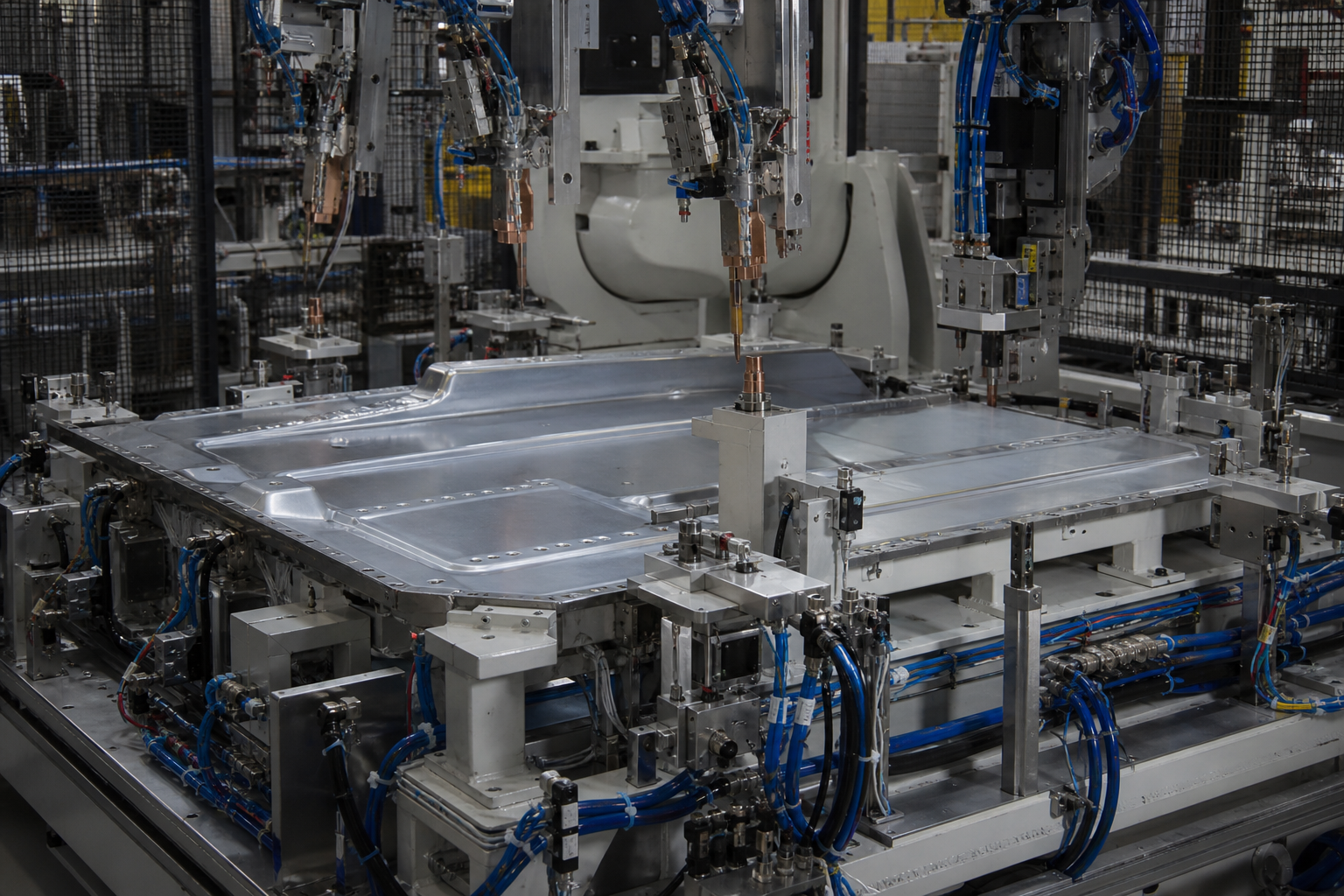
If the fixture lies, the perfect recipe lies with it.
3. Beam delivery is a maintained optical path
Contamination on cover slides, fiber condition, and focus calibration are process parameters. A laser without an optical hygiene program is a scrap generator with a safety enclosure.
4. In-process monitoring is a disposition system—not a pretty video
Photodiode, camera, or OCT-style seam monitors only help when limits open a disposition: stop, mark, quarantine, or continue with a recorded override. Recording without rules is theater.
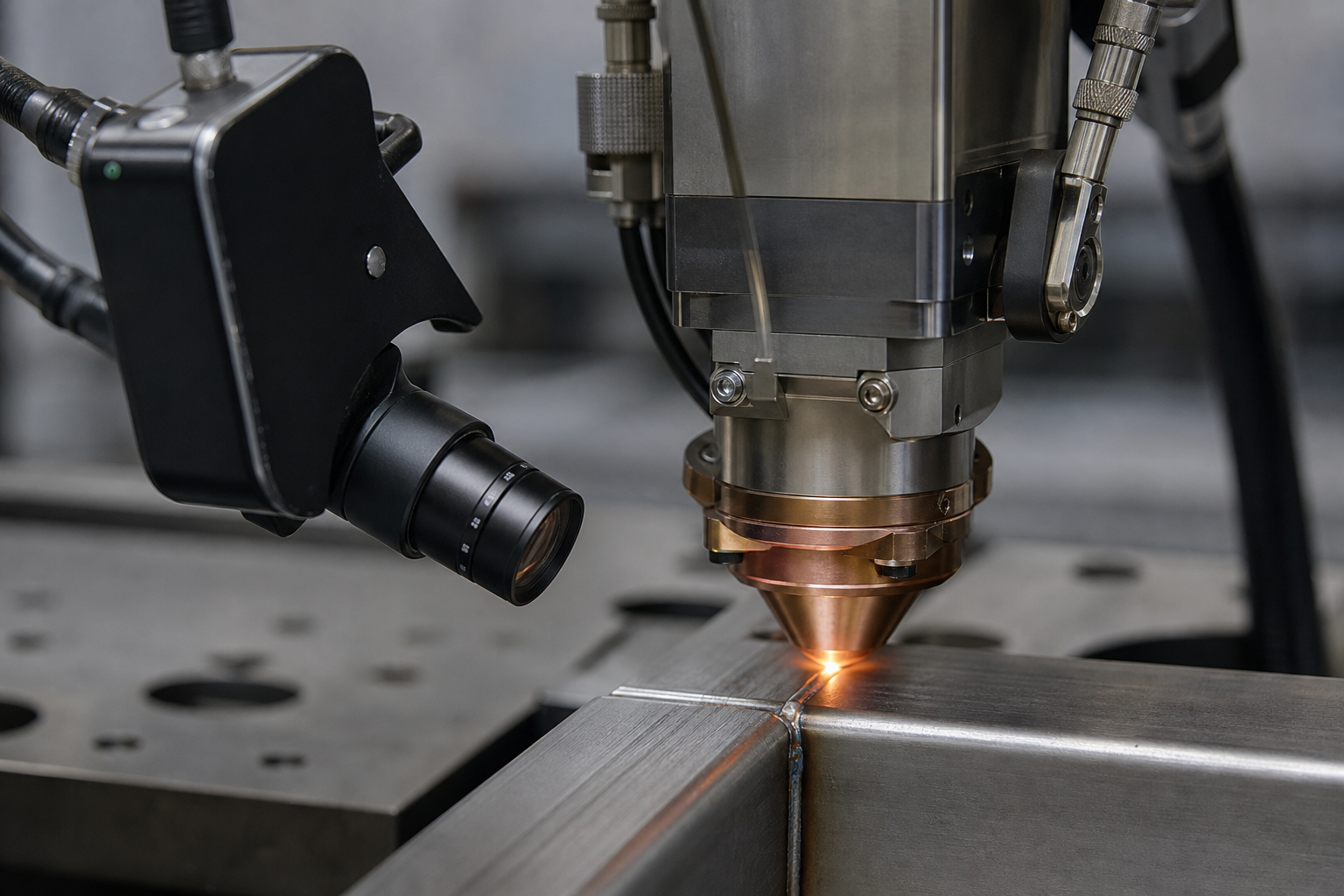
Monitoring without disposition is storage, not quality.
5. Shielding and spatter control are part of the weld schedule
Gas coverage, nozzle condition, and spatter management change porosity statistics more often than “robot speed” folklore. Treat them as recipe fields with owners.
6. Safety and access do not cancel maintainability
Interlocks that make optical cleaning impossible guarantee dirty optics. Cells must allow safe, frequent access for the hygiene the process demands.
7. Traceability ties seam to part to override
When a field failure arrives, you need seam ID, monitor score, fixture revision, and who overrode a limit. Without that chain, every incident becomes a new religion.
Anonymized takt miss
An EV tray line missed weekly output after offline NDT became the bottleneck. Offline inspection was catching real porosity—but the root was fixture wear plus a monitor alarm that operators habitually cleared. Restoring takt meant fixture wear limits, forced disposition on monitor classes, and killing the tribal override. Throughput rose only after scrap rules got stricter—because the cell stopped shipping doubt.
What this cell is not
Wire-harness robotics owns connector routing. Tank-cleaning robots own confined CIP paths. Ultrasonic NDT robots own programmed inspection scans. Acoustic PdM owns plant rotating assets. None of them own laser seam monitoring disposition on an EV line. Do not buy a harness cell and expect body-in-white weld integrity.
Laser welding becomes real capacity when design, fixtures, optics, monitoring, and traceability share one ownership map. Until then, takt charts are wishes with enclosures.