
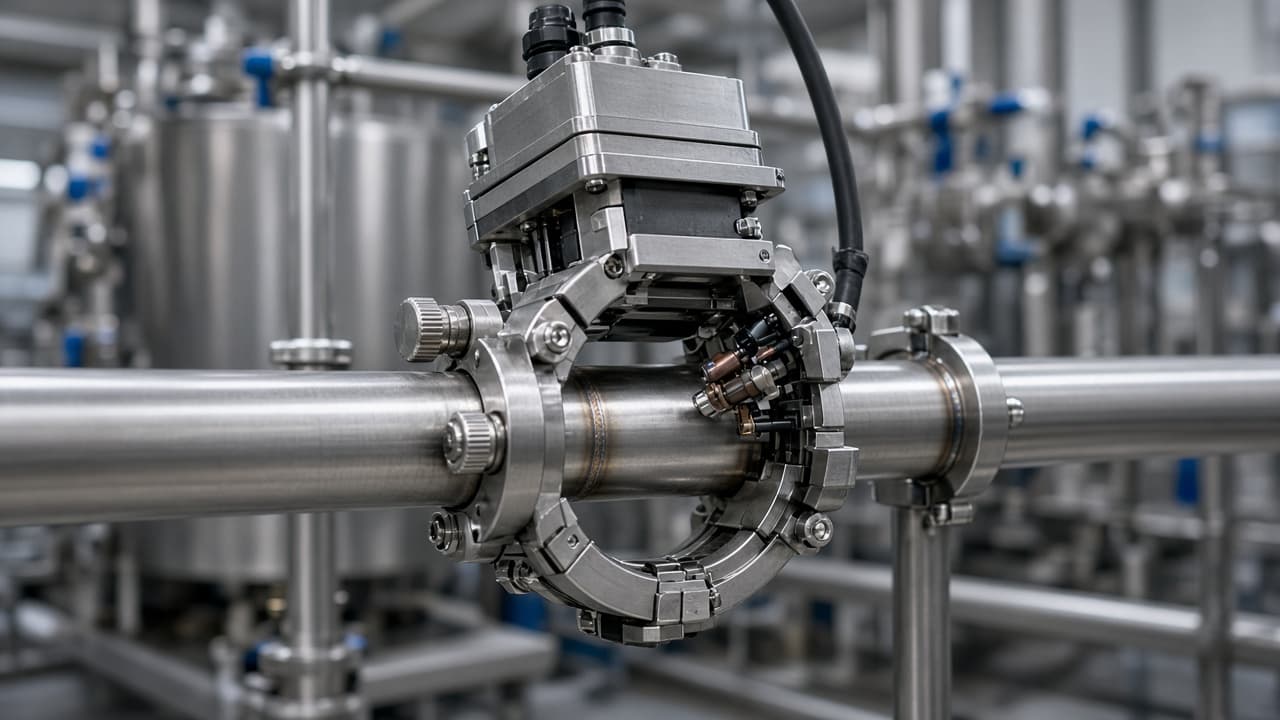
Orbital welding clamps a welding head around stainless tubing and rotates the arc under programmed current and travel. Food, beverage, biotech, and high-purity process skids use it to produce consistent circumferential joints with limited operator variation. The machine removes much of the hand-skill scatter. It does not remove metallurgy or purge physics.
Robotic MIG cells and heat-stake plastic assembly solve different joining problems. This note is orbital GTAW on sanitary or high-purity tube.
What usually decides bead quality
Fit-up and cleanliness. Squareness, gap, and ID alignment set whether the weld pool bridges evenly. Contaminated or scratched prep invites inclusions and discoloration that hygiene specifications reject.
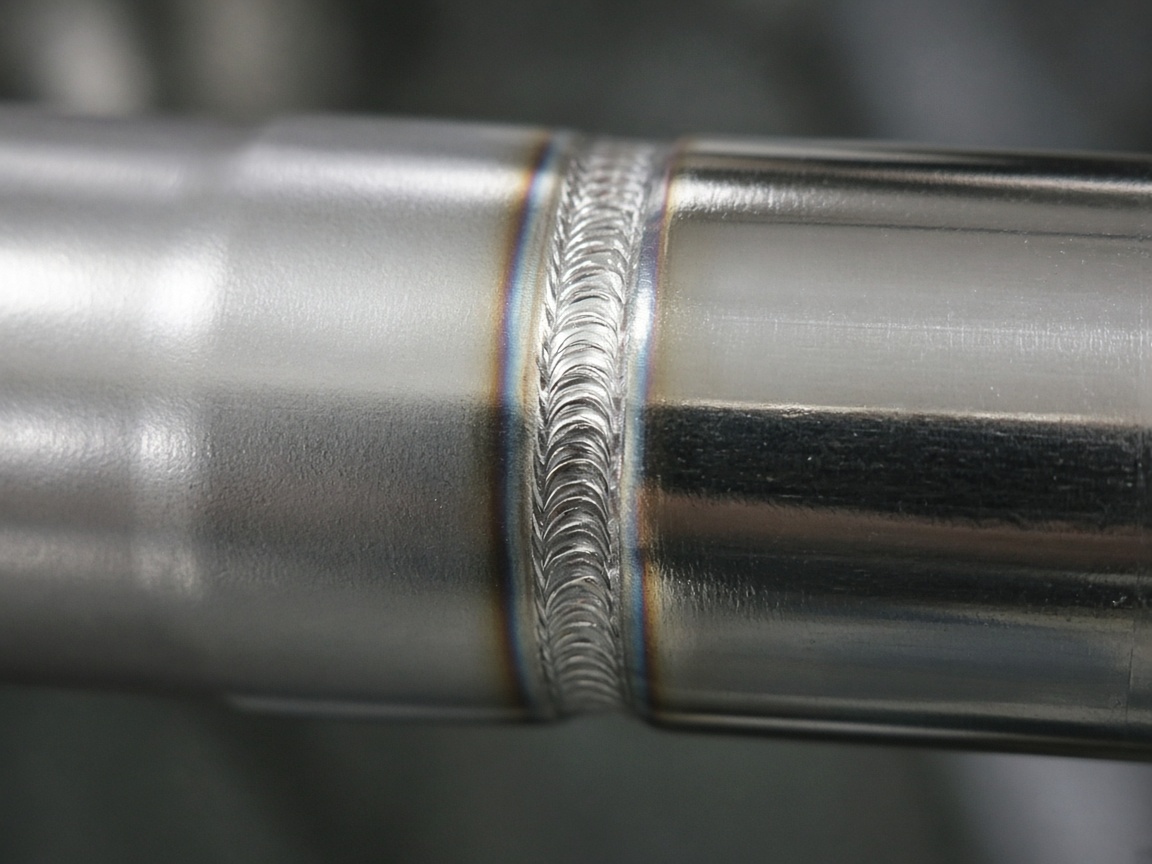
Internal purge. Inert gas on the ID prevents sugaring (heavy oxidation) on stainless. Insufficient purge flow, leaks at dams, or starting the arc before oxygen is displaced produce ID surfaces that fail visual or boroscope criteria even when the OD looks acceptable.
Parameters tied to coupons. Wall thickness, diameter, and alloy grade need a qualified procedure. Copying a program from a different schedule without a new coupon is a common source of incomplete penetration or excessive ID reinforcement.
Documentation that keeps audits calm
Procedure qualification records, purge method, gas type, and as-run parameter printouts belong with the isometric or spool package. When a joint fails inspection, those records decide whether the head, the purge, or the fit-up is the patient.
Automated orbital welding is still welding. The head repeats the motion; purge and prep decide whether the motion produces an acceptable sanitary joint.