
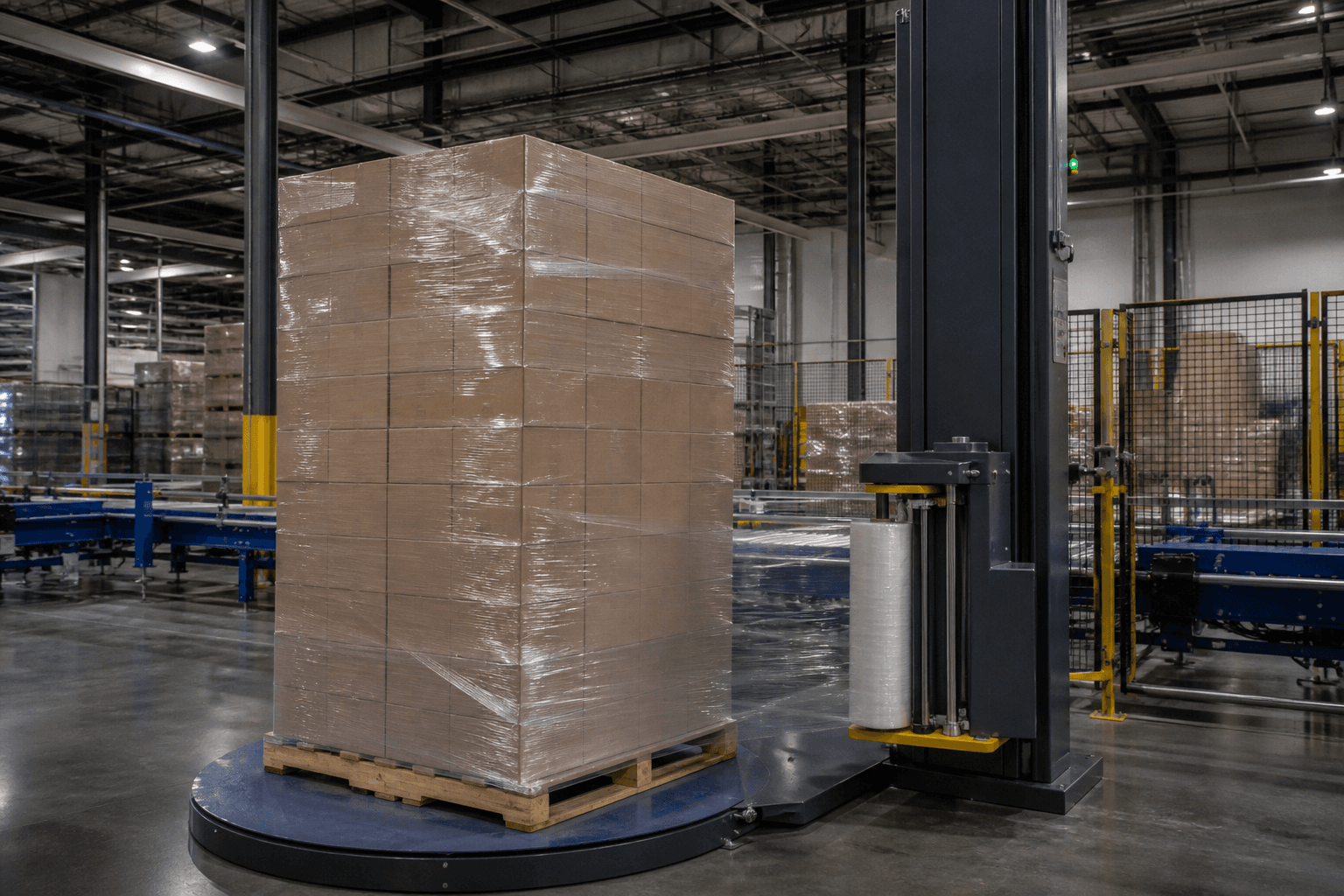
Robotic palletizing cells get the CapEx slides. The stretch wrapper at the exit gets a film roll and a hope. When cartons telescope in the trailer, teams blame the stack pattern first. Often the wrap never delivered the containment force the pattern assumed—pre-stretch crippled, carriage speed raised to hit takt, or film gauge changed without rewriting the recipe.
AMR intersection briefs own aisle traffic after the wrap bay. Palletizing robotics own build geometry. This page owns stretch-wrap process honesty as the last mechanical lock on the unit load.
Seven truths
-
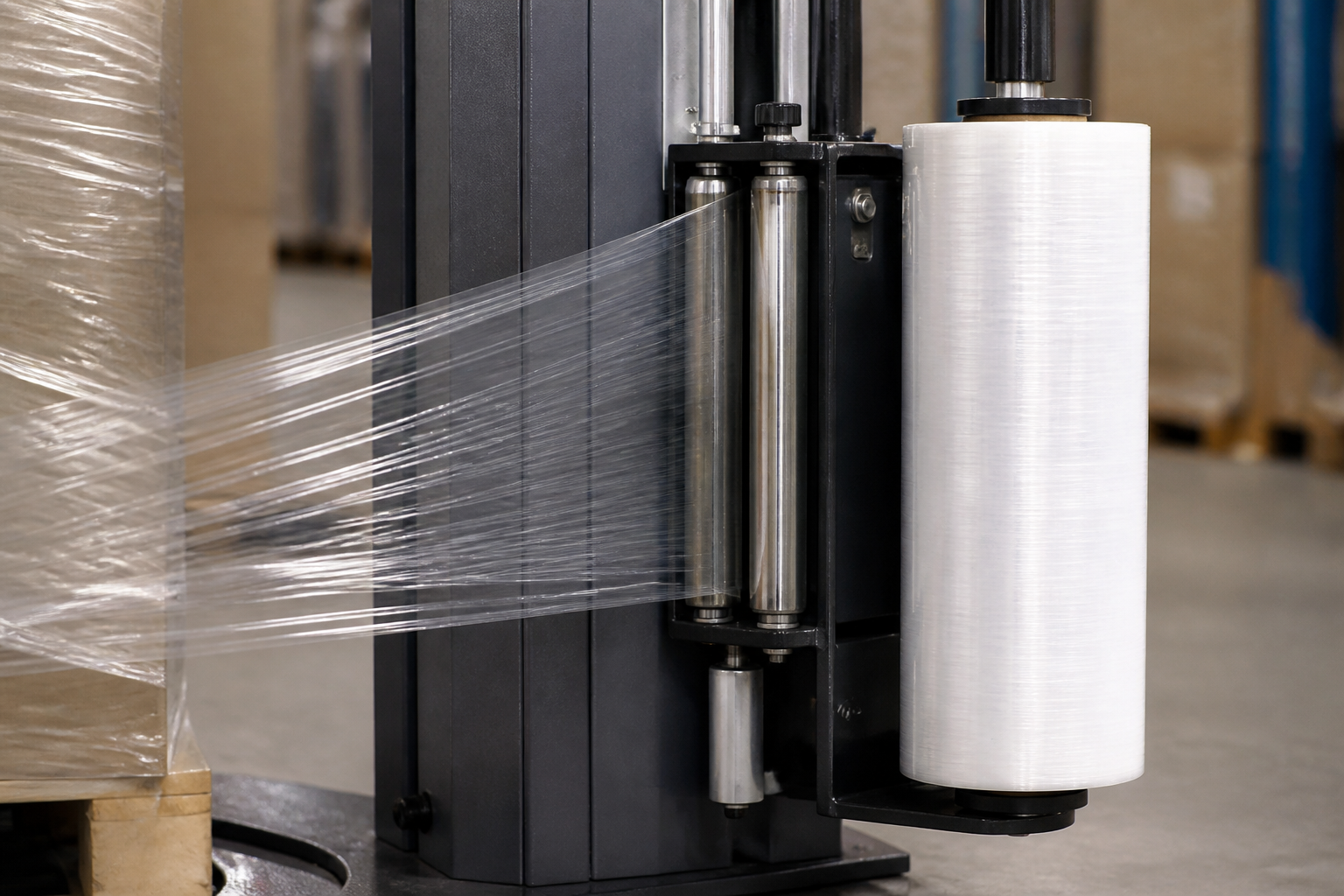
Pre-stretch is a setting with a physical roller pair, not a marketing number on a film carton. Worn rollers and wrong threading cut force while the HMI still shows 250%.
-
Containment force is measurable. Force plates or simple pull tests on named faces beat “felt tight.” Log them after film SKU changes.
-
Top sheets and corner boards change the recipe. A pattern MoC that ignores wrap passes invents crushed corners or loose shoulders.
-
Film breaks are process signals. Treat break rate as SPC, not as night-shift annoyance. Breaks after a “faster wrap” change are containment debt.
-
Turntable or arm speed vs film feed must stay matched. Speed without film delivery is cosmetics around air.
-
Load height and overhang need taught limits. Wrapping a leaning mixed SKU that the palletizer already compromised is theater.
-
Hand-off to AGV or forklift needs a dwell and a visual gate. Moving a pallet mid-wrap or with the film tail free undoes the cycle you paid for.
Cell rule
Any change to film gauge, pre-stretch target, wrap pattern, or palletizer stack geometry is one MoC—not three hallway agreements. Prove containment on the first article of the new combo before releasing the shift rate.
The robot builds the stack. The wrapper decides whether the stack is still a stack at the customer dock.