
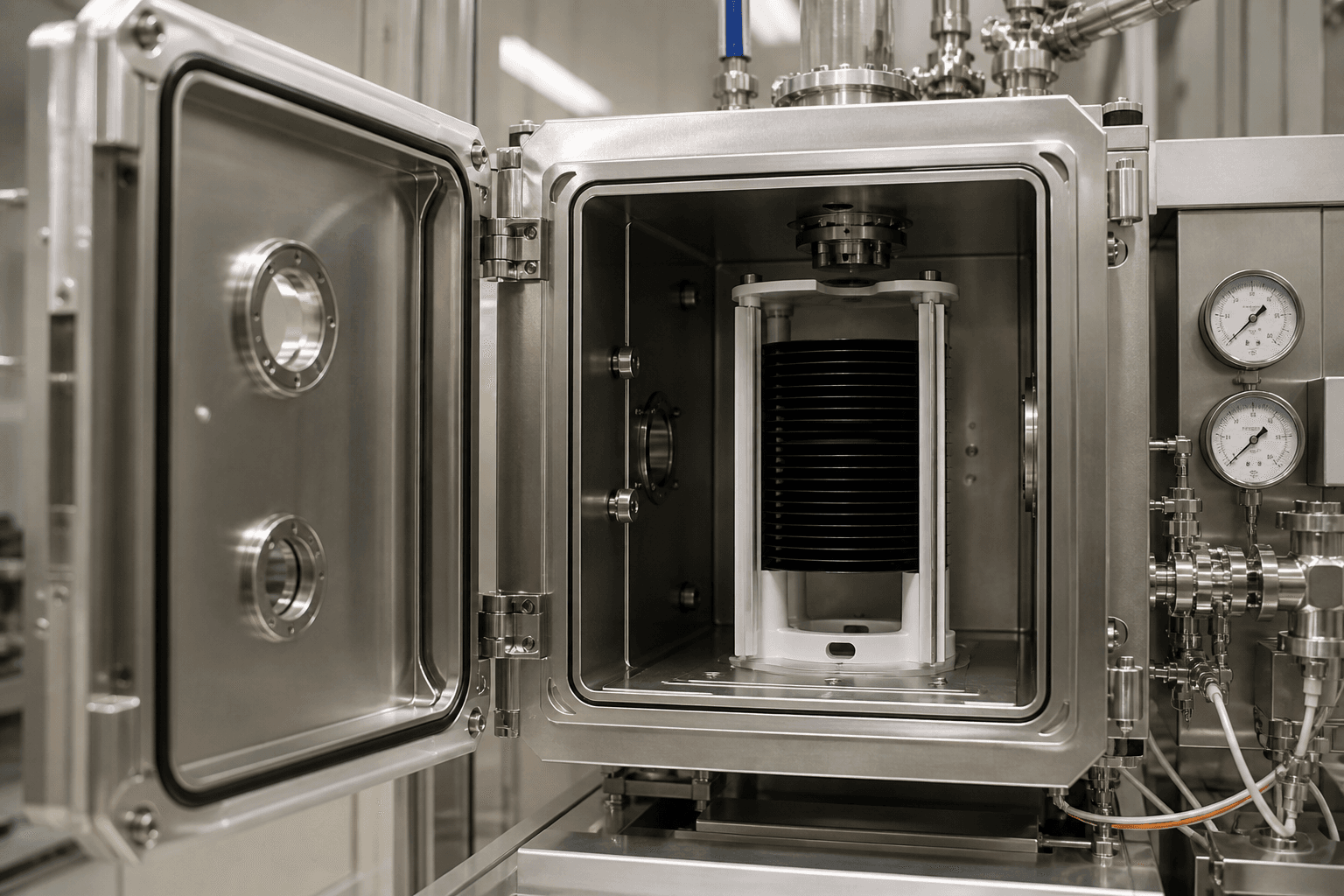
Field note — tool engineering
Chamber matching blamed RF hours. Edge CD walked. The split was load-lock B, not the process module.
Pumpdown reached “base” on the icon. Leak-up with the door sealed was 2.3× the qualification limit. O-ring on the transfer door showed compression set. Crossover to the tool had been shortened two weeks earlier to recover takt. Wafers were entering a lock that never held the prior atmosphere long enough to forget it.
This is adjacent to dry-vacuum foreline stories and ESC helium leaks, not a repeat. The boundary here is the load lock as a contamination and pressure memory device.
What the lock is doing
Each transfer is a small vacuum cycle: pump down, optional purge, open to tool or FOUP side, close, pump again. Leak-up rate with valves closed is the honesty test. Slow leaks raise partial pressure of H₂O, O₂, and organics before the wafer crosses into the chamber. Shortened pumpdown times buy takt and pay in chemistry.
Door seals, transfer arm bellows, and viewport greases are consumables with curves—not lifetime parts.
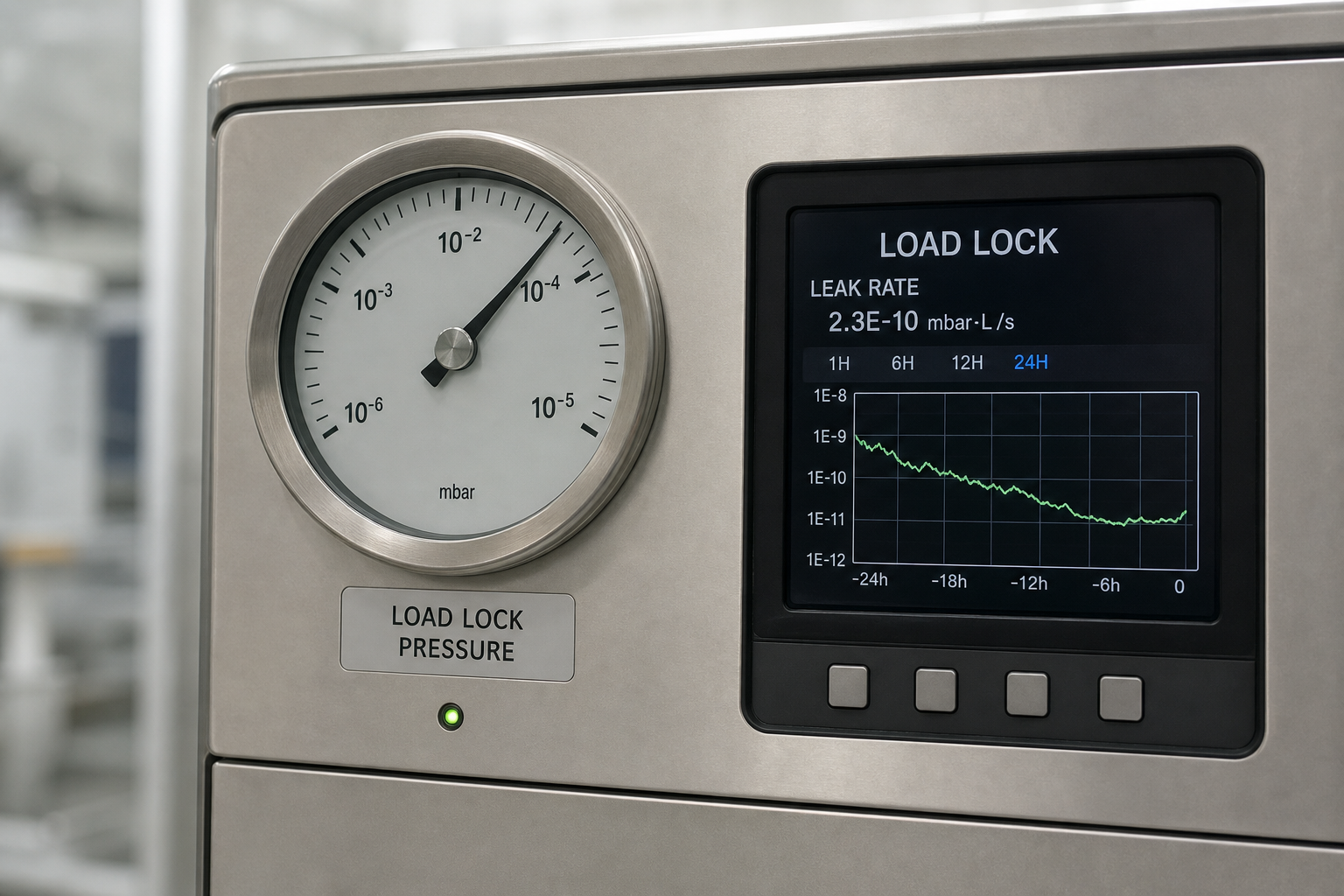
Numbers on the PM sheet
Log: time to base, leak-up rate at qualification pressure, crossover pressure, and door cycle count since seal change. Trend leak-up before base pressure drifts. A cliff that follows a seal swap without a leak check is a process change.
Qualify pumpdown after any change to crossover timing, seal vendor, or purge gas recipe.
Before the chamber DOE
Ask lock serial, last leak-up, and whether takt edits shortened pumpdown. The chamber sees whatever the lock remembered.