
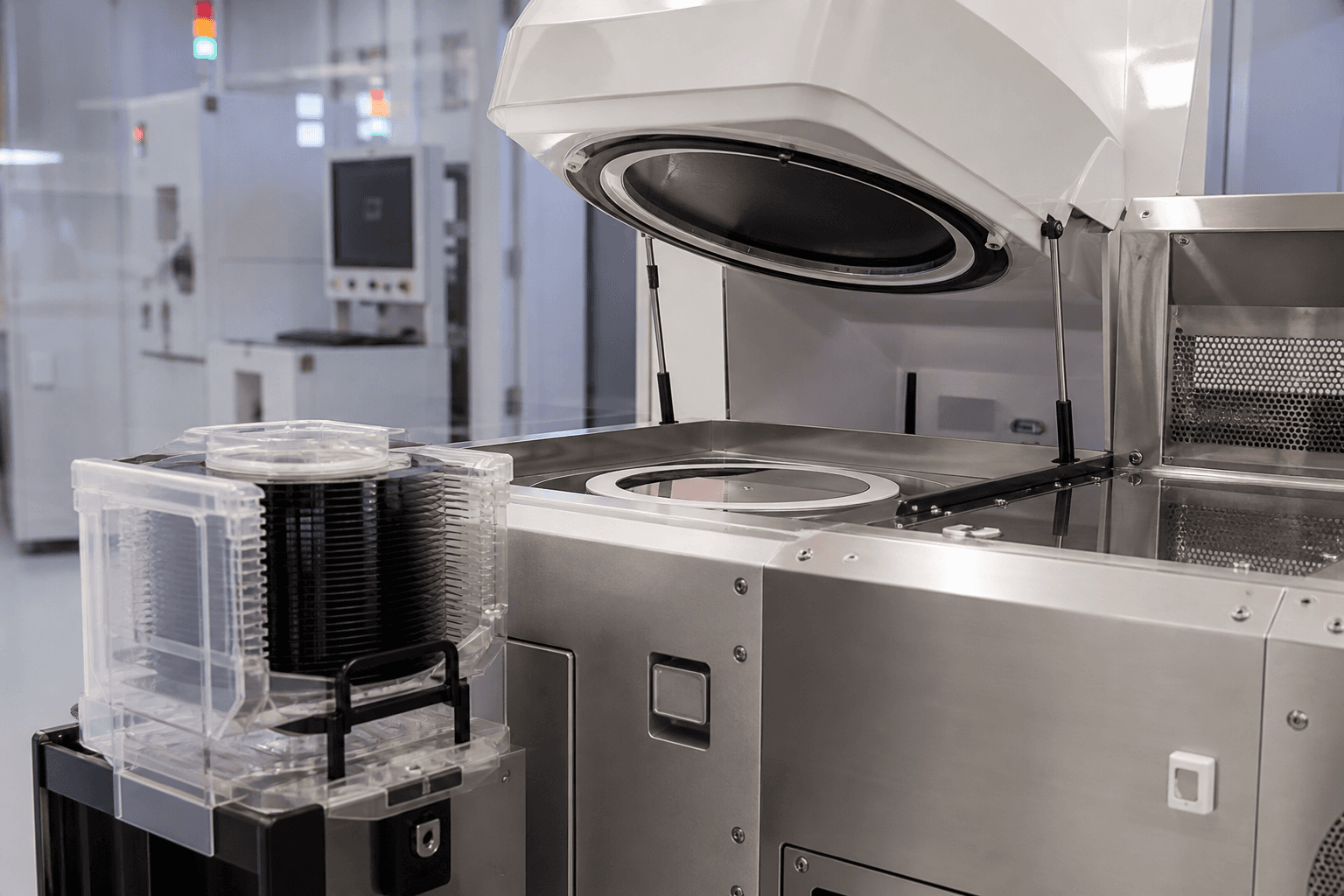
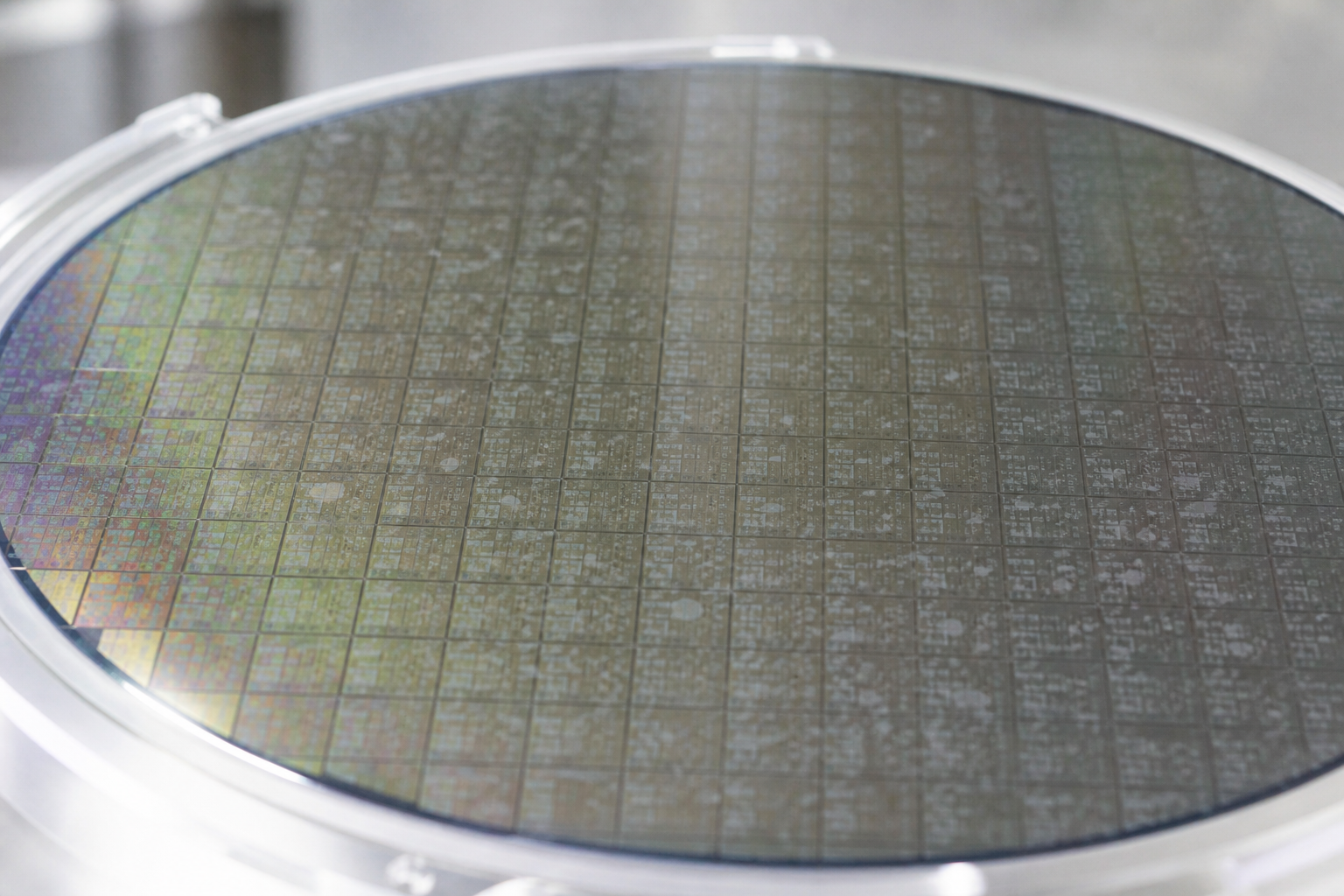
After wet etch or clean, wafers often meet a spin-rinse dryer before the next vacuum tool. When watermarks, haze, or ring residues appear, the first meeting still opens with the etch bath or a CMP lot. Sometimes those are guilty. Often the SRD is the patient: DI rinse incomplete, surface-tension mismatch, exhaust imbalance, spin deceleration that lets droplets sit, or a chuck that leaves a dry shadow. Inspection calls particles. The fab scrap code gets a chemistry argument it did not earn.
This is adjacent to wet-bench bath life and Q-time between etch and film, not a repeat. The unit operation here is the rinse–dry.
What the SRD is doing
Rinse must displace process chemistry to a known endpoint. Dry must remove liquid before evaporation concentrates residues into watermarks. IPA or other aids change surface tension and drying dynamics; skipping them on a “cost” ticket without requalifying watermark rates is a process change. Exhaust that fights the bowl leaves mist that rains back onto the wafer.
Chuck cleanliness and edge contact matter. A contaminated chuck prints a pattern that follows the tool serial, not the wet bench.
Numbers that belong on the tool report
Track: watermark or haze counts by SRD chamber, DI resistivity and organics at point of use, exhaust differential, recipe spin segments actually run, and time from last wet chemistry to dry complete when Q-time binds. A cliff that moves with the dryer and vanishes after a chuck clean or recipe restore is not an etch DOE candidate.
Particle monitors on the DI header are necessary and not sufficient. The last seconds of spin decide what freezes on the surface.
Change control
Rinse volumes, spin RPM tables, IPA enable, and exhaust setpoints are the recipe. Dual-sourcing DI polish resins or changing IPA grade without a watermark correlation lot is how quiet yield walks start.
Before a bath-chemistry fight over rings at inspection, ask SRD chamber, last chuck PM, and whether the dry recipe matched qualification. The wafer remembers the dry, not the meeting.