
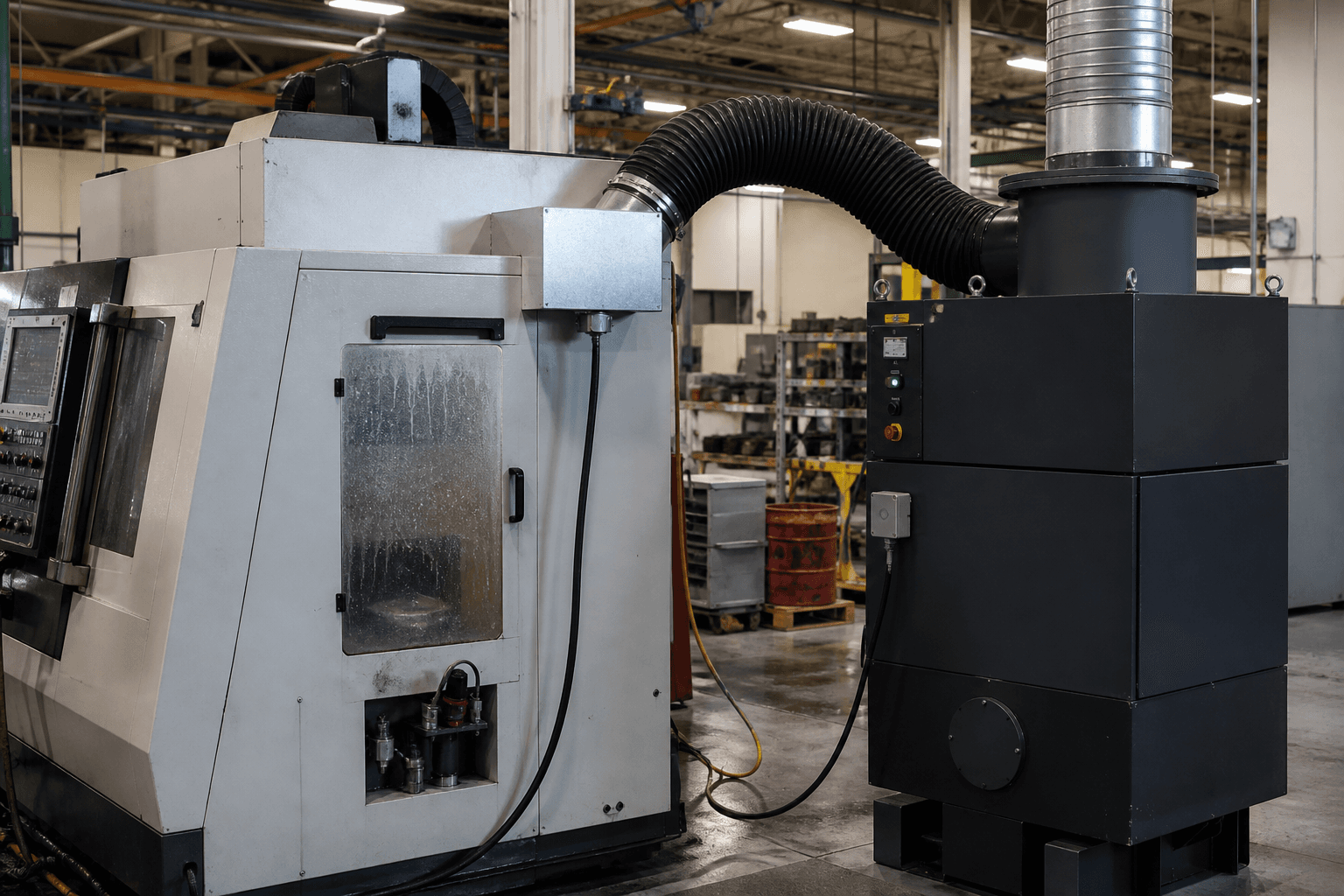
Machine shops fund mist collectors for compliance and housekeeping. The failure mode is quieter: filters load, ΔP climbs, someone opens a bypass or blanks a stage to “restore airflow,” and mist returns to the bay. Floors go slick. Cabinet filters foul. Operators smell coolant again. Energy meetings see only a fan kWh line and call the system healthy.
This is not compressed-air leak theater, not regenerative VFD braking, and not baghouse pulse-jet rows. It is oil-mist capture as a filtration and duct discipline problem.
What the collector is doing
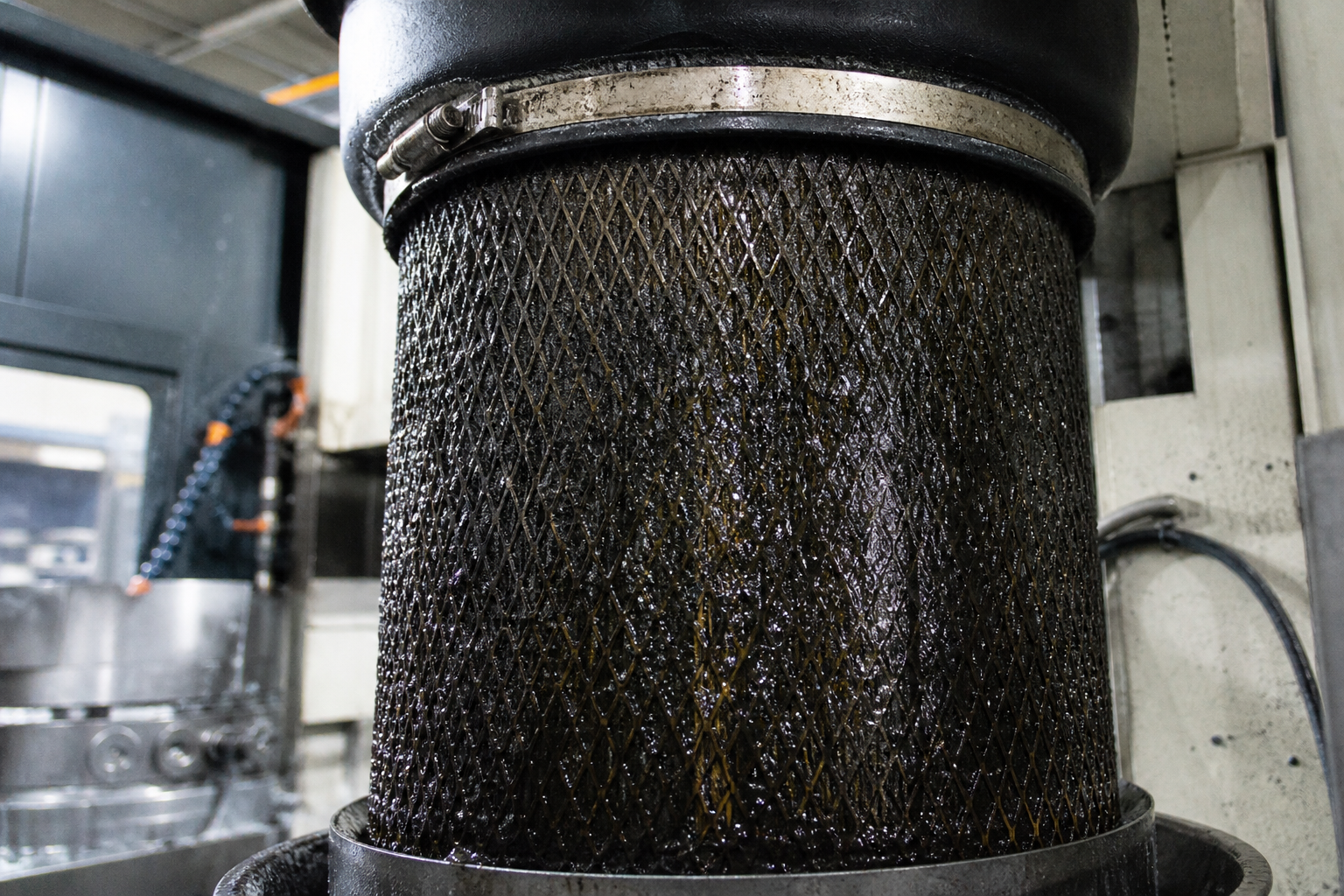
Enclosure capture needs velocity and sealing at the source. Long flex duct, crushed hose, and open enclosure doors invent ambient mist that no rooftop unit will fix. Inside the collector, coalescing or cartridge stages drop mist; saturating media raises ΔP until flow collapses or a relief path opens—by design or by habit.
Blanked filters and missing gaskets are not optimizations. They are uncontrolled emissions with a work-order history.
Practices that hold
Trend ΔP and change-out against hours and coolant type—not against “it still sucks.” Smoke or tissue checks at enclosure gaps catch capture lies. After filter service, verify no bypass and that door seals close. Coolant formulation changes that increase misting deserve a capture review, not only a sump chemistry note.
Fire and oil-load risks on saturated media belong on the same PM sheet as ΔP.
What EHS and maintenance should ask together
Before accepting “collector running” as compliance, ask last ΔP, last cartridge date, and whether any bypass was left open. Before blaming HVAC for oily residue on a far wall, walk the duct from spindle to stack.
The fan moves air. The filter and the enclosure decide whether mist leaves the machine. Own both, or own the film on everything else.