
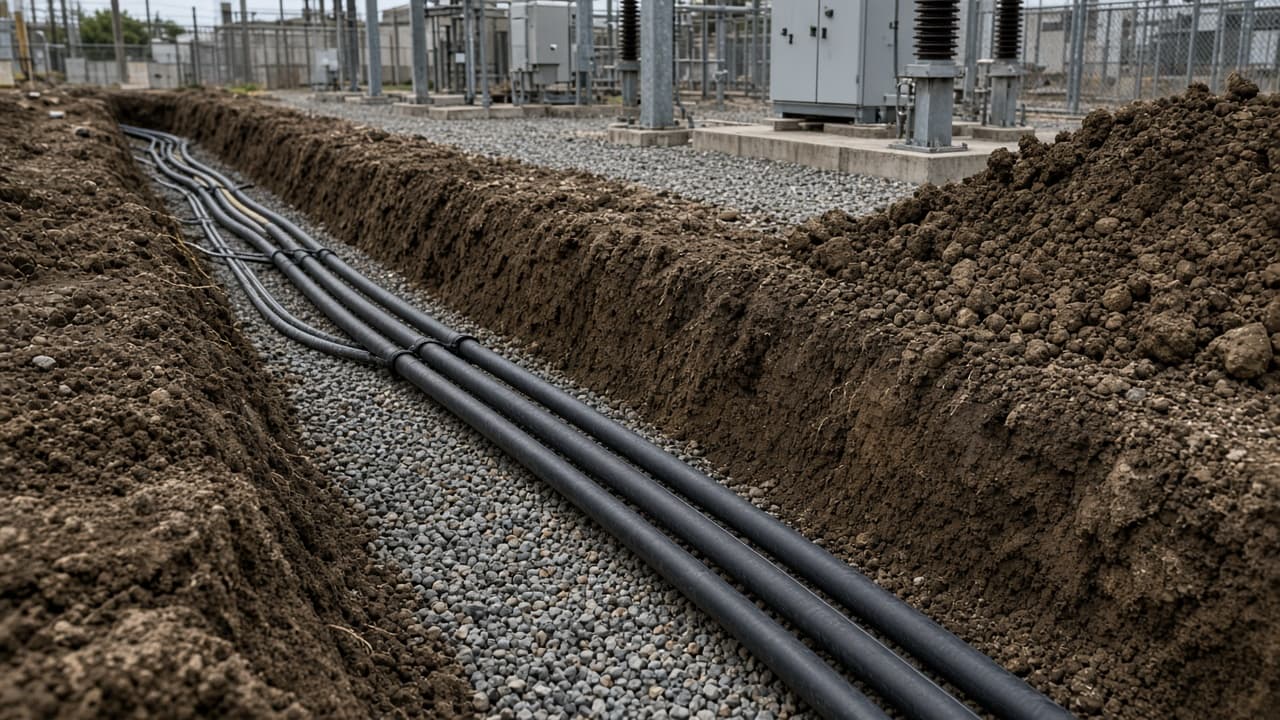
Feeder upgrades often start with a cable catalog ampacity and a trench sketch. Years later the jacket temperature runs hot, emergency ratings vanish in summer, or insulation ages early. The copper did not change. The thermal path into the soil did—or it was never measured.
Busduct joint IR thermography owns bolted connections above ground. Transformer OLTC and vacuum breaker timing are different craft tickets. This note is underground medium-voltage cable ampacity versus soil thermal resistivity and installation geometry.
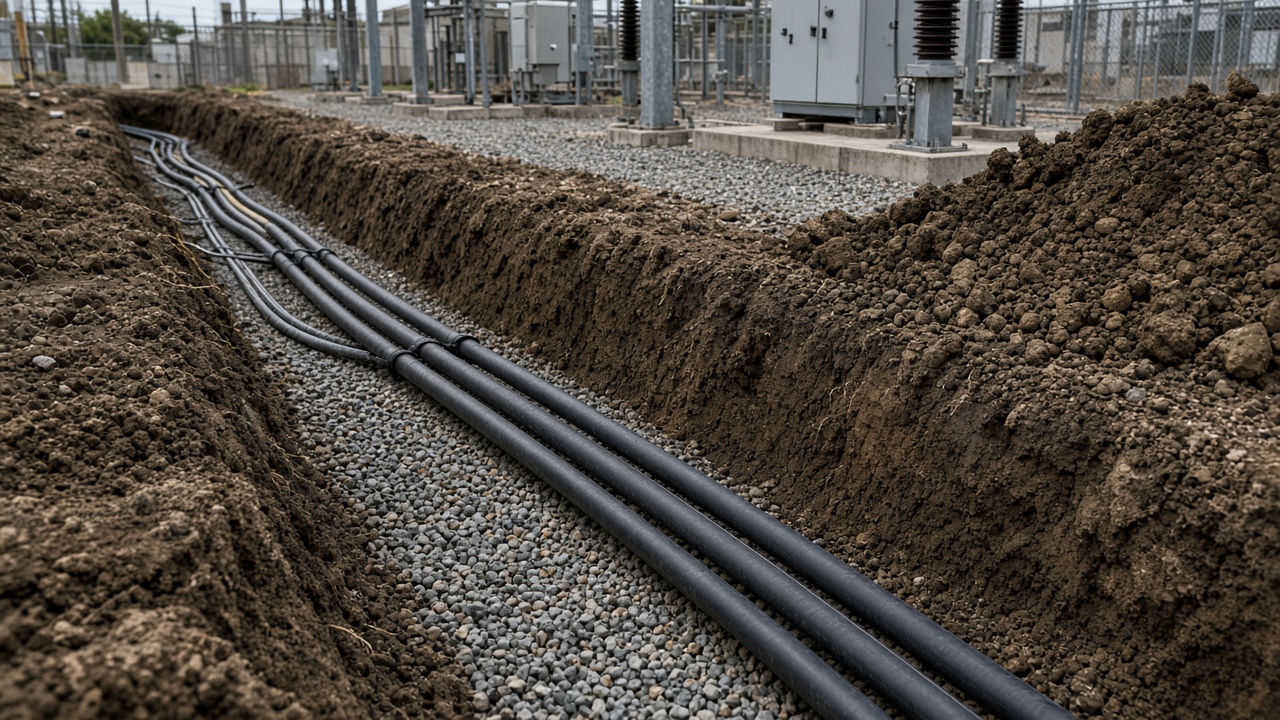
Ampacity tables assume a thermal resistivity (Rho), ambient earth temperature, depth, and mutual heating between circuits. Native clay, dry sand, and engineered thermal backfill are not interchangeable. A trench left with air voids or a concrete duct bank without the modeled fill changes the heat path. Parallel circuits closer than the study assumed share heat. Drought that dries the soil raises Rho seasonally—the summer constraint the winter study never felt.
What to verify before you load the feeder harder
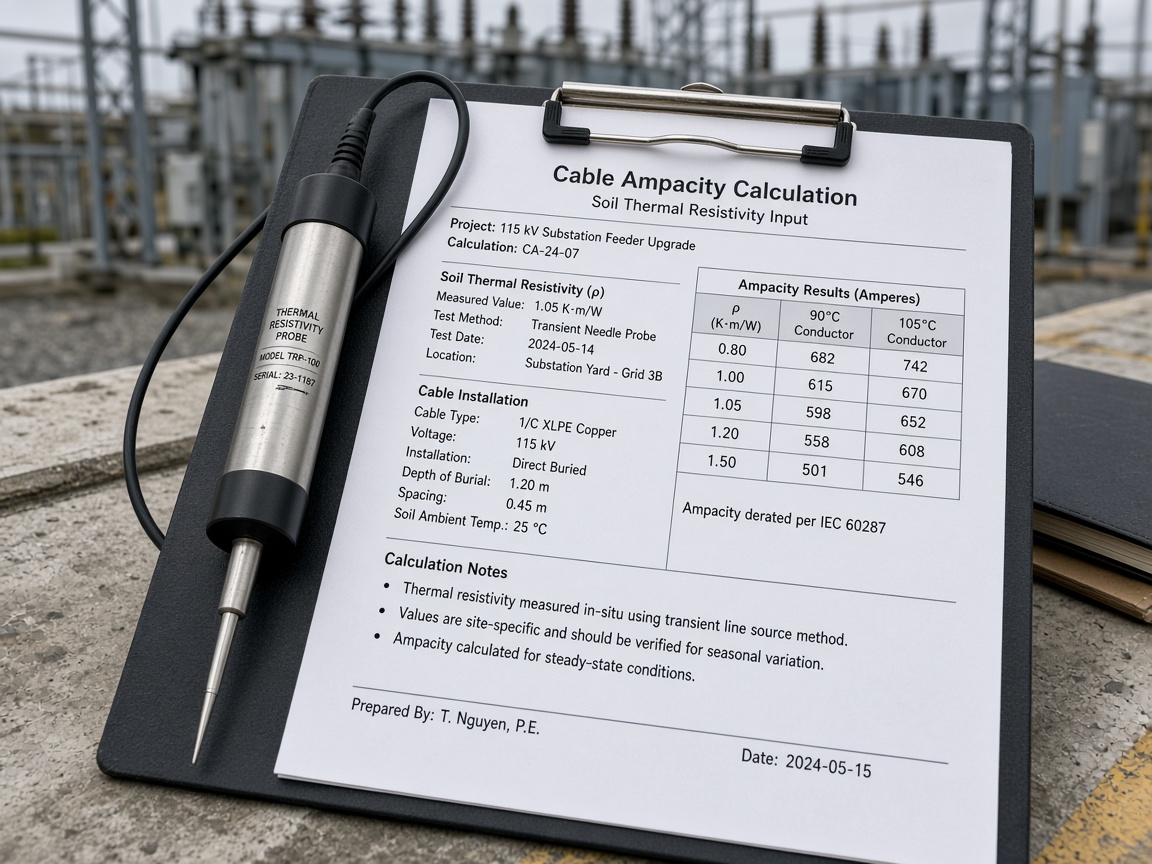
Use site soil thermal resistivity measurements (or conservative bound values with documented assumptions) in the ampacity study—not a brochure default from another climate. Record as-built depth, spacing, and backfill type. Trend sheath or conductor temperature where sensors exist against load. After civil rework near the route, re-check geometry; a new parallel duct can invalidate the old rating.
Raising protection settings to “use the spare capacity” without a thermal truth check is how plants buy quiet insulation aging. Ampacity is negotiated with the ground. The catalog only opens the conversation.