
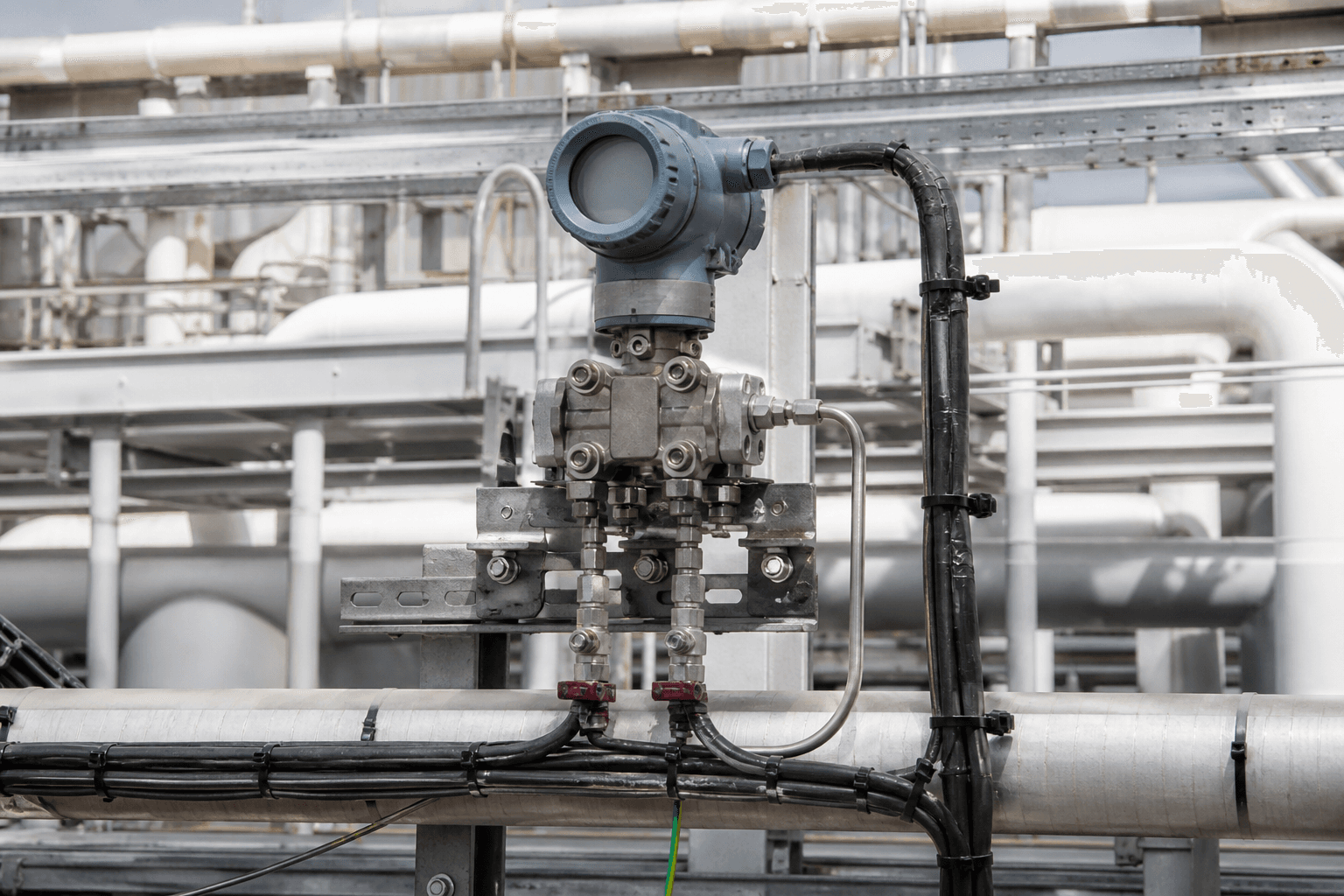
A flow or level loop that flatlines or spikes in cold weather is often “tuned” in the control room. The transmitter is frequently fine. One impulse leg is frozen, gelled, or full of condensate; heat trace is open-circuit; insulation was stripped for a weekend job and never restored; or the equalizing valve was left cracked. The DP cell reports a physics experiment on the tubing, not the orifice or the vessel.
This is not instrument-shield ground loops, not analyzer sample-system honesty, and not historian tag quality as a software essay. It is impulse integrity and freeze protection at the tap.
What the impulse path is doing
Two legs (or a remote seal system) must stay liquid-filled and at the intended density. Steam legs need condensers and drains that actually work. Liquid legs need heat or insulation matched to ambient and fluid freeze point. A single frozen leg invents a false head. Both frozen can invent a stuck DP that looks like a quiet process.
Heat-trace circuits that share a breaker with lighting, or that were never commissioned with a clamp ammeter, fail silently until the first hard freeze.
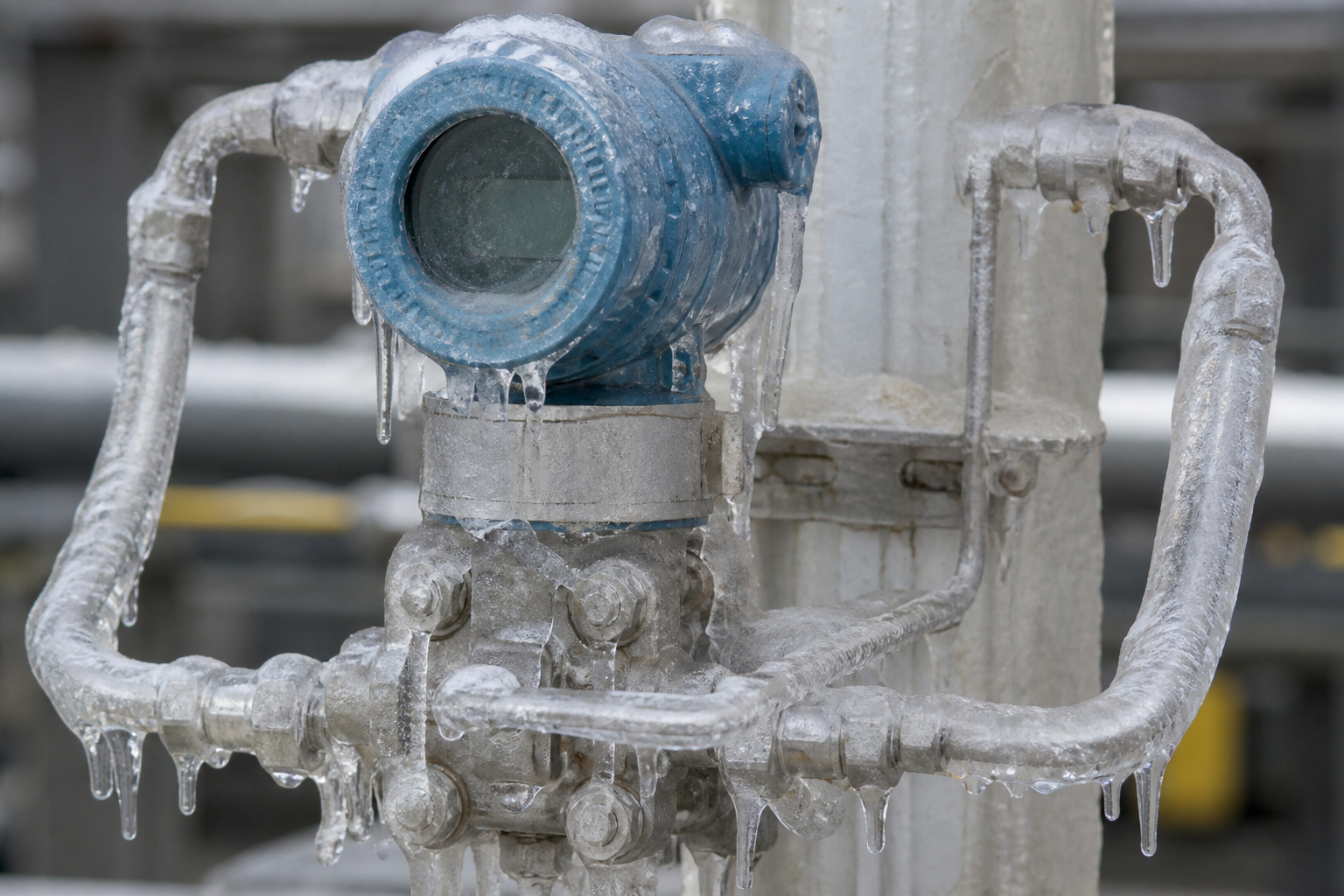
Checks that catch lies
Winter walkdowns: trace amp draw or temperature, insulation continuity, drip-leg drains clear, manifold positions correct. After any insulation removal, a reopen ticket that includes trace and lagging restore—not only the primary craft. Compare redundant meters or tank gauges when DP walks with weather.
Blowdowns and fills after service must follow the procedure that re-establishes equal density; rushing back to “auto” with air in a leg is how Monday mornings invent trips.
What reliability meetings should stop doing
Stop widening PV filters to hide a weather-correlated DP. Stop blaming the orifice plate before touching the manifold block with a gloved hand in January.
The orifice and the taps are the meter. The cell only reads whatever the tubing delivers. Keep the legs honest, or keep explaining “mystery” winter flow.