

A vortex flowmeter that still outputs a steady milliamp can be lying about mass or volume. The loop is healthy. The shedder bar is not. Coating damps vortices; a damaged bluff body changes frequency; a raised low-flow cutoff hides real flow as “zero.” Operators chase pumps and valves while the meter quietly under-reports.
Magnetic flowmeter electrode coating and Coriolis proving are different technologies. Guided-wave radar owns level. This note is vortex shedder integrity and signal honesty.

Vortex meters count vortices shed from a bluff body (shedder bar) in the stream. Frequency tracks velocity when the Reynolds regime and meter sizing are right. Buildup rounding the edges weakens shedding. Cavitation or flashing near the meter adds noise the electronics may reject as invalid. Upstream fittings closer than the vendor’s straight-run table distort the pattern the K-factor assumed.
Checks that beat swapping transmitters
Compare vortex totalizers to tank drops or a proving reference on the same day. Inspect the shedder on sticky or erosive services on a chemistry-aware interval—not only when the output flatlines. Verify low-flow cutoff and damping after any “nuisance noise” ticket; raising cutoff to silence alarms is how real flow disappears from the balance. Confirm installation orientation and gasket intrusion do not shadow the bar.
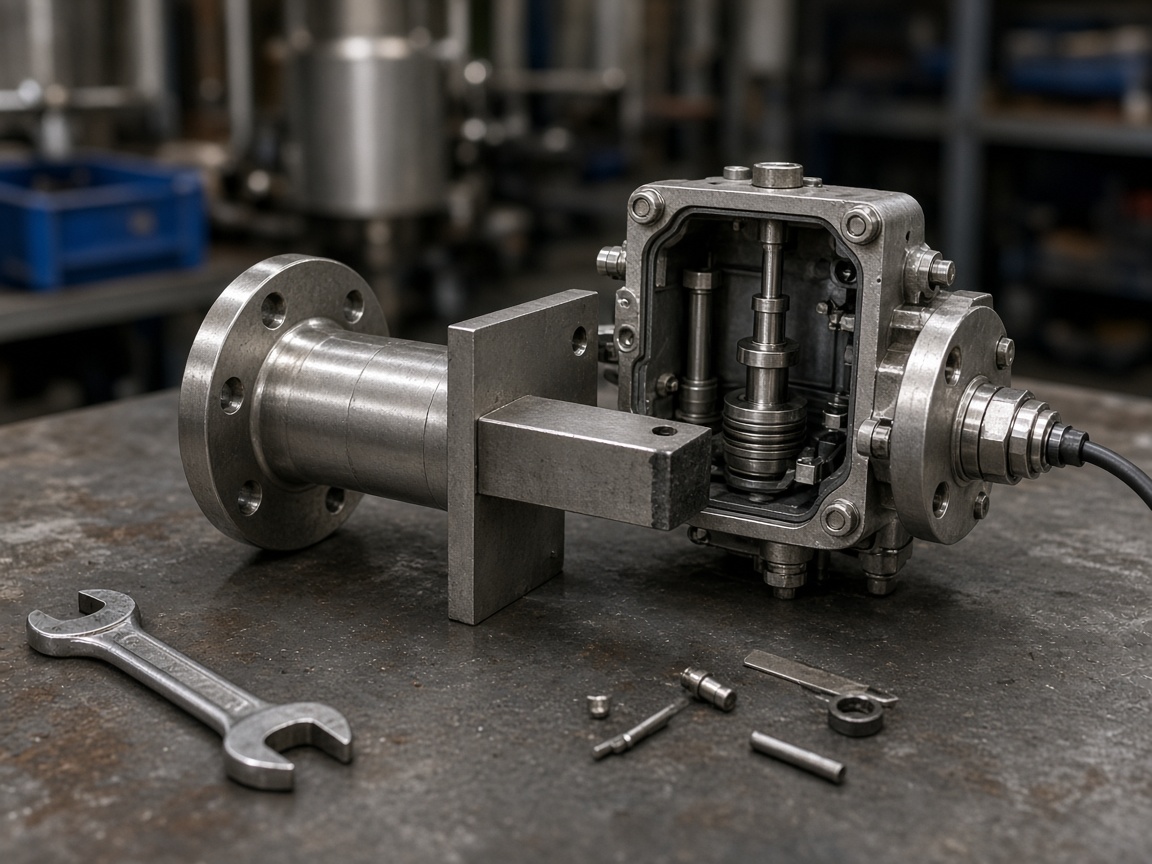
When plant mass balance drifts and the vortex loop looks green, pull the meter internals before you retune the process. The frequency path owns the truth; the milliamp path only repeats what it is told.