
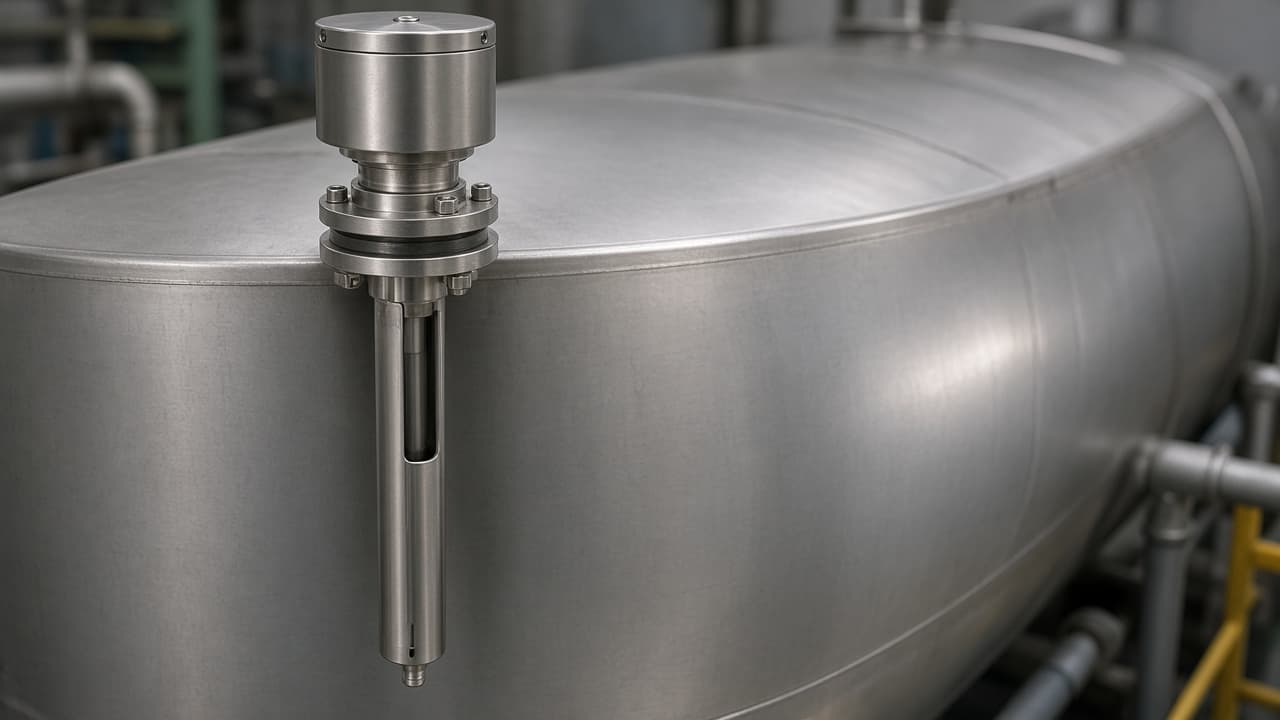
Level tickets that bounce between “transmitter bad” and “process swinging” often share one ignored object: the guided-wave radar probe hanging in the vessel. The electronics still boot. The HMI still shows a number. The number belongs to a coated waveguide, not to the liquid surface the control loop thinks it owns.
Diaphragm-seal fill honesty and magnetic-flowmeter electrode coating are different impulse and conductivity stories. Knockout-drum demisters own vapor carryover. This note is guided-wave radar (GWR) probe buildup and echo honesty.
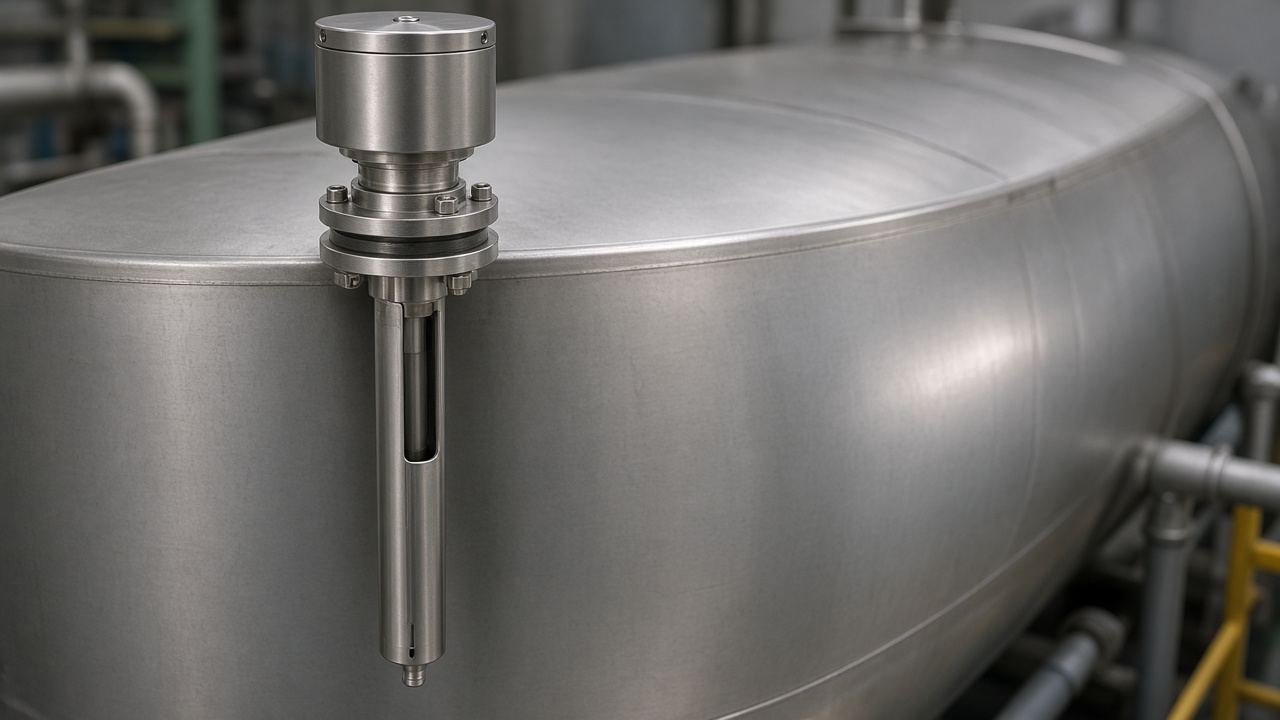
GWR launches a microwave pulse down a rod, coaxial, or cable probe and times reflections. Product coating changes impedance along the path; bridging between probe and stilling well creates ghost echoes; heavy build near the process connection can mask the true surface. Operators see sudden jumps, stuck highs after a drain, or levels that disagree with a sight glass after a sticky batch.
What usually precedes the lie
Sticky polymers, wax, sludge, and crystallizing salts love the probe surface—especially in stilling wells with poor circulation. Skipping steam or solvent cleaning after a campaign leaves last week’s product as this week’s “level.” Threshold and mapping parameters that were tuned on a clean probe do not forgive a millimeter of film.
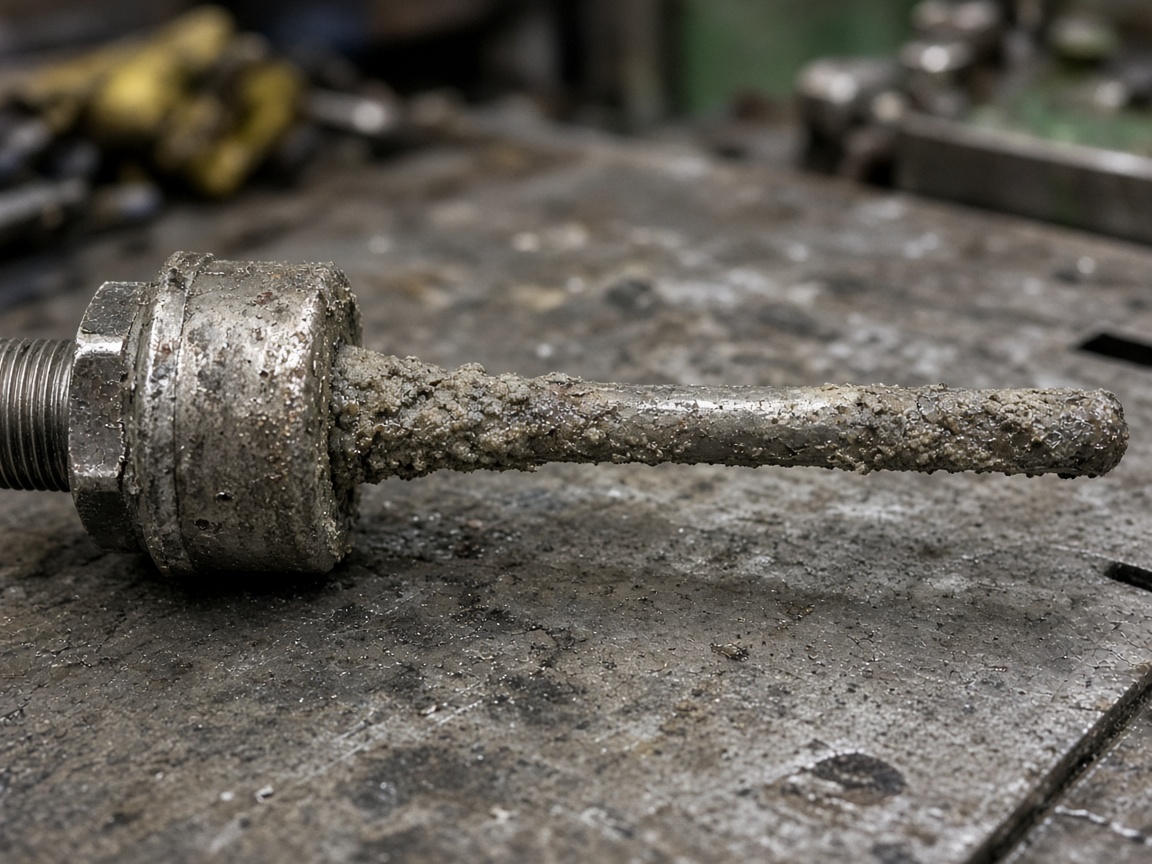
Compare GWR to an independent check (sight glass, manual tape, or a second technology) after any sticky campaign—not only when the alarm floods. Trend echo amplitude and diagnostic quality codes if the transmitter publishes them. Clean or replace probes on a chemistry-aware interval; do not wait for a spill. When GWR and the glass disagree, pull the probe before you retune the empty-full map. Coating does not care how expensive the radar head was.