
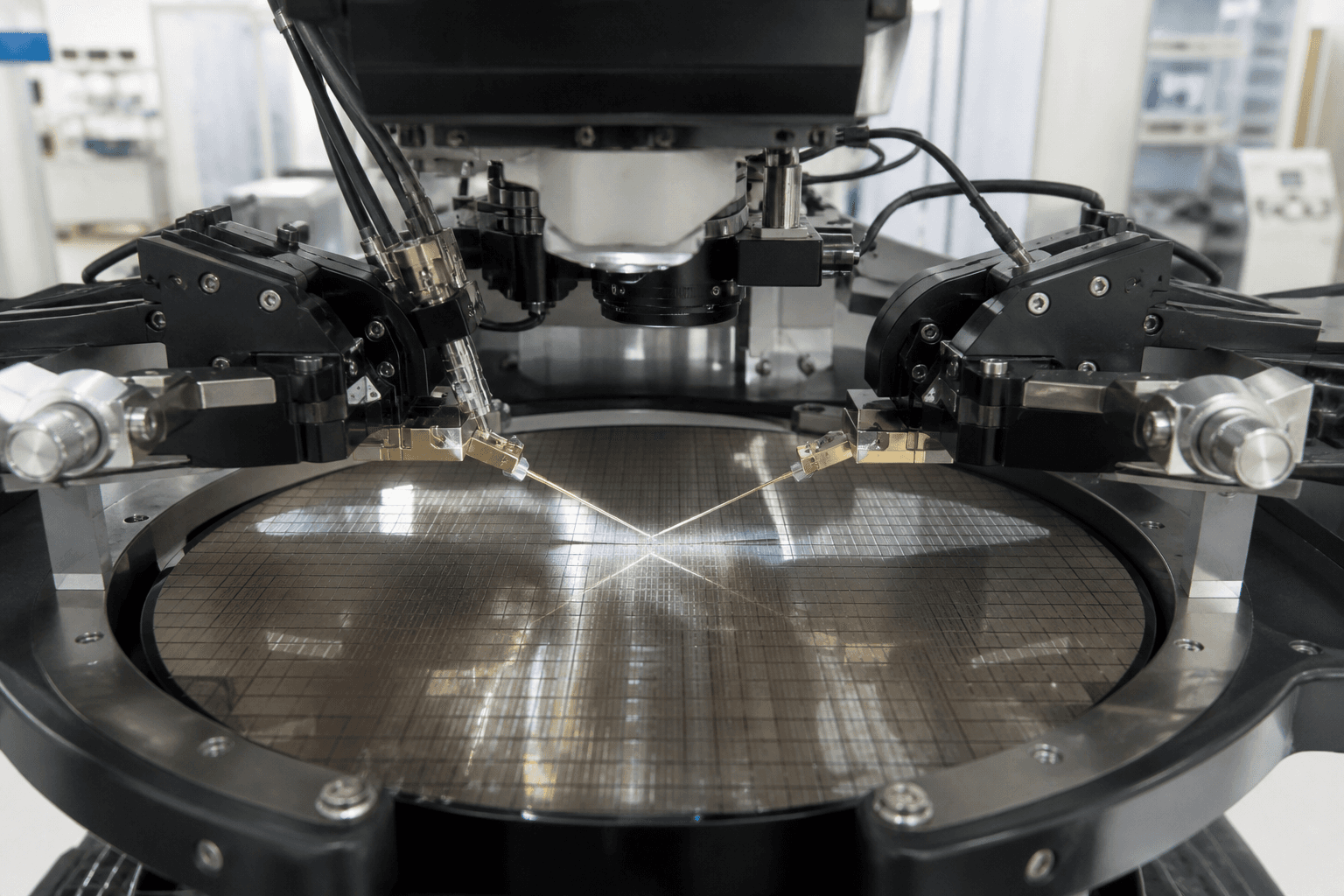
When sort yield drops on a mature product, the first meeting still opens with etch, implant, or a suspect CMP lot. Sometimes those are guilty. Often the wafer is fine and the interface is not: probe needles mushroomed, spring probes fatigued, card planarity out, scrub too short on a warped wafer, or a contactor contaminated with aluminum smear. Continuity and contact resistance drift. Opens and intermittents spike. The fab scrap code gets blamed for a test-floor consumable.
This is adjacent to Gauge R&R and metrology-AI gates, not a repeat. The consumable here is the probe card and its contact physics.
What the card is doing
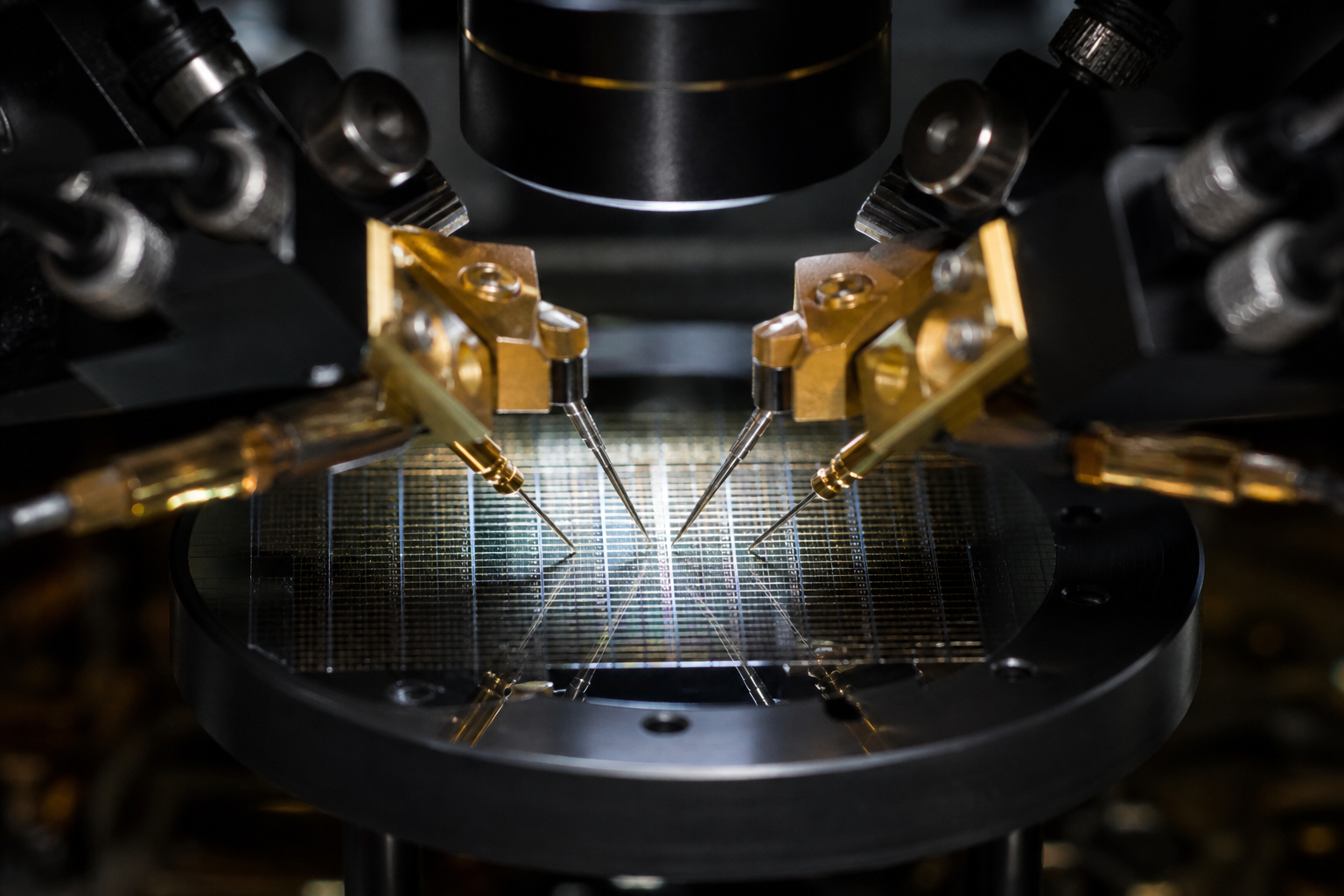
Each touchdown is a mechanical event. Tip geometry, force, and scrub wipe oxide and make a temporary metal path. As tips wear, force for the same overtravel falls, contact resistance rises, and marginal pads look like device fails. Temperature on hot chucks changes tip and pad behavior; a card qualified cold is not automatically qualified at elevated sort.
Planarity across the array matters as much as a single tip. One corner light means a region of false opens that follows the card serial, not the wafer slot.
Numbers that belong on the sort report
Track: touchdowns since dress or rebuild, contact-resistance distributions on continuity patterns, re-probe recover rate, and card serial on every yield excursion. A cliff that moves with the card and vanishes on a freshly dressed card is not a fab process change.
Re-probe policy must be explicit. Blind re-probe that “clears” intermittents without card maintenance hides wear until a customer return.
Change control
Needle material, tip shape, overtravel, and scrub are the recipe. Changing card vendor or rebuild house without a correlation lot is a process change. So is raising overtravel to chase contact on a worn card—you buy short-term yield and long-term pad damage.
Before a DOE on etch CD for a sort open spike, ask card hours, last dress, and whether the fail map rotates with the card orientation. The die sees the needle, not the lot traveler.