
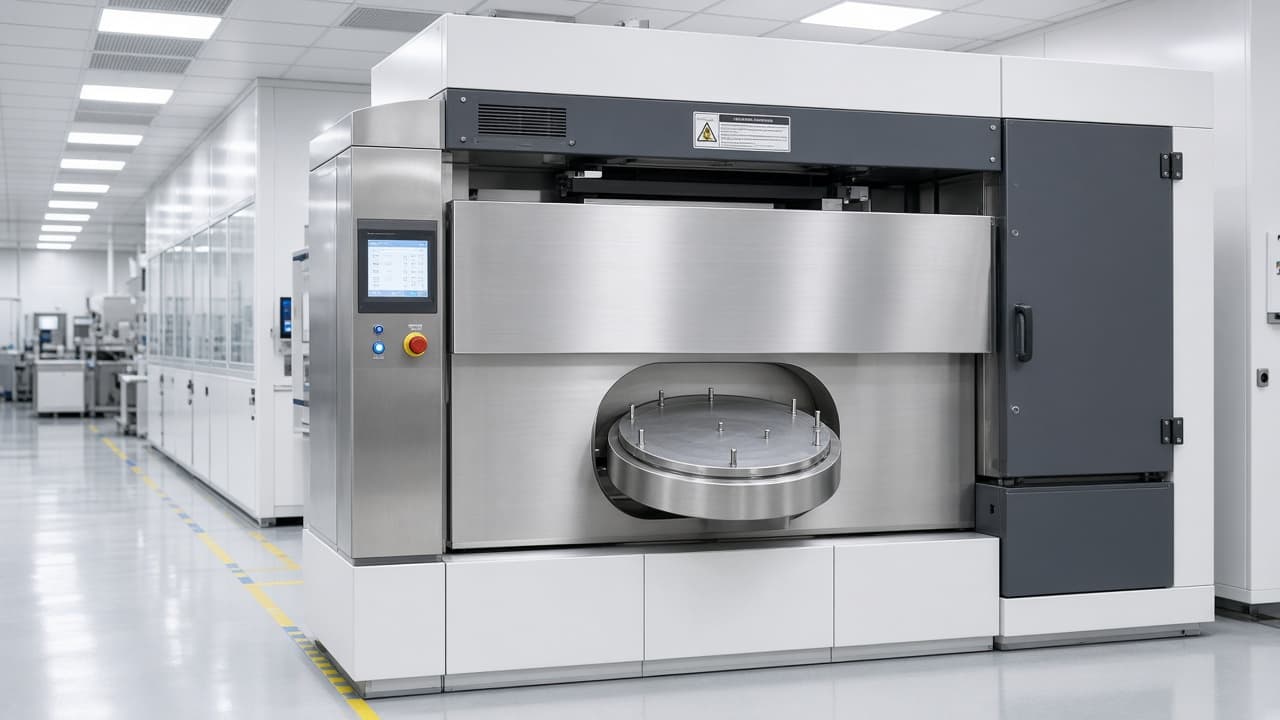
Chemically amplified resists do not end at the exposure slit. Post-exposure bake (PEB) drives the acid-catalyzed reaction that sets the developable profile. When one zone of the hot plate runs cool and another runs hot, critical dimension walks across the wafer in a pattern that looks like “scanner focus” until someone pulls bake metrology.
BARC thickness and spin-chuck vacuum are coat-module neighbors. Photoresist edge-bead owns the rim. This page is PEB hot-plate temperature uniformity—setpoint honesty, within-plate range, and post-PM qualification.
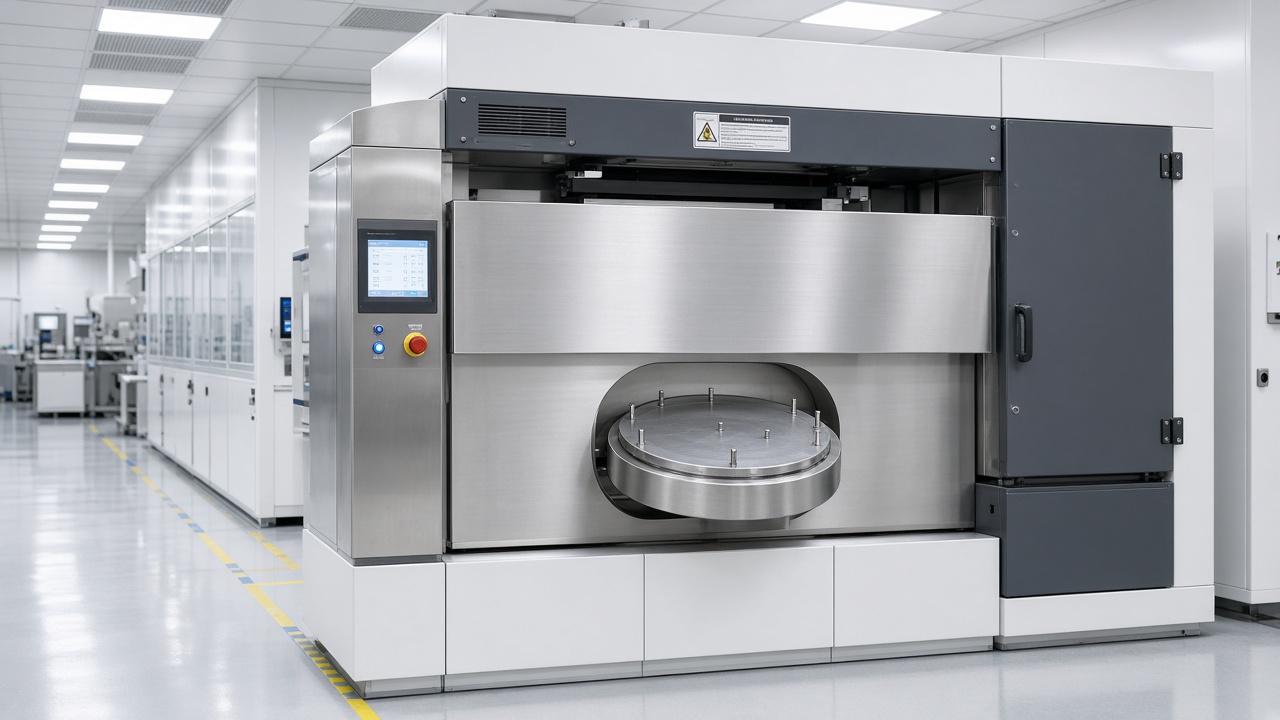
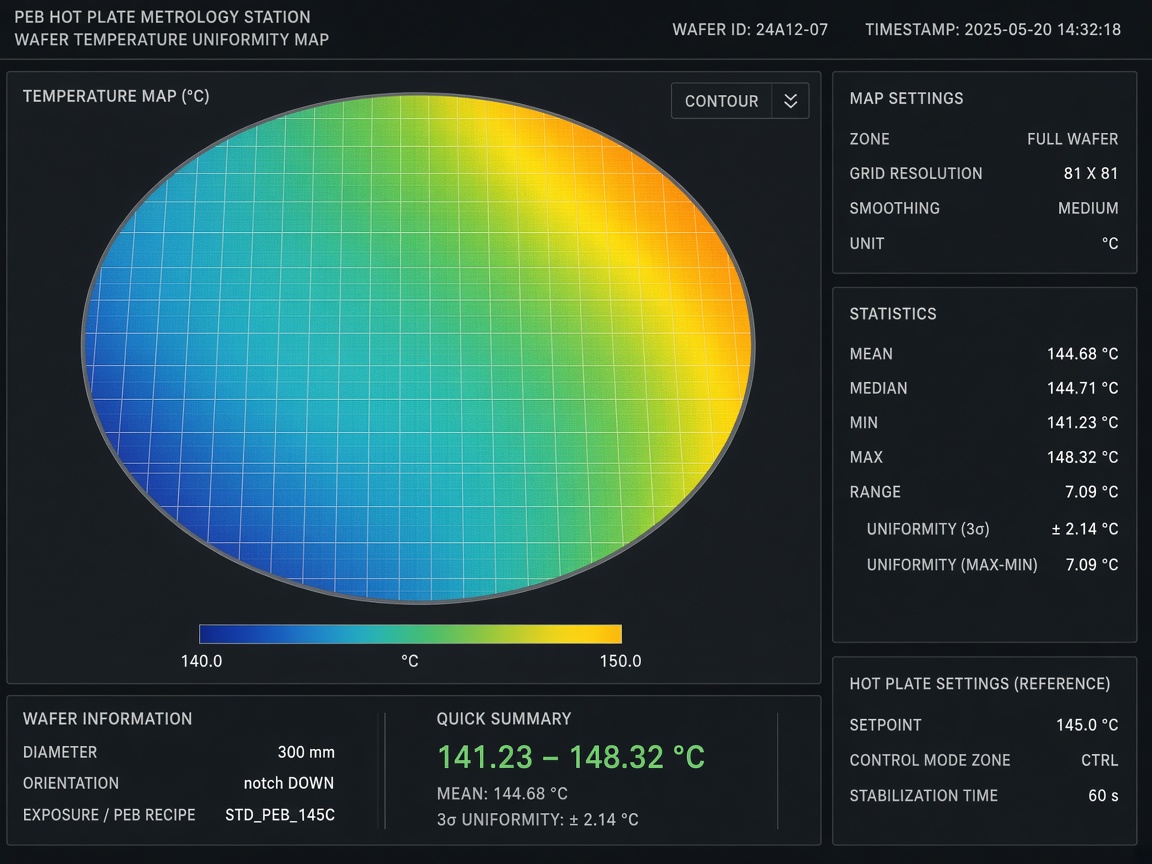
Acid diffusion and deprotection rates are steep functions of temperature for many CA resists. A degree or two of across-wafer bake error can move CD more than a small dose tweak. Causes include failing heaters or sensors in multi-zone plates, warped plates after a crash, contaminated proximity pins that change thermal contact, and exhaust imbalance that cools one side. A recipe that only logs “PEB complete” without plate diagnostics invents confidence.
What to trend before the next dose experiment
Map plate temperature with the OEM monitor wafer or equivalent after heater repairs, pin changes, and calendar intervals for critical layers. Trend within-wafer CD range against PEB plate ID and recent PM. When CD shows a plate-shaped signature and focus/dose history is quiet, hold lots against bake genealogy—not only reticle or scanner chamber.
Lithography meetings love exposure energy. The track owns whether the post-exposure bake still matches the process window model. Sites that qualify PEB plates like other thermal tools stop funding endless dose ladders for a heater problem.