
Field note — assembly
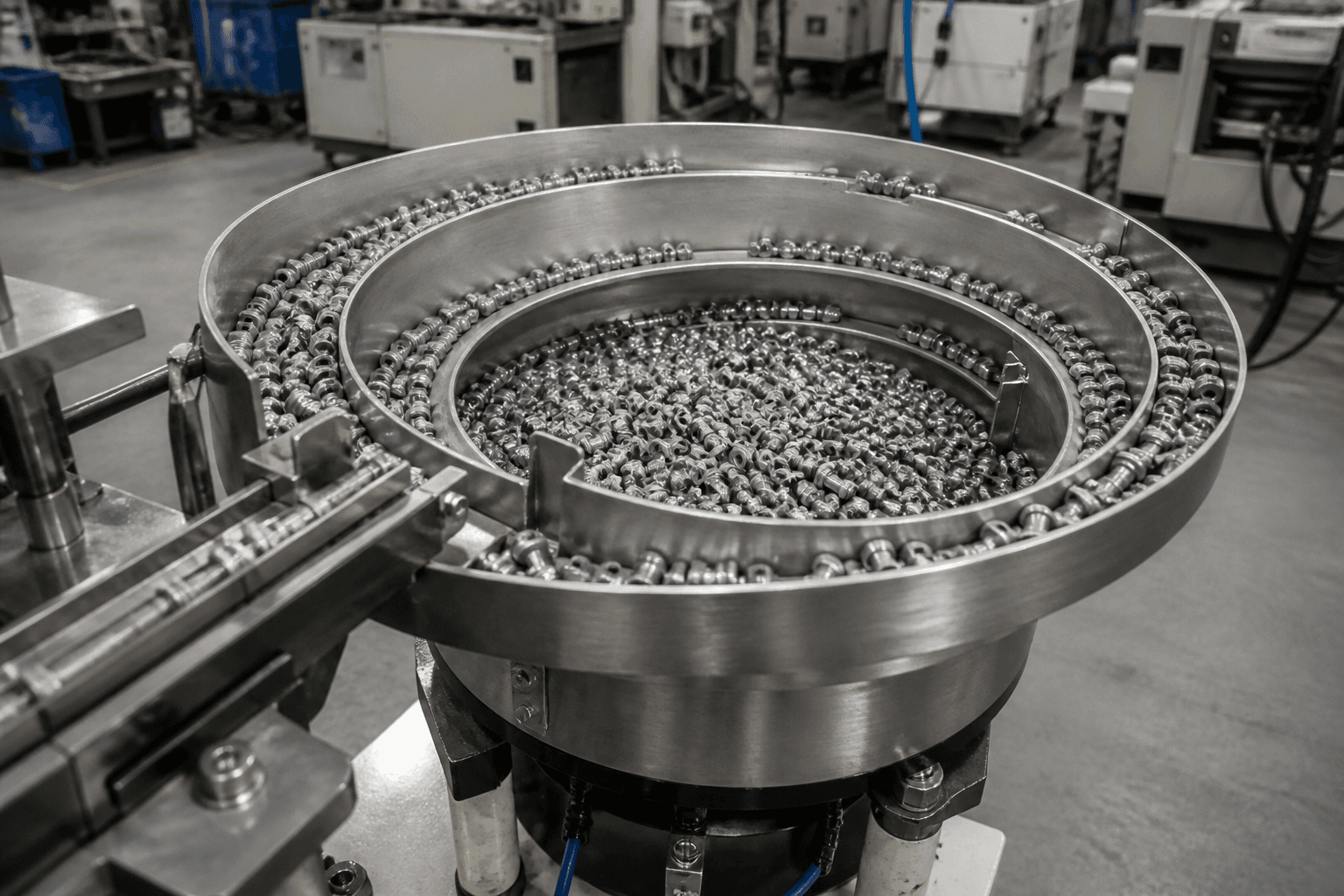
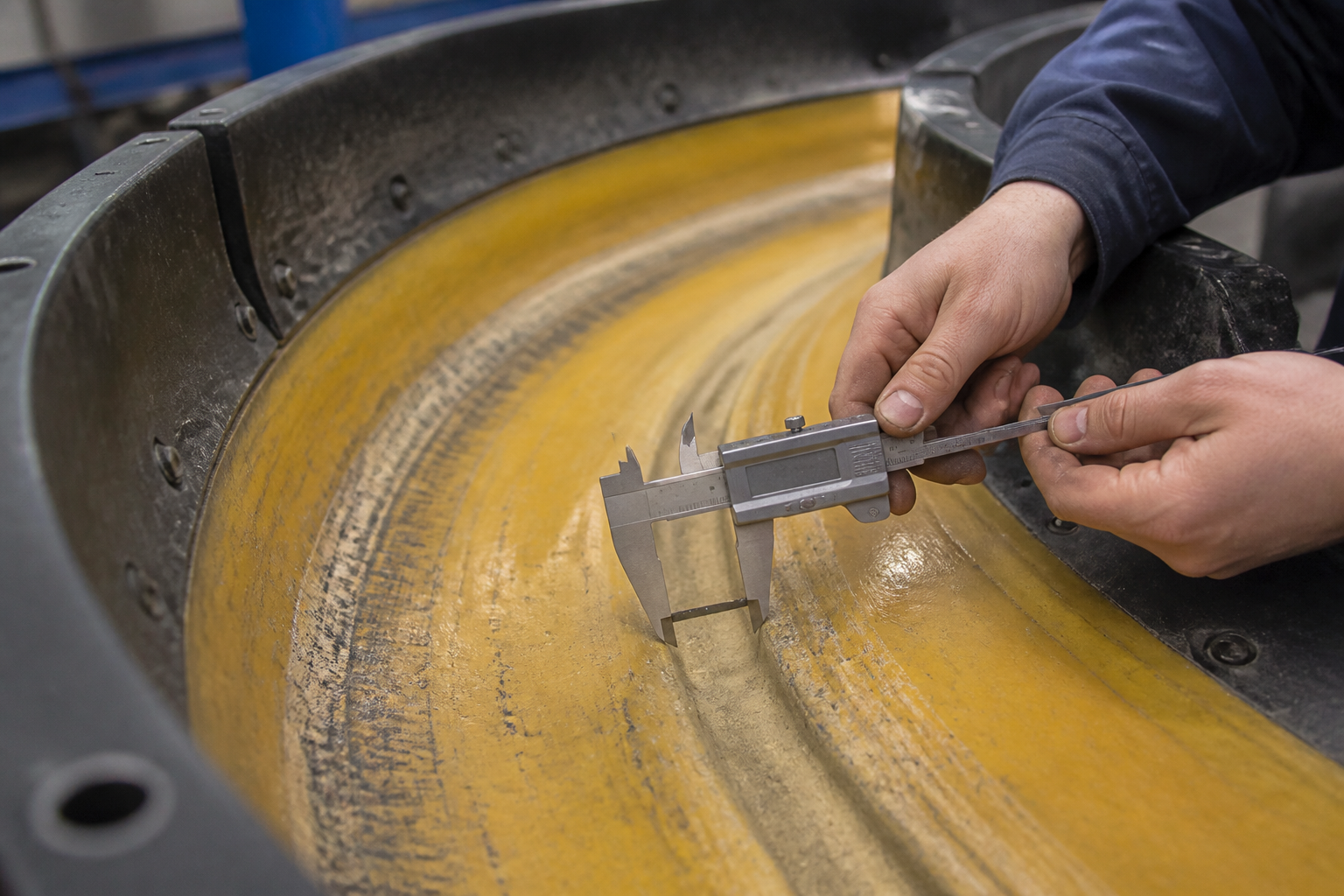
The bowl feeder started double-feeding M6 screws at shift change. Coil voltage was nominal. The spiral track had worn 1.2 mm of polyurethane in the climb zone—enough for a screw to bridge and ride two high.
Vibratory bowls own orientation, not magic. The track profile is the process: groove depth, relief angles, and surface friction decide whether parts singly file or stack. Drive tuning hides wear until the robot gripper sees twins.
What to measure before you touch the controller
- Groove depth at three clock positions on the climb; compare to the spare-bowl drawing.
- Tool marks or heat glaze where brass parts have polished the lining.
- Oil mist from upstream washers that turned the track slippery without changing amplitude.
Rule
No amplitude or frequency hunt until the track is within spec or formally relined. A relined bowl without a depth log is a repeat failure in six weeks.