
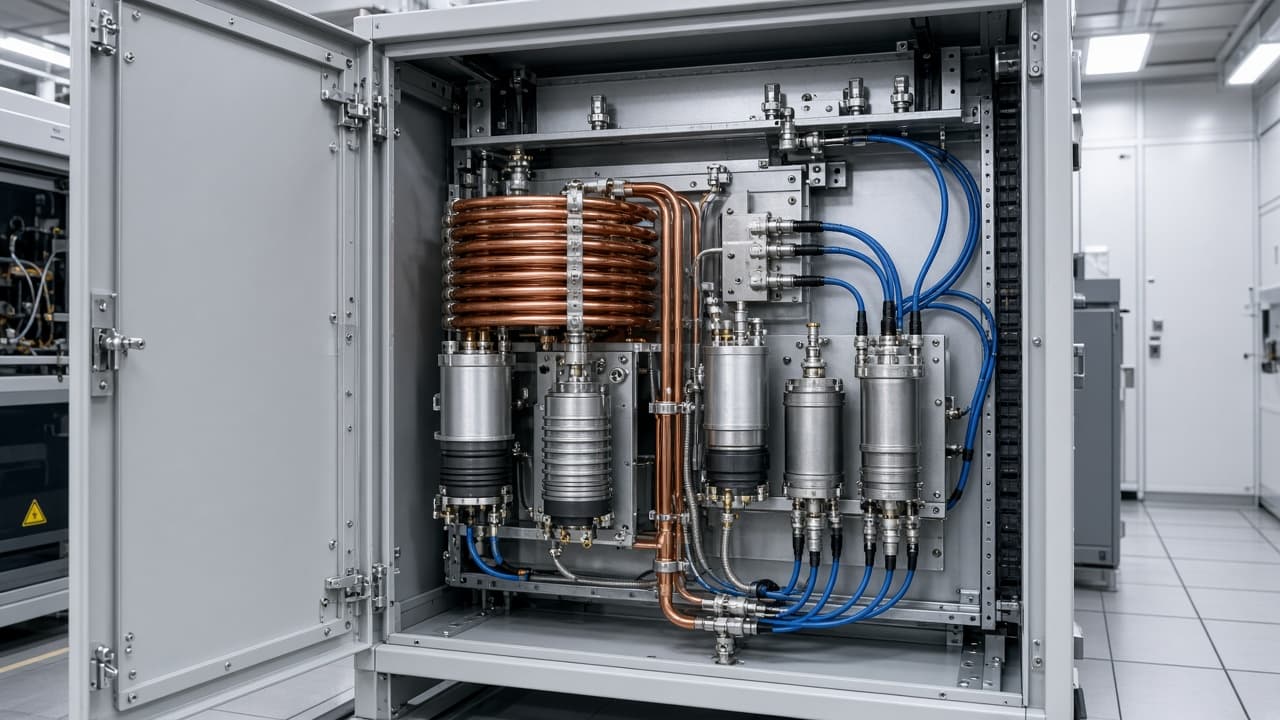
Etch and some CVD tools deliver RF through a matching network that transforms the generator’s impedance to the chamber load. When the match is healthy, reflected power stays low and the plasma stays inside the recipe window. When capacitors stick, cables loosen, or the chamber surface condition moves, reflected power rises—and operators start arguing about “process drift” that began in the RF path.
Cryopump regeneration and MFC calibration belong elsewhere. Here the subject is match tune, reflected power, and cable honesty.
What the meters are saying
Forward power is what the generator claims to send. Reflected power is what bounced back because the load and the match disagreed. A slow climb in reflected power at fixed recipe settings often tracks match capacitor wear, connector torque, or chamber wall seasoning—not a mysterious chemistry ghost. Sudden spikes after a wet clean or after someone reseated an RF cable are maintenance fingerprints.
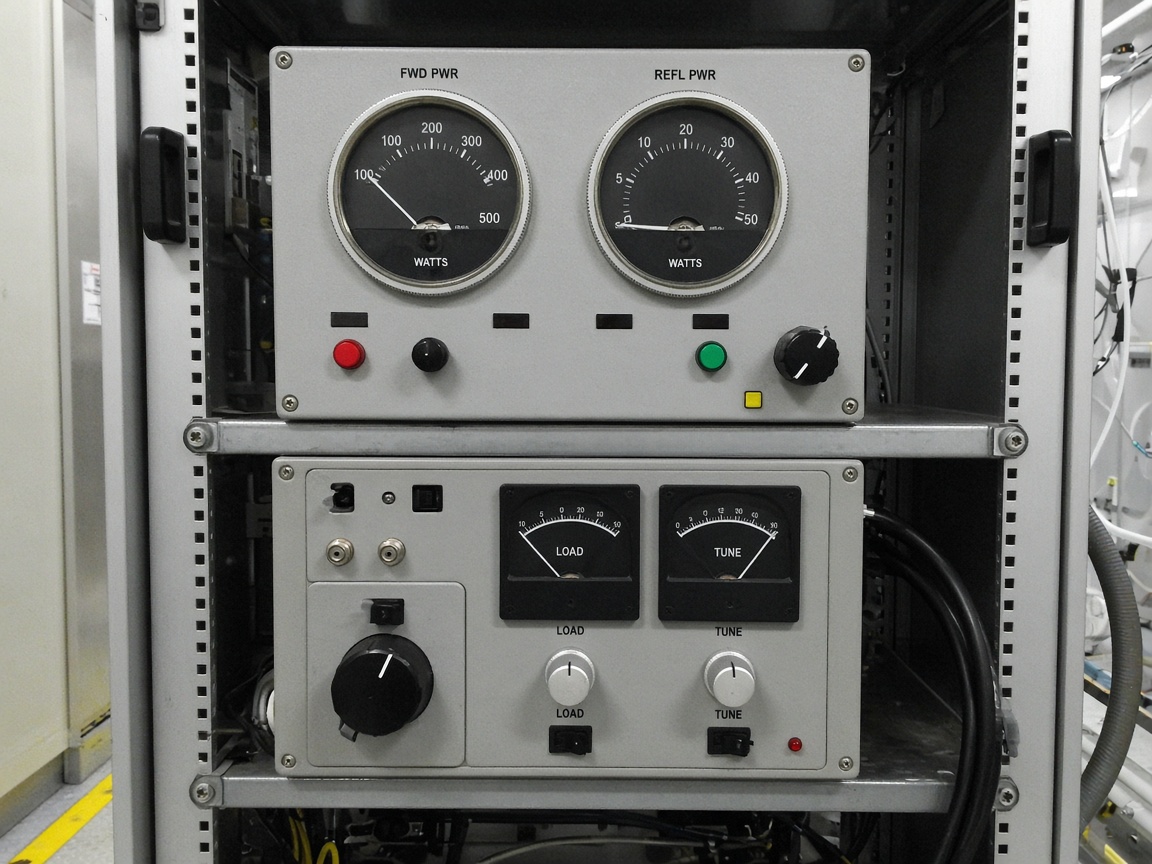
Autotune routines help only while the hardware can still reach a match. If tune positions drift to their stops recipe after recipe, the network needs service, not another recipe patch. Log tune positions with PM; compare them to the last known-good chamber state.
Cable and connector discipline
RF cables and connectors are wear parts. Bend radius violations, carbonized connectors, and wrong cable length for the frequency band recreate “chamber” problems that vanish when the cable is replaced. After any RF path work, verify reflected power on a standard recipe before releasing production lots.
When etch rate moves and the match log moved first, fix the RF path before you rewrite the chemistry.