
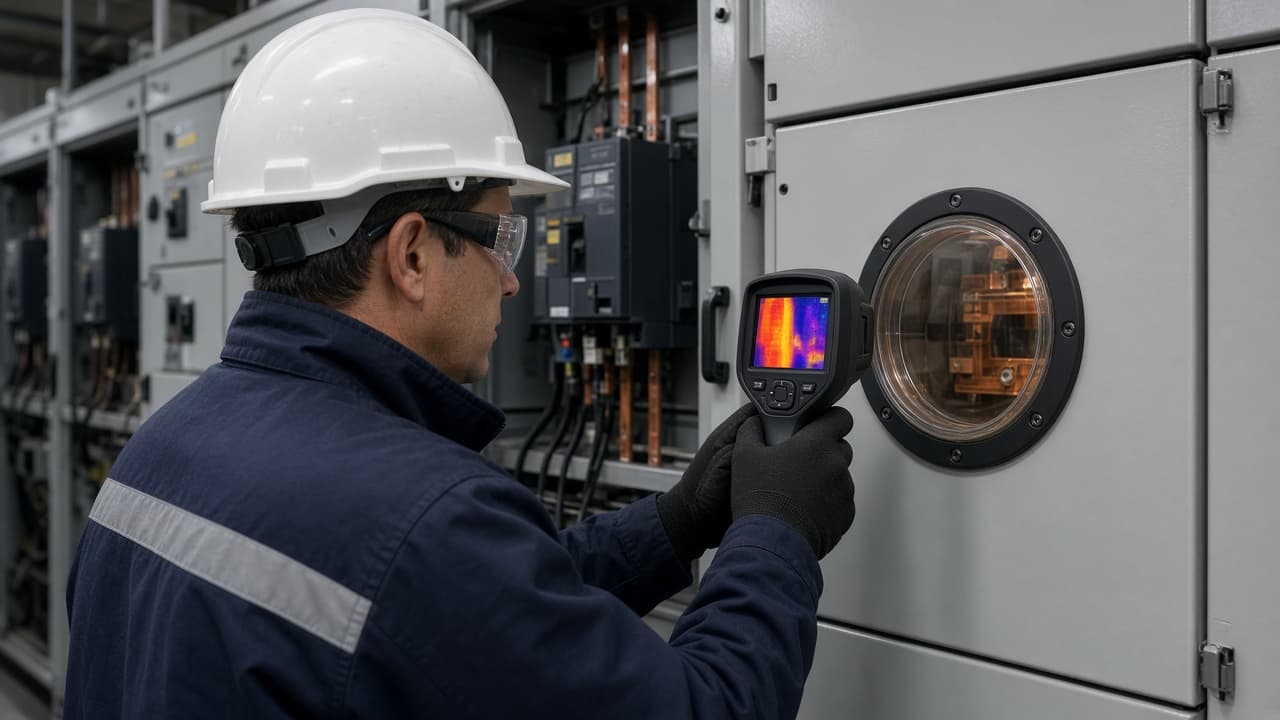
Opening energized switchgear for a camera shot is a risk many plants correctly refuse. Infrared (IR) inspection windows—polymer or crystal ports rated for the enclosure—exist so thermography can happen with doors closed and arc boundaries intact.
Load-bank proofs and ATS testing are other energy notes. This one is shorter: IR windows, survey discipline, and what a cold image does not prove.
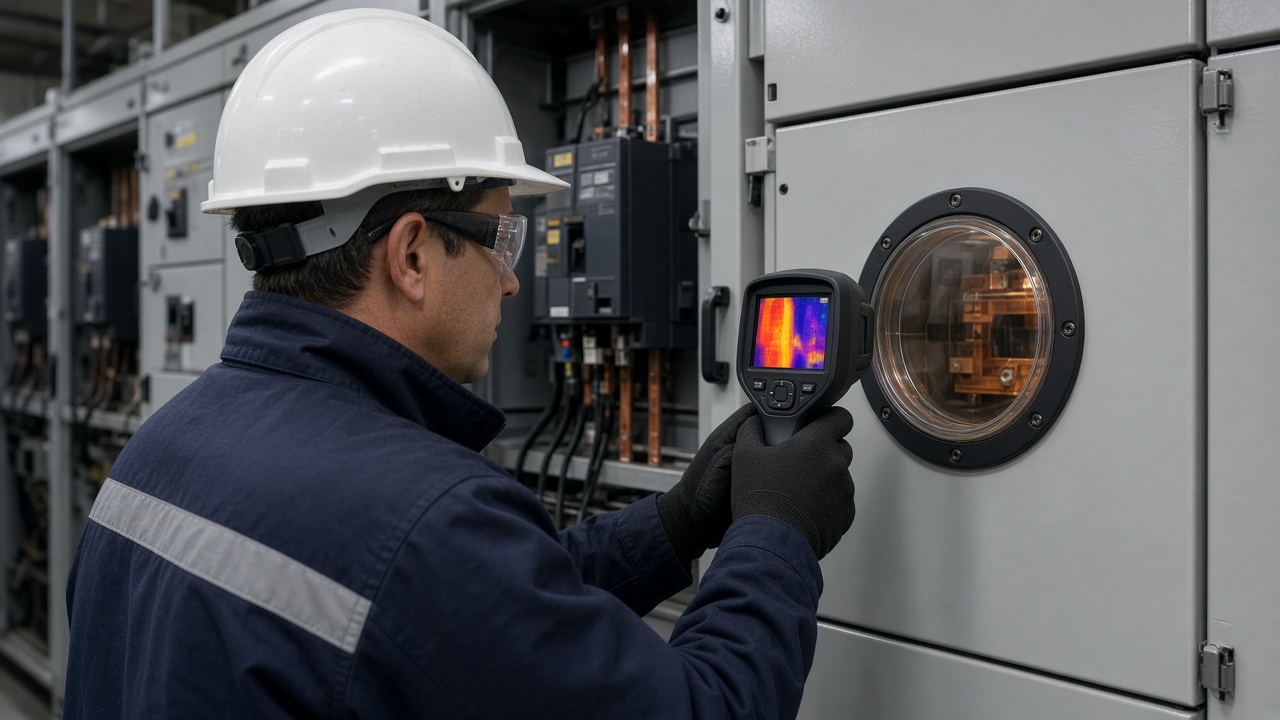
Windows age. Scratches, fogging, and wrong transmission curves for the camera’s waveband quietly raise apparent temperatures or hide them. Label each port with the window model and the camera settings the survey assumes. Recheck torque on the retaining ring after any panel work—an unseated window is not an IR program; it is a hole.
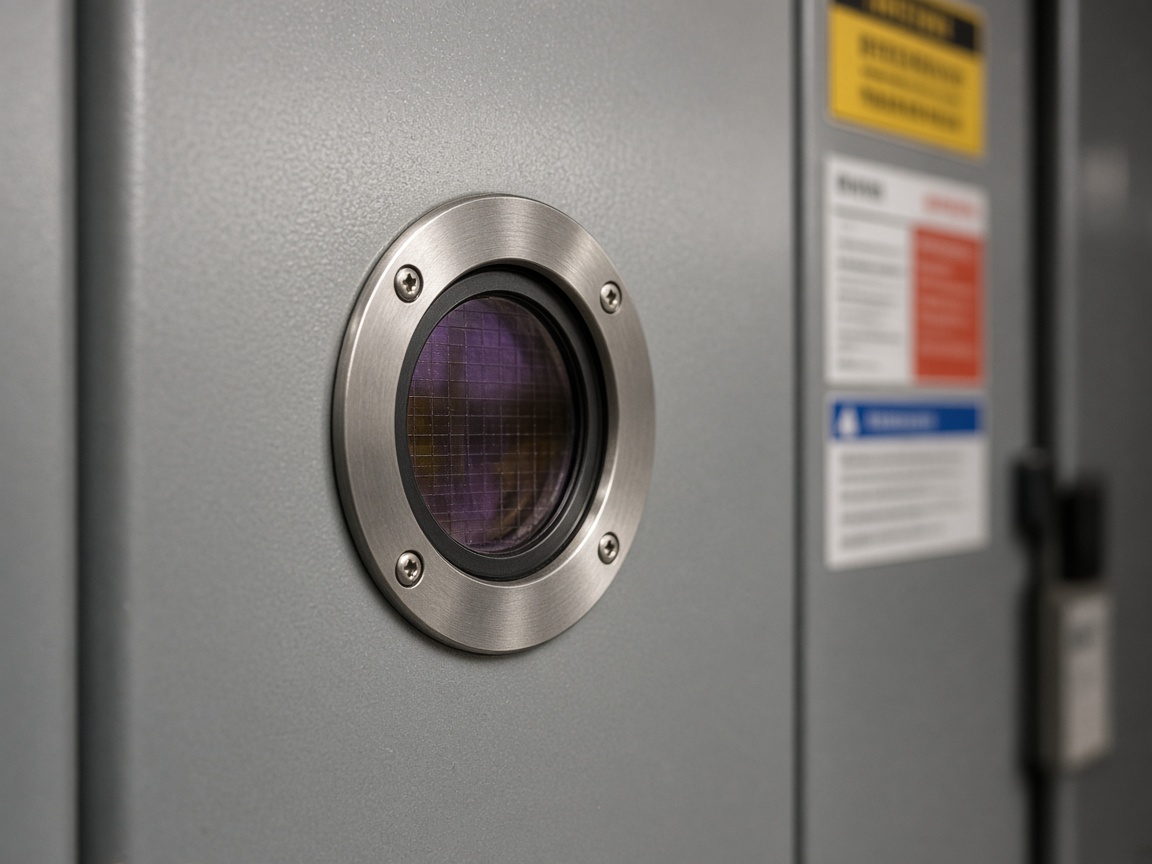
A useful survey is a route with load context: same feeders, comparable amperage, recorded ambient, and trend against the last report—not a one-off selfie after a breaker trip. Emissivity guesses on shiny bus destroy comparisons; note coatings and use consistent methods. “No hot spots today” only means something if yesterday’s baseline and today’s load are in the file.
Install the window before the outage you are trying to avoid—not after the first unexplained smell of hot insulation.