
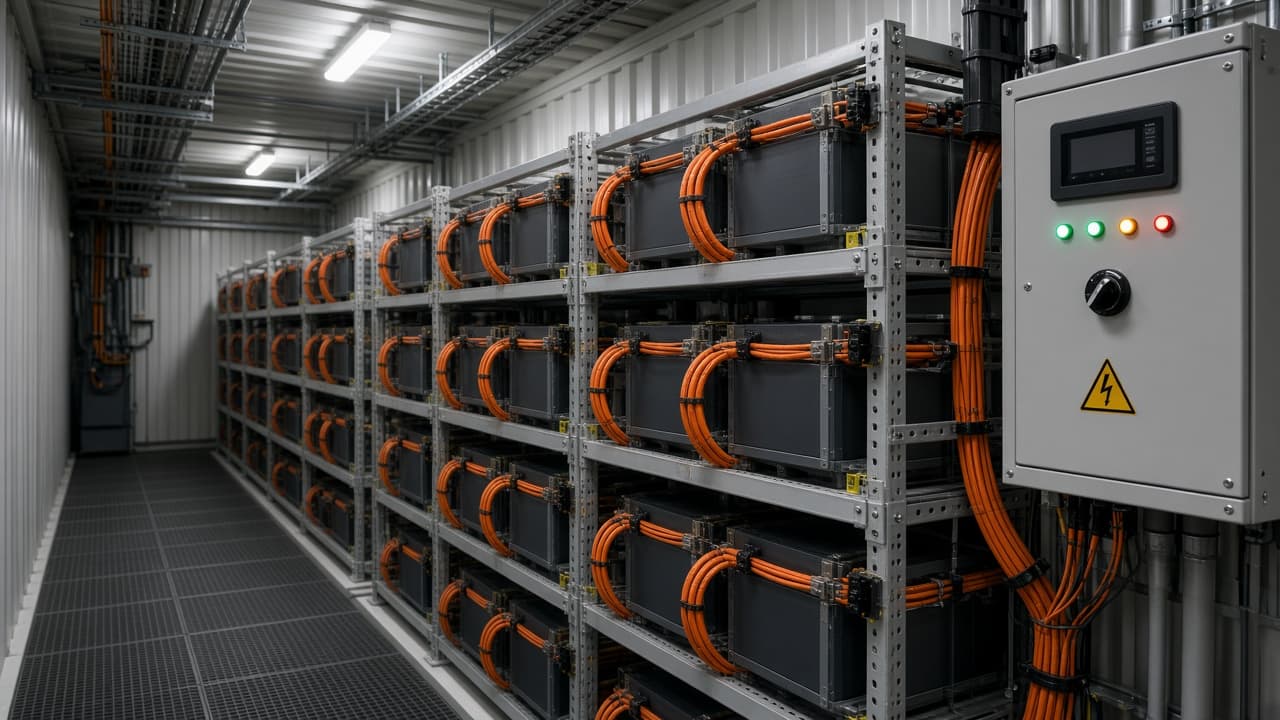
Dispatch diaries own how the site bid. Cell imbalance and thermal soaks own formation halls and BMS voltage windows. This note is electrical safety geometry: DC insulation monitoring on ungrounded BESS, where a single ground fault does not clear itself by tripping a breaker the way an AC grounded feeder often does.
Unearthed DC lets the system ride through a first insulation failure. That is an operational advantage only if someone hears the insulation monitoring device (IMD). The IMD injects a supervised test signal and watches resistance-to-earth; when insulation falls through warning and alarm thresholds, the plant still has time to localize—module, rack, cable tray, coolant leak path—before a second fault bridges positive to negative through ground. Grounded BESS topologies need different sensing (often residual-current style); copying an IMD recipe onto the wrong earthing scheme invents false comfort.
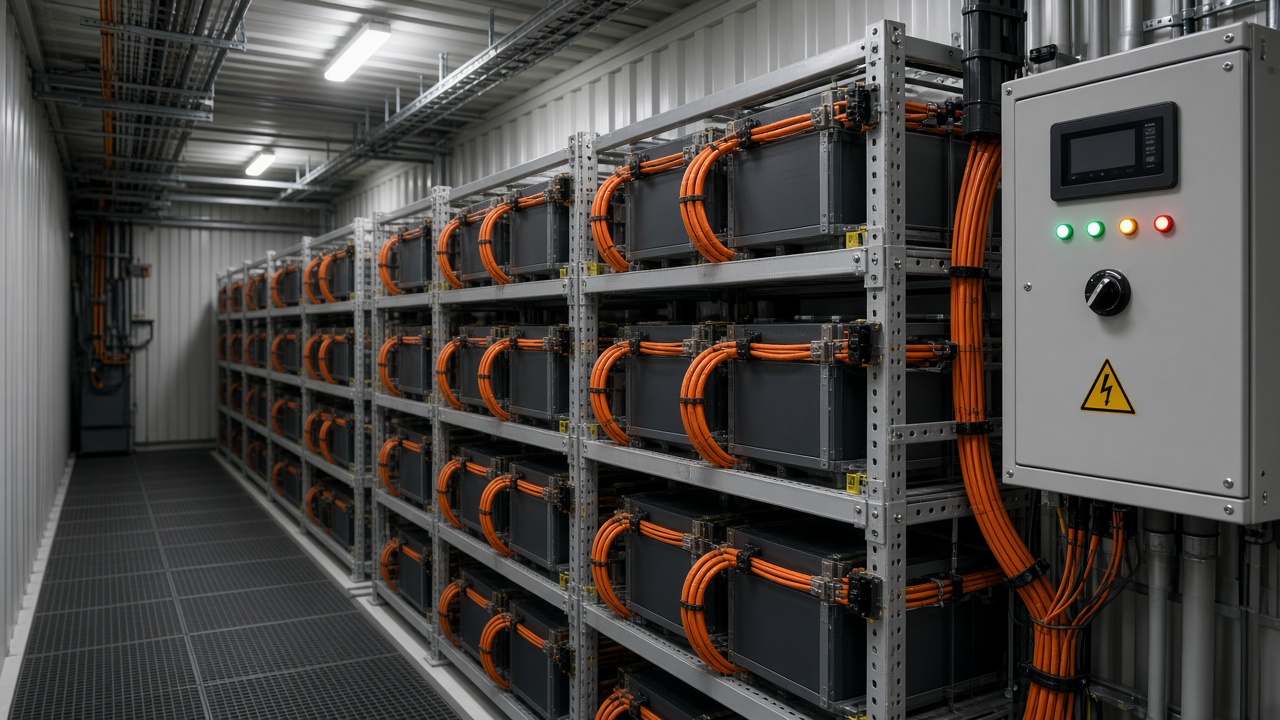
Coordinate alarms with contactor and PCS behavior. An IMD reading after a bank is isolated is not the same zone as the reading with contactors closed; settling time and topology belong in the response procedure. Trend insulation alongside humidity, coolant conductivity, and connector torque campaigns. A slow walk-down of megohms after rain or after a coolant service is a finding, not weather. Cell imbalance protection is still mandatory—but it does not substitute for knowing that the DC bus still floats cleanly from earth.
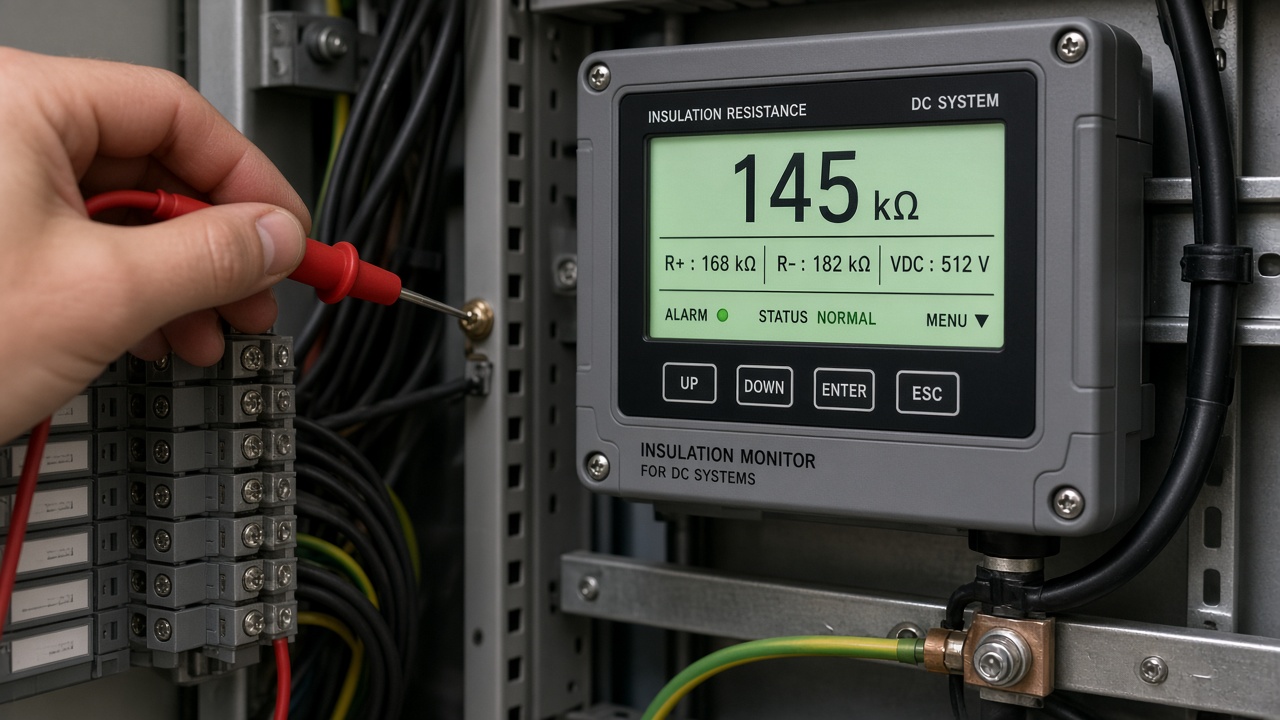
Silencing a first-fault IMD because “power is still flowing” is how second faults write the incident report. Clear the first clock while it is still a maintenance ticket.