
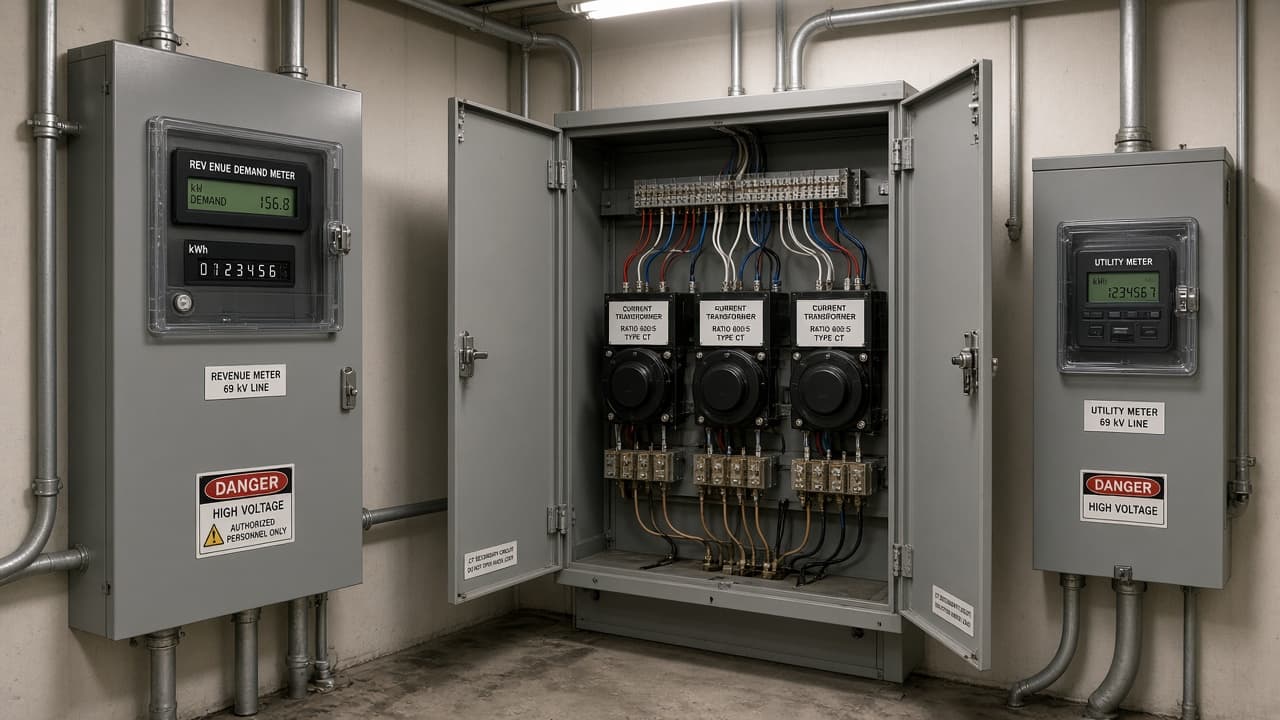
Tariff forensics explain where penalties hide on the demand curve. This page is the metering chain underneath that curve: current transformers, potential transformers, and the billing multiplier that scales secondary readings into primary kW and kVA.
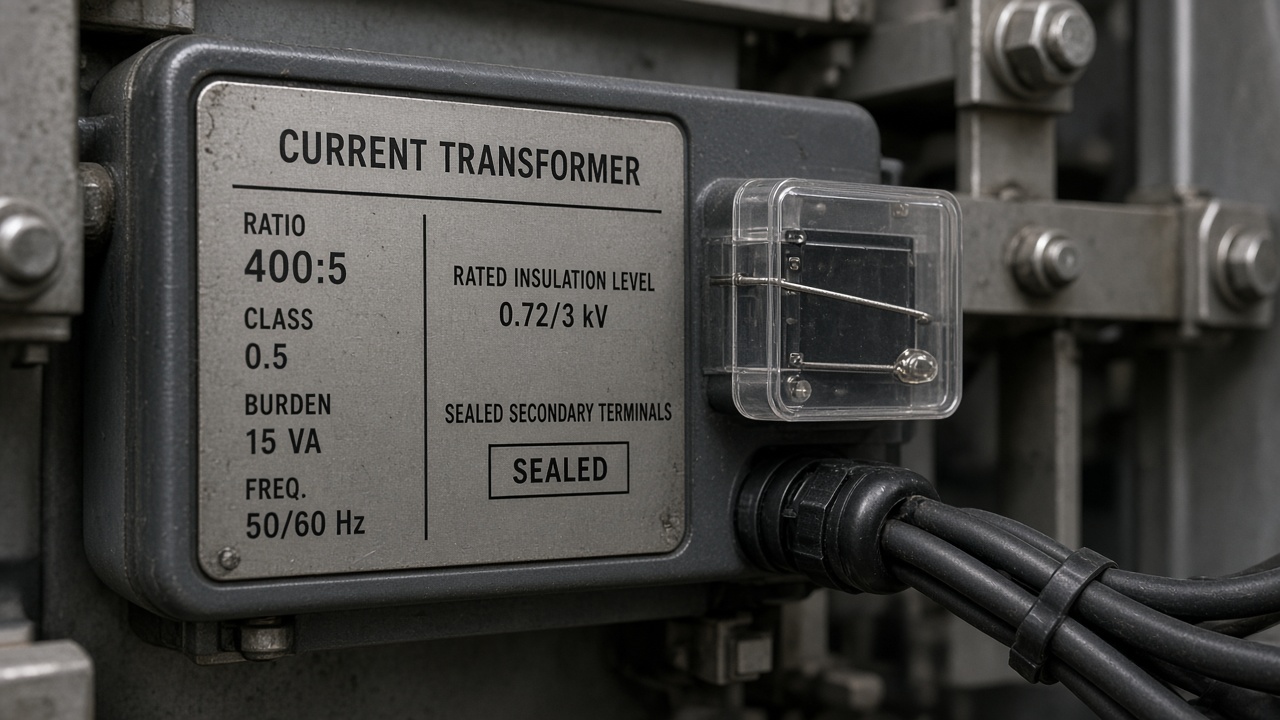
Demand is not instantaneous peak watts on a clamp meter. It is usually the highest average load over a fixed interval in the billing period. Interval energy converts to average power the usual way—kilowatt-hours in the interval divided by interval hours (for fifteen minutes, multiply kWh by four). Where the meter sees CT/PT secondaries, that result still needs the correct combined ratio unless the register already applies it. Mix up a 400:5 CT (multiplier 80) with a neighbor’s ratio, or double-apply a factor the meter already embeds, and the “peak” everyone manages is fiction.
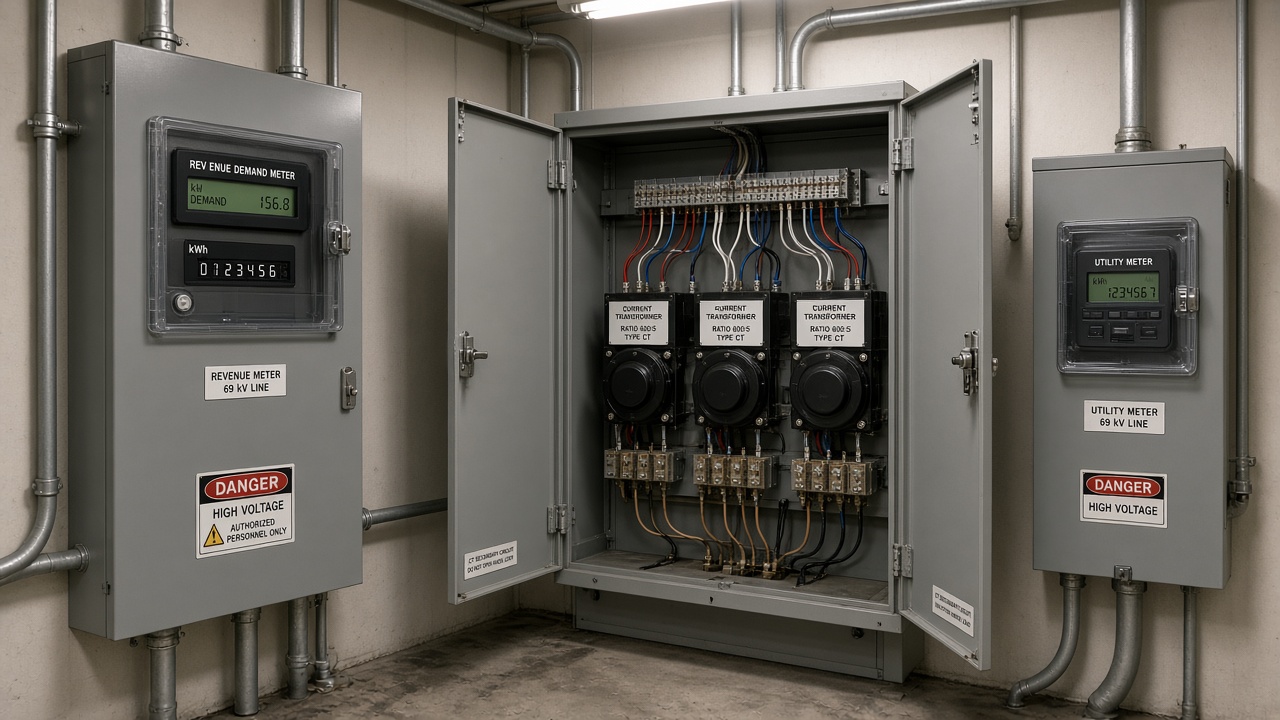
What to lock down on site:
- Nameplate CT and PT ratios versus the multiplier on the bill and in the interval data system
- Sealed secondaries and burden that match the metering class—open CT secondaries are a safety and accuracy failure, not a shortcut
- One documented source of truth for whether the meter firmware already multiplies
- After any CT swap, bus work, or meter change-out, a witness comparison against a known load or portable reference before the next bill cycle
Load scheduling cannot beat a wrong scale factor. Prove the multiplier first; then argue about chillers and shift starts.