
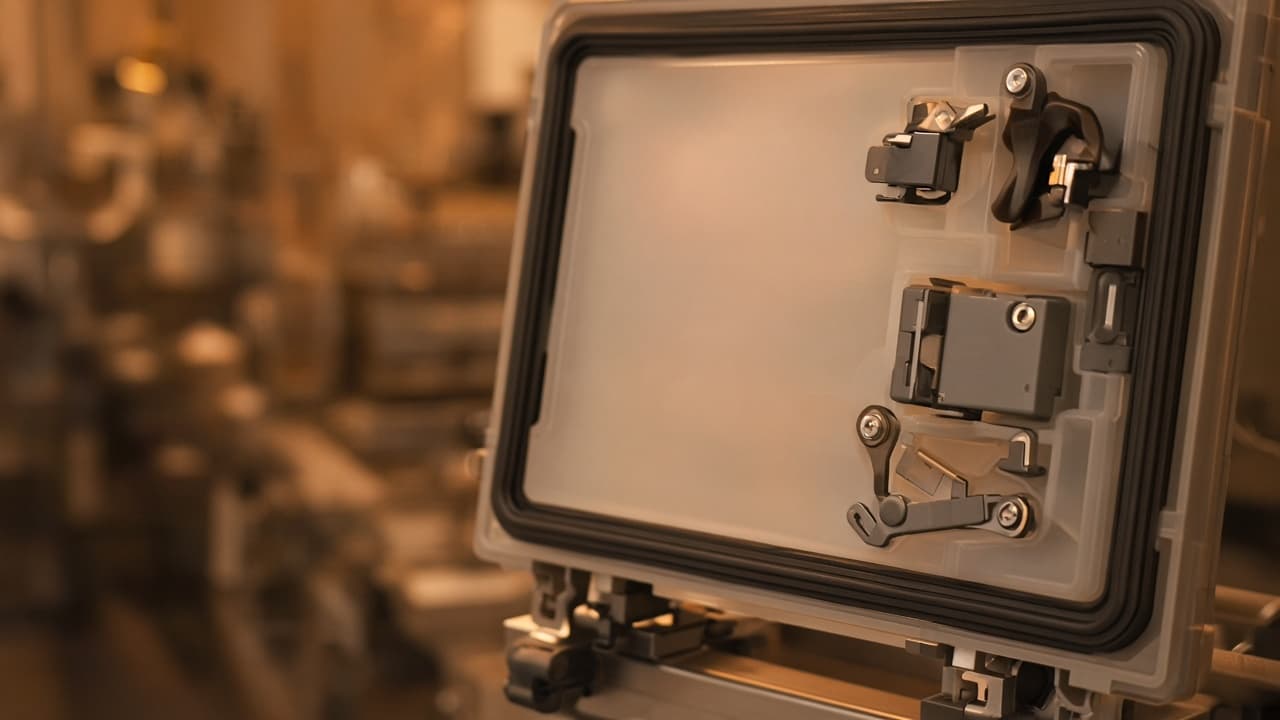
Purge recipes look complete on the tool log: flow started, humidity fell, lot moved. The wafer still sees moisture and particles if the Front-Opening Unified Pod (FOUP) door gasket no longer seats, a latch no longer compresses the seal, or a purge port assembly leaks. The microenvironment is mechanical. When it fails, post-etch corrosion, AMC uptake, and particle adders look like process tool problems until someone inspects the carrier fleet.
Fab Q-time briefs own surface clocks between steps. PEB queue notes own expose-to-bake delay. Specialty-gas essays own neon and helium supply. This page is FOUP door seal and purge-path integrity—gasket, latch, conductance, and purge hardware as process equipment.
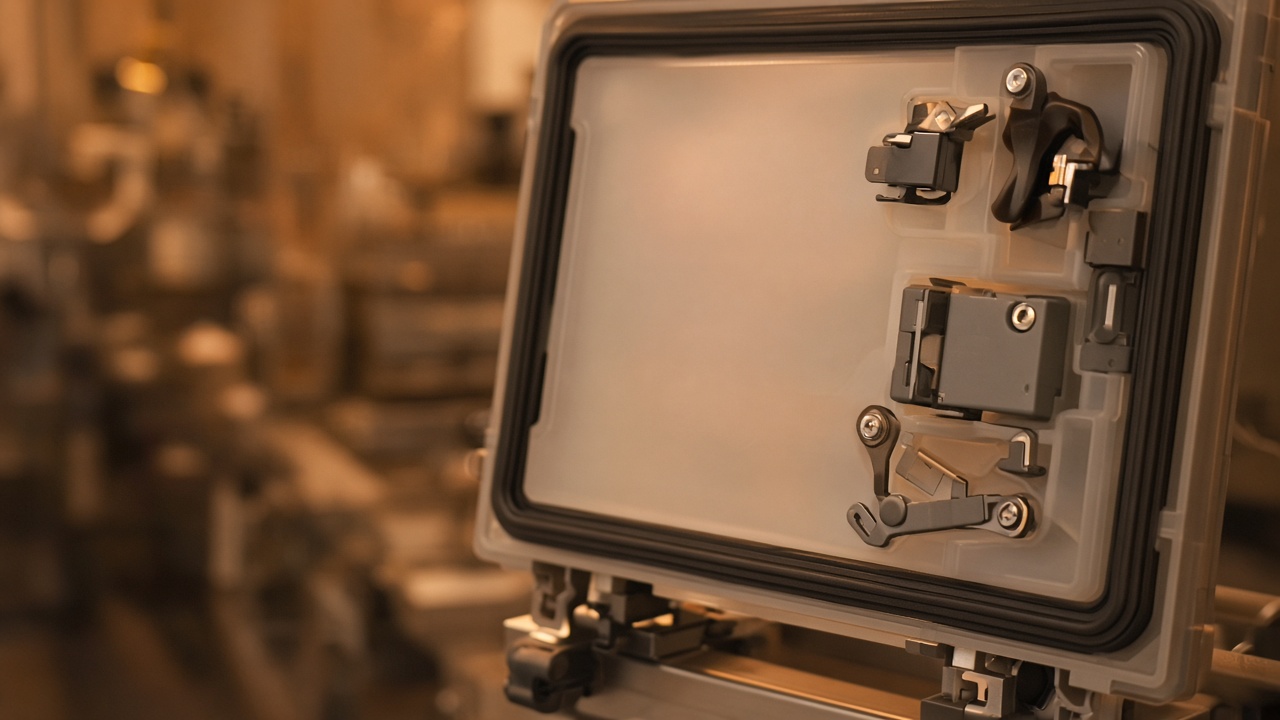
Practical maintenance is not optional theater. Functional checks of latches before clean cycles catch doors that no longer pull the gasket into compression. Visual inspection finds crushed or glazed elastomer. Dimensional checks of door and flange catch shells that no longer mate. Conductance or leak testing on a calendar—and after drops, collisions, or failed inspections—decides whether the pod still deserves production wafers. Door gaskets and purge assemblies (filters, O-rings, check valves) are consumables with replacement intervals; a fleet of thousands of FOUPs without a seal program is a yield lottery.
Nitrogen purge after process and during storage only works inside a tight box. Door-off loadport purge is even less forgiving: ambient EFEM air fights the purge front. Diffusers help distribution; they do not forgive a torn gasket once the door closes for travel.
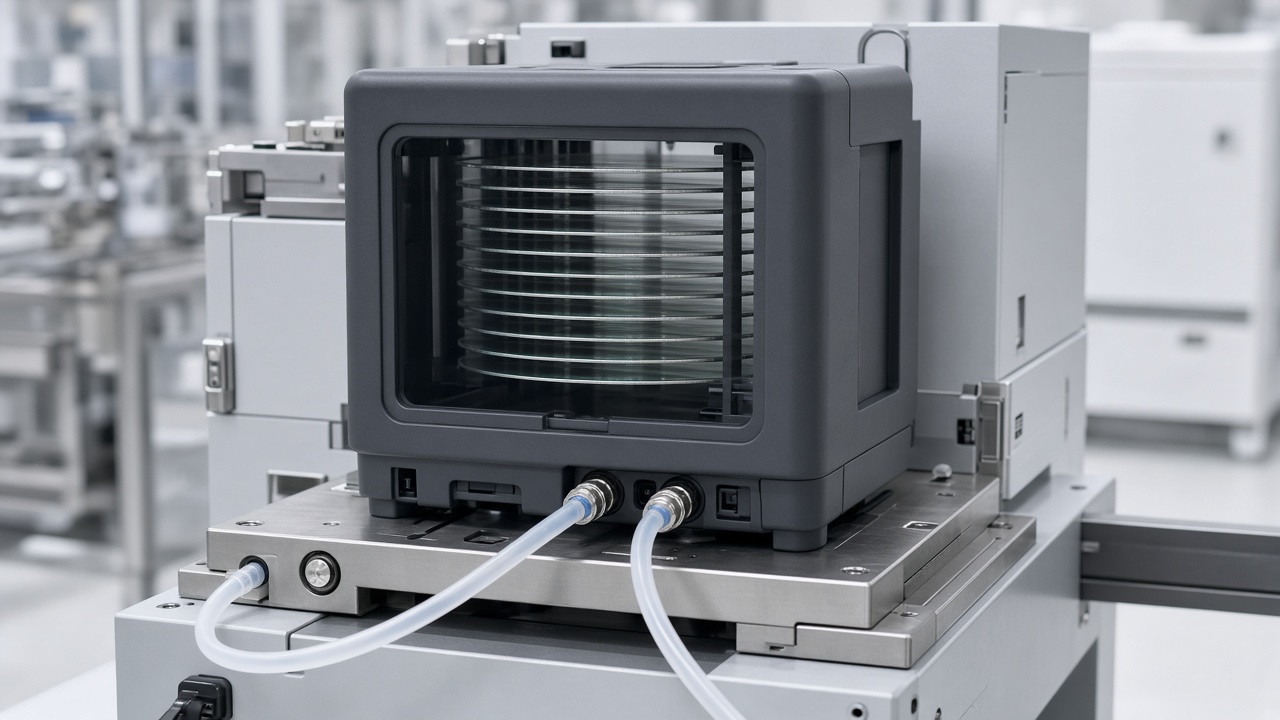
When defect signatures cluster by FOUP ID or carrier age rather than by chamber, hold the lot against carrier genealogy. The track and etch tools run recipes. The FOUP runs the air the wafer breathes between them.