
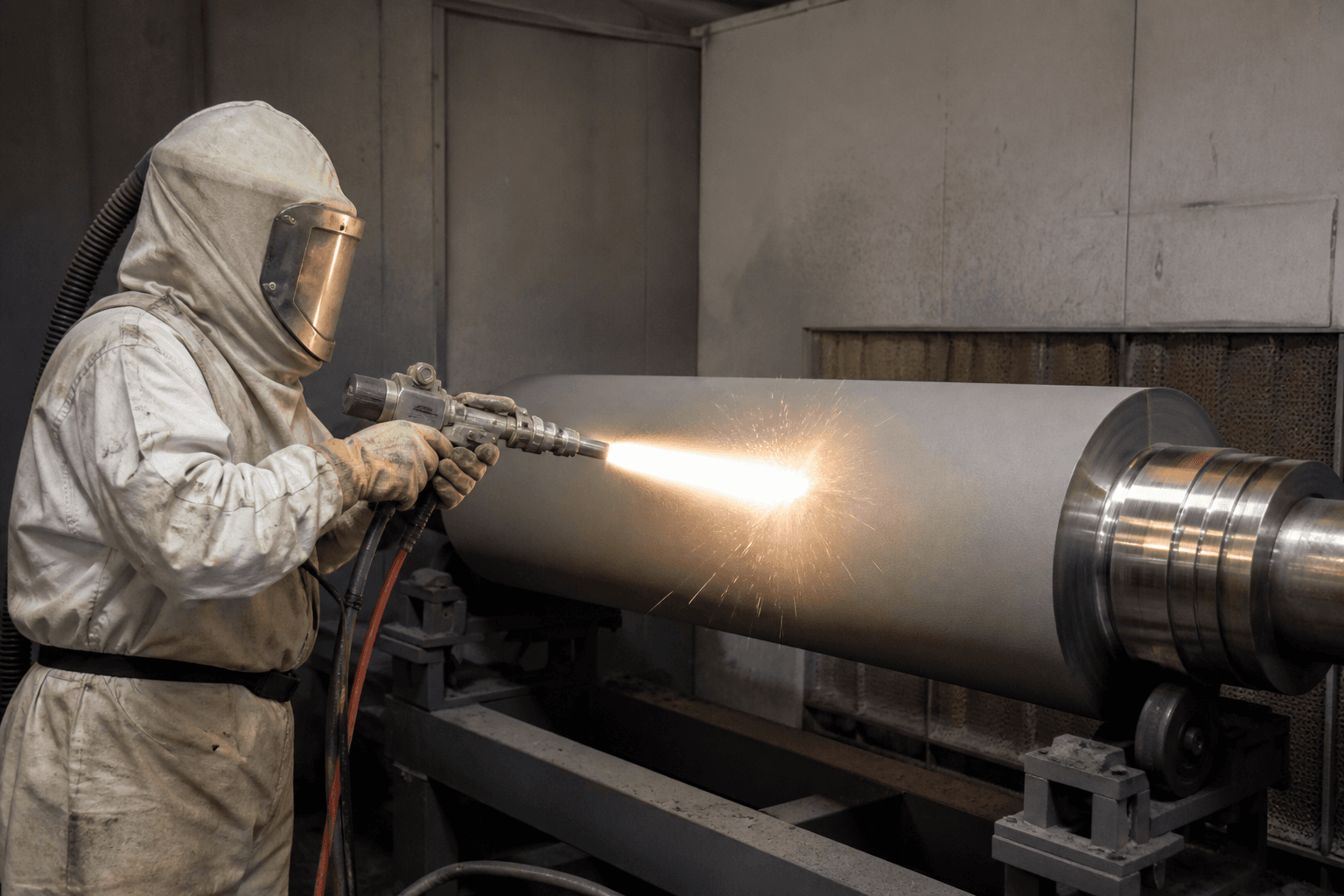
Roll rebuilds blame powder lot when coating peels at the customer. Often the grit blast profile was below the specified Ra, the operator shortened standoff to “save powder,” and no tensile coupon was pulled that shift. Thickness met the drawing; bond did not.
Thermal spray owns mechanical interlocking and residual stress control. Torch parameters are inputs. Prep, temperature, and coupon proof are the process that paint thickness alone cannot replace.
What the traveler must show
| Check | Why it matters | Fail action | |-------|----------------|-------------| | Blast profile / cleanliness | Low profile = poor lock | Re-blast; do not spray over oil | | Standoff and traverse speed | Too close overheats; too far porosity | Requalify spray path | | Deposit temperature band | Excess heat embrittles interface | Pause; cool; adjust passes | | Tensile or bend coupon per lot | Thickness ≠ adhesion | Hold shipment until coupon passes |
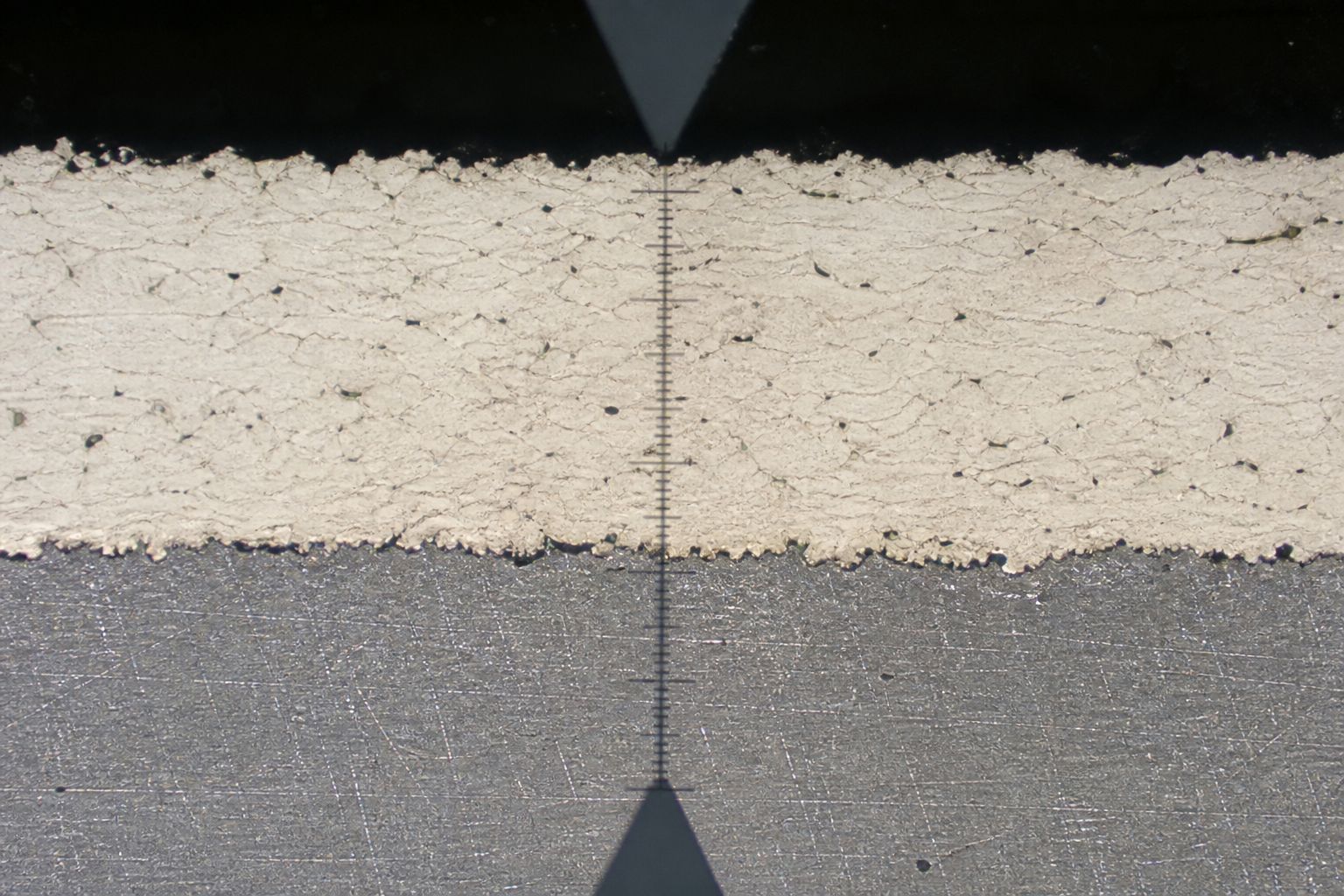
Gate
No production spray without a same-shift coupon when the powder, blast media, or gun tip changes. Do not accept “thickness OK” as release after a bond failure history on that part family.
The booth shows amps and powder feed. The interface decides whether the coating is armor or scrap waiting for the first thermal cycle.