
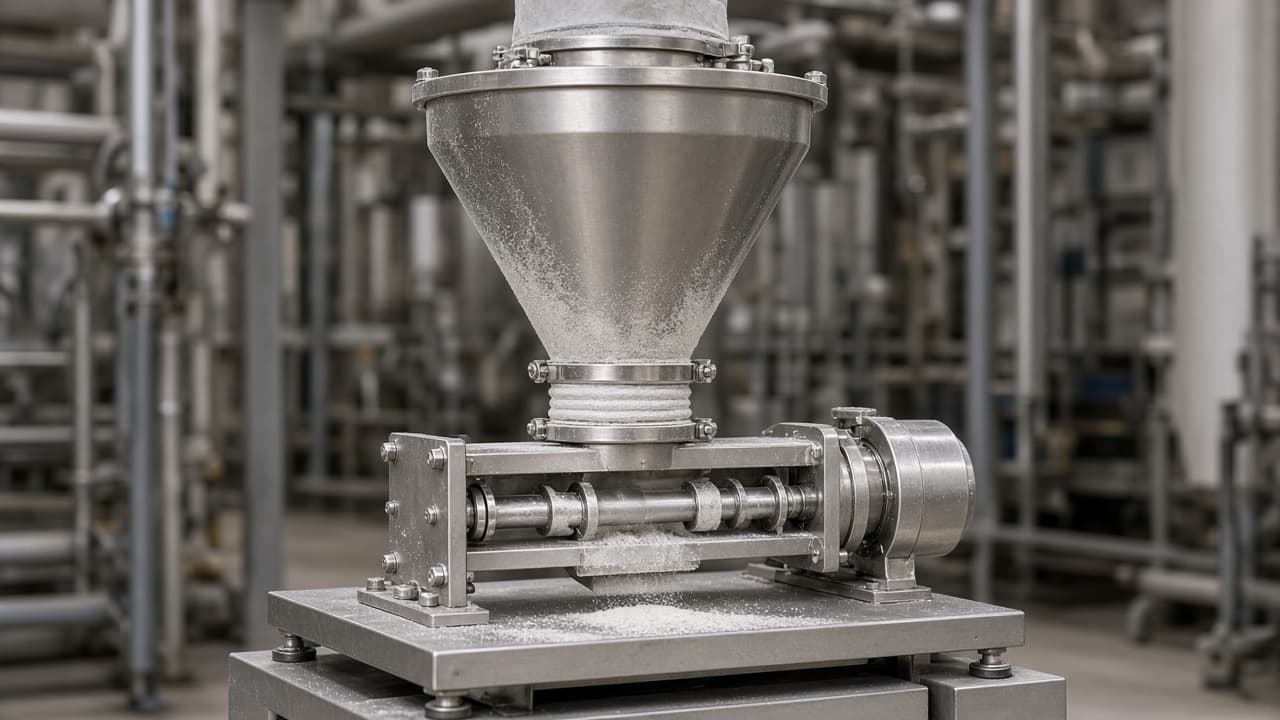
Refill starts. Hopper mass climbs. Then the live weight flattens while the upper bin is still full of powder that has arched above the outlet. The feeder controller, often already in volumetric memory mode during refill, commands screw speed against a mass flow that is not happening. When the bridge breaks, a slug drops; the weigh cell sees a cliff; the PID or volumetric remnant floods the process. Assay drifts. The HMI still shows the recipe setpoint.
LIW feeder honesty covers frame vibration, soft-mount errors, and refill blinding in general. Rotary airlock briefs own pneumatic convey seals. This page is bridging and rat-holing at refill on cohesive minors—the mechanical failure mode that makes catch samples disagree with totalizer stories.
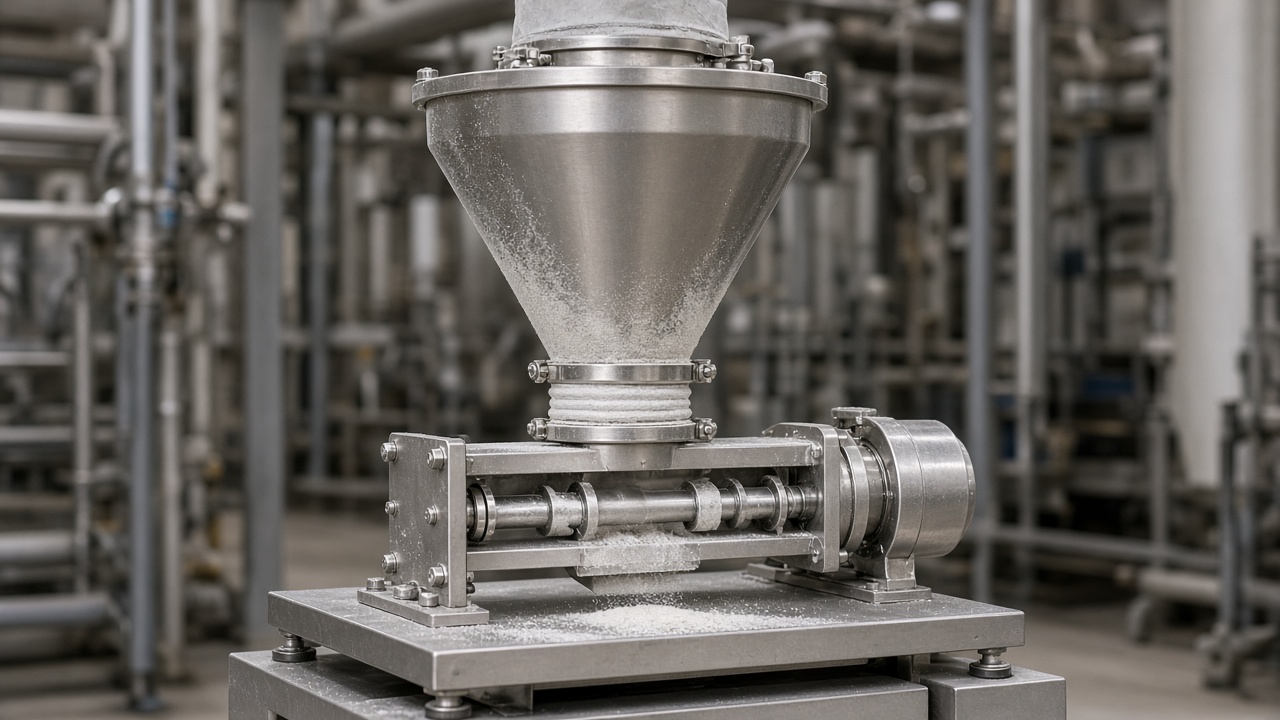
Cohesive, fine, or hygroscopic powders bridge when bulk density, moisture, and hopper geometry conspire. Agitators, flexible-wall hoppers, and properly sized outlets exist because gravity alone is not a control strategy. If refill frequency is high and material is known to arch, treat bridge-break events as process alarms: sudden mass steps after a flat period, screw amps that fall while commanded RPM holds, or catch-sample shortfalls clustered after refill cycles.
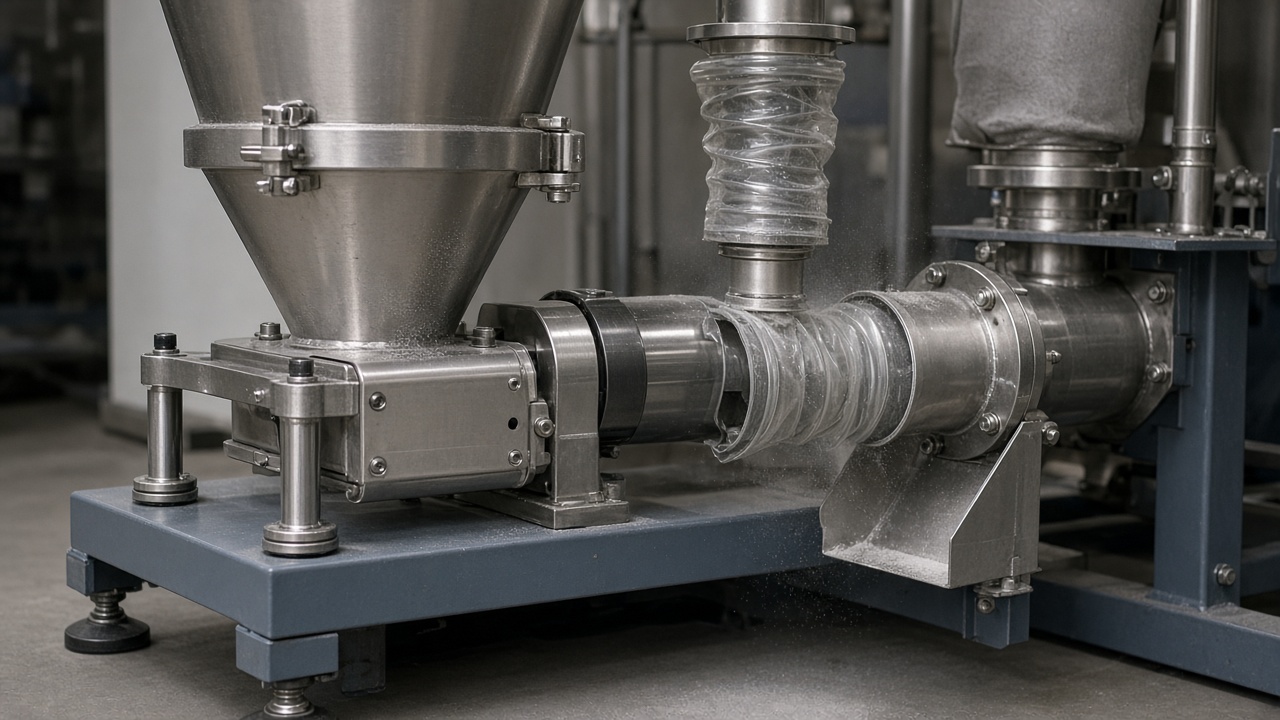
Before blaming the raw-material lot, run a refill under watch: does mass rise smoothly, or stall then spike? Listen for the hollow sound of an empty screw throat. Dual-sourcing a powder without rechecking bridge behavior is a MoC. So is changing hopper inserts or disabling the agitator “because it was noisy.” The weigh cell reports mass only when powder can reach it. A bridge reports confidence instead.